Chung Ki Wa
Our verdict
Chung Ki Wa on West Olympic Boulevard sits inside the dense Korean dining corridor that defines this stretch of Koreatown — a neighbourhood where the competition is specific, the regulars are opinionated, and the bar for Korean barbecue is set by decades of institutional memory. For visitors planning around Los Angeles's broader Korean dining scene, it belongs on the same research list as the corridor's most-discussed addresses.

Pearl is the En Primeur Club membership app — saves, bookings, and concierge access live there. Same editors, same standards.
- Address
- 3545 W Olympic Blvd, Los Angeles, CA 90019
- Phone
- (323) 737-0809
- Hours
- Daily 11 AM–10 PM
- Website
- chungkiwala.com
- Directions
- Get directions
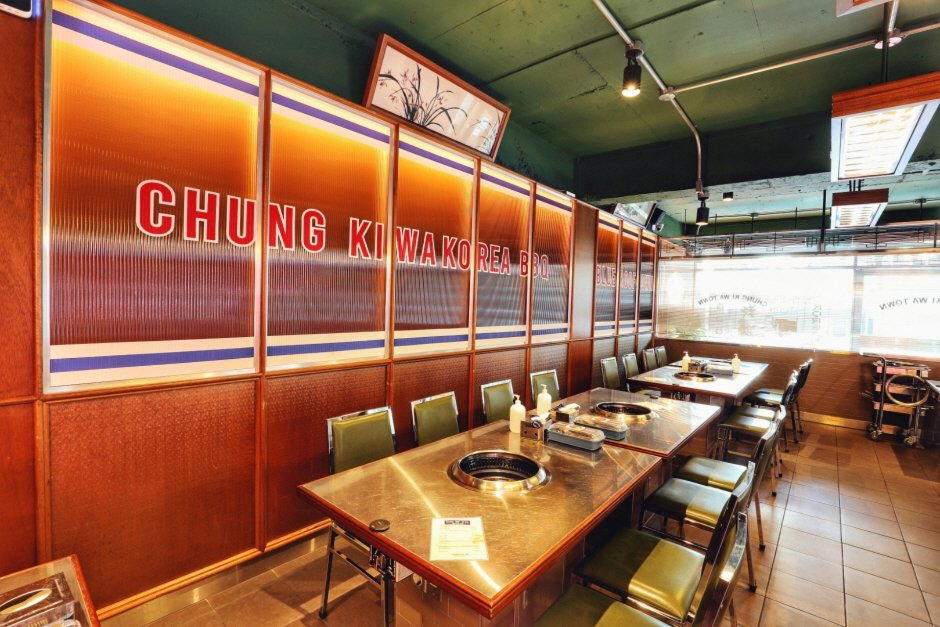
West Olympic and the Weight of Koreatown's Expectations
The block of West Olympic Boulevard where Chung Ki Wa sits tells you a great deal about how Korean dining works in Los Angeles before you even step inside. This is not a neighbourhood where restaurants succeed on novelty or marketing visibility. The Korean-American community that built and sustains this corridor rewards consistency, generational loyalty, and the kind of institutional presence that accumulates over years of serving the same families the same dishes the same way. A restaurant at 3545 W Olympic Blvd is competing in one of the most demanding and cuisine-specific dining environments in the United States — not against the city's broader fine-dining tier, but against the deep, local knowledge of a community that knows exactly what the food should taste like.
Los Angeles has one of the largest Korean-American populations outside Korea, and Koreatown functions as its culinary anchor. The dining scene here operates on different logic than, say, the Michelin-tracked restaurant culture further west. Where venues like Providence, Somni, or Kato earn attention through tasting-menu format and chef recognition, the most-respected addresses in Koreatown earn it through decades of community trust. The two systems run in parallel, and visitors treating them as equivalent miss the point of both.
Reading the Room Before You Book
The editorial angle that matters most for anyone planning a visit to Chung Ki Wa is honest logistics: what do you actually know before you arrive, and what does that uncertainty require of you as a planner? The venue's online footprint is thin. No website, no published phone number in major directories, no verified hours in circulation at time of writing. That pattern is not unusual for long-running Koreatown establishments, where word-of-mouth and community familiarity have historically done the work that digital presence does elsewhere. But it creates a specific problem for visitors unfamiliar with the neighbourhood.
The practical implication is this: anyone planning a meal here from outside the local community should budget time for reconnaissance. Show up during likely service hours (early evening is the standard opening window for Korean barbecue operations of this type) and verify operating status in person, or ask a locally-connected contact to confirm. Koreatown restaurants at this address level rarely take reservations through third-party platforms, and walk-in formats are common. The absence of a published booking system should not be read as a signal of difficulty — it is closer to a signal of format. These are not counter-seats that fill three months ahead the way Hayato's omakase does; they are tables that fill with regulars and with visitors who know to arrive early and stay patient.
For context on how this compares to the broader Los Angeles dining planning experience: venues at the formal end of the city's restaurant scene, places covered in our full Los Angeles restaurants guide, typically offer structured booking windows, online reservation systems, and clear price communication. Koreatown's institutional tier operates with less of that infrastructure, which is part of what keeps it accessible and part of what makes it harder to plan around from a distance.
The Korean Barbecue Format and What It Demands of the Table
Korean barbecue, as a dining format, places more agency with the diner than almost any other table-service tradition in the city. The service structure at most serious Korean barbecue houses involves tableside grilling, often managed partly by staff and partly by the guests themselves, with a sequence of banchan (small accompaniments) that arrive before the main proteins and set the register for the meal. The quality of those accompaniments, the fermentation depth of the kimchi, the seasoning of the namul, the variety and freshness of what surrounds the grill, is frequently the real measure of a kitchen's seriousness. Anyone who has eaten at this level in Seoul or in the better Koreatown addresses understands that the banchan spread is where the kitchen's attention shows first.
This format context matters because it shapes expectations in both directions. Visitors arriving with the frame of reference of a Western tasting menu, the sequential, chef-controlled progression of a meal at The French Laundry or Le Bernardin in New York City, will find Korean barbecue operates on different terms. The meal here is communal, interactive, and paced by the table rather than the kitchen. Groups of four tend to eat better than solo diners, both logistically and in terms of ordering range. Coming with a clear sense of what you want to order, rather than expecting a guided progression, is the more productive approach.
West Olympic Boulevard and its immediate surroundings hold several of the longest-running and most-discussed Korean barbecue addresses in the city. The neighbourhood's competitive density is what gives it authority: a restaurant that survives and retains a loyal following in this environment has cleared a real bar, even without formal award recognition or media coverage. That is a different kind of trust signal than a Michelin star, but it is not a weaker one in this context.
For comparison, the award-tracked end of Los Angeles dining, Osteria Mozza, Kato, and peers, operates with full digital transparency: published tasting menus, verifiable prices, advance booking. The institutional Koreatown tier trades that transparency for a different kind of authority rooted in neighbourhood tenure. Both are legitimate. They are simply different systems, and visitors benefit from understanding which one they are entering before they arrive.
Across the United States, Korean dining at the formal recognition level has begun attracting broader critical attention. Atomix in New York City represents the tasting-menu end of that shift. What Koreatown's institutional addresses represent is the other pole: not modernised for outside audiences, but maintained for the community that built them. Both matter. They are not in competition with each other.
Planning Your Visit
Chung Ki Wa is located at 3545 W Olympic Blvd, Los Angeles, CA 90019, in the heart of Koreatown. Parking along this stretch of Olympic is available in adjacent lots. Because verified hours, phone contact, and booking details are not published through major directories at time of writing, the most reliable approach is a direct visit during early evening service windows or a local recommendation to confirm current operating status. Walk-in is the expected format for this type of address. Come with a group if possible, arrive with a clear protein order in mind, and expect the banchan to arrive first.
Quick reference: 3545 W Olympic Blvd, Los Angeles, CA 90019. No verified booking platform. Walk-in format expected. Verify hours locally before visiting.
Frequently asked questions
Where is Chung Ki Wa located?
Chung Ki Wa is located at 3545 W Olympic Blvd, Los Angeles, CA 90019, Los Angeles.
How does Chung Ki Wa fit into the Koreatown dining scene compared to newer LA Korean restaurants?
Chung Ki Wa sits on West Olympic Boulevard, the corridor that anchors Koreatown's longest-running Korean barbecue addresses in Los Angeles. Where newer openings in K-town often pursue a modern format with reservations and designed interiors, the institutional addresses on this block have built followings through consistency and repeat local custom rather than press cycles. That generational tenure places Chung Ki Wa in a different category from the wave of polished Korean barbecue concepts that have opened across Los Angeles in the past decade.
What's the signature dish at Chung Ki Wa?
At serious Korean barbecue houses along West Olympic Boulevard, the anchor is typically premium beef: galbi, bulgogi, and unmarinated cuts grilled table-side. Confirm the current menu directly with the restaurant at 3545 W Olympic Blvd before visiting.
Can I walk in to Chung Ki Wa?
Arrival time matters on busy evenings: the West Olympic corridor draws consistent foot traffic, particularly on weekends. Your safest approach is to call ahead or arrive early in the dinner window.
What's the signature at Chung Ki Wa?
The defining feature at an address like Chung Ki Wa is the table-grilling format itself: diners cook protein over live heat, managing pace and doneness at the table. That format, common to Koreatown's institutional tier on West Olympic Boulevard, separates this corridor from the more service-directed dining rooms elsewhere in Los Angeles.
Is Chung Ki Wa good for vegetarians?
Korean barbecue as a format is built around beef, pork, and seafood, and most addresses along this stretch of Olympic Boulevard are protein-centred by design. Vegetarian diners should contact the restaurant at 3545 W Olympic Blvd, Los Angeles, CA 90019 directly before making the trip.
Comparison Snapshot
Comparable venues nearby, for context on price, style, and recognition.
| Venue | Cuisine | Price | Notes |
|---|---|---|---|
| Chung Ki WaThis venue — the venue you are viewing | Korean BBQ | $30–50 | Not listed |
| Yuk Dae Jang | Traditional Korean Soup Specialist | $10–20 | Wilshire Center |
| Eighth Street Soondae 8가순대 | Authentic Korean Soondae | $20–30 | Westlake |
| Dong Il Jang | Traditional Korean BBQ | Not listed | Koreatown |
| Shiku | Korean Comfort Food | $10–20 | Financial District |
Continue exploring
More in Los Angeles
Restaurants in Los Angeles
Browse all →
Bars in Los Angeles
Browse all →

Hotels in Los Angeles
Browse all →
Wineries in Los Angeles
Browse all →
Details
- Lively
- Group Dining
- Family
- Casual Hangout
- Open Kitchen
- A La Carte
Current opening hours
- Monday
- 11 AM–10 PM
- Tuesday
- 11 AM–10 PM
- Wednesday
- 11 AM–10 PM
- Thursday
- 11 AM–10 PM
- Friday
- 11 AM–10 PM
- Saturday
- 11 AM–10 PM
- Sunday
- 11 AM–10 PM
Hours can change for holidays and private events. Last verified .
Casual and lively atmosphere with wooden benches and a funky, organic vibe centered around interactive table BBQ pits.