Tabelog 100 #33
Our verdict
Chinese Muramatsu places Shizuoka’s Chinese dining scene in a tighter, more ingredient-led register: counter seating, seafood as a central category, and recognition in Tabelog’s Chinese EAST “Tabelog 100” selection for 2023, 2024, and 2026. It suits diners who want the precision of a small-format meal rather than a broad hotel-style Chinese menu.

Pearl is the En Primeur Club membership app — saves, bookings, and concierge access live there. Same editors, same standards.
- Address
- 9-3 Otamachi, Aoi Ward, Shizuoka, 420-0845, Japan
- Phone
- +81 90-8657-5416
- Website
- instagram.com
- Directions
- Get directions
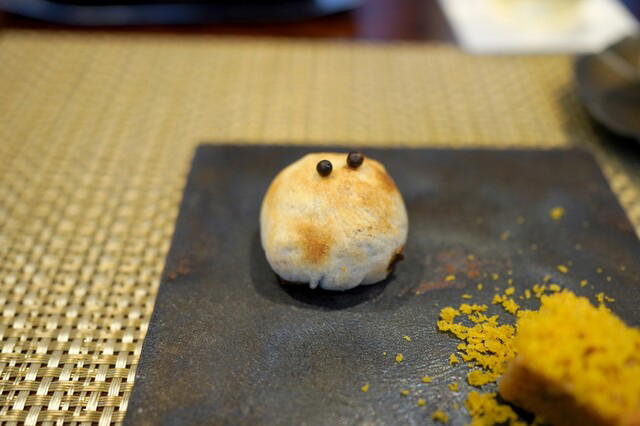
Otamachi is not the showpiece face of Shizuoka dining. It is quieter, more residential in feel, and close enough to the city’s daily rhythms that a small counter can read as more serious than theatrical. That setting matters for Chinese Muramatsu because the appeal is not scale, décor, or a long public menu; it is the compactness of the format and the way Chinese cooking in Shizuoka can lean on seafood, proximity to the Pacific, and a dining culture that rewards concentration over display.
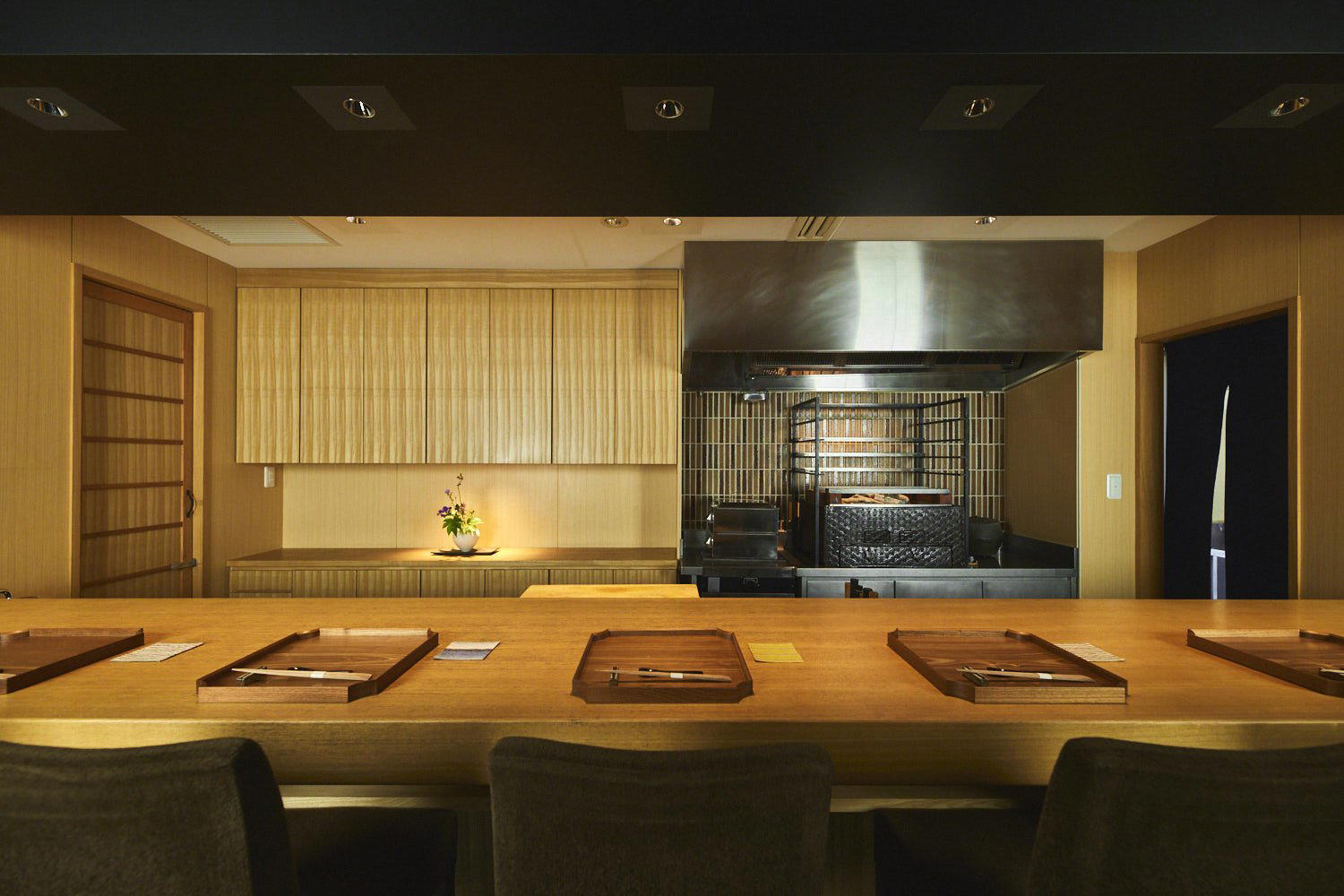
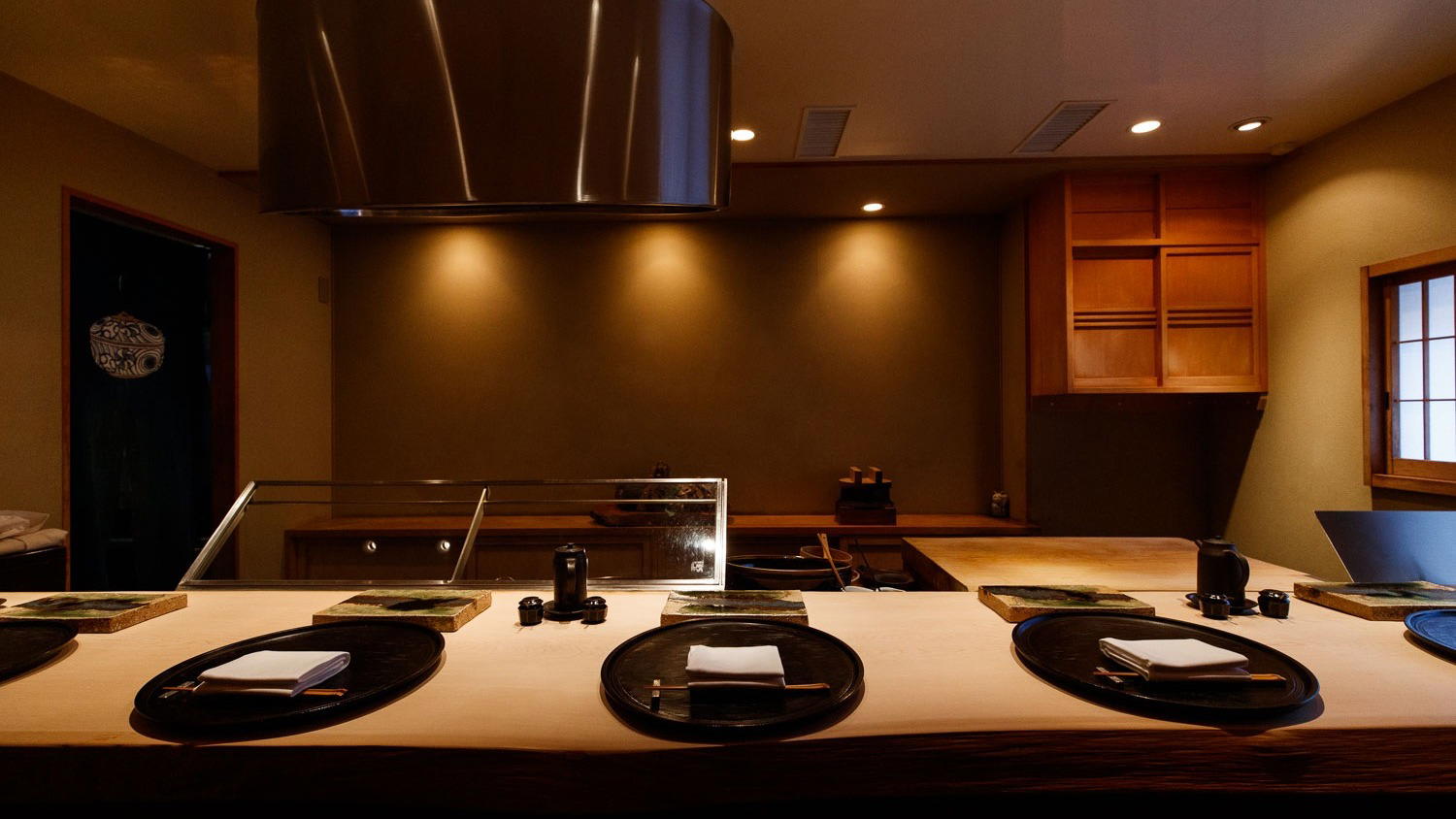
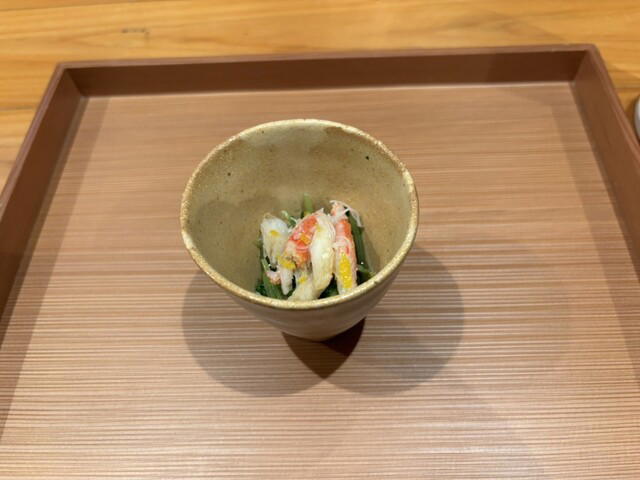
A seven-seat counter for Chinese cooking with seafood at the centre
Japan’s higher-end Chinese restaurants often split into two broad types: larger dining rooms built around banquet vocabulary, and smaller rooms where the meal behaves closer to kappo or omakase in tempo. Chinese Muramatsu belongs to the second camp. The category listing is Chinese and seafood, a pairing that says more than a generic cuisine label. In Shizuoka, where fish markets, port towns, green tea country, and mountain produce all sit within a compact prefecture, ingredient sourcing is not a decorative claim. It is a structural advantage for kitchens that want Chinese technique without losing a local Japanese register.
The seven-seat counter also changes the reader’s expectations. This is not the setting for ordering widely across a laminated menu or letting a large group drift through familiar dishes. A counter format narrows the room’s energy and puts timing, portioning, and sequence under scrutiny. For diners used to Chinese restaurants as shared-table abundance, the point here is different: the meal is likely to feel closer to a chef-paced progression, with seafood carrying much of the identity rather than appearing as a luxury add-on.
Recognition by Tabelog’s Chinese EAST “Tabelog 100” in 2023, 2024, and 2026 places the restaurant inside a competitive eastern Japan field rather than only a local Shizuoka conversation. That distinction matters. Shizuoka has plenty of everyday eating, from casual sweets and noodles to neighborhood Chinese rooms, but a small counter operating in the JPY 15,000 to JPY 19,999 dinner band is competing for a different decision: whether a visitor should spend one serious meal in the city on Chinese technique rather than sushi, kaiseki, or wagyu.
Shizuoka's serious dining is broader than sushi and kaiseki
Travelers often reduce Shizuoka to Mount Fuji views, tea, and seafood. Those are valid anchors, but the city’s dining character is more varied than that shorthand allows. Kaiseki properties such as Asaba (Kaiseki) represent the formal Japanese end of the spectrum, while restaurants like FUJI, Aozora, Blue Label, and Chabo show how fragmented the local map becomes once visitors look beyond the obvious categories.
Within that map, Chinese Muramatsu is useful because it complicates the usual itinerary. The restaurant is not trying to imitate Tokyo’s grand Chinese rooms or Kyoto’s seasonal Japanese grammar. Its logic is smaller and more Shizuoka-specific: Chinese cooking, seafood emphasis, counter discipline, and a price tier that asks diners to treat the meal as the evening’s main event. Compared with casual local peers such as Ooyakiimo and Suien Dosai Honten, which sit in a far lower spend bracket, it belongs to a different dining tier. Compared with Shizuoka Sichuan Hanten, listed at a mid-range dinner level, the point is not merely cuisine type but format, scale, and intent.
That is also why the restaurant makes sense for travelers building a food-focused Shizuoka stay rather than a single-meal detour. The broader city guides help frame the rest of the trip: Our full Shizuoka restaurants guide for dining, Our full Shizuoka hotels guide for where to stay, Our full Shizuoka bars guide for drinking, Our full Shizuoka wineries guide for regional wine context, and Our full Shizuoka experiences guide for planning around the meal.
Who should choose it over a safer Shizuoka dinner
The strongest case for Chinese Muramatsu is for diners who already understand that premium Chinese cooking in Japan is not only about luxury ingredients. It is about calibration: heat, texture, restraint, and how seafood behaves when Chinese technique meets Japanese sourcing habits. The room’s small scale also makes it a poor fit for diners who want anonymity, broad choice, or a flexible family meal. It is better read as a focused counter experience for adults who value structure.
For readers comparing across Japan, the useful reference is not whether this replaces a Tokyo splurge. It is whether a Shizuoka itinerary has room for a meal that speaks to the prefecture through a non-Japanese cuisine lens. That same question applies well beyond Shizuoka: a traveler choosing -Grilled beef Sukiyaki- KAMAKURA TANUKIAN 鎌倉 たぬき庵 in Kamakura. 鮪と炭火焼き うお炭 秋葉原店 in Tokyo.cafe in Osaka.know in Kumamoto, (Shoku) Vietnam in Kawasaki, or [Curry Senmon Ten] Maruyama Kyoju. in Sapporo is often deciding between local specificity and cuisine category. The same logic extends outside Japan at Jōdo Saké Bar in Los Angeles and Onigiri Time in Pasadena, where format and context shape the meal as much as the label on the door.
The editorial read is clear: choose Chinese Muramatsu when the interest is Shizuoka ingredients filtered through a serious Chinese counter, not when the brief calls for a relaxed group dinner or a survey of familiar dishes. Its Tabelog 100 record gives the external signal; the seafood category, small counter, and city context explain why that signal matters.
Frequently asked questions
Is Chinese Muramatsu a family-friendly restaurant?
The venue lists no family-friendly facilities and notes a 7-seat counter in Shizuoka’s Aoi Ward. It is reservation-only, which points to a tighter format than a casual family dining room.
What should I expect atmosphere-wise at Chinese Muramatsu?
Expect a compact counter room rather than a large banqueting space, with seven seats at the counter and a service model that runs on staggered seating. The setting is formal enough for a Tabelog 100 EAST 2026 selection, but not padded with private rooms or card payments.
Is Chinese Muramatsu more mid-range or high-end?
Pricing at Chinese Muramatsu is listed as JPY 15,000 - JPY 19,999.
Where is Chinese Muramatsu located?
Chinese Muramatsu is located in Shizuoka.
How far ahead should I plan for Chinese Muramatsu?
The booking model requires a phone reservation, and the restaurant runs one seating for lunch and dinner. With only seven counter seats and a 3–4 hour experience window, planning ahead is sensible.
What's the defining dish or idea at Chinese Muramatsu?
The clearest idea is Chinese cooking with seafood at the centre, presented in a 7-seat counter format. Its Tabelog 100 EAST 2026 selection and JPY 15,000-19,999 price band place it in serious dinner territory.
Quick Comparison
Comparable venues by cuisine and price in the same metro.
| Venue | Cuisine | Price | Awards | Notes |
|---|---|---|---|---|
| Chinese MuramatsuThis venue — the venue you are viewing | Chinese | Not listed | Tabelog 100 #33 | Not listed |
| Shizuoka Sichuan Hanten | Authentic Sichuan Chinese | $50–100 | Tabelog 100 #65 | Aoi Ward |
| Simples | Modern French-inspired Japanese Omakase | $150–200 | Tabelog Bronze #413 | Mariko, Suruga-ku |
| Unagi Shun | Charcoal-Grilled Unagi Fine Dining | $150–200 | Tabelog Gold #31 | Aoi Ward |
| カワサキ | French Gastronomy with Game & Seasonal Vegetables | $100–150 | Tabelog 100 #30 | Aoi-ku |
| Suehiro Zushi | Traditional Shimizu Sushi with Hagashi Tuna | $100–150 | Tabelog 100 #72 | Shimizu Ward |
Recognition history
Dated appearances from independent guides and award organizations, with the underlying list record or original source where available.
Tabelog 100 #33 · No. 33
Tabelog · Tabelog 100 - Chinese cuisine - EAST - 2026
Continue exploring