Our verdict
On a narrow lane in Nice's Vieux-Nice quarter, Chez Thérésa occupies the kind of address that outlasts trends: a compact, stone-walled room where the cooking stays close to Niçoise tradition. Compared to the city's more ambitious tasting-menu formats at spots like Flaveur or L'Aromate, this is a different proposition entirely, one where the room itself sets the register for everything that follows.

Pearl is the En Primeur Club membership app, where members save venues, book tables and use the concierge.
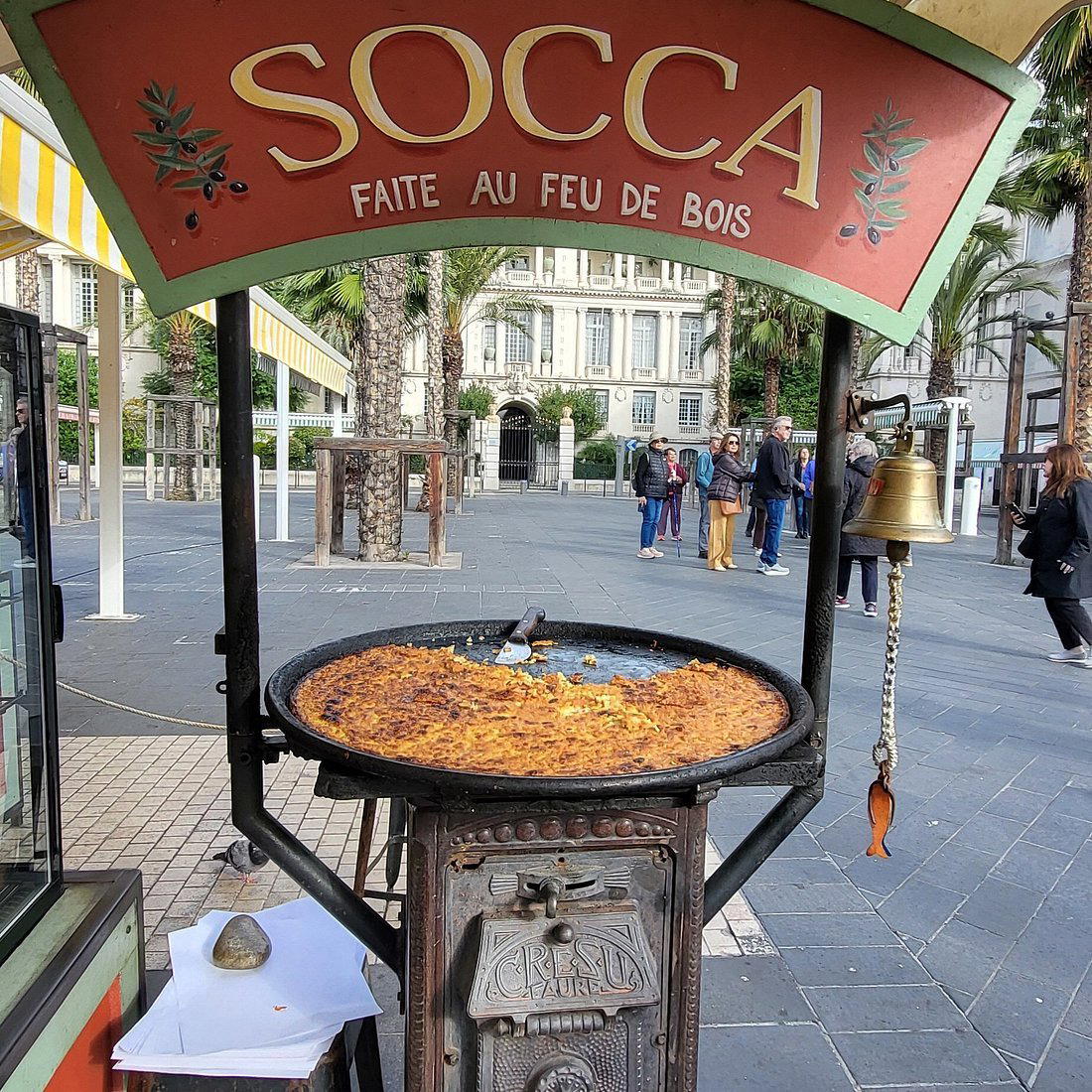
The menu
What to order
- Socca
- Pissaladière
- Trucchia
- Pan bagnat
- Sweet chard pie
Rue Droite and the Architecture of Restraint
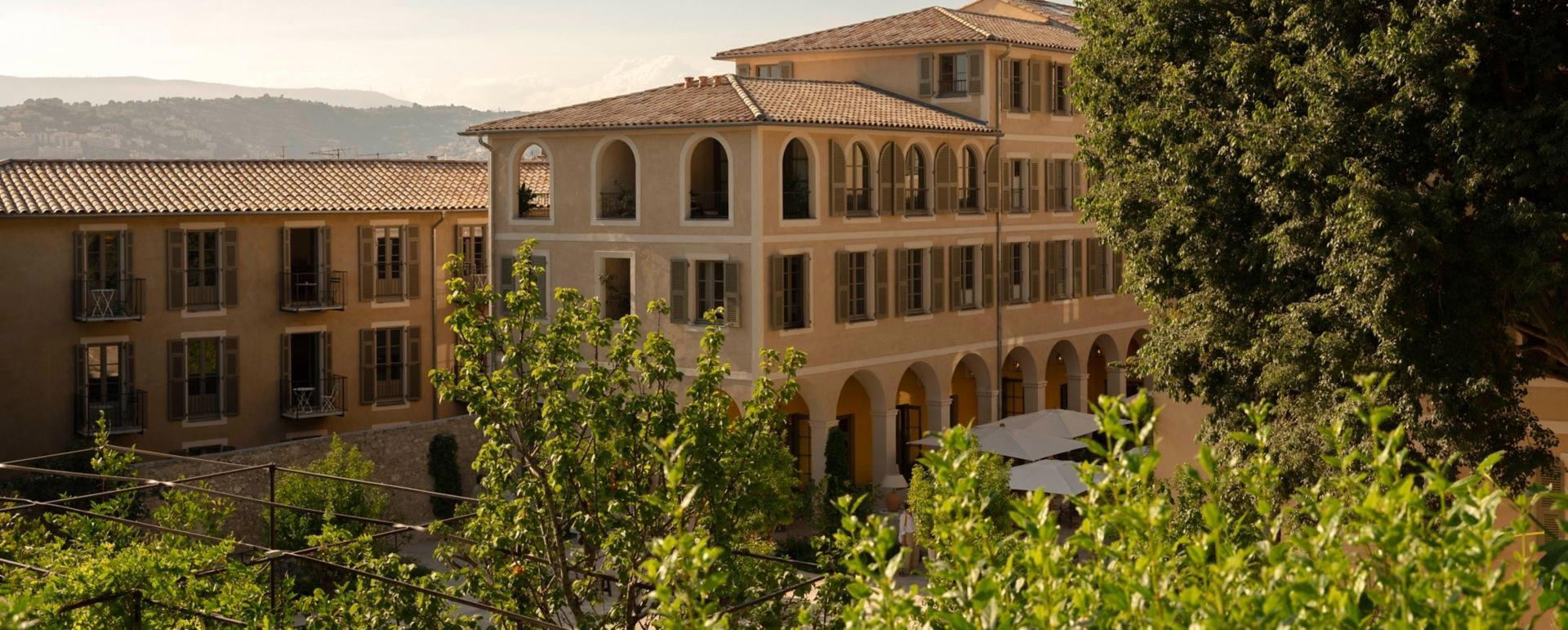
Vieux-Nice is one of the few historic urban cores in the French Mediterranean where the street grid still functions as it did centuries ago. Rue Droite, straight, narrow, cutting through the old city's Baroque district, is a lane where facades press close enough to shade the pavement for most of the day. Buildings here carry their history in the stone itself: ochre and terracotta renders, tall shuttered windows, ground-floor openings that have housed bakeries, workshops, and eating places across multiple generations. Chez Thérésa sits at number 28, embedded in that continuity rather than decorating it.
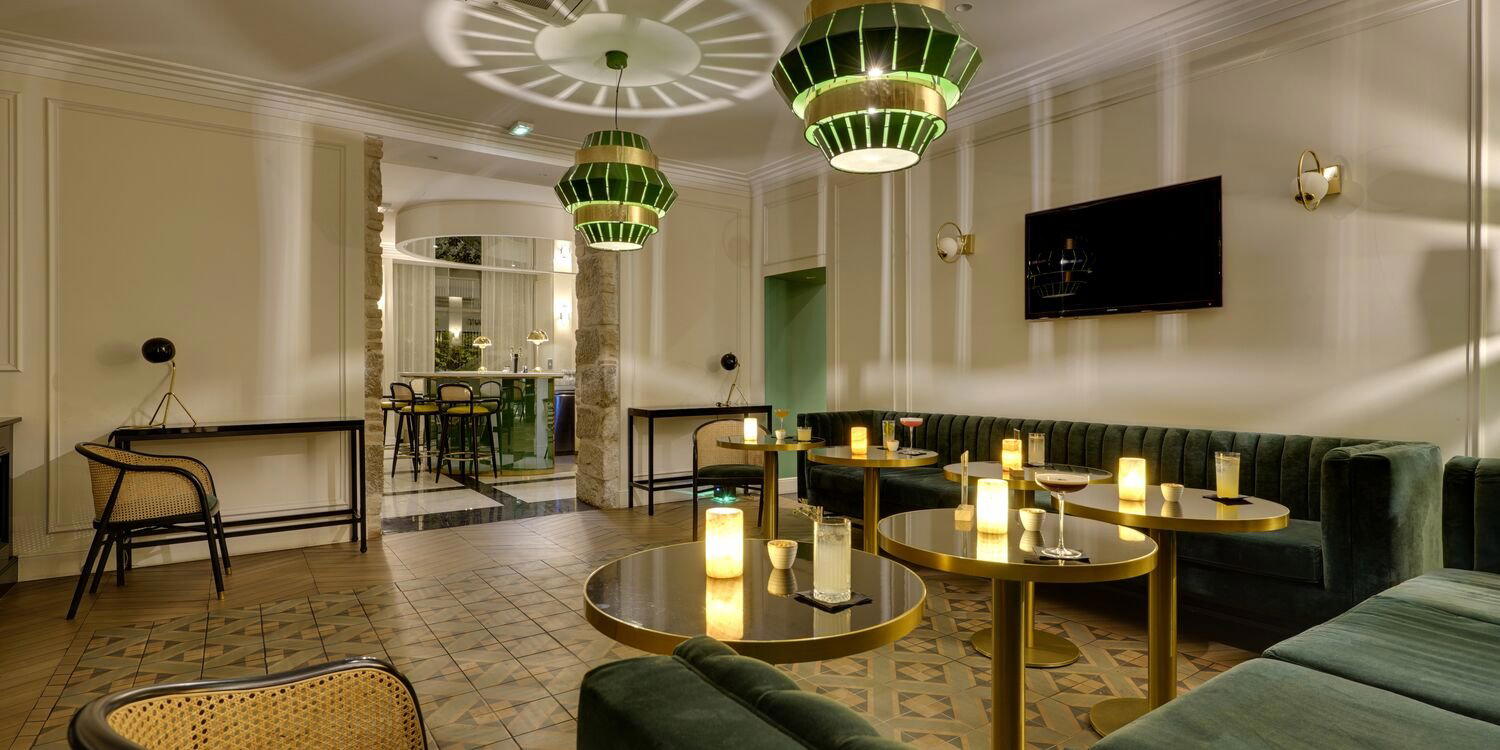
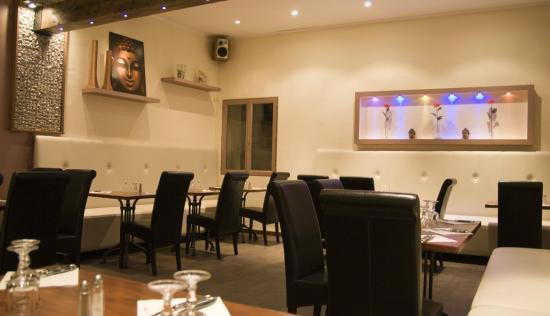
In cities where dining rooms are conceived as statements, where the interior designer's credit appears alongside the chef's in press materials, there is a counter-tradition of spaces that make their case through material honesty. The stone walls, the compressed scale, the absence of designed flourish: these are not shortcomings but a formal position. The room reads as an argument about what a meal in this part of Nice should feel like, and the argument is made through what is not there as much as what is.
That physical register places Chez Thérésa in a different competitive tier from the city's modern tasting-menu addresses. Flaveur and L'Aromate operate at the €€€€ level with creative menus and the kind of formal progression that demands a corresponding room. Les Agitateurs and ONICE similarly frame their cooking inside spaces where the design is part of the editorial. Chez Thérésa proposes something older and more immediate: a room that makes no claim beyond its own walls, and a location inside one of the most architecturally coherent medieval quarters on the Riviera.
The Niçoise Kitchen in Its Native Container
Nice has a culinary identity that is genuinely distinct from the broader Provençal tradition, shaped by Ligurian influence, the city's long Italian administrative history, and a set of preparations, socca, pissaladière, daube niçoise, pan bagnat, that belong to no other regional category. The most honest expressions of that cooking tend to appear in the smallest rooms, in addresses with the lowest design budgets and the most direct relationships with their suppliers and their neighbourhood clientele. La Merenda, cash-only and without a phone line, is the model most frequently cited; it has shaped expectations about what an authentic Niçoise table should cost and feel like.
Chez Thérésa occupies adjacent territory in that conversation. The Rue Droite address is central to Vieux-Nice, within easy walking distance of the Cours Saleya market that supplies much of the old city's cooking, and the stone-walled setting is a physical container appropriate to dishes that predate the concept of restaurant design. When the Le Chantecler at the Negresco applies classical technique to regional ingredients, or when the city's newer generation of chefs references Niçoise tradition inside tasting menus, they are working with source material that addresses like this one preserve in a more literal form.
The broader French fine dining conversation, from Mirazur in Menton to Flocons de Sel in Megève, from the institutional weight of Paul Bocuse to the evolution documented at Troisgros, tends to move toward complexity and elaboration. The counter-argument, made by a specific tier of regional address, is that the most durable cooking is also the most locally grounded. Auberge de l'Ill in Alsace and Bras in Laguiole have each built international reputations from deep regional specificity. In Nice, that specificity lives on streets like Rue Droite.
Reading a Room Without Design Credits
The editorial angle that applies to Chez Thérésa is one that rarely gets written: the design of the absence. Rooms that are not designed in the contemporary sense, that is, rooms that have not been commissioned, art-directed, or styled, nonetheless have a spatial logic. Stone walls of a certain thickness and age create acoustic conditions that no acoustic panel reproduces. A compressed room with low ceilings and close tables creates a social density that modern hospitality design often tries to replicate through deliberate crowding, usually with less success. The patina on old surfaces, the irregularity of hand-laid stone, the proportions of a doorway built before standardisation: these accumulate into an atmosphere that functions independently of any decorator's brief.
At the international end of the dining spectrum, at Alléno Paris au Pavillon Ledoyen, at Le Bernardin in New York, at Lazy Bear in San Francisco, the room is a considered component of a total proposition, engineered to support a specific price point and experience format. At the other end of that spectrum, in the old quarters of Mediterranean cities, the room is inherited rather than designed, and the proposition rests entirely on the cooking and the location. Both approaches can produce meals worth remembering. The distinction is in what the diner is being asked to pay attention to.
For those compiling a broader picture of southern French cooking, Les Prés d'Eugénie, La Table du Castellet, and Georges Blanc each represent the institutional end of French regional cooking. Chez Thérésa represents something deliberately smaller and less formal, which is not a lesser ambition, it is a different one.
Planning Your Visit
Chez Thérésa is at 28 Rue Droite in the Vieux-Nice quarter, reachable on foot from Place Masséna in under ten minutes and from the Cours Saleya market in two or three. Vieux-Nice is pedestrianised at its core, so arrival on foot or by taxi is standard. The old city's streets operate on their own rhythm: lunch trade builds quickly at midday, particularly in warmer months when the neighbourhood sees significant foot traffic, so arriving at opening rather than mid-service is sound practice regardless of whether a reservation is in hand. Our full Nice restaurants guide provides broader context on the city's dining tiers and how to sequence a visit.
Frequently asked questions
Where is Chez Thérésa in Nice?
Chez Thérésa is located at 28 Rue Droite, 06300 Nice, France, Nice.
Is Chez Thérésa representative of authentic Niçoise cooking rather than generalised Provençal cuisine?
Nice has a culinary identity that diverges meaningfully from broader Provençal tradition, shaped by centuries of Ligurian proximity and the city's own administrative and cultural history. Chez Thérésa occupies Rue Droite in Vieux-Nice, the quarter where that distinct local kitchen has been most continuously practised. Its address places it within a street that functions as one of the neighbourhood's culinary arteries, which carries its own form of contextual credential in a city where provenance matters.
What should I order at Chez Thérésa?
Chez Thérésa sits on Rue Droite in Vieux-Nice, a street whose food vendors and small restaurants have long traded in the classics of the Niçoise tradition. That means dishes shaped by Ligurian influence and Nice's distinct culinary identity rather than the broader Provençal canon, think socca, pissaladière, and preparations rooted in the city's own pantry. Ordering broadly across the menu rather than selecting cautiously tends to reward here.
How far ahead should I plan for Chez Thérésa?
Chez Thérésa is at 28 Rue Droite in the heart of Vieux-Nice, a quarter that draws both locals and visitors year-round. Rue Droite itself is a focal street for the neighbourhood, which means foot traffic is consistent and tables at small established addresses can fill quickly, particularly in summer and during market days near Cours Saleya. Contacting the venue directly before arrival is advisable rather than assuming walk-in availability.
The Minimal Set
Comparable venues nearby, for context on price, style, and recognition.
| Venue | Cuisine | Price | Notes |
|---|---|---|---|
| Chez ThérésaThis venue (the venue you are viewing) | Traditional Niçoise | $10–20 | Not listed |
| La Table Alziari | Traditional Niçoise Bistro | $50–100 | Nice Historique, Traditional Niçoise Bistro |
| Le clin d'œil | Niçois Bistronomie | $20–30 | Cœur de Nice, Niçois Bistronomie |
| La Cantine de Mémé | French-Mediterranean Bistro | $30–50 | Cœur de Nice, French-Mediterranean Bistro |
| D'AQUÌ | Niçoise Street Food | $10–20 | Nice Historique, Niçoise Street Food |
| Chez Pipo | Niçoise Socca Specialist | $10–20 | Nice Historique, Niçoise Socca Specialist |
Continue exploring
More in Nice
Restaurants in Nice
All restaurants in Nice →
Bars in Nice
All bars in Nice →

Details
- Classic
- Rustic
- Well Known
- Casual Hangout
- Historic Building
- Open Kitchen
- Terrace
- Local Sourcing
- Street Scene
- A La Carte
- Vegetarian Friendly
- Vegan Options
Current opening hours
- Monday
- Closed
- Tuesday
- 9:30 AM–3 PM
- Wednesday
- 9:30 AM–3 PM
- Thursday
- 9:30 AM–3 PM
- Friday
- 9:30 AM–3 PM
- Saturday
- 9:30 AM–3 PM
- Sunday
- 9:30 AM–3 PM
Hours can change for holidays and private events. Hours as of .
Casual market-side spot with a lively, traditional atmosphere centered around the wood oven and fresh Niçoise specialties.