Chez Pierre d'Agos
Our verdict
Chez Pierre d'Agos sits along Avenue du Lavedan in Agos-Vidalos, a small commune in the Hautes-Pyrénées where the mountains shape both the terrain and the table. The restaurant operates within a French regional dining tradition that prizes proximity to source over culinary spectacle, placing it among the Pyrenean auberge category rather than the Michelin-chasing corridors of Paris or Lyon.

Pearl is the En Primeur Club membership app, where members save venues, book tables and use the concierge.
The menu
What to order
- Ris de veau
- Foie gras mi cuit aux figues
Where the Pyrénées Set the Plate
The Hautes-Pyrénées department does not produce restaurant destinations the way Paris or Lyon do. What it produces instead are places where the valley itself determines the menu, where the altitude, the river systems, and the pastoral traditions of the Lavedan create a table that would be impossible to replicate anywhere else. Agos-Vidalos sits along the Gave de Pau, a river corridor that feeds one of the most agriculturally distinctive microregions in southwestern France, and it is in this context that Chez Pierre d'Agos makes its case. The address, 5 Avenue du Lavedan, places it squarely on the artery connecting the lowland communes to the heights above Lourdes and, further south, the Cirque de Gavarnie.
Approaching this part of the Hautes-Pyrénées by road, the shift in topography is immediate. The foothills compress the valley, the light changes, and the villages grow quieter. What does not change is the density of agricultural activity: sheep grazing on hillside pasture, market gardens in the flatter stretches, and the kind of small-scale production, cheese, charcuterie, river fish, that French regional cooking has always depended on. That supply chain, short and local by geographic necessity rather than marketing choice, is the defining characteristic of the dining tradition Chez Pierre d'Agos operates within.
The Pyrenean Auberge Tradition and Why Sourcing Is the Story
French regional cooking at this altitude tends to resist the aesthetics of contemporary fine dining. The tradition here is auberge cooking: generous, ingredient-led, and calibrated to the seasons in a way that mirrors the pastoral calendar rather than a tasting menu format. This is a different register from the three-Michelin-star creativity visible at places like Mirazur in Menton or the institutional grandeur of Paul Bocuse - L'Auberge du Pont de Collonges. It is also distinct from the mountain refinement pursued by Flocons de Sel in Megève, where alpine ingredients are filtered through a precision-led kitchen. In the Lavedan valley, the emphasis falls on the ingredient before the technique.
The southwest Pyrenean corridor has particular assets. Bigorre black pig, a breed native to the Hautes-Pyrénées that nearly disappeared before a revival effort in the 1980s and 1990s, produces charcuterie with a fat composition distinct from industrially reared alternatives. Pyrenean lamb, grazed at altitude on a diet of wild grasses and herbs, carries a flavour profile that lowland farming cannot replicate. Trout from the mountain streams, Ossau-Iraty and Bethmale cheeses from the adjacent valleys, and foraged fungi in season round out a local larder that serious regional kitchens draw on heavily. A restaurant on Avenue du Lavedan has access to this supply chain in a way that a Parisian bistro does not, and that geographic advantage is the primary editorial argument for paying attention to it.
For comparison, consider the sourcing logic at Bras in Laguiole, where Michel and Sébastien Bras built their kitchen philosophy around the Aubrac plateau's plant life and pastoral tradition, or at Auberge du Vieux Puits in Fontjoncouse, where the surrounding garrigue defines the palette. The logic is the same across all three: place determines plate, and the kitchen's job is to make that relationship legible rather than to obscure it behind imported ingredients or global technique.
Agos-Vidalos in the Context of the Regional Dining Map
Agos-Vidalos itself is a small commune of a few hundred residents, positioned between Lourdes to the north and Argelès-Gazost to the south. Lourdes draws millions of pilgrims annually, but its restaurant infrastructure skews toward high-volume catering rather than considered regional cooking. The more interesting dining territory lies further south along the valley, where smaller communes and their associated kitchens operate with less tourist pressure and more direct connection to local producers. Agos-Vidalos sits at this transition point, close enough to the pilgrim traffic to sustain a dining room but removed enough to maintain the character of a place cooking for its own region.
Visitors arriving by car from Lourdes should allow roughly fifteen minutes for the drive south along the D821. Arriving from Tarbes or Pau by train, Lourdes is the practical base, with onward transport by car or taxi. The timing of a visit matters in the Hautes-Pyrénées: late spring through early autumn is when the local larder is at its most expressive, with summer markets in the valley towns and the high-pasture products available in their prime form. For our full Agos-Vidalos restaurants guide, the seasonal window is worth accounting for in any planning.
How This Fits the Broader French Regional Picture
French regional cooking at the serious end of the spectrum has seen a long-running tension between Parisian prestige and provincial authenticity. The grandes maisons, Alléno Paris au Pavillon Ledoyen, Troisgros - Le Bois sans Feuilles, Maison Lameloise in Chagny, Georges Blanc in Vonnas, represent one pole: restaurants that have achieved national and international recognition while remaining rooted in their regions. At the other pole sit the smaller, less-documented kitchens in places like the Lavedan valley, where the cooking remains primarily local in audience and ambition but often more direct in its relationship with source ingredients.
Neither pole is inherently superior, but they serve different reader needs. A traveller coming to the Hautes-Pyrénées for the mountains, the pilgrimage town of Lourdes, or the walking routes into the national park will find that the most honest expression of the region's food culture tends to come from exactly the kind of auberge address that Chez Pierre d'Agos represents. The alternative, driving to a destination restaurant in Eugénie-les-Bains or making the trip to L'Oustau de Baumanière in Les Baux, is a legitimate choice, but it is a different kind of trip, one oriented toward the restaurant as the destination rather than the region.
For readers who want to understand what the Pyrenean table actually tastes like, the answer is more likely to be found in a valley auberge than in a hotel dining room engineered for a global audience. That is the argument for Chez Pierre d'Agos, and it is an argument rooted in geography rather than reputation.
Planning a Visit
Chez Pierre d'Agos is located at 5 Avenue du Lavedan, Agos-Vidalos, in the Hautes-Pyrénées department of Occitanie. Direct contact details and current hours are best confirmed through local tourism resources or on-site inquiry, as operational information was not available at time of writing. The Lavedan valley sees the majority of its visitor traffic between May and October, and a reservation made in advance is advisable during the summer months when the regional tourism flow from Lourdes and the Pyrenees National Park peaks. Off-season visits in late autumn or winter carry different expectations: the pastoral larder is less abundant, but the dining room is quieter and the surrounding landscape is at its most austere.
Frequently asked questions
Would Chez Pierre d'Agos be comfortable with kids?
Agos-Vidalos is a small commune rather than a destination dining hub, and the auberge tradition of the Hautes-Pyrénées generally favours a relaxed, family-oriented atmosphere over formal table service. That regional format tends to accommodate children reasonably well.
What should I expect atmosphere-wise at Chez Pierre d'Agos?
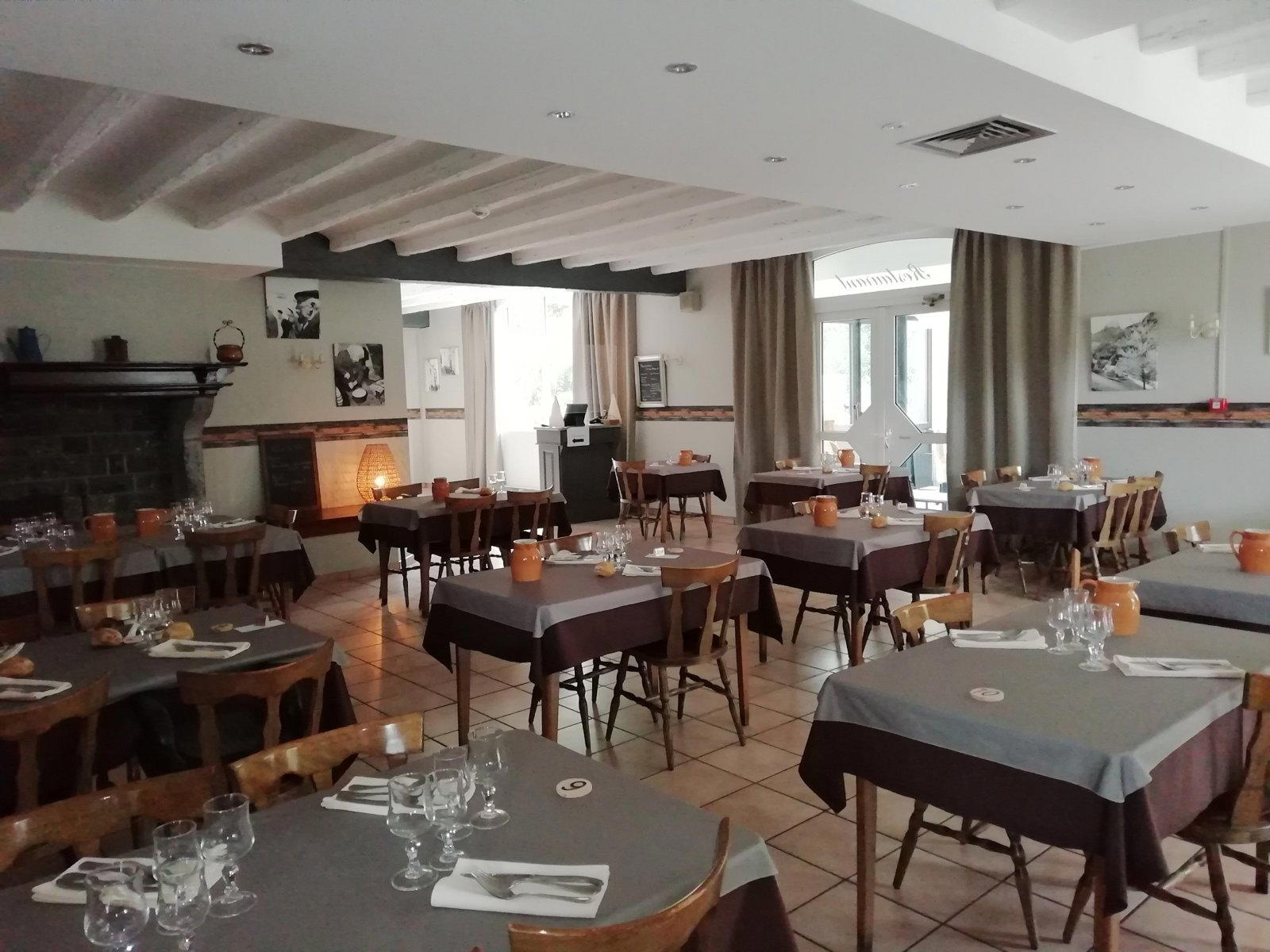
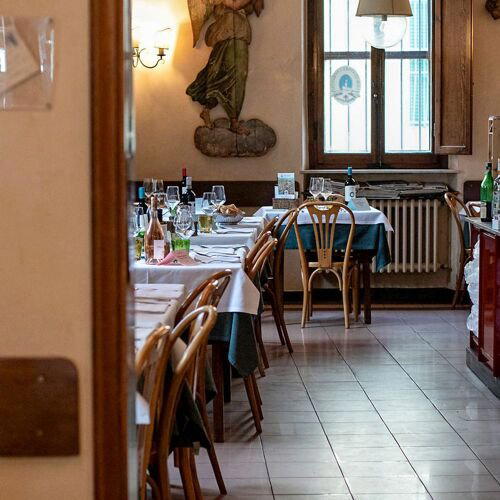
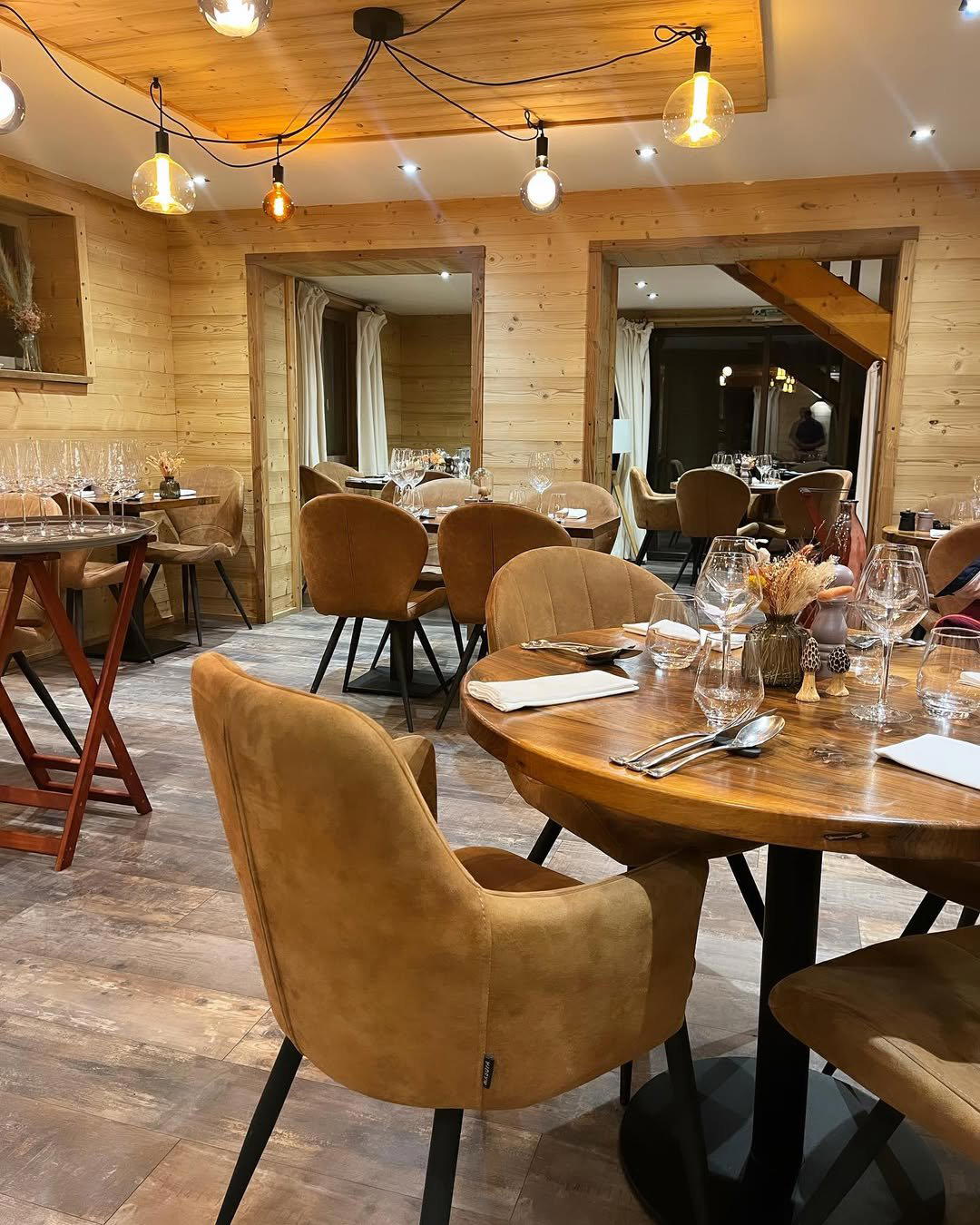
Agos-Vidalos sits in a small valley commune between Lourdes and Argelès-Gazost, and the dining register in this part of the Hautes-Pyrénées reflects that setting: auberge-style, grounded, and oriented around the produce of the surrounding hills rather than gastronomic theatre. Expect a room that prioritises the plate over the décor, in line with the regional tradition of the Hautes-Pyrénées.
Is Chez Pierre d'Agos worth a detour from Lourdes or Argelès-Gazost?
Agos-Vidalos sits roughly midway between Lourdes to the north and Argelès-Gazost to the south along the Lavedan valley, making Chez Pierre d'Agos a practical stop rather than a dedicated detour for travellers already moving through the Hautes-Pyrénées. The auberge tradition in this part of Occitanie has historically served the surrounding villages rather than drawing destination diners, which keeps it off the radar of most regional guides. For those already in the valley, the address at 5 Avenue du Lavedan is worth investigating.
What's the must-try dish at Chez Pierre d'Agos?
What the Hautes-Pyrénées auberge tradition reliably produces is cooking shaped by valley sourcing: local lamb, mountain-grazed dairy, and seasonal produce from the Lavedan corridor. The kitchen's focus, based on regional context, is likely to track that lineage.
Where is Chez Pierre d'Agos located?
Chez Pierre d'Agos is located at 5 Av. du Lavedan, 65400 Agos-Vidalos, France, Agos Vidalos.
How far ahead should I plan for Chez Pierre d'Agos?
For a small-commune auberge in the Hautes-Pyrénées, particularly during summer hiking season and the Lourdes pilgrimage period, contacting the venue at 5 Avenue du Lavedan well in advance is advisable. Arriving without a reservation in peak months carries real risk at restaurants of this scale.
What's the defining dish or idea at Chez Pierre d'Agos?
The defining idea at an address like Chez Pierre d'Agos, positioned in a valley commune between Lourdes and Argelès-Gazost, is auberge cooking anchored to its immediate geography. In the Hautes-Pyrénées, that means sourcing from the surrounding land takes precedence over menu architecture or technique signalling. The kitchen operates within a tradition where place does most of the editorial work.
| Venue | Cuisine | Price | Awards | Notes |
|---|---|---|---|---|
| Chez Pierre d'AgosThis venue (the venue you are viewing) | Traditional French Regional | $30–50 | Not listed | Not listed |
| Mirazur | Modern French Fine Dining | $300–500 | 3 Michelin Stars · World's 50 Best #1 | Modern French, Creative |
| Alléno Paris au Pavillon Ledoyen | Modern French Fine Dining | $150–200 | 3 Michelin Stars · World's 50 Best #79 | Creative |
| Kei | Modern French with Japanese Influences | $300–500 | 3 Michelin Stars · World's 50 Best #93 | Contemporary French, Modern Cuisine |
| L'Ambroisie | Classic French Haute Cuisine | $300–500 | 2 Michelin Stars · World's 50 Best #23 | French, Classic Cuisine |
| Le Cinq - Four Seasons Hôtel George V | Modern French Fine Dining | $300–500 | 3 Michelin Stars · World's 50 Best #24 | French, Modern Cuisine |
Continue exploring
More in Agos Vidalos
Details
- Rustic
- Classic
- Family
- Group Dining
- Celebration
- Terrace
- Local Sourcing
- Mountain
- A La Carte
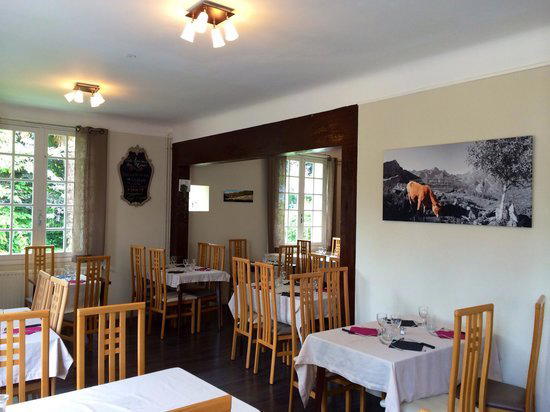
Chaleureux et convivial with attentive service, tablecloths, and a bright, spacious dining room.