Cajun Boil
Our verdict
On West Flagler Street in Miami's western sprawl, Cajun Boil sits inside a dining tradition that has found unlikely traction in South Florida: the communal seafood boil, served in plastic bags, eaten with your hands, and priced for neighbourhood regulars rather than Design District tourists. It is casual, direct, and rooted in a Gulf Coast format that Miami has absorbed and made its own.

Pearl is the En Primeur Club membership app, where members save venues, book tables and use the concierge.
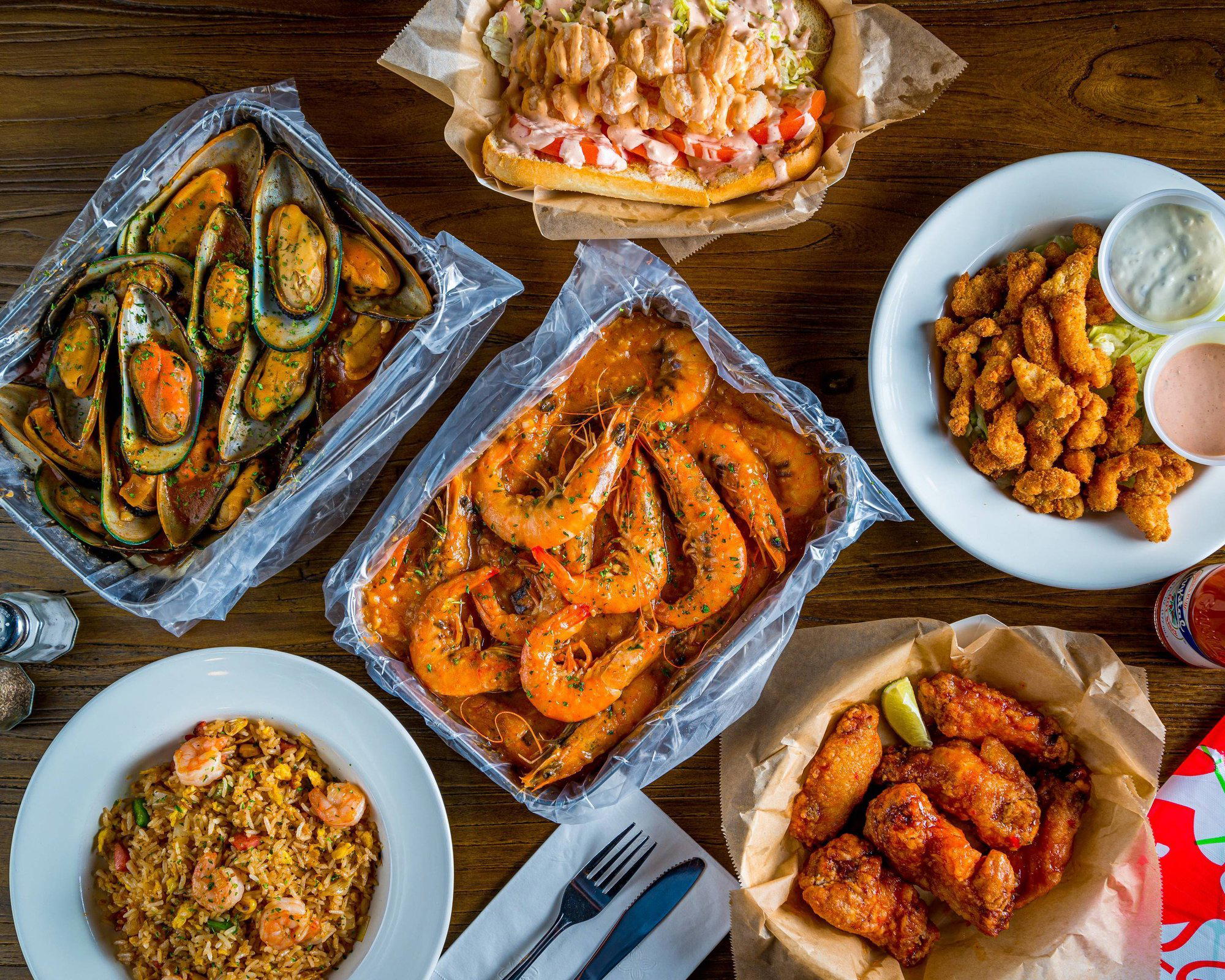
The menu
What to order
- Comprehensive Sauce seafood boil
- Snow crab
- Head-on shrimp
- Frog legs
West Flagler and the Seafood Boil Circuit
West Flagler Street runs through one of Miami's densest working corridors, a stretch defined less by destination dining than by the kind of everyday eating that sustains a neighbourhood. The Cajun seafood boil format arrived in South Florida via Houston and New Orleans, carried along by the same Gulf Coast culinary migration that shaped the region's taste for bold spice, communal eating, and shellfish sold by the pound. Cajun Boil Flagler St sits inside that tradition at 10162 W Flagler St, drawing from a local customer base rather than from the hotel concierge circuit that feeds venues closer to Brickell or South Beach.
The format itself has undergone a visible evolution across American cities over the past decade. What began as a niche Vietnamese-Cajun hybrid in New Orleans and Houston, a style that combined Southeast Asian spice blends with Gulf Coast boiling technique, has since split into two distinct tiers. One tier moved upmarket, with white tablecloths, wine lists, and price points that rival a mid-range tasting menu. The other stayed close to its origins: plastic bags, communal tables, and a direct pound-by-pound pricing structure. West Flagler is not Michelin territory; it is the latter tier, and that is its purpose.
How the Format Has Shifted in Miami
Miami's seafood boil scene has tracked the same evolution happening in Atlanta, Houston, and Las Vegas, with one local inflection: a Cuban and Caribbean seasoning sensibility that edges into some kitchens alongside the standard Cajun-Old Bay axis. The broader Miami dining conversation tends to centre on the restaurants making national lists, places like ITAMAE for its Peruvian-Japanese counter work, or Boia De for the kind of Italian-inflected contemporary cooking that wins critics over. Cote Miami operates at the premium Korean steakhouse tier, and Ariete anchors Coconut Grove with a serious modern American program.
None of that is the competitive set for a West Flagler seafood boil. Its peers are the other boil houses scattered across Miami-Dade, the format multiplied quickly here after 2015, with new operations opening in Kendall, Hialeah, and along Calle Ocho. The question for any individual boil house is whether it has refined its spice blend, its shellfish sourcing, and its value proposition enough to hold a neighbourhood's loyalty as competition thickens. That is a different kind of pressure than chasing a Michelin Bib Gourmand, but it is pressure nonetheless.
The Boil Tradition and What It Demands
The communal seafood boil carries specific technical requirements that are easy to underestimate from the outside. The cooking liquid, the boil itself, needs to be built and maintained, with spice levels that hold across a full service. Shellfish timing matters: overcooked shrimp and crab are the most common failures in the format, and they are immediately apparent to anyone eating at the table. Accompaniments like corn, sausage, and potatoes absorb the seasoning differently than the protein, and the better operations understand that the bag is a unified dish, not an assembly of separate components.
Nationally, the boil format has produced some genuinely serious restaurants. Emeril's in New Orleans operates in the same Gulf Coast culinary lineage, though at a very different price point and formality level. The comparison is instructive: Gulf Coast seafood traditions support everything from white-tablecloth fine dining to the plastic-bib casual format, and both have legitimate claims on the tradition. What distinguishes the casual tier is not lesser ambition so much as a different audience contract, speed, value, and the kind of ease that comes from eating with your hands at a table covered in paper.
For readers more familiar with the fine dining end of the American spectrum, The French Laundry in Napa, Le Bernardin in New York, or Providence in Los Angeles, a West Flagler boil house represents the opposite end of a very long spectrum. That is not a criticism. The spectrum exists because different dining needs are real, and a neighbourhood seafood boil serves purposes that a tasting menu never will.
Where West Flagler Fits in Miami's Wider Map
Miami's dining geography is more stratified than its reputation suggests. The Design District and Brickell draw most of the press, but the city's western municipalities, the areas that run out along Flagler toward the Tamiami Trail, operate as a largely self-contained dining economy. Residents here eat out frequently and locally; the restaurant turnover in these corridors reflects real competitive pressure rather than tourist-driven churn. A seafood boil operation on this stretch needs to earn repeat business from people who live within a few miles, not from visitors checking items off a list.
That reality shapes everything from portion size to price sensitivity to how a kitchen calibrates its heat levels. A tourist-facing boil house can afford to err on the mild side. A neighbourhood operation on West Flagler cannot; its regulars know exactly what they want and will notice when a spice blend is diluted or a shellfish order is short-weighted.
For context on Miami's broader dining range, our full Miami restaurants guide maps the city across price tiers and neighbourhoods. Those looking for the premium end of Miami's seafood tradition might also consider L'Atelier de Joël Robuchon Miami, which operates at a fundamentally different register but draws on the same coastal proximity.
Frequently asked questions
What part of town is Cajun Boil Flagler St in?
Cajun Boil Flagler St is located at 10162 W Flagler St, Miami, FL 33174, Miami.
What's the best thing to order at Cajun Boil Flagler St?
In the Cajun seafood boil format, shrimp, crab legs, and crawfish are the structural anchors of any order, typically sold by weight and served in spiced boiling liquid. Corn and potatoes are the standard accompaniment. Spice level selection is the most consequential decision most diners make at a boil house.
What is Cajun Boil Flagler St known for?
The operation sits within the Cajun-style communal seafood boil format that spread across American cities from Gulf Coast and Vietnamese-Cajun origins over the past decade. On West Flagler Street in Miami, it serves a corridor defined by working-class Cuban and Central American residential density rather than destination dining. That neighbourhood context shapes the format: high-volume, informal, and built around group eating.
What if I have allergies at Cajun Boil Flagler St?
Shellfish is the central ingredient in the Cajun boil format, making it categorically unsuitable for crustacean or shellfish allergies. Cross-contamination risk is high given the shared cooking liquid. Anyone with a serious allergy should check the venue's official channels before visiting.
Price Lens
Comparable venues nearby, for context on price, style, and recognition.
| Venue | Cuisine | Price | Notes |
|---|---|---|---|
| Cajun Boil Flagler StThis venue (the venue you are viewing) | Cajun Seafood Boil | $30–50 | Not listed |
| Cane Fire Grille | Caribbean-Latin Fusion Grill | Not listed | Flagami, Caribbean-Latin Fusion Grill |
| Grand Cafe Aventura | Kosher European Cafe | $20–30 | Aventura, Kosher European Cafe |
| Selva Negra Restaurant | Authentic Nicaraguan | $20–30 | Sweetwater, Authentic Nicaraguan |
| Aiko and Mumu | Japanese Sando & Sushi / Asian Fusion Bistro | $20–30 | Ocean View Heights, Japanese Sando & Sushi / Asian Fusion Bistro |
| LeKoke Wine and Bites | Spanish Tapas and Wine | Not listed | Little Havana, Spanish Tapas and Wine |
Continue exploring
More in Miami
Restaurants in Miami
All restaurants in Miami →
Bars in Miami
All bars in Miami →
Details
- Lively
- Energetic
- Group Dining
- Family
- Casual Hangout
- Late Night
- Open Kitchen
- Beer Program
- A La Carte
Current opening hours
- Monday
- 12–10 PM
- Tuesday
- 12–10 PM
- Wednesday
- 12–10 PM
- Thursday
- 12–10 PM
- Friday
- 12–10:30 PM
- Saturday
- 12–10:30 PM
- Sunday
- 12–10 PM
Hours can change for holidays and private events. Hours as of .
Electric and energetic atmosphere with upbeat music, cold air conditioning, and casual dining focused on shared seafood boils.