.png)
A Michelin Plate-recognised farm-to-table address on Niedergösgen's main street, Brücke sits at the accessible end of Switzerland's farm-sourced dining spectrum without sacrificing the seasonal discipline that earns it repeated Michelin attention. With a 4.7 Google rating across 300 reviews and a Star Wine List white-star recognition for its cellar, this is a mid-price restaurant that punches beyond its category.
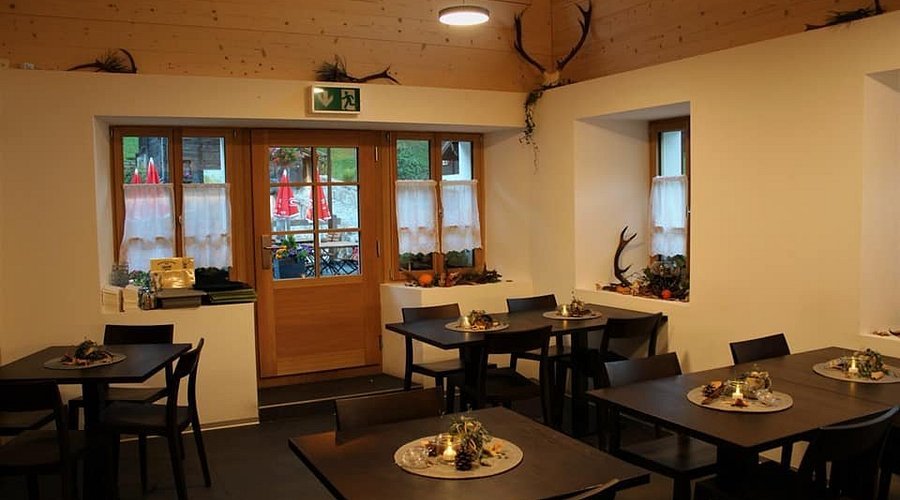
Where the Aare Valley Feeds the Kitchen
There is a particular rhythm to small-town Swiss dining that urban restaurant culture tends to overlook. In a village like Niedergösgen, a municipality in the canton of Solothurn where the Aare curves through agricultural flatlands, the relationship between kitchen and surrounding farmland is not a positioning statement — it is a practical reality. Brücke, on Hauptstrasse 2, sits inside that tradition. The address is the main street of a town most Swiss food travellers pass through rather than stop in, and that is precisely where its interest lies.
Approaching the building, you are in the company of the working Swiss countryside rather than a postcard-ready Alpine backdrop. There are no cable cars or lake panoramas framing the entrance. What there is, in the canton of Solothurn, is some of the most productive agricultural land in the Swiss Mittelland: market gardens, orchards, and small producers whose output stays local because the distances are short. For a farm-to-table kitchen, that geography is an advantage that no amount of urban restaurant design can replicate.
Farm-to-Table in a Region That Does Not Need to Perform It
Farm-to-table as a dining category has split in two directions. In major cities — Geneva, Zurich, Basel , it has become a branding register, a way of signalling values on a menu cover regardless of how far the produce actually travelled. In Switzerland's smaller towns and rural communes, the concept requires less performance because the supply chain is short by default. Niedergösgen sits in that second camp. Restaurants here source regionally because regional suppliers are close, available, and often better value than centralised wholesale networks.
Brücke operates within this framework. The cuisine type is farm-to-table, and at the €€ price tier, that means the sourcing discipline has to be built into the margin rather than passed to the diner through a premium cover charge. That is a different constraint than the one faced by, say, Schloss Schauenstein in Fürstenau or focus ATELIER in Vitznau, both of which operate at €€€€ and can absorb higher per-ingredient costs within tasting-menu formats. At Brücke, the farm connection has to work economically, which typically means direct supplier relationships, reduced waste through whole-animal or whole-vegetable cooking, and menus that bend to what is available rather than what a fixed concept demands.
For diners who have eaten their way through Switzerland's Michelin-starred tier , addresses like Memories in Bad Ragaz, Cheval Blanc by Peter Knogl in Basel, or Hotel de Ville Crissier in Crissier , Brücke represents a different argument: that ingredient-led cooking does not require a four-figure tasting menu to be taken seriously.
What the Awards Signal
Brücke has held the Michelin Plate in both 2024 and 2025. The Plate sits below the star rankings but is a deliberate Michelin designation, not an absence of recognition. It marks restaurants where the inspectors found cooking that is good and consistent, even if the cuisine or format does not match the criteria that push a restaurant into star territory. For a village restaurant at the €€ price point, consecutive Michelin Plates indicate that the kitchen's standards are holding across seasons and years rather than catching an inspector on a single good evening.
The Star Wine List White Star recognition, published December 2021, adds a separate credential. Star Wine List evaluates wine programmes specifically, and a White Star indicates a list that meets their editorial threshold for quality and curation. At a mid-range Swiss restaurant, a wine programme strong enough to earn external recognition suggests the owners are treating the cellar as a serious component of the offering, not an afterthought. Switzerland's own wine production , dominated by Chasselas in the Vaud, Pinot Noir in the German-speaking cantons, and Merlot in the Ticino , gives a well-curated Swiss restaurant cellar interesting domestic options that remain largely invisible to international audiences. Whether Brücke's list leans into Swiss regional production or broader European selection is not confirmed in available data, but the recognition itself signals ambition at the wine programme level.
The Google rating of 4.7 across 300 reviews adds a third signal. That volume at that score is meaningful: it is not a small sample of enthusiastic regulars but a broad public record that has held across enough visits to be representative. For comparison with the wider Swiss farm-to-table category, see Au Gré du Vent in Seneffe and BOK Restaurant in Münster as addresses working in a comparable genre with their own regional contexts.
Placing Brücke in Switzerland's Broader Dining Map
Switzerland's restaurant scene is often discussed through its concentration of Michelin stars per capita, which is among the highest in Europe. The attention falls on the three-star tier: Schauenstein, Memories, and the urban flagships. Below that, the two-star addresses , IGNIV Zürich by Andreas Caminada, Einstein Gourmet in Sankt Gallen, Da Vittorio in St. Moritz , draw a destination dining audience. What gets less coverage is the layer of regionally serious restaurants operating outside the star system and outside the major cities, where the cooking is grounded in local supply and the prices are accessible to a regular dining frequency rather than a special-occasion budget.
Brücke sits in that layer. The Solothurn canton, which rarely appears in international food press, has its own agricultural identity that supports this kind of restaurant. Visitors travelling between Basel and Zurich along the A1 corridor, or exploring the Aare valley on the slower cantonal roads, are in the vicinity of exactly this kind of mid-market, ingredient-serious dining. The restaurant's position on the main street of Niedergösgen makes it accessible without requiring a dedicated detour from either city.
For planning purposes: the address is Hauptstrasse 2, 5013 Niedergösgen. Niedergösgen has a train station on the regional rail network connecting Aarau and Olten, both of which have fast intercity connections to Zurich and Basel, making the restaurant reachable without a car if the schedule aligns. No booking method, hours, or current pricing is confirmed in available data, so direct contact with the restaurant before visiting is advisable. For context on Niedergösgen's broader food and drink offering, our full Niedergösgen restaurants guide covers the local picture, with additional entries in our bars guide, hotels guide, wineries guide, and experiences guide for the area. For similar farm-sourced cooking in a larger Swiss city context, Colonnade in Lucerne and L'Atelier Robuchon in Geneva represent different points on the spectrum.
Frequently Asked Questions
- Is Brücke good for families?
- At the €€ price range, Brücke sits well within the budget for a family meal by Swiss dining standards, where mid-range restaurants typically offer better value than the major urban centres. Niedergösgen is a small, quiet town rather than a tourist destination, which tends to mean a relaxed atmosphere without the pace pressure of a city restaurant. That said, specific details on children's menus or seating arrangements are not confirmed in available data, so it is worth contacting the restaurant directly before booking with young children.
- What's the overall feel of Brücke?
- The combination of a €€ price point, a village main-street address, and consecutive Michelin Plate recognition points to a kitchen that takes its cooking seriously without the formality of a destination fine-dining room. Star Wine List recognition for the wine programme suggests more care at the cellar level than you would typically expect at this price tier in a small Swiss town. The 4.7 Google score across 300 reviews indicates a loyal, broadly satisfied regular clientele rather than a niche audience of food enthusiasts.
- What do people recommend at Brücke?
- The farm-to-table format and the seasonal discipline of that cuisine type suggest the strongest choices will follow what is fresh and local at the time of your visit rather than fixed signature dishes. No specific dishes are confirmed in available data. Given the Michelin Plate recognition in both 2024 and 2025, the safest approach is to follow the kitchen's current recommendations and any seasonal specials, which in a farm-sourced restaurant reflect what the kitchen has chosen to work with rather than what is merely available.
Need a table?
Our members enjoy priority alerts and concierge-led booking support for the world's most difficult tables.
Access the Concierge