Bistrot le Héron

Michelin Plate
Our verdict
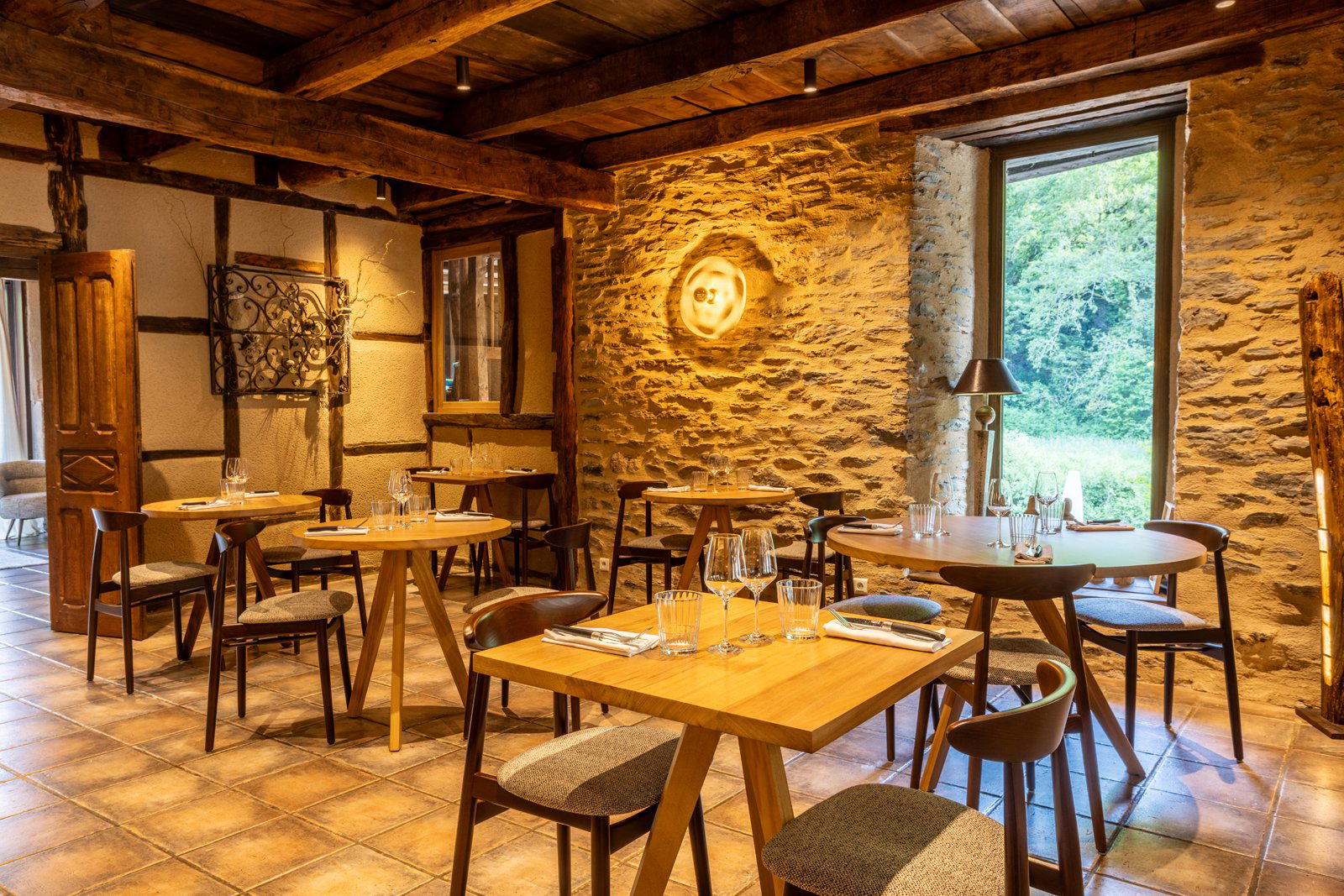
The bistronomy sibling of the Michelin-starred Moulin de Cambelong, Bistrot le Héron occupies a former mill at the foot of Conques-en-Rouergue, one of France's most architecturally intact medieval villages. The cooking is grounded in Aveyron produce and seasonal rhythm, offering a lower-barrier entry point to the same kitchen philosophy without sacrificing seriousness of ingredient or technique.

Pearl is the En Primeur Club membership app, where members save venues, book tables and use the concierge.
The menu
What to order
- Velouté de cèpes œuf parfait
- Sole meunière
- Saint-Jacques
- Carpaccio de poulpe et asperges vertes
A Mill, a Village, and the Produce of the Aveyron
Conques-en-Rouergue sits in a fold of the Dourdou valley in southern Aveyron, its Romanesque abbey and Pierre Soulages-designed stained-glass windows drawing visitors who might otherwise pass through the Massif Central without stopping. The village is classified among France's most beautiful, and the Moulin de Cambelong at its foot, a restored mill complex at 61 lieu-dit Cambelong, houses two distinct dining propositions under the same roof. One is Émilie & Thomas's Michelin-starred restaurant; the other is Bistrot le Héron, a deliberately unpretentious format that draws on the same supply chain and kitchen sensibility at a more accessible register.
The approach at the bistrot level reflects something broader in how serious French kitchens have reorganised themselves over the past decade. Where starred restaurants once stood alone, many now operate a second room or adjoining space designed to capture the ingredient sourcing and culinary discipline of the main kitchen without the ceremony or price architecture. Bistrot le Héron belongs firmly to that model, and in the context of rural Aveyron, the decision carries particular weight. This is a region where the raw material, lamb, pork, river fish, wild herbs, summer vegetables, is already at an exceptionally high starting point.
What Aveyron Produce Means on the Plate
Aveyron has a specific agricultural identity that shapes what ends up in a kitchen like this one. The département is the second-largest in France by surface area and among the least densely populated, conditions that have preserved small-scale farming, transhumance grazing, and market-garden traditions that more urbanised regions largely lost in the second half of the twentieth century. Laguiole beef, Lacaune charcuterie, and the herb-covered plateaux of the Aubrac are all within range of Conques. Sourcing locally here is not a marketing decision but a geographic reality.
The dishes documented from Bistrot le Héron, tomato gazpacho with mussels and vierge vinaigrette; pulled pork with sorrel sauce, reflect this context directly. The gazpacho format, a cold tomato-based preparation sharpened with vinaigrette and opened up with shellfish, speaks to summer abundance and the kind of vegetable quality that makes a simple preparation worth ordering. Sorrel, one of the great under-appreciated French kitchen herbs, grows readily in this part of the country and brings an acidity to pork that cuts through fat without requiring wine or citrus. These are not clever constructions. They are dishes that begin with a strong ingredient and ask relatively little of it.
That restraint is the point. The bistronomy format, which emerged in Paris in the 1990s as a reaction against the cost and formality of haute cuisine, has found natural ground in rural settings where the produce requires less intervention to be compelling. Restaurants like Bras in Laguiole, just over an hour north of Conques, built their entire identity on the idea that Aubrac's landscape could be translated directly into a plate. Bistrot le Héron operates in a different register but draws on the same regional logic: the Aveyron provides; the kitchen edits.
Where It Sits in the French Bistronomy Spectrum
The French dining scene has spent the better part of twenty years stratifying itself more finely. At one end are the palace restaurants, Alléno Paris au Pavillon Ledoyen, Mirazur in Menton, Assiette Champenoise in Reims, where tasting menus run to dozens of courses and ingredient sourcing is a documented narrative on the plate. At the other are neighbourhood bistrots that may have strong produce but lack the structural rigour of a starred kitchen behind them. The bistronomy tier occupies the middle: it takes the sourcing and technique seriously, keeps the format loose, and prices accordingly.
What distinguishes Bistrot le Héron within that tier is its direct connection to a starred operation in the same building. The credentialed kitchen of Émilie & Thomas acts as a kind of quality anchor, in the same way that certain well-regarded provincial addresses, Auberge de l'Ill in Illhaeusern, Flocons de Sel in Megève, Troisgros in Ouches, maintain a formal dining room alongside more casual spaces that benefit from the same infrastructure. The visitor eating at the bistrot is not eating the starred menu, but they are eating within a system that prioritises ingredient provenance and kitchen discipline.
Planning a Visit
Conques-en-Rouergue is a deliberate destination rather than an incidental stop. It sits roughly equidistant between Rodez to the east and Figeac to the west, accessible by car along the D901 through narrow valley roads that make the approach feel appropriately unhurried. The village draws pilgrims and architecture enthusiasts following the Via Podiensis Camino route, which passes directly through, and its summer season is active enough that booking ahead for both the starred restaurant and the bistrot is advisable. For those planning a wider stay in the area, our Conques-en-Rouergue hotels guide covers accommodation options at the mill and in the village. The full restaurants guide for Conques-en-Rouergue maps the wider dining picture, while bars, wineries, and experiences in the area are covered separately. The bistrot format, with its lower price threshold and less formal atmosphere, suits a lunch stop after a morning walking the village or exploring the abbey's treasury, which holds one of the most complete collections of medieval reliquaries in France.
Frequently asked questions
Is Bistrot le Héron a family-friendly restaurant?
The bistrot's own positioning, described as 'friendly and down-to-earth', suggests an informal register that tends to work well for families. It operates as a relaxed counterpart to the Michelin-starred restaurant at Moulin de Cambelong, which means the format is accessible rather than ceremonial. Dishes like tomato gazpacho and pulled pork with sorrel sauce signal a straightforward, crowd-pleasing menu without the formality of a tasting menu setting.
Is Bistrot le Héron better for a quiet night or a lively one?
The bistrot sits at the foot of Conques-en-Rouergue, a village known more for its Romanesque abbey and Soulages stained-glass windows than for nightlife, so the setting naturally favours a quieter evening. Its role as the casual sibling to a Michelin-starred restaurant points toward convivial rather than loud, the kind of table where conversation carries the room. Visitors specifically travelling to Conques for the heritage and landscape tend to find that register fits the trip.
Does Bistrot le Héron have a Michelin star or similar recognition?
Bistrot le Héron has received recognition including: At the foot of this gorgeous village, known for its abbey church and Pierre Soulages's stained-glass windows, Moulin de Cambelong is home to this bistronomy restaurant, a friendly and down-to-earth alternative to Émilie and Thomas's MICHELI….
What's the signature dish at Bistrot le Héron?
The available menu references include tomato gazpacho with mussels and vierge vinaigrette, and pulled pork with sorrel sauce, the latter an example of the slow-cooked, produce-led cooking the Moulin de Cambelong kitchen is associated with. Both dishes reflect a bistronomy approach: seasonal Aveyron produce prepared with more technique than the price point might imply. For current menu specifics, checking directly with the restaurant before your visit is advisable.
Quick Comparison
Comparable venues nearby, for context on price, style, and recognition.
| Venue | Cuisine | Price | Awards | Notes |
|---|---|---|---|---|
| Bistrot le HéronThis venue (the venue you are viewing) | French Seasonal Bistro | $30–50 | Michelin Plate | Not listed |
| Émilie & Thomas - Moulin de Cambelong | French Gastronomic Cuisine d'Instinct | $100–150 | 1 Michelin Star | Conques-en-Rouergue |
| Le Chou Rouge - Le Petit Chou | French Bistro | Not listed | Michelin Plate | centre-ville |
| L’aventure | French Mountain Grill | $30–50 | Not listed | Oz en Oisans |
| Café Bras | Modern French Bistro | $30–50 | Michelin Plate | Jardin du Foirail |
| Cascade | Modern French Bistro | $30–50 | Michelin Plate | Salles-la-Source |
Recognition history
Dated appearances from independent guides and award organizations, with the underlying list record or original source where available.
Michelin Plate
Michelin · 2026 Michelin Plate
Full recognition history (2 entries)
Michelin Bib Gourmand
Michelin
Continue exploring
More in Conques-en-Rouergue



Details
- Rustic
- Cozy
- Scenic
- Quiet
- Intimate
- Casual Hangout
- Group Dining
- Family
- Private Event
- Waterfront
- Terrace
- Garden
- Historic Building
- Private Dining
- Farm To Table
- Local Sourcing
- Waterfront
- Garden
- A La Carte
- Set Menu
- Wine
- Vegetarian Friendly
Peaceful and authentic atmosphere in a converted mill setting with natural stone and schist architecture; dining on terraces overlooking the river or in a small intimate salon with contemporary comfort blended with authentic charm.