Au Grès du Marché
.png)
Au Grès du Marché holds a Michelin Plate (2024) and a 4.8 Google rating from 46 reviews, placing it among the more carefully regarded tables in the Northern Vosges. Sitting on Rue du Château in the medieval village of La Petite-Pierre, it serves traditional French cuisine at a mid-range price point that is notably accessible for recognized cooking of this calibre.
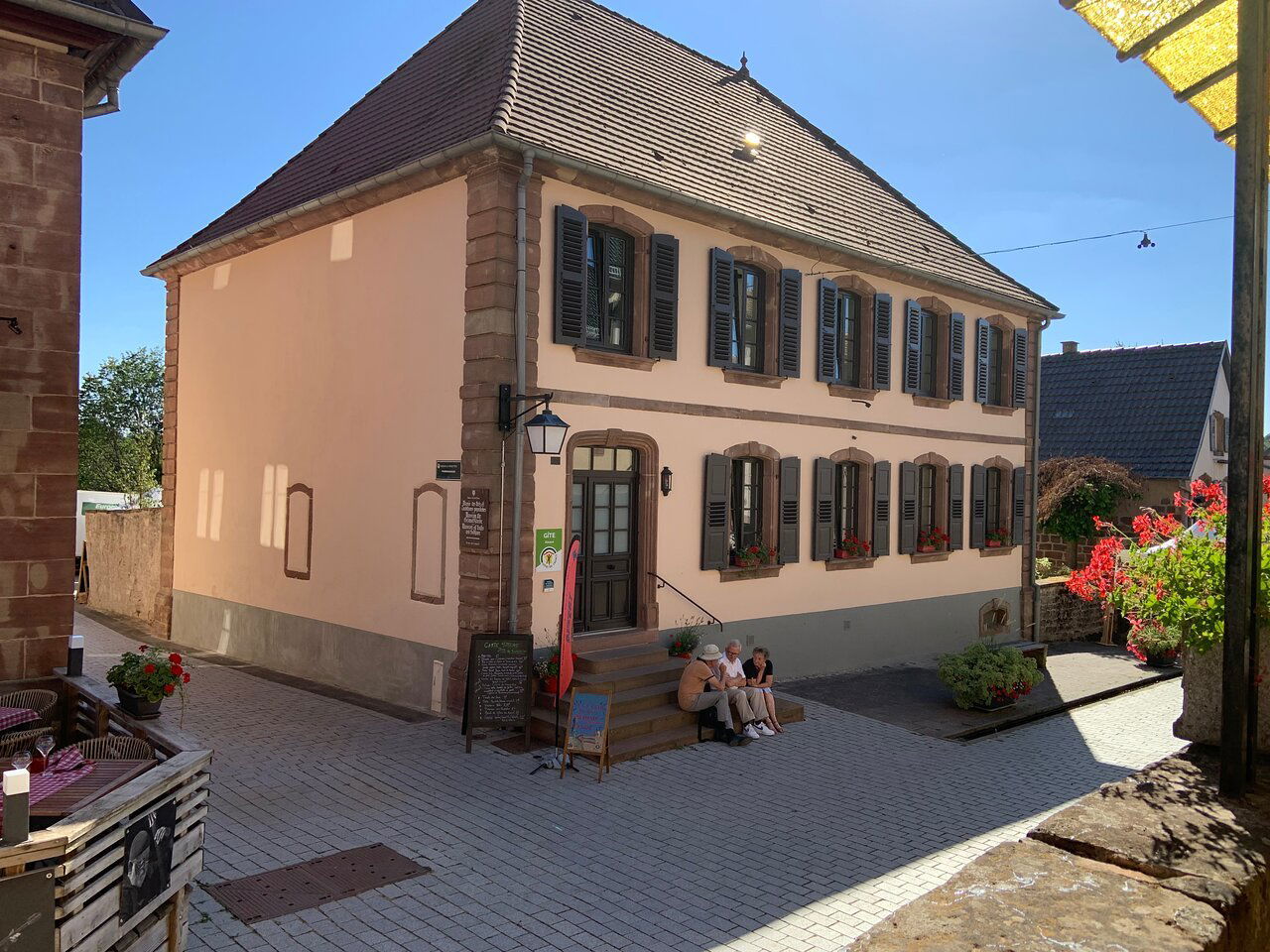
A Medieval Village and What It Asks of Its Cooks
La Petite-Pierre sits inside the Northern Vosges Regional Nature Park, a protected zone of sandstone ridges, dense forest, and small agricultural settlements that have supplied Alsatian kitchens for centuries. The village itself is compact enough that Rue du Château — the address of Au Grès du Marché — runs within a short walk of the medieval ramparts. Arriving on foot from the upper village, you pass stone walls and half-timbered facades before reaching a dining room that reads less like a destination restaurant and more like the kind of place the surrounding countryside quietly built over time. That distinction matters when thinking about what the kitchen does and why it works.
The Michelin Plate awarded in 2024 signals cooking that merits attention without the architectural complexity of the starred tier. In a region where Auberge de l'Ill in Illhaeusern has carried three Michelin stars for decades and where Au Crocodile in Strasbourg anchors the city's haute cuisine offer, the Plate category in a village setting represents something different: recognition that the food is honest, well-executed, and worth a detour rather than a culinary expedition. For a table priced at the €€ level, that credential shifts the value equation considerably.
What the Northern Vosges Puts on the Plate
Traditional French cuisine in Alsace draws from a larder that is both forest-driven and border-inflected. The region's position between French and Germanic culinary cultures produces a repertoire that includes freshwater fish from river systems running through the Vosges, game from forests that cover a significant portion of the park's 130,000 hectares, foraged mushrooms in autumn, and farmed produce from valley floors that benefit from a relatively dry microclimate compared to the western face of the range.
This ingredient geography shapes what a kitchen committed to traditional cuisine in this area can reasonably put forward. Markets in the Northern Vosges operate on a seasonal rhythm tied to what the forest and valley floor actually produce, not what the wholesale supply chain can deliver year-round. Restaurants that take the designation "traditional cuisine" seriously in this context are making a claim about sourcing as much as about technique , they are saying that the menu follows the calendar of the park rather than the convenience of a catalogue. Au Grès du Marché's name itself gestures toward that position: "au gré du marché" translates loosely as "according to the market" or "as the market dictates," which in a village this size means seasonal and local rather than fixed and predictable.
This approach positions the restaurant inside a broader French tradition of market-driven cooking that runs from Bras in Laguiole , where the plateau's herbs and grasses inform every plate , to village auberges throughout rural France where the week's menu depends on what arrived at the producer's gate that morning. At the three-star level, venues like Mirazur in Menton and Flocons de Sel in Megève have made ingredient provenance a central editorial statement. In a smaller village at a mid-range price point, the same instinct produces a quieter, less theatrical expression of the same principle.
Reading the Room: Where This Table Sits
A Google rating of 4.8 from 46 reviews, combined with a 2024 Michelin Plate, indicates a kitchen that has earned consistent approval from both the guide's inspectors and the dining public. At the €€ price tier, the competitive comparison is not Alléno Paris au Pavillon Ledoyen or Assiette Champenoise in Reims , it is the range of village restaurants and auberges that populate the Northern Vosges without any third-party recognition at all. Against that peer set, the Michelin acknowledgement marks a meaningful separation. For visitors to the park who want cooking that reflects the region's ingredient culture without committing to a grand tasting menu, the calculus here is direct.
Comparable village-scale traditional French tables recognized by Michelin at the Plate or Bib level include Auberge Grand'Maison in Mûr-de-Bretagne, which operates in a similarly rural context in Brittany. What they share is a format in which the restaurant functions as a serious expression of its immediate geography rather than a destination built to receive outside attention. Both operate at a price point that reflects the local economy rather than the international visitor market.
Planning a Visit
La Petite-Pierre is approximately 60 kilometres northwest of Strasbourg, accessible by car through the Vosges foothills. The village draws visitors throughout the year for hiking within the nature park, making weekends in spring and autumn the most active booking periods for restaurants in the area. Reservations for Au Grès du Marché are advisable on those weekends, particularly in October when autumn foliage and game-season menus bring more visitors into the park than summer does in some years. The €€ price bracket means a full dinner with wine sits comfortably below what comparable Michelin-recognized cooking commands in Strasbourg or Colmar. Those extending a stay in the region will find context for the broader dining scene in our full La Petite-Pierre restaurants guide, alongside recommendations for accommodation in our La Petite-Pierre hotels guide, bars in our La Petite-Pierre bars guide, wineries in our La Petite-Pierre wineries guide, and activities in our La Petite-Pierre experiences guide.
Those building a wider Alsace or eastern France itinerary can calibrate expectations by looking at what the region's more ambitious restaurants offer: Auberge du Vieux Puits in Fontjoncouse provides a useful point of comparison for remote village restaurants that have achieved starred recognition, while AM par Alexandre Mazzia in Marseille and Paul Bocuse - L'Auberge du Pont de Collonges in Collonges-au-Mont-d'Or show how different registers of French cooking operate at three-star level. For a cross-border perspective on traditional cuisine at a similar price and ambition tier, Auga in Gijón represents the northern Spanish equivalent of market-anchored regional cooking. And Troisgros - Le Bois sans Feuilles in Ouches illustrates how deep a French regional restaurant can go when it commits fully to its agricultural surroundings over multiple generations.
Frequently Asked Questions
- What do people recommend at Au Grès du Marché?
- The kitchen operates within a traditional French cuisine framework shaped by the Northern Vosges larder, so dishes tend to follow seasonal availability rather than a fixed signature. The 2024 Michelin Plate and a 4.8 Google rating suggest the cooking is consistently well-executed across the menu. In autumn, game and foraged ingredients are the most regionally specific choices; in other seasons, freshwater fish and local produce from the valley floor are characteristic of what this part of Alsace does well. Given the market-driven premise of the name, asking the room what has arrived recently is a reasonable approach.
- Is Au Grès du Marché better for a quiet night or a lively one?
- La Petite-Pierre is a small village within a protected nature park rather than a city dining destination, and restaurants here tend to operate at a measured pace regardless of the calendar. At the €€ price level and with fewer than fifty public reviews, the room is more likely to suit a relaxed evening than a high-energy one. That positioning is consistent with how Michelin Plate recognition functions in rural settings across France: it marks attentive, unhurried cooking rather than theatrical production. For visitors seeking a livelier scene, Strasbourg, roughly an hour's drive east, offers a broader range of options.
- Can I bring kids to Au Grès du Marché?
- The price tier and traditional cuisine format in a village context typically signal a family-compatible environment rather than an exclusively adult one. At the €€ level in rural Alsace, restaurants of this type generally accommodate children without ceremony. That said, specific policies on children's menus or seating are not confirmed in available data, so contacting the restaurant directly before visiting with young children is the practical approach, particularly for weekend evenings during peak park-visit seasons.
Need a table?
Our members enjoy priority alerts and concierge-led booking support for the world's most difficult tables.
Access the Concierge