Aquamarin Restaurant sits at Prinzregentenplatz 8 in Munich's Bogenhausen district, one of the city's more composed addresses for serious dining. The restaurant places itself within a neighbourhood that has long attracted focused, wine-conscious tables rather than trend-chasing crowds. For visitors working through Munich's finer dining options, it represents a quieter coordinate on a map that includes several Michelin-decorated neighbours.
- Address
- Prinzregentenpl. 8, 81675 München, Germany
- Phone
- +498941619637
- Website
- aquamarin-restaurant.de
- Directions
- Get directions
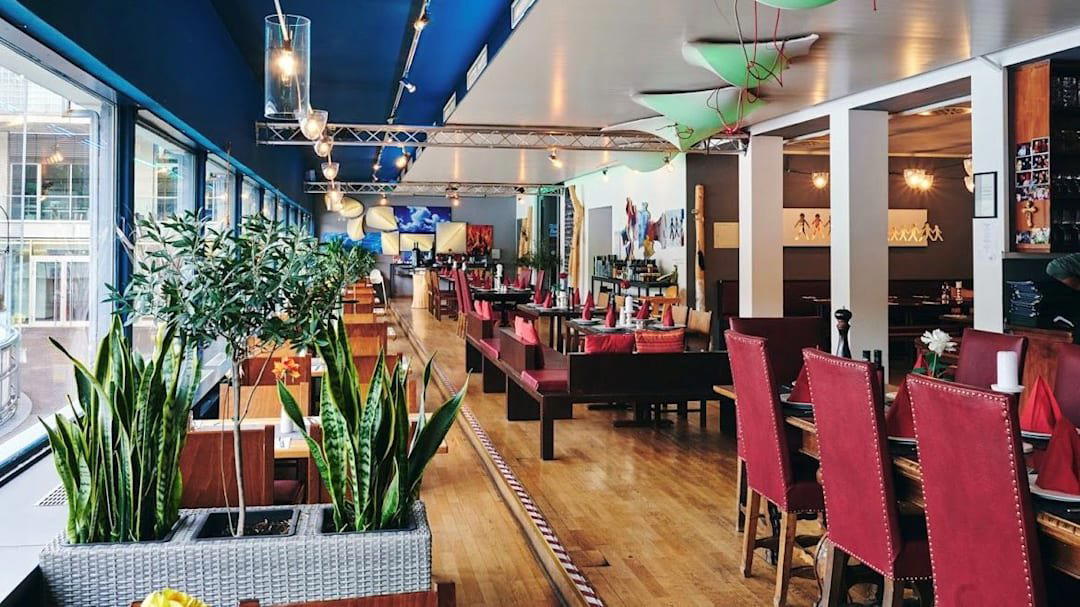
Bogenhausen's Quieter Register
Munich's fine dining conversation tends to open with the same handful of names: Tantris in Schwabing, Atelier inside the Bayerischer Hof, Alois above the Dallmayr delicatessen. These are the obvious anchors. But the city's dining geography extends eastward into Bogenhausen, a residential quarter defined by Gründerzeit apartment blocks, the Prinzregententheater, and a pace that sits several registers below Maximilianstrasse. Prinzregentenplatz, the address where Aquamarin Restaurant is found, carries that character: deliberate, neighbourhood-scaled, not performing for tourists. In a city where several of particularly interesting tables are embedded in residential streets rather than hotel lobbies, that positioning tells you something before you've read a menu.
The Wine Angle in a Beer City
Germany's relationship with wine is more serious than its international reputation suggests, and Munich occupies an interesting position in that story. The city is culturally synonymous with Bavarian beer, yet its restaurant wine lists frequently draw from Germany's top-producing regions, the Mosel, Rheingau, Pfalz, and Nahe, alongside deep pulls from Burgundy, the Rhône, and northern Italy. This dual identity shapes how serious Munich restaurants approach their cellars: the beer culture sets a particular standard for beverage craft, and wine programs at the city's better addresses tend to respond in kind, building lists that reward the kind of attention diners are already trained to give their Kellerbier or Weissbier.
Across Germany's decorated dining rooms, from Aqua in Wolfsburg to Schwarzwaldstube in Baiersbronn and Waldhotel Sonnora in Dreis, the wine list functions as a primary editorial statement about what kind of table the restaurant intends to set. Vendôme in Bergisch Gladbach and Victor's Fine Dining by Christian Bau in Perl have both built reputations in part through cellar depth that matches kitchen ambition. At the level where Aquamarin operates, a Bogenhausen address with a name that signals water, clarity, and a certain cool-toned aesthetic, the expectation is that the glass arrives with the same care as the plate.
Where the Address Places It
Prinzregentenplatz 8 sits within walking distance of the Haus der Kunst and the English Garden's southern boundary, which positions Aquamarin within a cluster of Munich life that tends toward the cultural rather than the commercial. This is not the tourist dining corridor. Diners arriving here are more likely to be Bogenhausen residents, visitors staying east of the Isar, or the kind of traveller who reads a neighbourhood before choosing a restaurant. That self-selecting audience matters for understanding what the room likely demands: consistency over spectacle, a wine list that rewards return visits, and cooking that earns its place in a quarter where locals can be territorial about their regular tables.
Munich's broader dining arc has moved decisively toward technical precision and cross-cultural influence. Tohru in der Schreiberei has built a strong reputation through its German-Japanese register, while JAN operates a creative format with enough discipline to hold serious attention. These are the city's more visible reference points for ambitious cooking. Aquamarin, by contrast, occupies a position where the neighbourhood's residential character likely shapes both the format and the expectation of what an evening looks like.
The German Fine Dining Context
Germany's decorated restaurant scene is geographically dispersed in a way that distinguishes it from France or the United Kingdom, where critical mass concentrates in capital cities. Schanz in Piesport, Bagatelle in Trier, and ES:SENZ in Grassau, which sits in the Bavarian Alps relatively close to Munich, demonstrate how quality distributes across smaller cities and rural settings. Even Restaurant Haerlin in Hamburg operates within a regional logic rather than a national hierarchy. Munich functions as Bavaria's anchor in this dispersed network, carrying enough critical mass to support multiple formats across different price tiers and neighbourhood registers.
What this means in practice: Munich diners are accustomed to measuring a restaurant against national peers, not just local ones. A table at a Bogenhausen address like Aquamarin is evaluated partly against what ES:SENZ is doing an hour south, and partly against what the city's more celebrated rooms deliver. That competitive context, even if informal, raises the floor for what serious restaurants in Munich need to offer.
Cross-Reference: Format and Register
For diners building a longer itinerary, Germany's fine dining geography rewards planning across cities rather than concentrating in one. CODA Dessert Dining in Berlin operates an entirely different format, built around a dessert-led tasting structure that has no real peer in Munich. Internationally, seafood-focused precision rooms like Le Bernardin in New York City or format-driven communal tables like Lazy Bear in San Francisco represent the ends of a spectrum that German fine dining sits somewhere in the middle of: more formal than California's relaxed-luxury approach, less rigidly codified than a three-star Paris institution. Munich's better tables, across all neighbourhoods, tend to occupy that thoughtful middle ground. For a full picture of the city's dining coordinates, the EP Club Munich restaurants guide maps the key addresses by format, price tier, and neighbourhood.
Planning a Visit
Bogenhausen is accessible from central Munich via U-Bahn lines running east from Marienplatz, with Prinzregentenplatz served by the U4 line. The neighbourhood rewards arriving with enough time to walk from the English Garden or down along the Isar, particularly in the warmer months from May through September when the city's outdoor culture is at its most active and evening light lingers until well past eight. For a restaurant visit in this quarter, autumn is worth noting separately: Bogenhausen's tree-lined streets take on a different quality in October, when the crowds of Oktoberfest season have cleared and the neighbourhood settles back into its more composed rhythm.
Comparable Spots
Comparable venues nearby, for context on price, style, and recognition.
| Venue | Cuisine | Price | Notes |
|---|---|---|---|
| Aquamarin RestaurantThis venue — the venue you are viewing | Traditional Greek Mediterranean | $$ | Not listed |
| Yuki Hana | Japanese Sushi | $$ | Lehel |
| LAX Eatery | LA-Inspired Healthy Brunch Cafe | $$ | Schwabing |
| Mr. Gogi-Korean BBQ Restaurant | Korean BBQ | $$ | Schwabing |
| Le Voyage | Authentic Huaiyang Chinese | $$ | Schwabing |
| Take-Don | Japanese Street Food | $$ | Neuhausen |
At a Glance
- Cozy
- Classic
- Family
- Group Dining
- Casual Hangout
- Standalone
- Terrace
- Street Scene
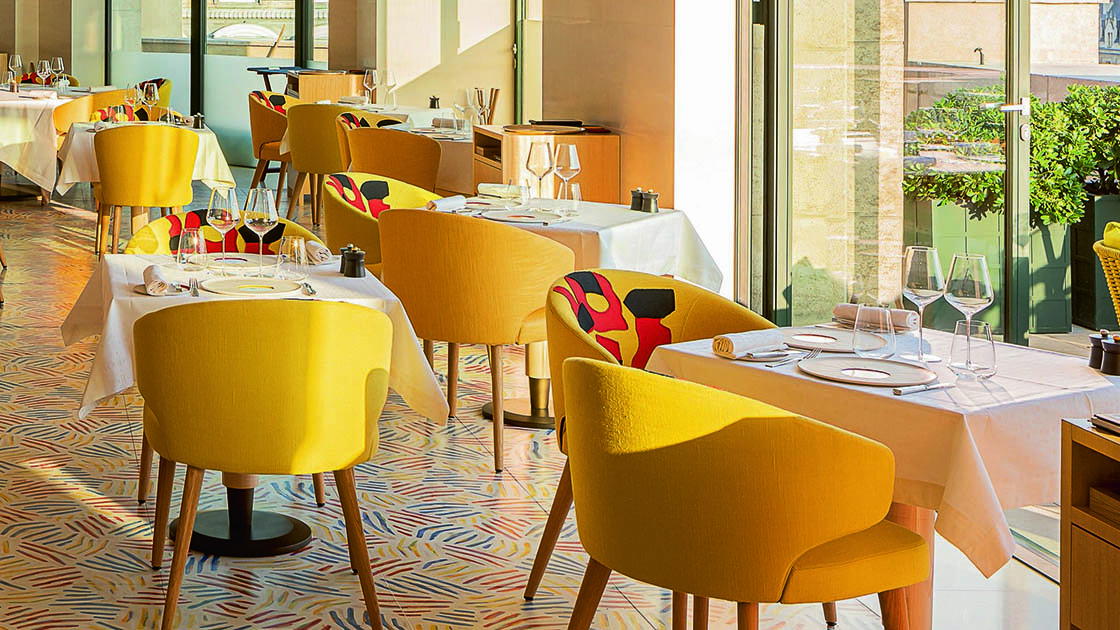
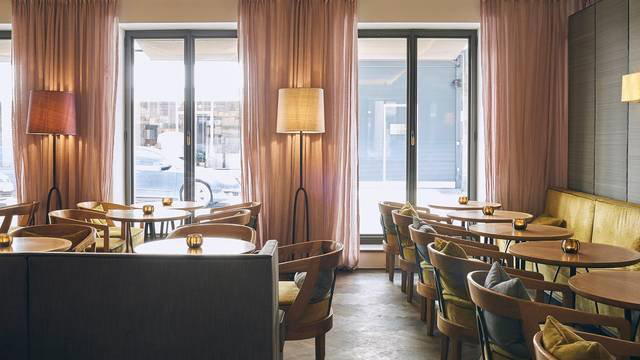
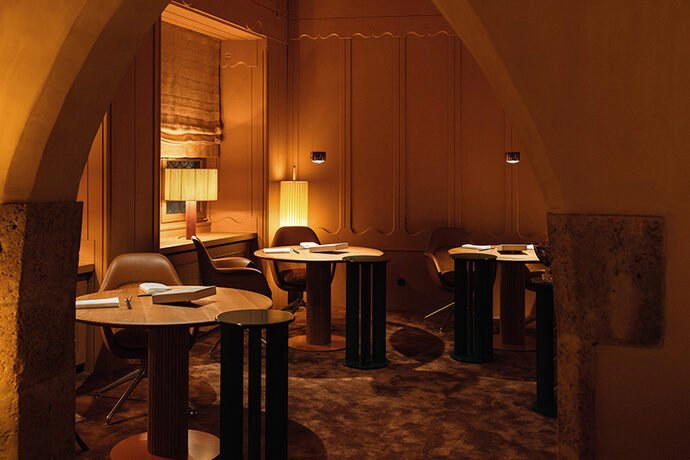
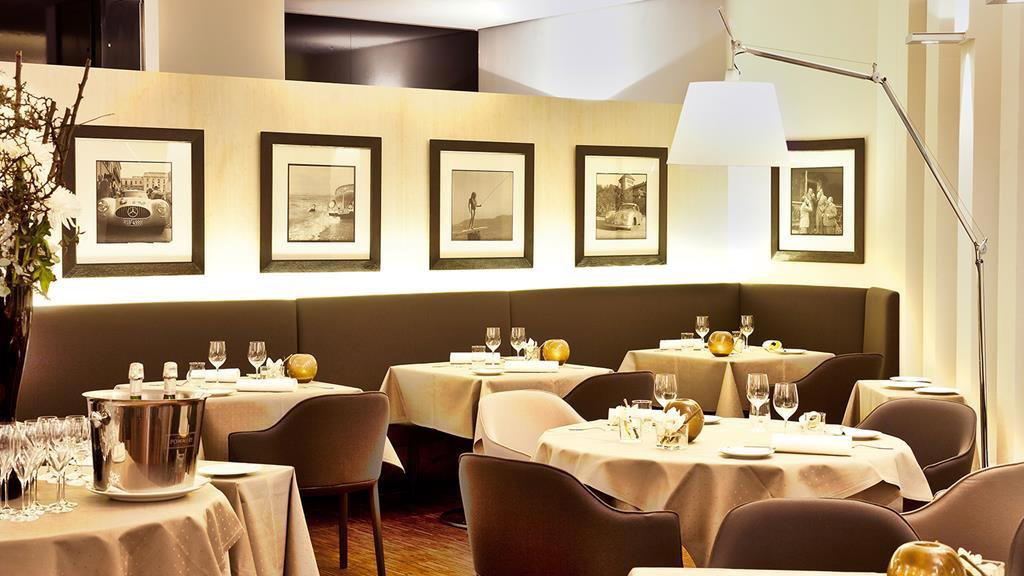
Casual and welcoming with a neighborhood feel; the dining area overlooks an ice hockey training facility, creating an entertaining backdrop for families and groups.