Al-Noor
Our verdict
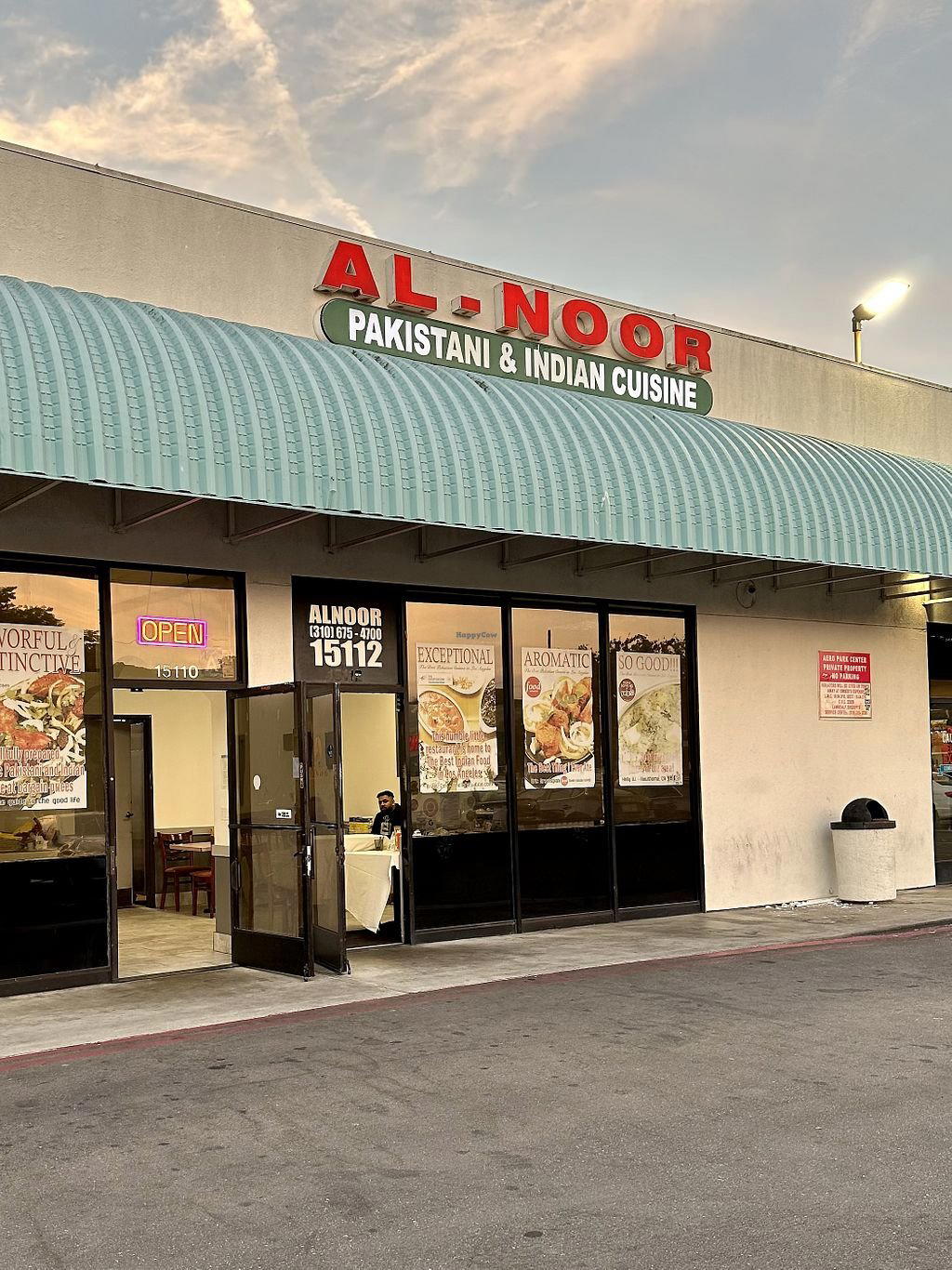
Al-Noor sits on South Inglewood Avenue in Lawndale, a stretch of the South Bay that has quietly developed a serious dining identity independent of LA's more publicized corridors. With a focus on ingredient sourcing rooted in the area's diverse community traditions, it occupies the kind of neighborhood position where local regulars and curious visitors share the same tables. Lawndale rewards the detour for those willing to look past more familiar addresses.

Pearl is the En Primeur Club membership app, where members save venues, book tables and use the concierge.
The menu
What to order
- Chicken Tikka Masala
- Palak Paneer
- Lamb Qorma
- Chicken Biryani
- Tandoori Mix Plate
South Inglewood Avenue and the South Bay's Quiet Dining Shift
The stretch of South Inglewood Avenue running through Lawndale doesn't generate the kind of press that follows Melrose, Sawtelle, or the Arts District. That absence of coverage has allowed a different kind of dining culture to develop here, one shaped more by the community it feeds than by the industry observers tracking it. Al-Noor, at 15112 S Inglewood Ave, occupies that context directly. Approaching along a corridor of small storefronts and neighborhood businesses, the physical environment signals the South Bay's practical character rather than any aspiration toward scenographic dining. What you encounter inside is conditioned by that same logic: the room is configured for people who eat here regularly, not for those photographing it.
For readers who have calibrated their expectations against the tasting-menu tier, places like The French Laundry in Napa, Le Bernardin in New York City, or Providence in Los Angeles, Al-Noor represents a categorically different register. That difference isn't a shortcoming; it reflects a distinct set of priorities around accessibility, community, and the sourcing traditions that inform its kitchen.
Ingredient Sourcing in a Community-Rooted Kitchen
Lawndale and the broader South Bay have long sustained a dense concentration of halal markets, international grocers, and import suppliers serving Middle Eastern, South Asian, and East African communities. That supply infrastructure shapes what kitchens in this area can do with fresh and specialty ingredients. Restaurants operating close to that sourcing network often have access to cuts, spices, and produce that more restaurant-row addresses don't prioritize ordering. Al-Noor's position on South Inglewood Ave places it inside that geography, where proximity to community-specific suppliers is a functional advantage rather than a marketing point.
This matters editorially because the ingredient sourcing conversation in American dining has largely been captured by farm-to-table narratives centered on agricultural estates and named producers, the model visible at places like Blue Hill at Stone Barns in Tarrytown, Single Thread Farm in Healdsburg, or Smyth in Chicago. Community-rooted sourcing in urban immigrant corridors operates on a parallel track with its own integrity and specificity, less documented but no less consequential for the food on the plate. The halal certification standard, for instance, imposes supply-chain discipline that goes beyond the simple question of permissibility, it determines the entire handling and provenance of protein, which is a form of traceability that premium dining audiences increasingly ask for from other sourcing frameworks.
Across the country, restaurants in immigrant-dense corridors from Miami's ITAMAE to Bacchanalia in Atlanta have demonstrated that sourcing specificity and community embeddedness aren't in tension. Al-Noor exists within that same argument, applied to the South Bay's particular demographic and supply character.
What the South Bay Dining Corridor Tells You About LA
Los Angeles dining coverage concentrates heavily on a few zip codes. The result is a gap in the public record about what's happening in communities that feed large populations without Michelin inspectors or food media regulars at nearby tables. Lawndale, Hawthorne, Gardena, and the adjacent South Bay cities form a dense residential band with enough population and culinary diversity to sustain serious kitchens operating entirely outside the press circuit. The restaurants in this corridor price for local incomes, source for local tastes, and answer to local regulars, which produces a different accountability structure than the one visible at Addison in San Diego or the award-tracked upper tier of Atomix in New York City.
That accountability to a regular customer base tends to produce consistent cooking rather than ambitious experimentation. Dishes get refined over time based on repeat-visit feedback rather than single-occasion impressions. For readers who follow the progressive American model visible at Lazy Bear in San Francisco or the ingredient-driven ethics of Oyster Oyster in Washington, D.C., Al-Noor represents a different kind of commitment: to serving the same community, week after week, without the scaffolding of a press profile or a reservation waitlist. See our full Lawndale restaurants guide for the broader picture of how this corridor fits together.
Placing Al-Noor in a Wider Sourcing Conversation
The national conversation about ingredient ethics in restaurant kitchens has expanded significantly in the past decade. Chefs at The Wolf's Tailor in Denver, Frasca Food and Wine in Boulder, and The Inn at Little Washington operate within certified sourcing frameworks that get documented in press coverage and awards commentary. The halal sourcing infrastructure that underpins Al-Noor's kitchen operates within an equally rigorous certification system, one that is globally standardized and audited, though it rarely appears in the language of the farm-to-table editorial tradition.
That gap between two parallel sourcing disciplines, one heavily covered, one largely invisible to the food press, is worth naming directly. Restaurants like Al-Noor are, in structural terms, operating with supply-chain accountability comparable to what gets celebrated in other contexts. The difference is one of documentation and editorial attention, not of actual practice. Readers with a serious interest in where food comes from should extend the same curiosity to community-rooted halal kitchens that they bring to documented farm-partnership restaurants. The sourcing rigor exists; the press coverage largely does not. Compare this to the model at Atelier Moessmer Norbert Niederkofler in Brunico, where Alpine ingredient sourcing has been made central to the restaurant's identity and covered extensively. Emeril's in New Orleans similarly built its sourcing narrative on Louisiana regional producers, turning supply relationships into a legible public story. Community-rooted urban restaurants deserve the same treatment.
Planning a Visit
Al-Noor is located at 15112 S Inglewood Ave in Lawndale, CA 90260, accessible by car from central Los Angeles via the 405 or surface roads through Hawthorne and Gardena. The South Bay is leading approached during off-peak hours given freeway congestion patterns across LA County. The address and neighborhood character suggest a casual, walk-in friendly format typical of this corridor, though calling ahead when possible is advisable for any dining destination in an area where hours may vary seasonally or around community calendars.
Frequently asked questions
Is Al-Noor suitable for children?
Al-Noor is located in a residential commercial strip on South Inglewood Avenue in Lawndale, a neighbourhood where family dining is the norm rather than the exception. Community-rooted restaurants in this corridor typically run multigenerational tables as a matter of course. Nothing in the venue's profile suggests a format that would exclude children.
Is Al-Noor better for a quiet night or a lively one?
South Inglewood Avenue in Lawndale operates outside the late-night energy of Melrose or the Arts District, which generally means a lower ambient volume and a pace set by neighbourhood regulars rather than destination crowds. Al-Noor fits that pattern: this is a spot for a focused meal, not a scene. First-time visitors expecting a buzzing room should recalibrate their expectations accordingly.
Does Al-Noor source halal ingredients, and where does it sit relative to other South Bay halal options?
Al-Noor operates in Lawndale, a city within a South Bay corridor that sustains one of the denser concentrations of halal markets and import suppliers in greater Los Angeles. That proximity puts restaurants on this stretch of South Inglewood Avenue closer to their supply chain than most LA dining destinations covered in mainstream food media. EP Club does not currently hold chef or certification documentation for Al-Noor specifically, but the neighbourhood context is a meaningful signal for halal-conscious diners.
Comparable Venues
Comparable venues nearby, for context on price, style, and recognition.
| Venue | Cuisine | Price | Awards | Notes |
|---|---|---|---|---|
| Al-NoorThis venue (the venue you are viewing) | Authentic Pakistani & Indian Cuisine | $20–30 | Not listed | Not listed |
| Badmaash | Modern Indian Gastropub | $30–50 | Michelin Plate | Downtown LA |
| Spice Social | Modern Indian Fusion | $20–30 | Not listed | Downtown Fullerton |
| The Yellow Chilli | Modern Indian | $30–50 | Not listed | The District |
| Anarbagh | Traditional Indian | $20–30 | Not listed | Woodland Hills |
| Badmaash | Modern Indian | $50–100 | Not listed | Venice |
Continue exploring
More in Lawndale
Restaurants in Lawndale
All restaurants in Lawndale →
Bars in Lawndale
Browse all →
Hotels in Lawndale
Browse all →

Wineries in Lawndale
Browse all →

Details
- Casual
- Rustic
- Classic
- Family
- Group Dining
- Casual Hangout
- Standalone
- A La Carte
- Family Style
- Vegetarian Friendly
- Vegan Options
- Halal
Current opening hours
- Monday
- Closed
- Tuesday
- 11 AM–8:45 PM
- Wednesday
- 11 AM–8:45 PM
- Thursday
- 11 AM–8:45 PM
- Friday
- 11 AM–8:45 PM
- Saturday
- 11 AM–8:45 PM
- Sunday
- 11 AM–8:45 PM
Hours can change for holidays and private events. Hours as of .
Bare bones, no-frills family institution with attentive service and a focus on authentic cuisine over decor.