
Tabelog 100 #70
Our verdict
Akita’s chicken culture reads differently in Odate, where Hinai jidori is local identity rather than a menu trend. Akita Hinaiya Oodate honten sits in that context with chicken dishes, yakitori and oyako-don, backed by selection for Tabelog 100 Chicken Cuisine 2025 and a format that works for family meals as readily as regional food-focused itineraries.

Pearl is the En Primeur Club membership app, where members save venues, book tables and use the concierge.
The menu
What to order
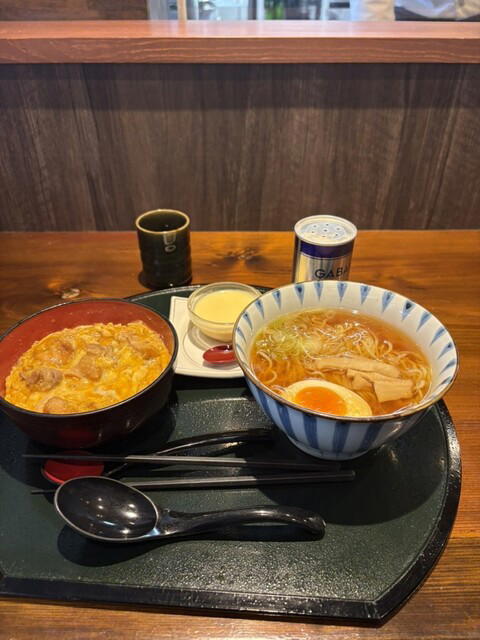
- Hinai-jidori oyakodon
- Hinai-jidori kiritanpo nabe
- Hinai-jidori damako nabe
Odate’s dining rhythm is quieter than Akita city’s station-side restaurant circuit, and that matters. The town is not selling a grand urban night out; it sits closer to the source of one of Japan’s prized native chickens, Hinai jidori, and the room reads as a house restaurant rather than a glossy destination set piece. In northern Akita, chicken is not a supporting act. It is the reason to sit down.
Akita Hinaiya Oodate honten belongs to the regional-specialist category Japan does particularly well: a focused restaurant built around a local ingredient, with enough range for lunch, dinner, families, and travellers who have come to Odate for more than a generic izakaya meal. Its Tabelog 100 Chicken Cuisine 2025 selection gives the address a national signal, but the sharper point is geographic. Hinai jidori has far more meaning here than as a premium label in Tokyo or Osaka.
Hinai jidori as Odate's calling card, not a luxury garnish
Japan’s regional chicken cooking splits into several registers: yakitori counters where technique and sourcing are compressed into skewers, oyako-don shops where egg and stock carry the argument, and broader chicken restaurants moving between grilled, simmered, and rice-bowl formats. Odate’s center of gravity differs because Hinai jidori is tied to Akita’s food identity. The appeal is not novelty; it is proximity, repetition, and confidence in a narrow brief.
The menu categories make that brief clear: chicken dishes, yakitori, and oyako-don. That places the restaurant between a specialist yakitori counter and a casual regional dining room. It is not chasing the controlled silence of a chef-led tasting counter, nor the looseness of a drinking-first izakaya. The broader format suits Odate: visitors can read the region through the ingredient without committing to a formal dégustation.
Among comparable regional Akita meals, the positioning is moderate rather than ceremonial. Inaho and Hasuya sit in higher dinner-budget bands, while Yo occupies a far more expensive Japanese-cuisine tier. Akita Hinaiya Oodate honten stays closer to the accessible specialist bracket, with lunch and dinner use cases rather than a single special-occasion lane. That pricing is part of the appeal: Hinai jidori can be treated here as a local staple, not only a rarefied product.
A room built for local use changes the way the meal lands
The 80-seat setup, split between a 30-seat hall and a 50-seat second floor, gives it a different texture from the tiny counters that dominate many travel lists. Counter seating, tatami rooms, and sunken seating point to a house-style restaurant built for mixed occasions. Private rooms for small groups and private use for larger parties make sense in Odate, where restaurants serve both visitors and local gatherings rather than one narrow audience.
That flexibility explains why the experience can feel casual without being careless. A Tabelog 100 selection in chicken cuisine does not turn the room into a hushed temple of gastronomy; it confirms that a regional format has enough consistency and following to be noticed beyond its neighbourhood. For travellers, that is the useful signal. The meal belongs to Odate first, and the award comes after.
Drinks widen the frame without changing the identity. Sake, shochu, wine, and cocktails are listed, with particular attention to sake and wine. In Akita, where rice, water, and cold-climate brewing traditions make sake a natural companion to local food, the point is not sommelier-led performance. It is that the table can move from lunch bowl to grilled chicken and drinks without leaving the regional register.
For a wider Akita itinerary, this is the northern, ingredient-led counterweight to the city’s more varied restaurant map. Readers building a food route can compare it with affetto akita, beef-focused meals at Akita Gyugentei Ekimae honten and Akita Gyugentei Sannou bekkan, and the local-drinking context around Akita Kurasu or BAR Le Vert. The broader planning rails sit in our full Akita restaurants guide, alongside our full Akita hotels guide, our full Akita bars guide, our full Akita wineries guide, and our full Akita experiences guide.
How to read it within Japan's regional-specialist dining map
The useful comparison is not with metropolitan luxury dining, but with restaurants that make one local product legible. Japan has many: beef houses, eel rooms, soba shops, chicken specialists, and sake bars where the regional lens is sharper than the room’s polish. Odate’s version gains force because ingredient and place align. The restaurant needs no theatrical framing; the location does the explanatory work.
That makes the meal suited to travellers who plan around place rather than trophy dining. It fits someone interested in Akita’s food grammar more than someone seeking a rarefied counter with a chef biography, fixed procession, and long reservation chase. The house-restaurant format, family-friendly facilities, and broad seating mix point toward a local institution that absorbs different kinds of diners while keeping chicken at the center.
Across Japan, that regional-specialist logic appears in different forms, from beef sukiyaki at -Grilled beef Sukiyaki- KAMAKURA TANUKIAN 鎌倉 たぬき庵 in Kamakura to charcoal seafood at. 鮪と炭火焼き うお炭 秋葉原店 in Tokyo, cafe culture at.cafe in Osaka, contemporary dining at.know in Kumamoto, Vietnamese cooking at (Shoku) Vietnam in Kawasaki, and curry specialization at [Curry Senmon Ten] Maruyama Kyoju. in Sapporo. For readers tracking Japanese flavors abroad, Jōdo Saké Bar in Los Angeles and Onigiri Time in Pasadena show how focused formats travel, though Odate’s advantage is that its main ingredient belongs to the surrounding region.
The editorial verdict is simple: treat Akita Hinaiya Oodate honten as a place-specific chicken restaurant, not a trophy stop. Its value lies in the alignment of Odate, Hinai jidori, a flexible house-style room, and national recognition within a defined category. That gives travellers a clear reason to leave the generic Akita checklist and eat where the ingredient has local weight.
Frequently asked questions
Would Akita Hinaiya Oodate honten be comfortable with kids?
Yes. The restaurant lists children welcome, a kids menu, and 80 seats across a hall and second floor, so it works better for families than a small counter in Akita.
Is Akita Hinaiya Oodate honten formal or casual?
It reads as casual rather than formal. The house-restaurant setting, family-friendly positioning, and price range of JPY 1,000–3,999 place it in an everyday dining bracket, even though it carries Tabelog 100 Chicken Cuisine 2025 recognition.
What's the price range at Akita Hinaiya Oodate honten?
Pricing at Akita Hinaiya Oodate honten is listed as JPY 3,000 - JPY 3,999 JPY 1,000 - JPY 1,999.
What part of town is Akita Hinaiya Oodate honten in?
Akita Hinaiya Oodate honten is located in Akita.
What's the best way to book Akita Hinaiya Oodate honten?
Use the website listed in the public record, http://www.akitahinaiya.co.jp/, or contact the restaurant through its Tabelog page. The 80-seat format and Tabelog 100 Chicken Cuisine 2025 selection suggest demand that makes advance planning sensible. Check the venue's official channels for the latest details.
Compact Comparison
Comparable options at the same price tier.
| Venue | Cuisine | Price | Awards | Notes |
|---|---|---|---|---|
| Akita Hinaiya Oodate hontenThis venue (the venue you are viewing) | Hinai-jidori & Akita regional Japanese | $20–30 | Tabelog 100 #70 | Not listed |
| Inaho | Japanese Soba and Chicken Dishes | Not listed | Tabelog 100 #92 | JPY 4,000 - JPY 4,999 JPY 1,000 - JPY 1,999 View spending breakdown |
| Hasuya | Not listed | Not listed | Not listed | JPY 6,000 - JPY 7,999 View spending breakdown |
| Yo | Not listed | Not listed | Not listed | Japanese Cuisine, JPY 20,000 - JPY 29,999 View spending breakdown |
Recognition history
Dated appearances from independent guides and award organizations, with the underlying list record or original source where available.
Tabelog 100 #70 · No. 70
Tabelog · Tabelog 100 - Chicken cuisine - 2025
Continue exploring
More in Akita
Restaurants in Akita
All restaurants in Akita →
Bars in Akita
Browse all →
Details
- Cozy
- Rustic
- Classic
- Family
- Group Dining
- Casual Hangout
- Solo
- Standalone
- Local Sourcing
- A La Carte
- Set Menu
- Sake
- Beer
Relaxed, homey izakaya-style atmosphere with counter and table seating on the first floor and traditional tatami seating on the second floor, suited to casual meals and small gatherings rather than formal dining.