
À Contre Sens sits on Caen's Bassin Saint-Pierre waterfront, where chef Anthony Caillot holds a Michelin star for cooking that anchors itself in Normandy's larder before reaching toward more unexpected territory. Semi-cooked mackerel with spinach velouté, John Dory with tangy sabayon, the kitchen handles regional produce with technical precision and a willingness to push beyond regional convention.
Pearl is the En Primeur Club membership app — saves, bookings, and concierge access live there. Same editors, same standards.
- Address
- 37 quai François-Mitterrand
- Phone
- +33 2 31 97 44 48
- Website
- acontresens.fr
- Directions
- Get directions
 Saves & bookings on Pearl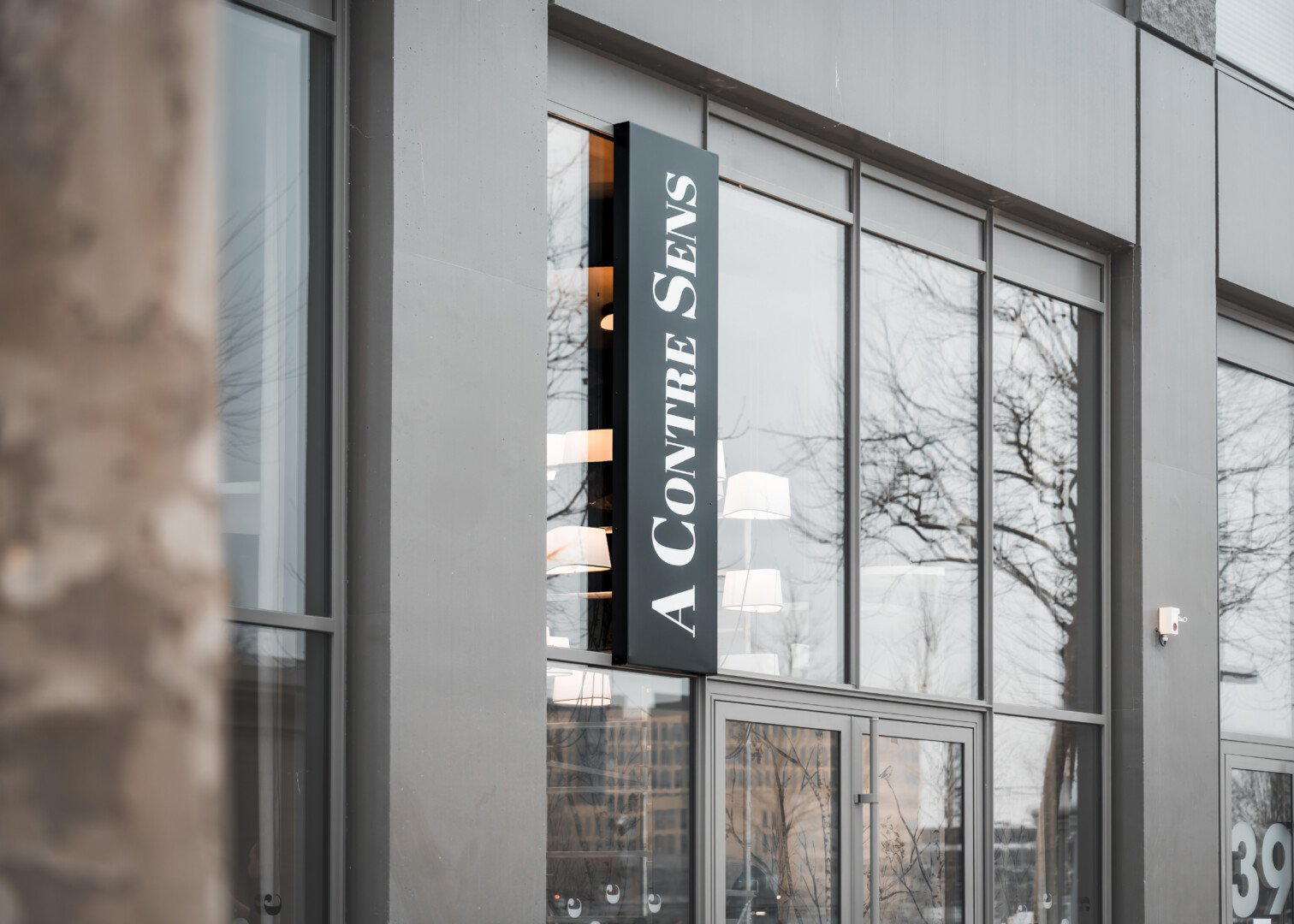
Glass, Water, and the Weight of a Region's Larder
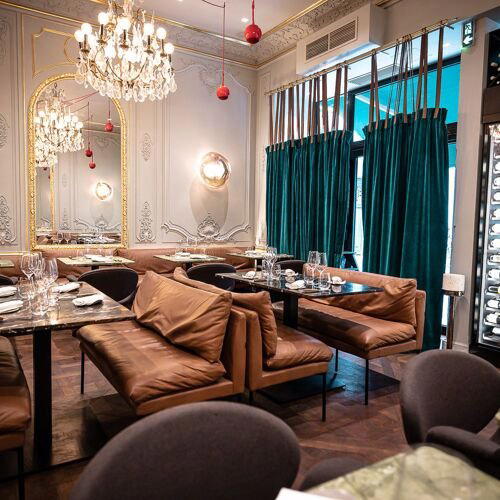
Caen's Bassin Saint-Pierre has the calm authority of a working marina that has found a second life as an address for serious dining and leisure. The quays along Quai François-Mitterrand face the water directly, and the light, especially in the late afternoon, has the particular quality of northern coastal France: grey-blue, diffuse, and oddly flattering to interior glass. À Contre Sens occupies that setting with an interior defined by glass, metal, and velvet, materials that read less as decoration and more as a considered design choice. This is a room that wants to be taken seriously without requiring formality, which, in a Michelin-starred context, is harder to achieve than it sounds.
For context on how Caen's serious dining tier is structured: the city carries a small cluster of modern kitchens. Ivan Vautier and Le Dauphin operate at the €€€ bracket; Augia and Magma anchor the modern €€ tier alongside Le Bouchon du Vaugueux, which covers the traditional end. À Contre Sens sits inside this comparable set as a Michelin-starred address with a kitchen approach that uses Normandy's produce as its foundation and then, selectively, reaches further. See our full Caen restaurants guide for a broader view of where the city's dining is heading.
What the Normandy Larder Actually Provides
Ingredient sourcing is central to this kitchen. Normandy is one of the genuinely well-stocked corners of France: Atlantic and Channel coastlines that supply fish and shellfish year-round, dairy traditions that run deep enough to have shaped French cooking nationally, and agricultural land that produces apple varieties, root vegetables, and herbs in quantity. A kitchen in Caen that anchors itself in Normandy's produce is working with genuine raw material, not just borrowing a marketing posture.
The specific dishes the Michelin guide cites for À Contre Sens illustrate how chef Anthony Caillot uses that larder without being constrained by it. Semi-cooked mackerel, a fish native to these waters, arrives with spinach velouté and heated sake. John Dory, another regional catch, is paired with courgettes and a tangy sabayon. In both cases, the protein is local and the technique is precise; the seasoning and accompaniment introduce an element from outside the Norman repertoire. This is a kitchen that knows the difference between respecting a region's produce and simply reproducing its traditional recipes. The distinction matters because it is exactly what Michelin recognises when it awards a star to a regional kitchen: technical command applied to honest material, not regional cooking for its own sake.
That same calibration, produce-first, then technique, then reach, appears across the broader canon of French regional cooking with serious ambitions. Kitchens like Bras in Laguiole have long made a case that deep knowledge of a specific region's ingredients, flora, and terroir is not a limitation but a position. Flocons de Sel in Megève does similar work with Alpine produce. The argument is consistent: the strongest regional cooking in France is not about limitation but about authority over a specific set of ingredients, applied with enough technique to make that authority visible on the plate.
Reading the Room: Warmth and Hospitality as Part of the Offer
The Michelin guide's notes on the restaurant are specific enough to be worth taking seriously: the reference to genuine warmth in the front-of-house points to something real. Starred restaurants in France exist on a spectrum from technically excellent but austere, kitchens where the cooking is the entire point and the service is framing, to places where hospitality and setting carry equal weight. The restaurant, in the Michelin characterisation, sits toward the warmer end of that spectrum without departing from technical rigour.
That positioning matters for a room overlooking a working marina. The environment already sets a particular tone, the Bassin Saint-Pierre is animated rather than hushed, with boats, light changes, and the general movement of a harbour at different hours. The interior materials (glass, metal, velvet) are chosen to work with that environment: they do not close the room off from it. The result is a formal meal in an informal-feeling context, which is the register that a certain kind of serious diner, particularly one who has grown tired of the performance of high-end eating, finds most appealing.
For comparison, the hospitality tradition in French seafood cooking at high levels has historically leaned toward the theatrical, think of the tableside service rituals at Le Bernardin in New York City, which carries French seafood cooking into an explicitly luxurious register.
Planning a Visit: What to Know
The restaurant is located at 37 Quai François-Mitterrand, directly on the Bassin Saint-Pierre. The address is walkable from central Caen and accessible from the main rail station in under fifteen minutes on foot or a short taxi ride. For visitors arriving from Paris by TGV, Caen is approximately two hours from Saint-Lazare, which makes the restaurant a plausible lunch or dinner destination on a day trip or as part of a wider Normandy itinerary.
Reservations are essential, especially on Friday and Saturday evenings. Weekday lunch often offers more availability.
France's broader starred dining circuit, from Alléno Paris au Pavillon Ledoyen at one extreme to Auberge de l'Ill in Illhaeusern and Mirazur in Menton in their respective regional contexts, offers a useful frame for understanding where the restaurant sits. It is a serious regional address. It is a serious regional address that holds a Michelin star with an approach grounded in local produce, applied with clear technique and a hospitality register that does not ask the diner to perform reverence. In Caen, that is precisely the right thing to be. And compared to Troisgros - Le Bois sans Feuilles or Emeril's in New Orleans, which both operate at the intersection of regional identity and established reputation, the restaurant is doing something more local and more contained, and for the right visitor, that is its strength.
A Quick Peer Check
Comparable venues nearby, for context on price, style, and recognition.
| Venue | Cuisine | Price | Awards | Notes |
|---|---|---|---|---|
| À Contre SensThis venue — the venue you are viewing | Modern French Fine Dining | $$$ | Michelin Plate | Not listed |
| Stéphane Carbone | Modern French Fine Dining | $$$ | Michelin Plate | near port de plaisance |
| Le Dauphin | Normandy French Gastronomic | $$$ | Michelin Plate | city center |
| Augia | Modern French Bistronomie | $$$$ | Michelin Plate | Vaugueux |
| Séquence | Modern French Tasting Menu | $$$$ | Michelin Plate | Caen city center |
| Le Bistrot Basque | Basque Bistro | $$ | Not listed | Quai Vendeuvre |
Recognition history
Dated appearances from independent guides and award organizations, with the underlying list record or original source where available.
Michelin Plate
Michelin
Continue exploring
More in Caen
Restaurants in Caen
Browse all →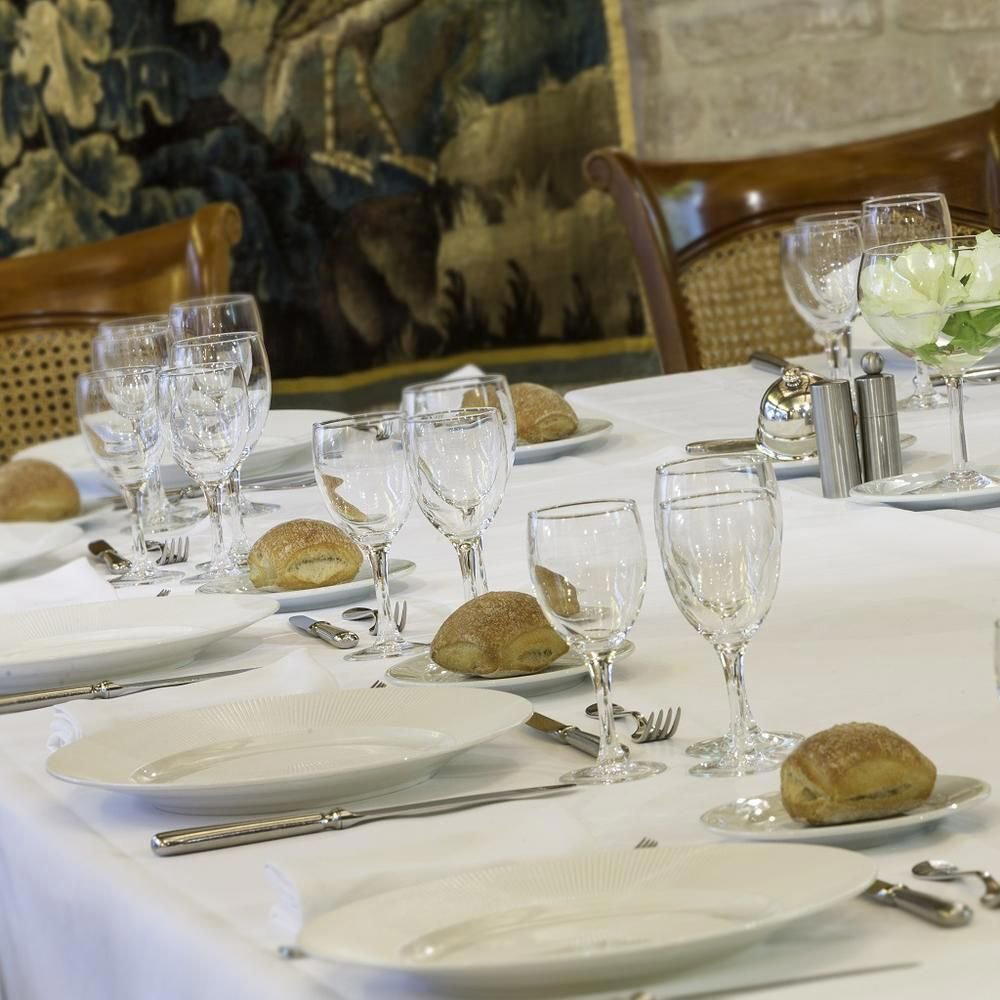
Bars in Caen
Browse all →

Hotels in Caen
Browse all →
Wineries in Caen
Browse all →
At a Glance
- Modern
- Elegant
- Sophisticated
- Intimate
- Date Night
- Special Occasion
- Waterfront
- Local Sourcing
- Waterfront
- Street Scene
Current opening hours
- Monday
- Closed
- Tuesday
- Closed
- Wednesday
- 10:30 AM–3 PM, 6–11 PM
- Thursday
- 10:30 AM–3 PM, 6–11 PM
- Friday
- 10:30 AM–3 PM, 6–11 PM
- Saturday
- 10:30 AM–3 PM, 6–11 PM
- Sunday
- Closed
Hours can change for holidays and private events. Last verified .
Stylish, trendy, and contemporary interior with a warm, chic atmosphere, large bay windows, and well-spaced tables for intimacy and tranquility.