Our verdict
Niigata's Tenjin district positions 新潟浦島 小平 within a city that treats ingredient provenance as a point of civic pride. The Sea of Japan coastline and Niigata's renowned rice paddies define the local sourcing framework, situating this address inside a broader tradition of produce-led Japanese dining that distinguishes the region from its more celebrated urban counterparts.

Pearl is the En Primeur Club membership app, where members save venues, book tables and use the concierge.

The menu
What to order
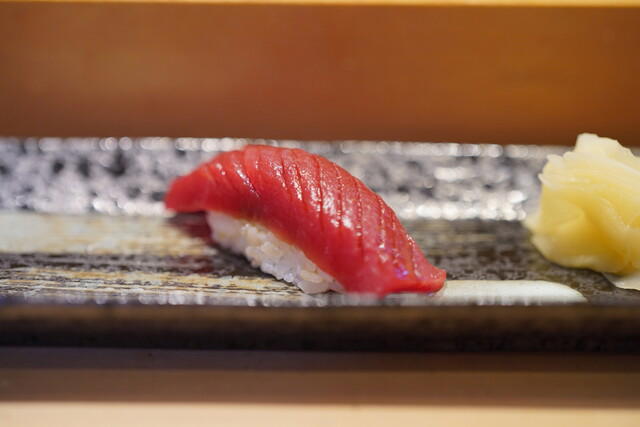
- Nanban shrimp nigiri
- Seared nodoguro
Where Niigata's Ingredient Culture Takes a Quiet Form
Niigata occupies a specific position in Japan's regional dining conversation, one that cities with louder culinary reputations tend to obscure. The prefecture faces the Sea of Japan, not the Pacific, which gives its fishing grounds a different seasonal rhythm and a distinct catch profile: snow crab from the depths of the Japan Sea, yellowtail that fattens in cold winter waters, and flatfish species that rarely appear on Tokyo menus. Inland, the Echigo Plain produces some of Japan's most closely watched short-grain rice, and the sake breweries concentrated along the Shinano River have shaped a local palate that runs toward clean, precise flavours rather than rich, assertive ones. 新潟浦島 小平, addressed in Tenjin within Niigata's Chuo Ward, sits inside this ingredient tradition rather than decorating itself with it.
The Sourcing Logic of the Sea of Japan
Understanding what Niigata's kitchens are working with requires some geographical orientation. The Sea of Japan shelf drops steeply off the Niigata coast, producing cold, nutrient-dense water that supports a fishery meaningfully different from the Tsukiji-dominated supply chains of Tokyo or Osaka. Seasonal fish calendars here follow the Japan Sea current rather than the Kuroshio, which means winter months bring Buri (yellowtail) of considerable size and fat content, while spring shifts toward Firefly squid from Toyama Bay, accessible to Niigata kitchens far more readily than to those further south. Restaurants working in this geography that choose to source locally are not simply making an ethical statement; they are accessing ingredients with a different flavour profile than what the major wholesale markets provide.
Rice is the second axis. Niigata's Koshihikari variety holds a reputation across Japan that is genuinely data-backed: the prefecture has placed consistently in Japan's rice quality ranking system, with Uonuma-grown Koshihikari occupying the leading grading bracket for decades. For a Japanese kitchen, the choice of rice supplier is a statement of intent, the grain affects texture in rice dishes and vinegared preparations alike, and a commitment to Niigata-sourced rice signals alignment with a local production network. That alignment connects a restaurant to sake brewers, farmers, and fishing cooperatives whose quality standards are inter-dependent. Venues like Kyodaizushi (Sushi) and KOKAJIYA represent different expressions of this same sourcing logic within Niigata's dining scene.
Tenjin and the Neighbourhood Context
The Tenjin area of Chuo Ward does not function as a destination dining strip in the way that Tokyo's Ginza or Kyoto's Gion do. It is a mixed-use district where local restaurants operate alongside everyday commerce, which tends to produce a more grounded relationship between kitchen and customer than the theatrics of high-visibility dining quarters allow. Restaurants in this kind of neighbourhood context typically build their business on repeat local custom before attracting visiting diners, a dynamic that, in Japan's regional cities, often correlates with kitchen discipline and ingredient consistency, since the local audience is harder to impress with novelty alone.
Niigata's broader restaurant geography reflects a city that takes its own food culture seriously without needing external validation. Menya Agosuke represents the city's ramen tradition, Mûrir and Restaurant UOZEN (French) anchor the French-influenced tier, while Japanese cuisine across various formats remains the category where Niigata's sourcing advantages are most legible. For the full picture of where 新潟浦島 小平 sits within the city's offer, our full Niigata restaurants guide maps the competitive set.
Regional Dining in Japan's Provincial Register
Japan's regional dining scene has developed in ways that make direct comparison with Tokyo-centric standards misleading. Cities like Fukuoka, Kyoto, and Niigata each operate partially independent food cultures, with their own local ingredients, preparation traditions, and quality benchmarks, rather than functioning as provincial satellites of the capital's restaurant world. Goh in Fukuoka and Gion Sasaki in Kyoto demonstrate how deeply rooted, ingredient-led cooking in Japan's regional cities can produce dining experiences that sit comfortably alongside their Tokyo equivalents, not by emulating them, but by deepening what is locally available. The same principle applies in Niigata, where the sourcing geography is sufficiently distinct to support a kitchen identity that does not need to reference the capital.
Beyond Japan's borders, the structural parallel is worth noting: the shift toward produce-led, locally sourced menus that has driven critical attention at restaurants like Lazy Bear in San Francisco or, at a different register, Le Bernardin in New York City reflects a global recalibration toward ingredient provenance as the primary editorial statement. Japan's regional kitchens have, in many cases, been operating on this principle for generations, Niigata's rice and seafood culture being a clear example of provenance as structural, not decorative.
Planning Your Visit
新潟浦島 小平 is located at 1 Chome-1 Tenjin, Chuo Ward, Niigata, accessible from Niigata Station via the city's central district on foot or by taxi, with Tenjin sitting within the walkable core of the ward. For visitors constructing a broader Niigata itinerary, pairing a visit here with the city's sushi and sake offerings gives a more complete read of what the prefecture's ingredient culture produces at table. The winter months, when Japan Sea yellowtail and snow crab are at their peak, represent the period when Niigata's sourcing advantages are most apparent across the dining scene generally.
Frequently asked questions
Where exactly is 新潟浦島 小平?
新潟浦島 小平 is located at Japan, 〒950-0917 Niigata, Chuo Ward, Tenjin, 1 Chome−13−1, Niigata.
What should I eat at 新潟浦島 小平?
新潟浦島 小平 is located in Tenjin, Chuo Ward, Niigata, a region whose kitchens draw heavily on Sea of Japan catches that differ markedly from Pacific-side fish markets. The cold, steep-shelved waters off Niigata produce species and seasonal patterns that define what regional restaurants here put on the plate.
Do they take walk-ins at 新潟浦島 小平?
Reservations are recommended for 新潟浦島 小平 in Niigata. Confirm current policy via the venue's official channels.
What's 新潟浦島 小平 best at?
新潟浦島 小平 is best approached by focusing on the core concept and signature offerings.
Do they accommodate allergies at 新潟浦島 小平?
Dietary accommodations can vary. Flag restrictions in advance via the venue's official channels.
How It Stacks Up
| Venue | Cuisine | Price | Awards | Notes |
|---|---|---|---|---|
| æ°æ½æµ¦å³¶ å°å¹³This venue (the venue you are viewing) | Japanese Kaiseki | Not listed | Not listed | Not listed |
| Kyodaizushi | Niigata-style Omakase Sushi | Not listed | Tabelog Silver #66 | Sushi |
| Shintaku | Traditional Kappo with Murakami Salmon | $30–50 | Tabelog Silver #122 | Japanese Cuisine |
| Restaurant UOZEN | Innovative Local French | $150–200 | Tabelog Silver #110 · We're Smart World 1 Radish | French |
| Tokiwa | Traditional Sushi Omakase | $150–200 | Tabelog Silver #143 | Not listed |
| Tokiwa Sushi Nigata Ten | Niigata Local Omakase Sushi | $200–300 | Tabelog Bronze #460 | Sushi, JPY 30,000 - JPY 39,999 JPY 15,000 - JPY 19,999 |
Continue exploring
More in Niigata
Restaurants in Niigata
All restaurants in Niigata →
Hotels in Niigata
All hotels in Niigata →
Details
- Cozy
- Classic
- Intimate
- Elegant
- Quiet
- Date Night
- Business Dinner
- Celebration
- Special Occasion
- Private Event
- Chefs Counter
- Private Dining
- Standalone
- Sake Program
- Local Sourcing
- Garden
- Set Menu
- Sake
A serene, warmly traditional Japanese atmosphere with tatami-lined spaces and a quiet, tucked-away feel; counter seating adds a live, intimate mood.