
Travel + Leisure It List Hotels
An 18th-century finca on a 2,000-acre self-sufficient estate, Vestige Son Ermità operates at the quieter, more deliberate end of Menorca's small accommodation spectrum. With just 10 rooms, estate-grown produce at its Brisa restaurant, and a location that trades connectivity for genuine seclusion, it positions itself against properties where scale and service infrastructure are secondary to place. Doubles from $577.

Pearl is the En Primeur Club membership app, where members save venues, book tables and use the concierge.
Where the Estate Is the Architecture
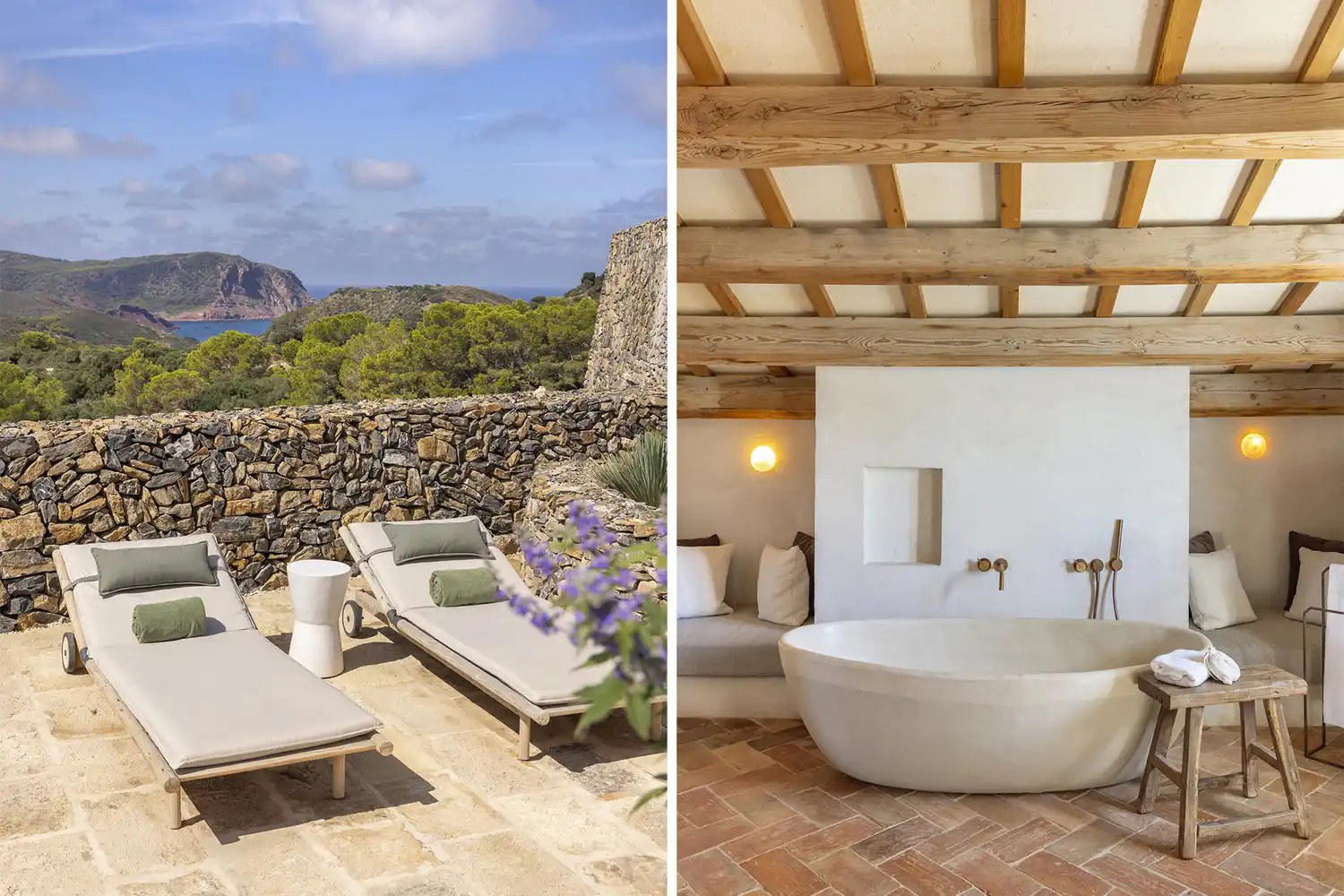
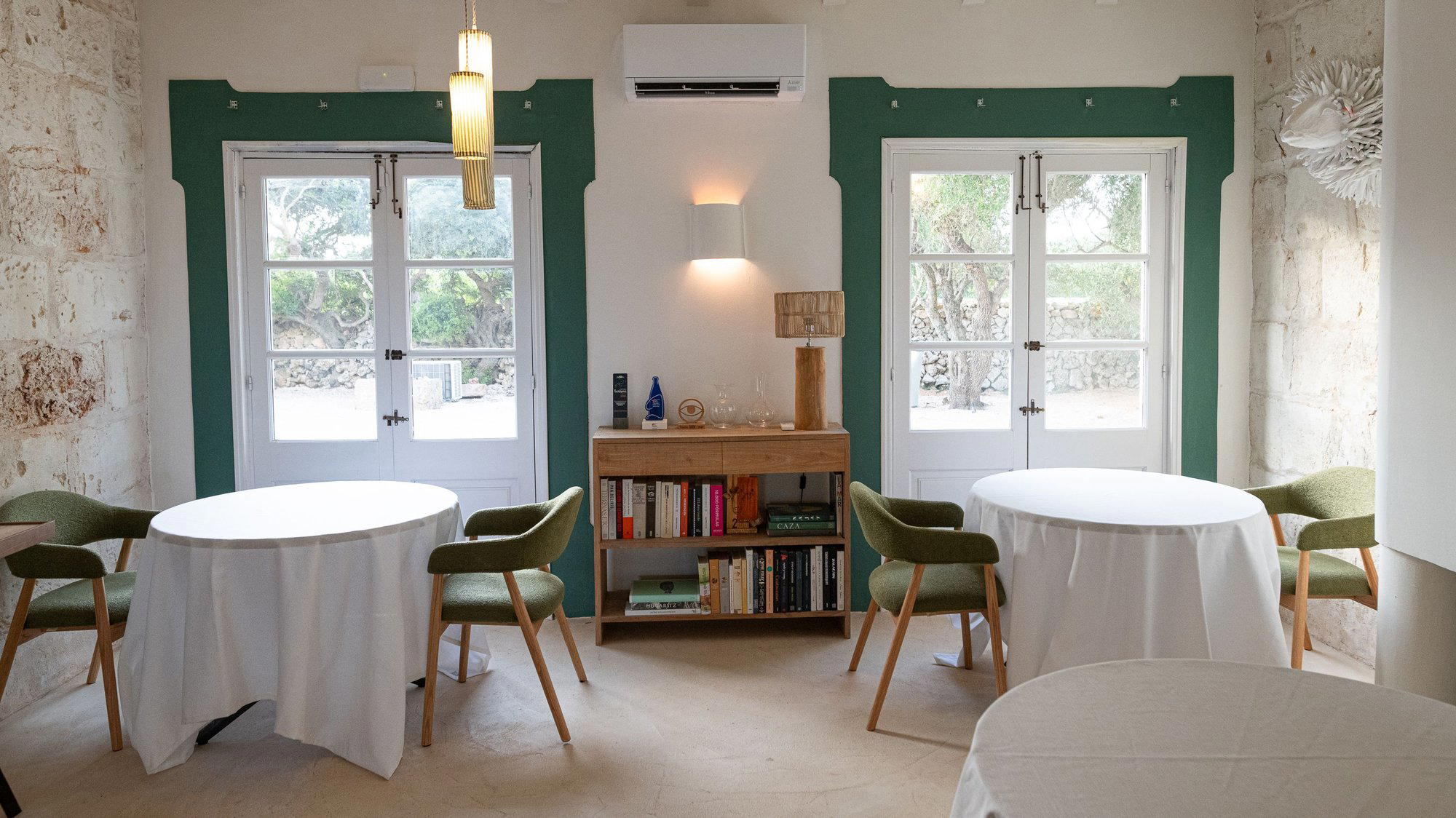
The approach to Vestige Son Ermità sets the terms before you arrive. The road narrows, cell service drops, and Menorca's interior opens into a landscape that the island's UNESCO Biosphere Reserve designation, awarded in 1993, has kept largely intact. That protected status is not incidental to what the property offers: it is the offering. The 18th-century finca sits on 2,000 acres of working estate, and the physical fabric of the building, wooden beams, centuries-old doors, thick stone walls, reads as an architectural argument for continuity over renovation. At most heritage-converted properties in the Balearics, that vocabulary is decorative. Here, it operates alongside a genuinely functional logic: the estate produces its own water and electricity, which means the old structure and its self-sufficient systems are not in conflict but in conversation.
That commitment to self-sufficiency shapes the spatial experience in ways that more conventional rural hotels rarely achieve. Ten rooms is a deliberate ceiling, not a constraint. Properties at this scale on the Spanish mainland, from Mas de Torrent Hotel & Spa in Torrent to Hotel Mas Lazuli in Girona, have demonstrated that limiting keys is a specific editorial choice about what kind of attention a property can deliver. At Vestige Son Ermità, the ratio of estate acreage to guest count is extreme by any peer comparison, which means the 2,000 acres function less as grounds and more as private territory.
The Interior Logic of the Finca
The design approach sits within a broader tradition of Balearic rural conversion that refuses to flatten the original structure into a neutral hospitality shell. Rainfall showers and modern fittings appear alongside material that pre-dates the building's conversion by centuries. This is the tension that defines the better end of heritage hotel architecture across Spain: not whether to preserve, but how much friction between old and new to allow. Properties like Hotel Can Ferrereta in Santanyí and Hotel Can Cera in Palma have resolved that tension in different ways, each treating the visible layer of history as either backdrop or structural subject. At Vestige Son Ermità, the centuries-old doors and exposed beams are the primary architectural statement rather than accent details.
In Menorca specifically, this kind of finca conversion carries additional weight. Unlike Mallorca, which developed a well-established circuit of boutique agriturismos through the 1990s and 2000s, Menorca's interior remained considerably less trafficked. The island's biosphere designation has functioned as a soft brake on development pressure, meaning properties that do exist in the interior occupy a different competitive position than comparable rural hotels on the more developed Balearic neighbours. For a comparison of how Menorca's two leading small properties sit relative to each other, Hotel Can Faustino and Villa Le Blanc offer useful reference points at the island's coastal and urban ends. Vestige Son Ermità occupies the interior and the agrarian, a different positioning altogether.
Brisa: The Restaurant as Extension of the Estate
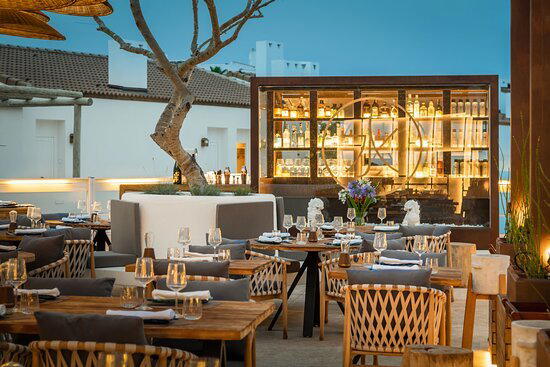
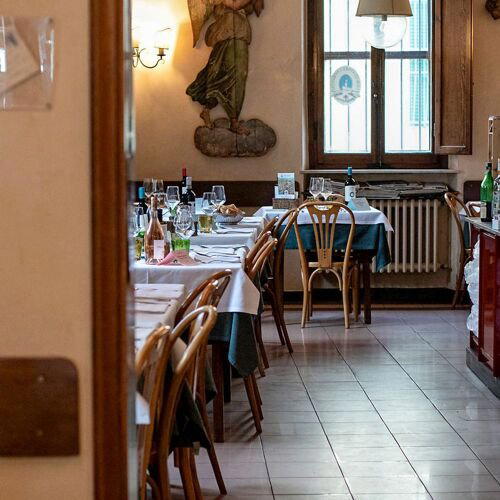
The farm-to-table format at Brisa is not a marketing positioning layered over a conventional kitchen supply chain. Estate-grown produce arriving at the restaurant directly is a function of the property's self-sufficient operational model, the same system that handles water and power. Executive chef Joan Bagur works within that constraint as a creative parameter, and the menu reflects estate availability rather than a fixed seasonal programme sourced from external suppliers. Dishes documented from the kitchen include langoustine ravioli in cream sauce and a mushroom carpaccio, both constructed around umami weight rather than visual spectacle, a technical approach that prioritises depth over decoration.
Spain has a well-developed tradition of restaurant-hotel hybrids where the kitchen anchors the property's identity as much as the rooms. At Pepe Vieira Restaurant & Hotel in Poio and Atrio Restaurante Hotel in Cáceres, the restaurant carries Michelin recognition and acts as the primary reason to visit. Brisa sits in a different register: the kitchen is integral to the estate's logic rather than a standalone culinary destination, which gives it a different but coherent purpose. For broader context on where Vestige Son Ermità fits within Menorca's dining picture, our full Menorca restaurants guide covers the island's range in more detail.
Terrain and Access: Getting There and Getting Around
Menorca's road network is navigable but deliberately unhurried, and the drive from Menorca Airport to the estate involves the kind of winding rural roads that signal arrival into the island's protected interior rather than its coastal infrastructure. The property operates a buggy service to Cala Calderer Beach, an access arrangement that reflects both the estate's scale and the low-impact ethos that aligns with the biosphere framing. The infinity pool, oriented south across the island's interior, functions as an alternative to the beach circuit for guests who prefer stillness to movement, and given the guest-to-acreage ratio at Vestige Son Ermità, the pool is frequently a private experience even at capacity.
Doubles start from $577, which positions the property at the upper end of Menorca's accommodation range without entering the bracket occupied by the most expensive rural hotel conversions across the wider Balearics. For reference, properties like Predi Son Jaumell in Capdepera or La Residencia, A Belmond Hotel, Mallorca represent the higher tariff end of Balearic rural conversion, where brand provenance and amenity range are factored into the rate. At Vestige Son Ermità, the price point reflects seclusion, self-sufficiency, and an extraordinarily low guest count rather than a broader amenity stack.
The deliberate off-grid positioning, no reliable cell service on the approach road, estate-generated utilities, means the property self-selects its guest profile. Travellers accustomed to the frictionless connectivity of a Mandarin Oriental Ritz, Madrid or the urban density of Mandarin Oriental Barcelona are operating in an entirely different register here. That is not a deficiency. It is the architectural and operational position Vestige Son Ermità has chosen, and on an island that has spent three decades protecting its interior from the development pressure that reshaped its neighbours, that choice carries a coherent logic.
In Context: Vestige Son Ermità Within Spain's Rural Hotel Category
Spain's rural estate hotel category has expanded significantly over the past decade, with wine-producing properties like Abadía Retuerta LeDomaine and Terra Dominicata in Escaladei demonstrating what self-sufficient production models can deliver when the estate product is built into the guest experience rather than sold separately. Vestige Son Ermità operates a version of that model without the wine production axis, replacing it with an off-grid utilities logic and a kitchen sourced from estate agriculture. The comparison with Balearic coastal properties, whether Cap Rocat in Cala Blava with its military fortress conversion or Marbella Club Hotel on the Andalusian coast, reveals the degree to which Vestige Son Ermità has committed to a specifically interior, agrarian identity rather than trading on sea access or architectural spectacle.
Within Menorca's limited supply of serious small hotels, that identity is difficult to replicate. The 2,000-acre estate is not a number that appears often in the Balearic context, and the UNESCO Biosphere Reserve framing makes large-scale development in the island's interior structurally improbable. Whatever the property's particular qualities, the conditions that make it possible are unlikely to be repeated nearby.
Comparison Snapshot
Comparable venues nearby, for context on price, style, and recognition.
| Venue | Cuisine | Price | Awards | Notes |
|---|---|---|---|---|
| Vestige Son ErmitàThis venue (the venue you are viewing) | Restored 18th-century finca with neoclassical influences and contemporary restraint | $500–750 | Travel + Leisure It List Hotels | Not listed |
| Son Ermita & Binidufa | Rural finca-style boutique retreat spread across two historic estates on a large private Menorcan property. | Not listed | Town & Country Hotel Awards | Not listed |
| Villa Le Blanc | Contemporary Spanish beachfront resort with white-washed architecture homage. | Not listed | Michelin Selected · La Liste Top Hotels | Santo Tomas |
| Hotel Can Faustino | Historic palace luxury with modern serenity | $300–500 | 1 Michelin Key · Relais Chateaux Award | historic center |
| Barcelo Asia Gardens | Exotic Asian paradise integrated into Mediterranean mountainside | $200–300 | Michelin Selected · Leading Hotels of World Member | Finestrat |
| Torre Vella - Fontenille Collection | Restored 18th-century watchtower finca with elegant rustic decor amid olive groves and cliffs. | Not listed | Michelin Selected | Alaior |
Recognition history
Dated appearances from independent guides and award organizations, with the underlying list record or original source where available.
Travel + Leisure It List Hotels
Travel + Leisure
Continue exploring
More in Menorca
Hotels in Menorca
All hotels in Menorca →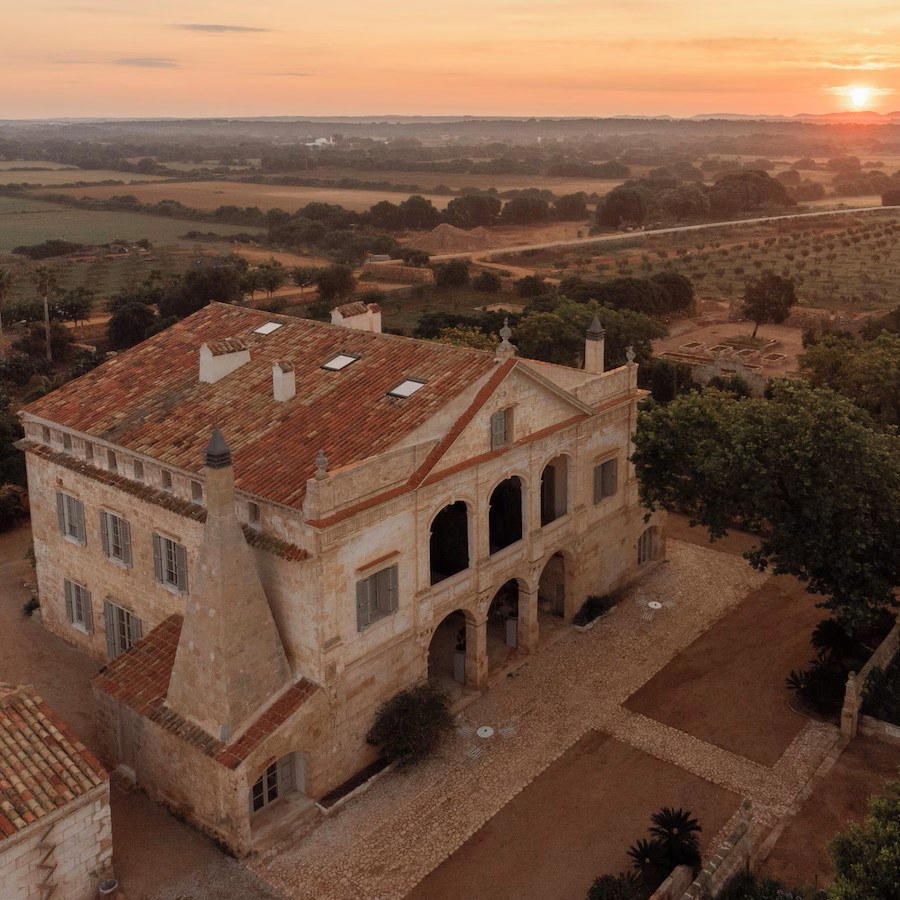
Bars in Menorca
Browse all →
Details
- Quiet
- Elegant
- Rustic
- Intimate
- Scenic
- Sophisticated
- Romantic Getaway
- Wellness Retreat
- Weekend Escape
- Infinity Pool
- Panoramic View
- Terrace
- Garden
- Pool
- Wi Fi
- Restaurant
- Fitness Center
Serene and sophisticated sanctuary with natural light, earthy elegance, and relaxing pastoral atmosphere amid groves and countryside.