Unnamed office-to-hotel conversion
Boulogne-Billancourt's office-to-hotel conversion sector represents one of the more architecturally consequential shifts in the Paris metropolitan hospitality market. Former corporate buildings, reimagined as design-led stays just outside the Périphérique, occupy a distinct position between central Paris luxury and suburban convenience. Specific details for this property remain forthcoming; check our Boulogne-Billancourt guide for updates.
- Address
- Boulogne Billancourt, France
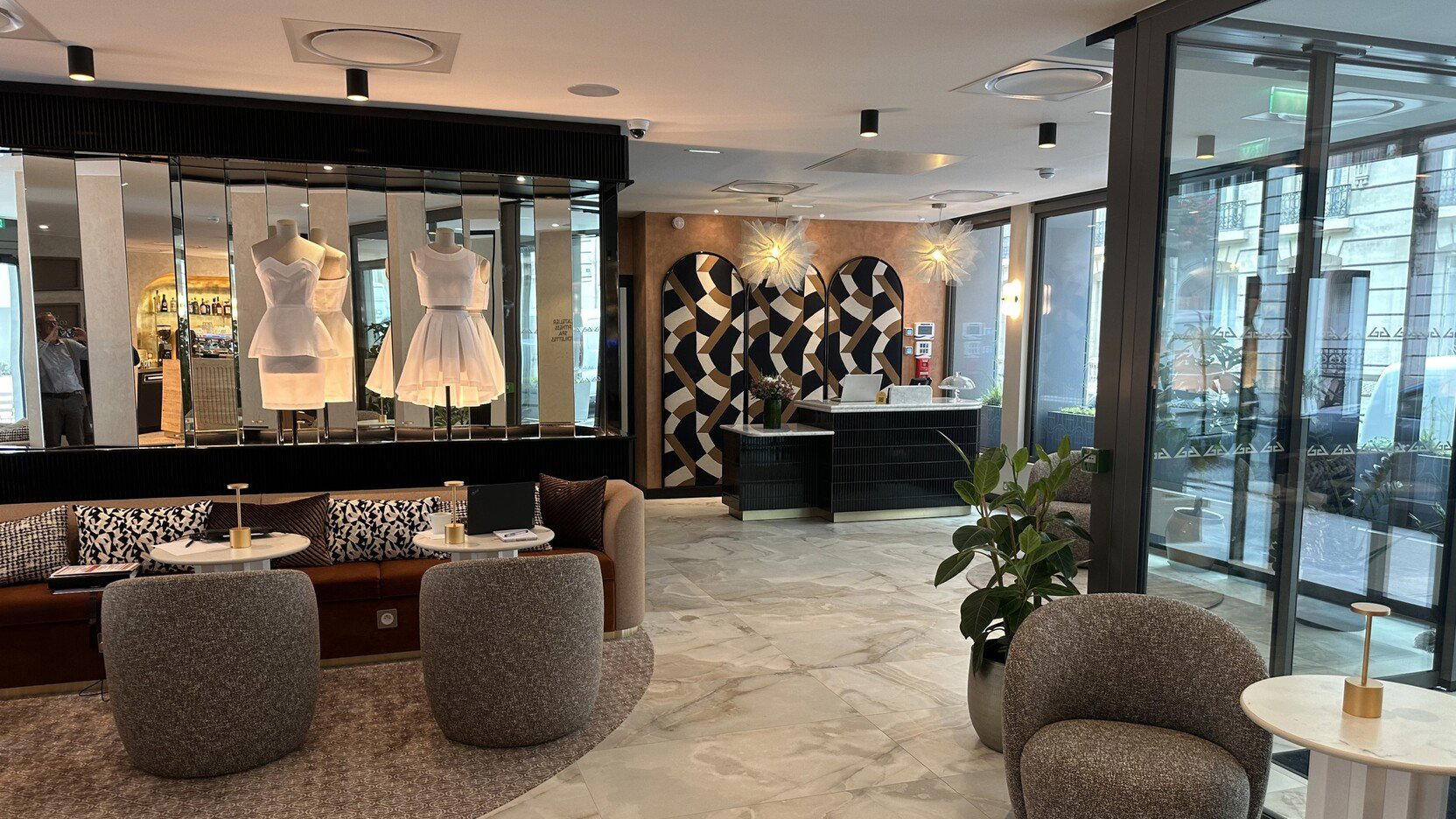
The Architecture of Reinvention: Boulogne-Billancourt's Office-to-Hotel Moment
Approach Boulogne-Billancourt from the Pont de Sèvres side and the built environment reads as a compressed history of French commercial ambition. Haussmann-era residential blocks give way to the glass-and-concrete grids that made this arrondissement hors-les-murs the headquarters district for a generation of French corporations. It is precisely that legacy — the empty floors, the suspended ceilings, the deep-plan floorplates that once housed open-plan offices — that now forms the raw material for one of the more considered adaptive-reuse movements in the greater Paris hotel market.
The conversion of former office stock into hospitality product is not a phenomenon unique to Boulogne-Billancourt, but the commune has particular structural reasons to lead it. The departure of several large employers following post-2008 consolidations left a stock of well-located, structurally sound commercial buildings without obvious alternative tenants. Residential conversion is constrained by planning norms. Hotels, sitting between commercial and residential in regulatory terms, became the pragmatic answer, and, in the hands of the right operators, an architecturally interesting one.
What Adaptive Reuse Actually Produces
When a mid-century or late-modernist office building becomes a hotel, the design brief is rarely direct. The bones of corporate architecture, column grids sized for open-plan desks, window-to-floor ratios calibrated for diffused working light, service cores positioned for lift banks rather than guest flow, resist easy domestication. The leading conversions treat those constraints as generators rather than obstacles. Column grids become the module for room widths. Deep floorplates, a liability in residential conversion, allow for larger room footprints than central Paris hotels at equivalent price tiers can typically offer. Industrial ceiling heights, where retained, produce a spatial register that no amount of boutique-hotel styling can fake in a purpose-built property.
This is the category context in which a Boulogne-Billancourt office-to-hotel conversion operates. The comparison set here is design-led urban conversions: properties that trade on spatial intelligence and architectural narrative rather than acreage or centuries of institutional history.
Boulogne-Billancourt's Position in the Paris Hospitality Map
The commune sits immediately west of the 16th arrondissement, with the Bois de Boulogne as a natural buffer between it and the city's most residential arrondissements. The Métro Line 9 and Line 10 connections, along with the T2 tram, place central Paris, specifically the areas around Trocadéro, the Champs-Élysées, and La Défense, within fifteen to twenty minutes. For travellers whose itineraries are weighted toward the western business districts or the Seine-side museums, the location argument for staying in Boulogne-Billancourt is stronger than it might appear on a map centred on the 1st arrondissement.
The hospitality market here operates at a different price register than the central arrondissements. That gap is closing as adaptive-reuse projects enter the upper-midscale and four-star tiers, but it remains meaningful. Guests who would pay premium rates for a functionally average room in the 8th can, in principle, access better-designed rooms with more floor space at equivalent or lower nightly rates by shifting ten minutes west. The trade-off is address cachet, which remains a real variable for certain traveller profiles.
For those oriented toward French hospitality at the coastal or alpine extreme, destinations like Hotel Du Cap-Eden-Roc in Cap d'Antibes, The Maybourne Riviera in Roquebrune-Cap-Martin, or Le K2 Palace in Courchevel, a Boulogne-Billancourt hotel functions as a Paris base rather than a destination in its own right. That is an honest framing, and the better properties in this conversion segment position themselves accordingly.
Design Philosophy in the Conversion Category
The design conversation around office-to-hotel conversions in France has matured significantly over the past decade. Early projects in the 2010s tended to mask their origins, lowered ceilings to cover industrial services, veneers applied over concrete columns, finishes chosen to evoke traditional hospitality rather than acknowledge the building's lineage. The more recent generation of conversions has moved in the opposite direction: the structural column is left exposed, the original curtain-wall glazing is retained where thermal performance allows, and the guest is invited to read the building's history as part of the experience.
This shift parallels what has happened in the broader adaptive-reuse sector across European cities, former industrial sites becoming design hotels, former religious buildings becoming cultural hospitality venues. In France, the conversion of heritage wine infrastructure into hospitality has produced properties like Hôtel Chais Monnet and Spa in Cognac, where the building's former life as a cognac warehouse is legible in the architecture. The office-to-hotel conversion in Boulogne-Billancourt operates within a similar logic, though the raw material is corporate rather than industrial or agricultural.
Properties taking this approach in the Paris suburbs are in dialogue with a wider French hospitality tradition that prizes specificity of place. Whether that is the provençal restraint of La Bastide de Gordes, the coastal material intelligence of Casadelmar in Porto-Vecchio, or the agricultural-estate logic of Villa La Coste in Le Puy-Sainte-Réparade, the connective tissue is a design language that grows from site conditions rather than being applied to them.
Planning a Stay: Practical Orientation
Travellers planning a stay in the Boulogne-Billancourt area should consult our full Boulogne-Billancourt guide, which maps the broader hospitality and dining offer in the commune and is updated as new properties confirm operational details. For context on the wider Paris luxury tier, including how properties like Le Negresco in Nice, Hôtel du Palais in Biarritz, or Château de la Chèvre d'Or in Èze define regional benchmarks, EP Club's France hotel coverage provides the comparative framework.
Those whose Paris itineraries include the western museums, the Fondation Louis Vuitton, or business in La Défense will find the Boulogne-Billancourt location genuinely convenient. The commune's restaurant offer, anchored by a cluster of mid-range and destination addresses along the Seine riverfront, is a secondary draw. On balance, the conversion category here is a practical argument as much as a design one, and in the current Paris market, that combination has genuine traction.
A Quick Peer Check
| Venue | Price | Awards |
|---|---|---|
| Unnamed office-to-hotel conversion (Boulogne-Billancourt)This venue — the venue you are viewing | Not listed | Not listed |
| Cheval Blanc Paris | $2,500+ | 3 Michelin Keys · World's 50 Best #20 |
| Le Meurice | $1,000–1,500 | 3 Michelin Keys · La Liste Top Hotels |
| Cheval Blanc Courchevel | $1,500–2,500 | 3 Michelin Keys · La Liste Top Hotels |
| The Peninsula Paris | $1,000–1,500 | 2 Michelin Keys · La Liste Top Hotels |
| Aman Le Mélézin | $2,500+ | 2 Michelin Keys · La Liste Top Hotels |
Continue exploring
More in Boulogne Billancourt
Details
- Modern
- Elegant
- Sophisticated
- Quiet
- Family Vacation
- Weekend Escape
- Business Trip
- Historic Building
- Design Destination
- Garden
- Terrace
- Rooftop Pool
- Wi Fi
- Fitness Center
- Restaurant
- Bar
- Meeting Rooms
- Parking
- Garden
- Street Scene
- Elevator
- Accessible Restroom
Warm, understated luxury with clean lines and tactile materials; terracotta and deep green tones create a calm, welcoming atmosphere throughout shared spaces and rooms.