Thornbury Castle


1 Michelin Key · Relais Chateaux Award
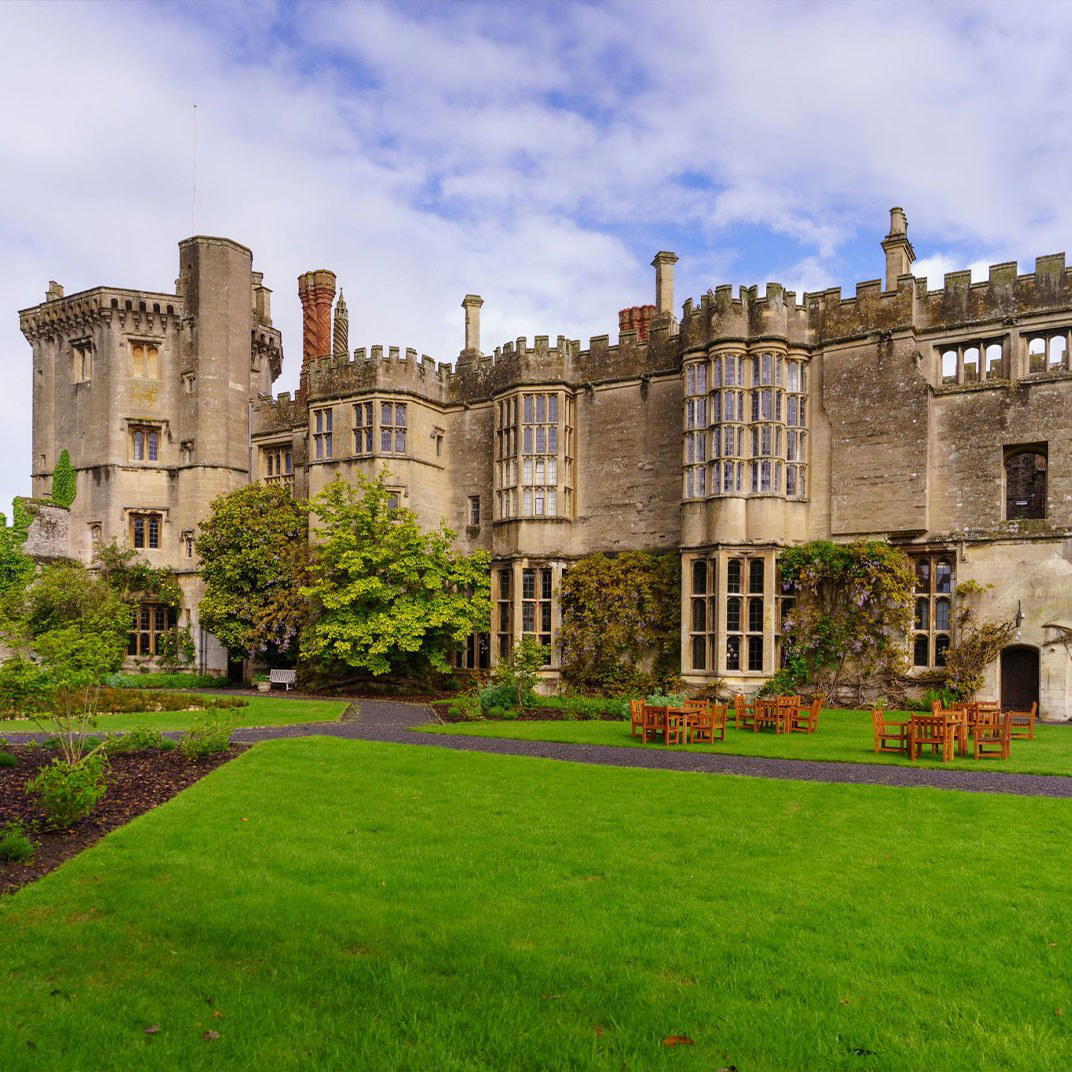
England's only castle hotel built and occupied by a Tudor monarch, Thornbury Castle sits in South Gloucestershire with a Michelin Key awarded in 2025. The property trades on genuine historical fabric rather than period reproduction, placing it in a narrow tier of UK castle hotels where architectural provenance does most of the work that design budgets do elsewhere.

Pearl is the En Primeur Club membership app, where members save venues, book tables and use the concierge.
A Castle That Precedes the Hotel Category Entirely
There is a category of British country house hotel that deploys castle aesthetics as decor: stone-effect wallpaper, reproduction heraldry, a turret or two added in the Victorian enthusiasm for the medieval. Thornbury Castle sits in a different register entirely. Construction began in 1511 under Edward Stafford, the third Duke of Buckingham, and Henry VIII stayed here in 1535, making it the only castle hotel in England built and occupied by a Tudor monarch. That provenance is not a marketing footnote. It is the architectural and atmospheric condition of the entire stay. The walls, the oriel windows, the spiral staircases: these are not interpretations of a period. They are the period.
For context on where Thornbury sits in the broader UK castle-hotel tier, consider what separates the category. Properties like Crossbasket Castle in High Blantyre offer Scottish baronial fabric with boutique hotel programming. Longueville Manor in Jersey works in the manor-house register rather than true castle form. Thornbury's distinction is the Tudor-original structure, largely intact, combined with a Michelin Key recognition in 2025, a credential that places it among a small cohort of UK properties where hospitality standards are considered to match the architectural weight of the building itself.
What the Architecture Demands of a Stay
Visiting Thornbury is less about checking in to a hotel and more about occupying a building that has its own prior life, one far longer than any hospitality operation. The tower rooms, with their thick stone walls and deeply recessed windows, frame South Gloucestershire countryside in a way that no amount of interior design expenditure could replicate. The proportions belong to a different century: ceilings that feel surplus to modern utility, fireplaces scaled to warm rooms before central heating existed, courtyards that were functional rather than decorative.
This kind of architectural experience places Thornbury in the same broad conversation as properties such as Estelle Manor in North Leigh, another English property where the building's original life informs the guest experience, and sits at some distance from the purpose-built luxury hotel model represented by something like Aviator Hotel in Farnborough. The trade-off is known and understood by the guests who seek it out: you gain atmosphere that cannot be constructed, and you accept that the building occasionally reminds you it was not designed for your convenience.
Position in the UK Country House Market
The UK country house hotel market has, over the past decade, split into two recognisable streams. One stream involves significant capital investment in spa facilities, tasting-menu restaurants, and contemporary interior design layered over period fabric, the approach taken at properties like Lime Wood in Lyndhurst or The Newt in Somerset. The other stream holds to the proposition that the building itself is the primary experience, with hospitality services playing a supporting rather than leading role.
Thornbury belongs to the second stream. The 2025 Michelin Key award signals that the hospitality offer has reached a threshold of quality, but the competitive argument of the property has always rested on something Michelin cannot grant: five hundred years of continuous architectural presence. For travellers comparing properties across the UK's wider premium tier, from Gleneagles in Auchterarder with its resort infrastructure to Farlam Hall Hotel in the Lake District with its intimate country house feel, Thornbury occupies a position that is harder to replicate than any of them.
South Gloucestershire as a Context
Thornbury sits in South Gloucestershire, a stretch of the Severn Vale that does not carry the same tourism weight as the Cotswolds to the east or the Somerset countryside to the south. That relative quietness has, over the years, contributed to the castle's character: there is no town centre geared to visitor traffic immediately outside, no cluster of competing attractions pressing against the property's edges. Castle Street in Thornbury is exactly the kind of address the name implies, a street scaled to the medieval, with the castle occupying its northern end with appropriate authority.
For those building a longer itinerary in the region, our full Thornbury restaurants guide covers the broader dining offer in and around the town. The surrounding area also connects easily to Bristol, placing urban amenities within reach without the castle itself being absorbed into urban noise.
The Michelin Key Standard
The Michelin Key programme, launched formally in 2024 and expanded in 2025, evaluates hotels against criteria that weight architectural character, service quality, and the coherence of the overall guest experience. A single Key, the level awarded to Thornbury Castle in the 2025 listings, places a property in the lower tier of Michelin-recognised hotels, but the significance of any Key recognition is what it signals about peer-set positioning: the property has cleared a threshold of quality that separates it from the general country house market.
Among comparable properties holding Michelin recognition, the Key at Thornbury reads as validation of the consistency of the operation rather than a claim to the level of hospitality investment seen at properties like The Savoy in London or Badrutt's Palace Hotel in St. Moritz. Thornbury is not competing in that register. Its claim is architectural authenticity at a standard of service that the Michelin process has found satisfactory, a combination that covers a different kind of need.
Planning a Stay
Thornbury Castle is located on Castle Street in Thornbury, South Gloucestershire, roughly 12 miles north of Bristol city centre, close enough to Bristol Parkway railway station to make a train-and-taxi arrival direct for those travelling from London Paddington. The property sits within a walled garden that provides additional separation from the surrounding town. Given the castle's profile and limited room count, advance booking is advisable, particularly for weekend stays and the summer months when South Gloucestershire's accessible countryside draws more visitors to the region. Guests considering peer properties in the UK's castle-and-manor tier, from Oddfellows on the Park in Manchester to Thornton Hall Hotel in Heswall, will find Thornbury's offer differentiated primarily by the age and provenance of the building rather than by spa or resort amenities. That distinction should inform the decision: if the architecture is the point, very few properties in England can match it.
In Context: Similar Options
Comparable venues nearby, for context on price, style, and recognition.
| Venue | Cuisine | Price | Awards | Notes |
|---|---|---|---|---|
| Thornbury CastleThis venue (the venue you are viewing) | Tudor castle luxury retreat blending 16th-century grandeur with modern comforts. | $300–500 | 1 Michelin Key · Relais Chateaux Award | Not listed |
| TreeTop House | Distinctive treetop bolthole on a private 17th-century country estate | $300–500 | Not listed | Box |
| Traquair House | fortified historic mansion with private 17th-century wing | Not listed | Not listed | Scottish Borders |
| Ned's Club | Historic landmark converted into lifestyle hotel and members' club | Not listed | Not listed | Cheapside |
| Nobu Hotel Manchester | Luxury mixed-use skyscraper hotel integrated into Manchester’s tallest tower, combining hospitality, residences, and destination dining under the Nobu lifestyle brand. | Not listed | Not listed | Deansgate |
| Abercrombie & Kent Villas | luxury villa with resort facilities | Not listed | Virtuoso Luxury Hotel Partner | Cheltenham |
Recognition history
Dated appearances from independent guides and award organizations, with the underlying list record or original source where available.
Michelin 1 Key
Michelin
Relais Chateaux Award
Relais Chateaux
Full recognition history (3 entries)
Michelin 1 Key
Michelin
Continue exploring
More in Thornbury
Hotels in Thornbury
All hotels in Thornbury →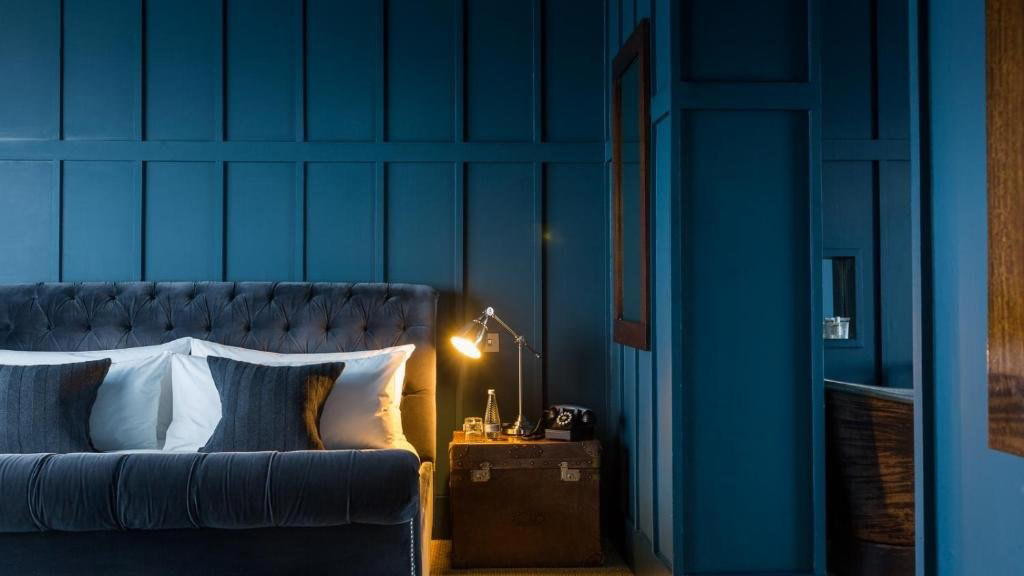
Bars in Thornbury
Browse all →
Details
- Romantic
- Elegant
- Classic
- Ornate
- Sophisticated
- Historic
- Honeymoon
- Romantic Getaway
- Anniversary
- Weekend Escape
- Historic Building
- Garden
- Terrace
- Room Service
- Concierge
- Garden
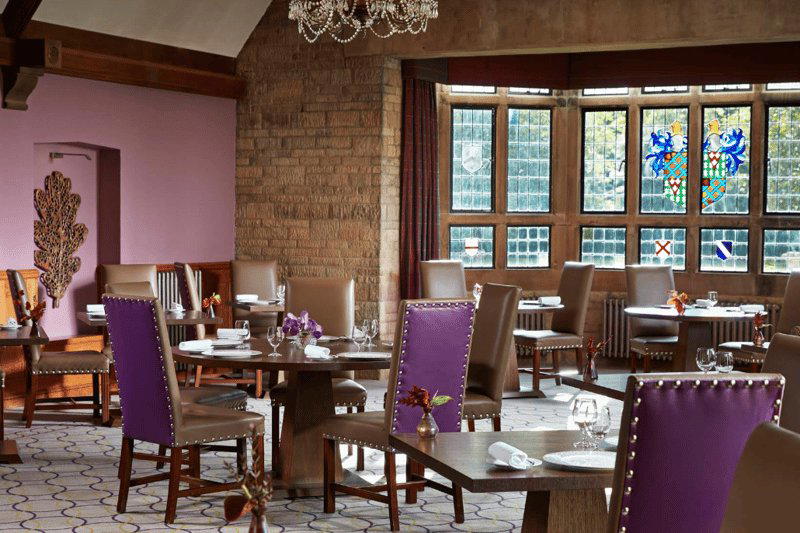
Ornate Tudor interiors with exposed stone walls, wooden paneling, tapestries, four-poster beds, velvet drapes, and fireplaces creating a regal, historical atmosphere.