The Lodge on Little St. Simons Island

La Liste Top Hotels
Little St. Simons Island is one of the last privately held barrier islands on the Georgia coast, accessible only by boat and home to just a handful of guests at any given time. The Lodge earned 97 points on La Liste's 2026 Top Hotels ranking, placing it among a small cohort of American properties where genuine remoteness is the primary amenity. For those weighing isolation against comfort, it sits closer to Amangiri than to a standard resort.

Pearl is the En Primeur Club membership app, where members save venues, book tables and use the concierge.
Where the Georgia Coast Runs Out of Road
The barrier islands of Georgia's coast have a particular character that sets them apart from Florida's more developed shoreline to the south and the Carolinas' resort corridor to the north. The Golden Isles chain, stretching from Sea Island to Cumberland, contains some of the last undeveloped maritime forest on the Atlantic seaboard. Little St. Simons Island occupies an unusual position within that chain: it is a privately held barrier island of roughly 11,000 acres, reachable only by boat across the Hampton River, and it receives guests in numbers so small that the ratio of wilderness to visitor remains genuinely tilted toward the wilderness. The Lodge on Little St. Simons Island operates within that context, and any honest assessment of the property has to begin with the island itself, because the island is the argument.
The Design Logic of Extreme Restraint
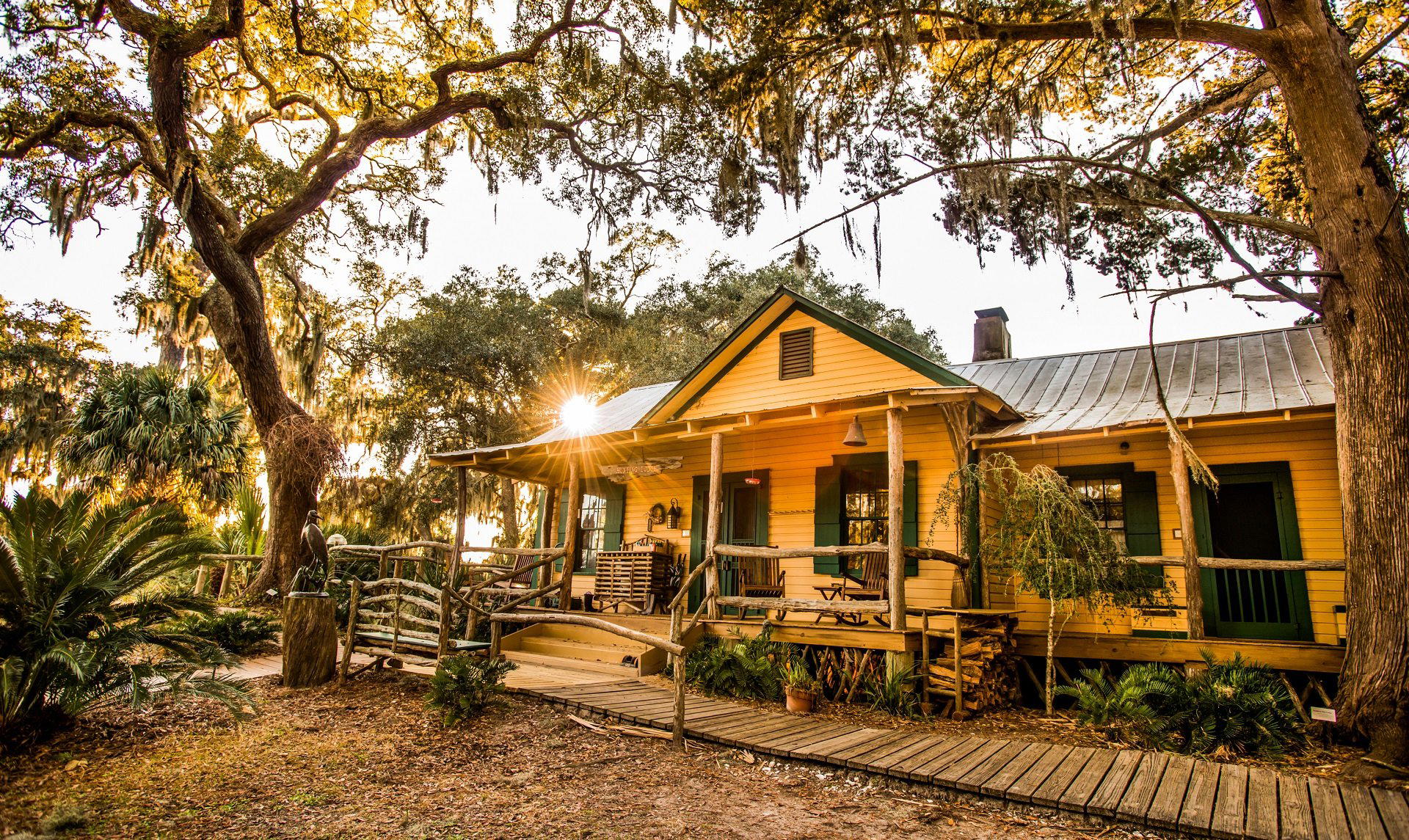
The dominant architectural tradition of American eco-lodges runs between two poles: the rustic-camp vernacular of the national park era, with its peeled-log columns and stone fireplaces, and the steel-and-glass naturalist aesthetic that arrived in the 1990s at properties like Post Ranch Inn in Big Sur. Little St. Simons Island belongs to neither camp in any pure sense. The Lodge's built environment skews toward the historic Low Country idiom: the main lodge structure dates to 1917, and the property's physical character has been shaped more by what has not been added than by deliberate architectural intervention. In a moment when hospitality design frequently layers material complexity onto natural sites, that restraint reads as a considered position rather than an absence of ambition.
Guest accommodations are distributed across several buildings, preserving the sense that you are moving through a working island property rather than a manicured resort campus. Boardwalks and shell paths connect structures that are deliberately low-profile against a canopy of live oaks draped in Spanish moss. The spatial experience is one of compression and release: enclosed by forest, then opening onto seven miles of Atlantic beach that, on any given day, may belong entirely to the guests in residence. That beach is not a backdrop to the architecture; it is the architecture's point.
Properties pursuing this degree of physical isolation face a structural tension between authenticity and amenity. Amangiri in Canyon Point resolved that tension through monumental contemporary design that competes with its desert setting on nearly equal terms. Little St. Simons Island resolves it differently, by keeping the built footprint subordinate and allowing the landscape to do the primary work. The comparison is instructive: both occupy remote sites with restricted guest counts, but the design philosophies diverge almost completely.
La Liste's Signal and What It Implies
The Lodge's 97-point score in La Liste's 2026 Leading Hotels ranking places it in distinguished company. La Liste, which expanded its scope to include hotels alongside restaurants, applies an aggregated methodology drawing on international media and critic data. A 97-point result for a property of this scale and remoteness indicates that the scoring system is weighting the category of experience-over-amenity at a meaningful level. Larger-capacity luxury resorts with broader facility profiles frequently score lower in these methodologies because aggregated critic response tends to reward coherence of concept over comprehensiveness of offering. The Lodge benefits from that dynamic: it has an exceptionally clear concept, and it executes within that concept without attempting to compete on dimensions where it cannot win.
Troutbeck in Amenia occupies a related register in the Northeast. What connects these properties is a refusal to treat the surrounding landscape as scenery to be consumed from a pool deck; the land is instead the program.
The Island as Program
Because Little St. Simons Island is privately managed for conservation as much as for hospitality, the activity structure differs from a conventional resort. Guided naturalist experiences, kayaking, shelling, and birdwatching on a island that hosts more than 280 recorded bird species are the primary activities. The Georgia coast's estuarine system, where salt marsh meets maritime forest and open beach, is one of the most biodiverse temperate coastal environments in North America, and the island sits within that system with its ecology largely intact. For guests whose interest in the natural world extends beyond a walk on a groomed trail, that distinction matters considerably.
Dining operates on an all-inclusive model typical of properties in this category: meals are served at the lodge, sourced with an emphasis on regional Low Country ingredients, and structured around the communal rhythms of a small island population rather than the à la carte logic of a hotel restaurant. The format aligns with what SingleThread Farm Inn in Healdsburg and Bernardus Lodge and Spa in Carmel Valley do within agricultural-landscape settings, though the Low Country coastal context gives the food program a distinctly different regional character.
Placing the Lodge in the American Wilderness-Luxury Conversation
The American market for remote luxury has expanded substantially over the past decade. Properties like Sage Lodge in Pray, Amangani in Jackson Hole, and Alpine Falls Ranch in Superior have established a western mountain vernacular within the category. The Southeast coastal variant that Little St. Simons Island represents is less crowded as a competitive set: the combination of private island access, conservation land scale, and historic built fabric is not easily replicated. Canyon Ranch Tucson and Ambiente in Sedona address the wellness-in-landscape category from desert positions; the Atlantic coastal equivalent has fewer practitioners at this level.
Guests accustomed to the service density of properties like Hotel Bel-Air in Los Angeles, The Fifth Avenue Hotel in New York City, or Raffles Boston should approach Little St. Simons Island with calibrated expectations. The value proposition here is not in the thread count or the cocktail menu; it is in the structural improbability of spending three days on a privately held Georgia barrier island with a handful of other guests and eleven thousand acres of functioning coastal ecosystem. That is a different argument than those made by Four Seasons at The Surf Club in Surfside or Aman New York, and it should be evaluated on its own terms.
Access to the island runs by ferry from the Hampton River Club Marina on St. Simons Island. Stays are bookable directly through the property. Demand across peak seasons, particularly spring and fall when the coastal climate is most favorable and birdwatching is at its richest, tends to fill capacity well in advance. For broader context on what St. Simons Island and the Golden Isles offer beyond the Lodge itself, see our full St. Simons Island restaurants guide.
Fast Comparison
Comparable venues nearby, for context on price, style, and recognition.
| Venue | Cuisine | Price | Awards | Notes |
|---|---|---|---|---|
| The Lodge on Little St. Simons IslandThis venue (the venue you are viewing) | Historic cottages set in wilderness with modern comforts | $500–750 | La Liste Top Hotels | Not listed |
| Municipal Grand | midcentury modern architectural icon restored as boutique hotel | $200–300 | Michelin Guide New Hotels New Hotel · Michelin Selected | historic district |
| Quercus | Regenerative working ranch with secluded luxury cabins | $1,000–1,500 | 1 Michelin Key · TIME 2026 TIME World's Greatest Places | Gay |
| The Digby | Blends historic architecture with modern luxury | Not listed | Not listed | Historic District |
| Hotel Phoenix Atlanta | Modern industrial luxury hotel in urban revitalization district | Not listed | Preferred Hotels L.V.X. Collection | Centennial Yards |
| Hideaway Inn | cozy mountain retreat with shared social spaces | Not listed | Not listed | Newbury |
Recognition history
Dated appearances from independent guides and award organizations, with the underlying list record or original source where available.
La Liste Top Hotels
La Liste
Continue exploring
More in St. Simons Island
Hotels in St. Simons Island
All hotels in St. Simons Island →
Details
- Rustic
- Scenic
- Quiet
- Cozy
- Romantic Getaway
- Family Vacation
- Group Retreat
- Weekend Escape
- Beachfront
- Waterfront
- Garden
- Historic Building
- Wi Fi
- Pool
- Beach Access
- Restaurant
- Waterfront
- Garden
- Wheelchair Accessible
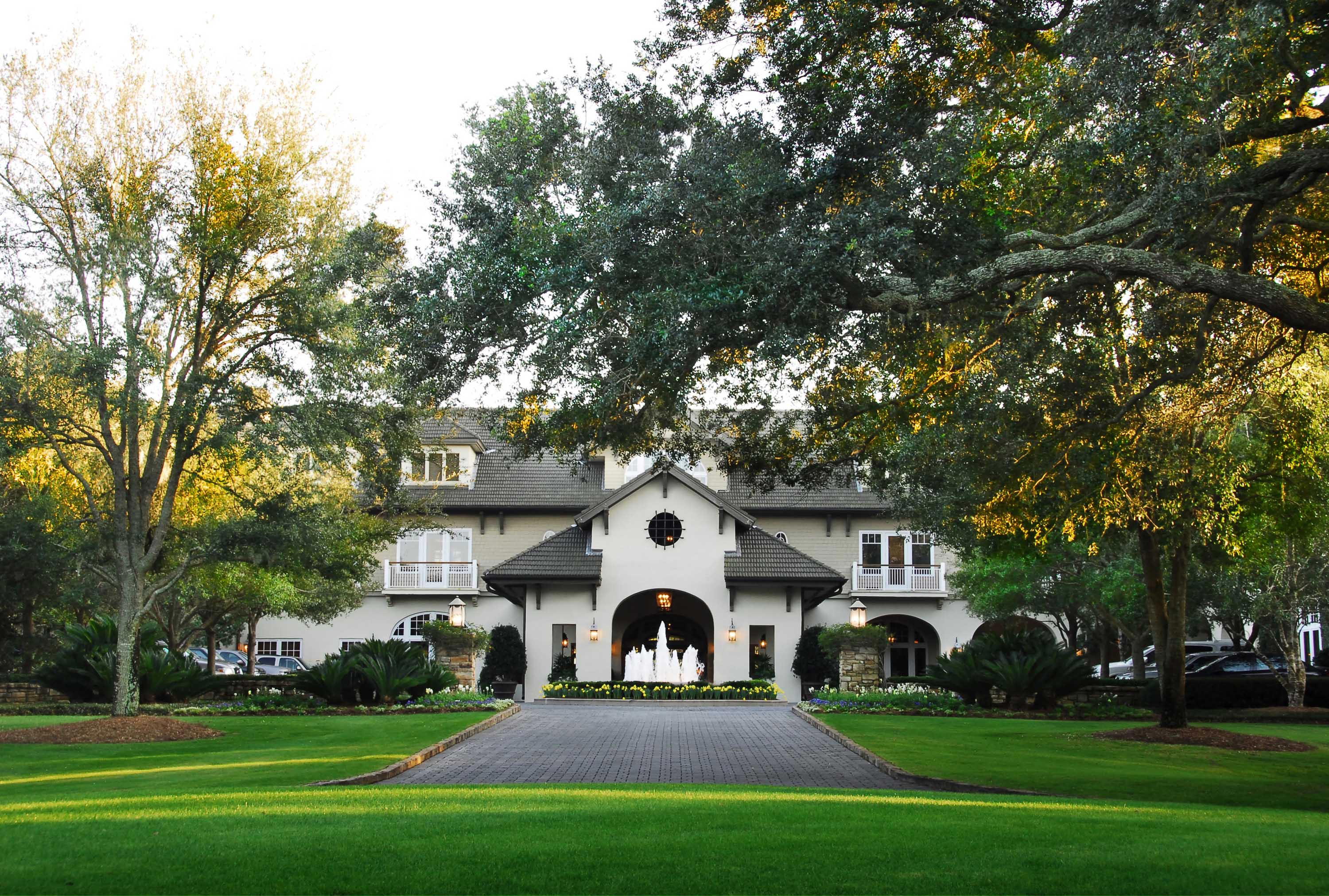
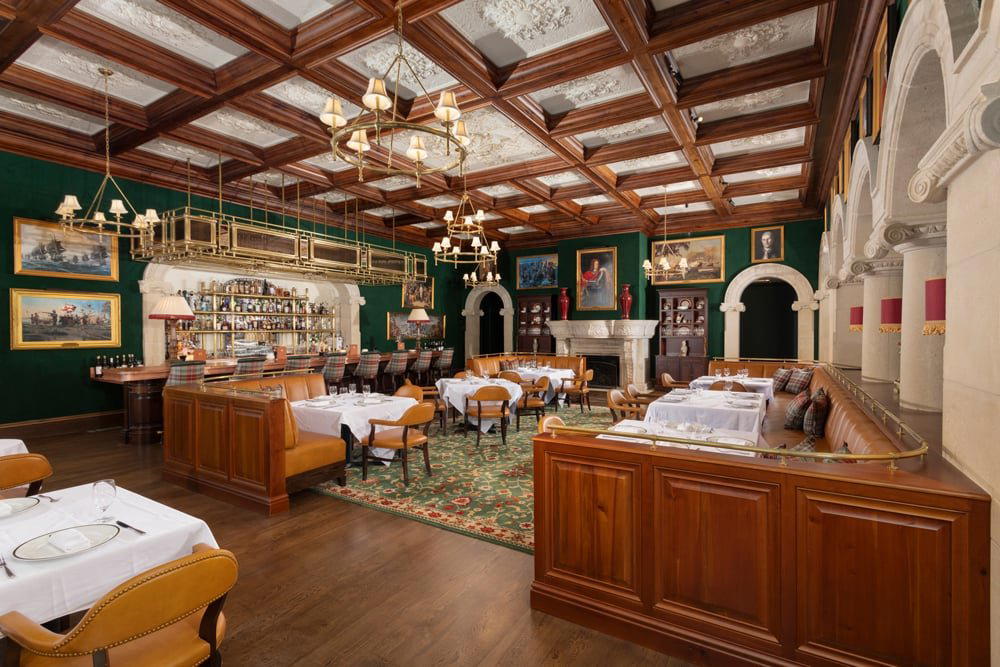
Rustic yet comfortable with natural light, antique furnishings, fireplaces, screened porches overlooking marshes, and a serene wilderness atmosphere.