The Lalu

1 Michelin Key
Carrying a 2025 Michelin Selected distinction, The Lalu sits above Sun Moon Lake on a ridgeline that places the water directly in the sightline of almost every room. The property belongs to a school of Taiwanese resort design that treats the natural setting as the primary architectural material, with glass, timber, and open corridors doing less to enclose guests than to frame what is already there.

Pearl is the En Primeur Club membership app — saves, bookings, and concierge access live there. Same editors, same standards.
- Address
- No.142 Jungshing Road, Sun Moon Lake, Sun Moon Lake, Taiwan
- Phone
- +886 49 285 6888
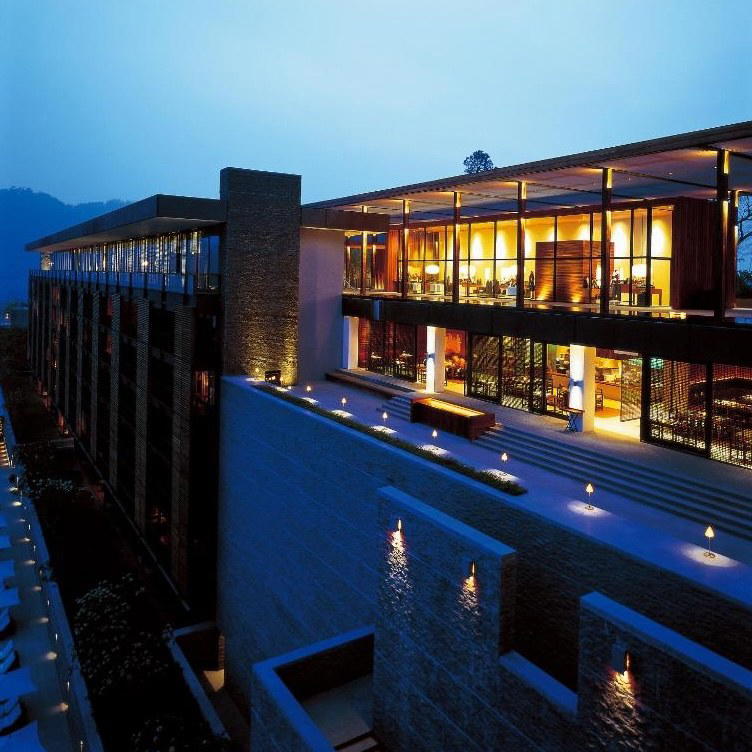
Glass, Water, and the Ridgeline Logic of Sun Moon Lake's Landmark Resort
Sun Moon Lake sits at roughly 760 metres above sea level in Nantou County, a two-hour drive south of Taichung through the Central Mountain Range. The lake is Taiwan's largest alpine body of water, and its surface shifts colour across the day in a way that has made it a reference point in Taiwanese landscape painting for centuries. The hospitality that has grown around it over the past two decades reflects a specific architectural thesis: that a building succeeding in this setting should not compete with the view but calibrate itself entirely around it. The Lalu, positioned on a promontory above the lake's northern shore, is the most cited local example of that thesis in practice.
The Architecture as Argument
The building's primary gesture is horizontal. Low-slung pavilions extend parallel to the waterline rather than rising above the treeline, and the result is that the lake remains the visual terminus from almost every public space on the property. Floor-to-ceiling glass runs along the lake-facing elevations, and corridors open onto terraces at intervals that feel deliberate rather than incidental. This is architecture that has made a decision: the landscape is the room, and the built structure exists to hold you at the right distance from it.
The material palette reinforces the position. Dark timber, stone, and muted neutrals appear throughout, a restrained vocabulary that keeps the eye moving outward rather than stopping on the interior surfaces. Taiwan's premium resort sector has, in general, trended toward this kind of material restraint in the years since international design-led hotels began competing seriously with domestic brands. The Lalu's design approach places it within that shift, functioning as an early and influential signal of the direction the category would take.
Among the comparable properties operating at a similar altitude and lake-adjacency format in central Taiwan, few match the consistency of The Lalu's spatial logic. Where properties like Grand Hilai Sun Moon Lake in Yuchi take a more conventionally grand hotel approach, The Lalu's design reads as quieter and more considered in its relationship to the site. That distinction has contributed to its sustained recognition within the Michelin hotel selection framework.
Michelin Selected and What That Signal Means
The Lalu holds a 2025 Michelin Selected designation, placing it within the Guide's curated tier for hotels rather than its restaurant star hierarchy. Michelin's hotel selection programme, expanded substantially in Asia over recent years, operates on criteria that weight design integrity, service consistency, and overall guest experience rather than food programming alone. A Michelin Selected designation in this context functions as a quality floor guarantee within a competitive field that includes numerous properties across Taiwan's lake and mountain resort circuit.
For context, the Michelin hotel framework in Taiwan sits alongside a growing body of recognised properties across the island, from the urban offerings of W Taipei and Hotel Indigo Taipei North in Zhongshan District to coastal and mountain alternatives. The Lalu's inclusion reflects a reading of the property as operating at a meaningful remove from the standard resort category, not simply because of its setting but because of how the design uses that setting.
Sun Moon Lake as a Destination, Not a Backdrop
The lake itself shapes the logic of a stay here in ways that distinguish Sun Moon Lake from Taiwan's beach resort circuit on the southwest coast or the hot spring towns concentrated in the northeast. The activity culture around the lake centres on cycling the 33-kilometre lakeside path, boat crossings to Lalu Island at the lake's centre, and the trail networks extending into the surrounding hills. The Thao indigenous community, one of Taiwan's smallest recognised indigenous peoples, maintains a presence around the lake's margins that adds a cultural layer most mountain resorts on the island do not carry.
The surrounding area also produces one of Taiwan's most recognised agricultural products: Assam black tea, cultivated on the slopes above the lake since the Japanese colonial period and still processed in small-batch operations that supply both local teahouses and export markets. For guests staying at The Lalu, this geographic specificity translates into a type of leisure that rewards slower, more attentive engagement than the high-volume attractions of Taiwan's major cities. The nearest alternative resort destinations operating at a comparable level include Hotel Indigo Alishan to the south, and the hot spring formats of The Moment Hotel Yilan by Lakeshore in Wujie and Volando Urai Spring Spa and Resort in Wulai District to the north.
Planning a Stay
Access to Sun Moon Lake from Taipei runs most efficiently via high-speed rail to Taichung followed by a direct bus service to the lake, a journey of approximately two and a half hours in total. From Taichung, road connections are direct and rental car access opens up the surrounding wine and tea country of Nantou County. The lake operates year-round, though autumn, when the water surface mist is most photogenic and temperatures settle into a comfortable range, draws the highest concentration of domestic visitors. Weekdays in the shoulder seasons offer noticeably quieter conditions.
Taiwan's broader resort options for travellers combining lake stays with other formats include InterContinental Taichung as a logical urban bookend, while those extending south can reference H2O Hotel in Kaohsiung, Hotel Dùa in Kaohsiung City, or the beach resort context of YOHO Beach Resort in Pingtung and Hotel dua Kenting. For those building a broader Taiwan itinerary, our full Sun Moon Lake restaurants and hotels guide maps the full range of options at the lake.
Booking The Lalu directly through official channels is advisable during national holidays and Golden Week periods when domestic travel demand in central Taiwan compresses availability across all properties in the area. The Michelin Selected designation tends to accelerate interest among international visitors who use the Guide's hotel recommendations as a primary filter, so lead times for peak season dates can be longer than the surrounding market average.
Comparable Venues
Comparable venues nearby, for context on price, style, and recognition.
| Venue | Cuisine | Price | Awards | Notes |
|---|---|---|---|---|
| The LaluThis venue — the venue you are viewing | Contemporary Zen-style luxury resort with cutting-edge design by renowned architect Kerry Hill, emphasizing simplicity and timeless beauty through natural materials and integration with landscape. | $500–750 | 1 Michelin Key | Not listed |
| The Lalu Hotel - Lake View Restaurant | Luxury zen-style resort harmonizing architecture with nature on Sun Moon Lake. | Not listed | Not listed | Yuchi |
| The Grand Hotel | Chinese palace-style landmark hotel with classical Chinese architecture and modern luxury amenities; designed to promote Chinese culture through extravagant design. | Not listed | Not listed | Mingsheng |
| Humble House Taipei | Contemporary urban gallery hotel blending Eastern tradition with Western modernity. | $200–300 | Michelin Selected | Xingya |
| Shangri-La's Far Eastern Plaza Hotel, Taipei | East-meets-West fusion in a towering urban landmark | Not listed | Michelin Selected · La Liste Top Hotels | Da'an |
| Grand HiLai Taipei | Modern luxury high-rise with palace-inspired architecture and smart room technology | $100–200 | Michelin Selected | Sanzhong |
Recognition history
Dated appearances from independent guides and award organizations, with the underlying list record or original source where available.
Michelin 1 Key
Michelin
Full recognition history (2 entries)
Michelin Selected
Michelin
Details
- Scenic
- Elegant
- Sophisticated
- Quiet
- Intimate
- Romantic Getaway
- Wellness Retreat
- Anniversary
- Weekend Escape
- Waterfront
- Infinity Pool
- Panoramic View
- Private Villa
- Destination Spa
- Historic Building
- Design Destination
- Wi Fi
- Pool
- Spa
- Fitness Center
- Room Service
- Concierge
- Hot Tub
- Restaurant
- Bar
- Sauna
- Waterfront
- Mountain
Serene and refined with natural materials, earth-tone aesthetics, and abundant natural light from large bay windows; thoughtfully designed common areas with symbolic courtyards and koi ponds create a contemplative atmosphere blending architecture with nature.