Star Castle Hotel
A sixteenth-century Elizabethan fortress converted into a hotel on St Mary's, the largest of the Isles of Scilly, Star Castle Hotel occupies a site that few British properties can match for architectural drama. The star-shaped ramparts and original garrison buildings frame a stay defined by Atlantic isolation, historical fabric, and the particular stillness that comes with being reachable only by boat or small aircraft.

Pearl is the En Primeur Club membership app, where members save venues, book tables and use the concierge.
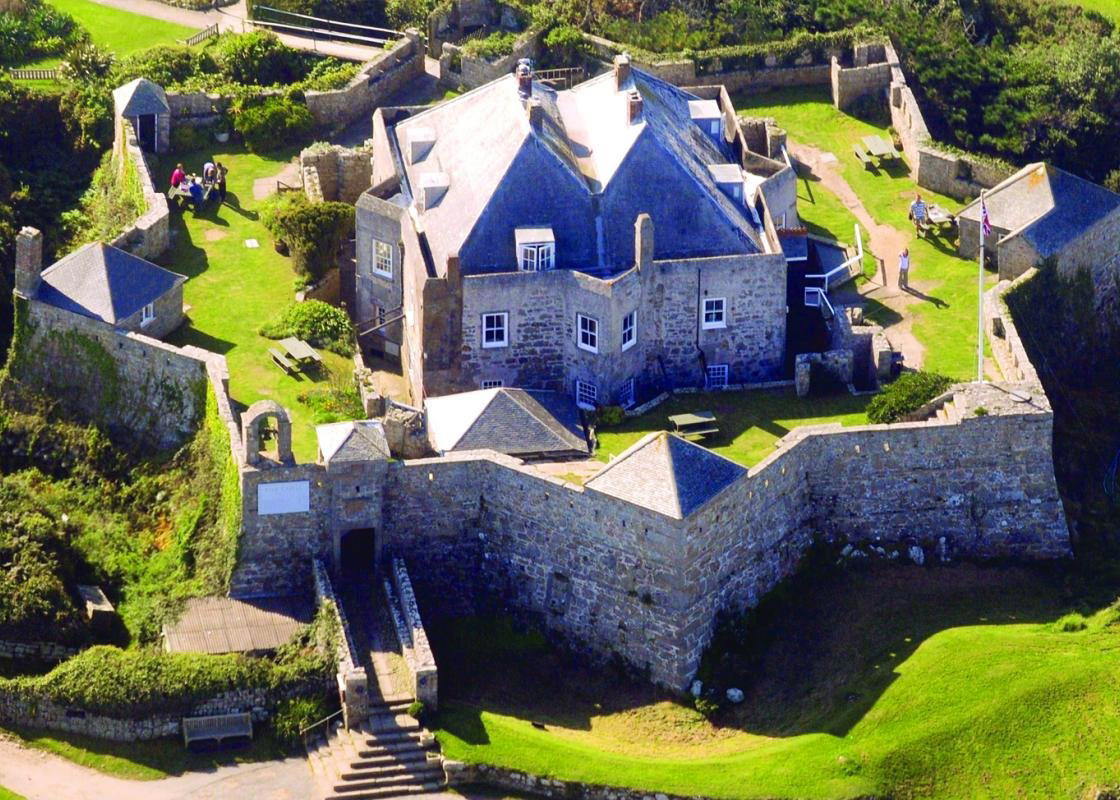
A Garrison on the Edge of Britain
The Isles of Scilly sit roughly 45 kilometres off Land's End, closer to France than to most of England, and the crossing, by Scillonian ferry from Penzance or by small aircraft from Exeter, Newquay, or Land's End, takes long enough to make the arrival feel deliberate. St Mary's, the largest island in the archipelago, receives the bulk of visitors, but the scale remains modest: the island measures roughly five kilometres at its widest point, and the sense of removal from mainland Britain is immediate and persistent. It is within this context that Star Castle Hotel operates, and the context matters enormously for understanding what kind of stay it represents.
The castle itself dates to 1593, commissioned by Queen Elizabeth I as a defensive garrison against Spanish naval threat following the Armada. The building's star-shaped plan, eight pointed bastions radiating from a central keep, was standard military engineering for the period, designed to deflect cannon fire and provide overlapping fields of fire from each point. What distinguishes Star Castle architecturally is how intact that original geometry remains. The star plan is not an approximation or a partial survival; it is a complete, readable form in the landscape, and approaching from Hugh Town the ramparts resolve from a distance into something that still reads as fortification first, hotel second.
Stone, Plan, and the Logic of Rampart Architecture
Elizabethan military architecture in Britain survives in fragments: a gatehouse here, a wall section there. Complete examples at this scale are scarce, and the Isles of Scilly's relative remoteness meant Star Castle escaped the more aggressive repurposing that transformed mainland fortifications into country houses or institutional buildings. The granite construction is consistent with Scillonian vernacular, the same local stone appears throughout St Mary's in field walls, quaysides, and cottage facades, which gives the castle a geological belonging that dressed-stone imports from the mainland would lack.
The conversion to hotel use, rather than erasing the military character, has preserved the thick walls and narrow apertures that defined garrison life. Guest rooms within the original castle retain the proportional logic of the period: relatively compact, with walls of considerable depth that keep interiors cool in summer and insulated through Atlantic winters. This is architecture that was built to withstand siege conditions, and it performs its thermal role without modernisation in ways that purpose-built hotels often cannot replicate. None operates inside a standing Elizabethan military structure.
The Garden Buildings and the Question of Room Choice
Beyond the original castle, the hotel includes accommodation in garden buildings set within the ramparts. This second tier of rooms offers a different spatial experience: typically larger, with more conventional proportions and direct garden access, they trade the atmospheric compression of the castle interiors for comfort by more standard hotel measures. The choice between castle rooms and garden rooms is, in practice, a choice between two different types of stay. Guests who prioritise the physical encounter with the building, the thickness of the walls, the low lintels, the sense of sleeping inside a structure with a documented 1593 construction date, will find that in the original castle. Guests who prioritise space and ease will find the garden buildings more accommodating in the conventional sense.
For context on how remote-island hotels in Britain structure their accommodation tiers, Hell Bay Hotel in Bryher, on Bryher, a neighbouring Scilly island, offers a useful comparison point. Both properties operate in the same island group and both serve a clientele that has made a significant logistical commitment to arrive; the difference lies in architectural register, with Hell Bay working in a lower-key contemporary idiom against Star Castle's historical weight.
Island Dining and the Scilly Constraint
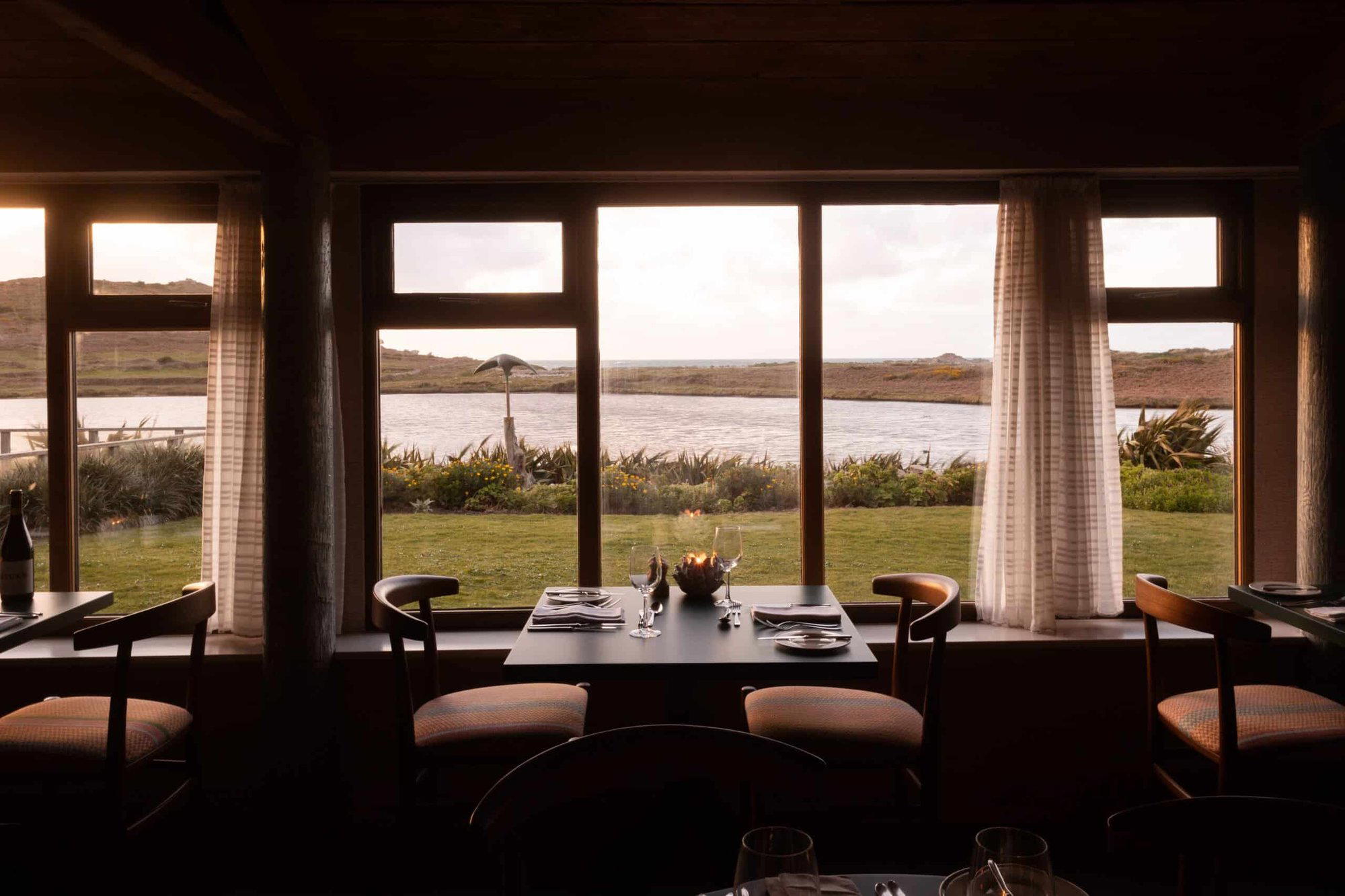
Island hospitality in the Scillies operates under supply chain constraints that mainland properties don't face. Ingredients arrive by boat, refrigerated transport is limited, and the rhythms of the kitchen follow the rhythms of the crossing. This is not a disadvantage so much as a condition that defines the food culture of the archipelago: local seafood caught in surrounding waters, seasonal produce from island gardens, a menu shaped by what is available rather than what a central purchasing operation can deliver overnight. The hotel's dining offer fits within this pattern, and understanding it in those terms, as island cooking defined by proximity and constraint rather than by mainland abundance, provides the right frame for expectation-setting.
The broader St Mary's food scene is small by any urban measure. For a full picture of where to eat and drink across the island, our full St Mary's restaurants guide maps the options with the context needed to plan around the tides and ferry schedules that govern island life. Among hotel stays on St Mary's, The Atlantic Inn represents a different price point and scale, and comparing the two helps clarify what Star Castle's architectural distinctiveness is worth as a premium.
Planning the Visit
Getting to the Isles of Scilly requires advance commitment. The Scillonian III ferry from Penzance runs seasonally and is weather-dependent; the crossing takes approximately two hours and forty minutes. Skybus operates small aircraft from Land's End, Newquay, and Exeter year-round, with Land's End the shortest crossing at around fifteen minutes of flight time. Both sea and air services book out well ahead in peak season, late June through August, and the accommodation on St Mary's, which is limited across all properties combined, follows the same booking pressure. Planning three to four months ahead for summer visits is advisable. Spring and early autumn offer shorter queues and the particular light quality that the Atlantic produces when the season is shifting. The castle's thermal mass means the building holds warmth longer into autumn than might be expected.
Among UK properties that reward advance planning and deliberate travel, The Newt in Somerset and Babington House in Kilmersdon attract a broadly comparable planning horizon, though neither involves the logistical specificity of an island crossing. Further afield in the British Isles, island properties like Langass Lodge in the Outer Hebrides and Ardbeg House in Port Ellen on Islay share the ferry-dependent access model that gives island stays their particular character.
Side-by-Side Snapshot
| Venue | Price | Awards |
|---|---|---|
| Star Castle HotelThis venue (the venue you are viewing) | $200–300 | Not listed |
| Lime Wood | Not listed | 2 Michelin Keys · La Liste Top Hotels |
| Muir, A Luxury Collection Hotel, Halifax | $300–500 | 1 Michelin Key · Forbes 4-Star |
| Raffles London at The OWO | $1,000–1,500 | 3 Michelin Keys · World's 50 Best #28 |
| The Connaught | $1,000–1,500 | 3 Michelin Keys · World's 50 Best #49 |
Continue exploring
More in St Mary S
Hotels in St Mary S
All hotels in St Mary S →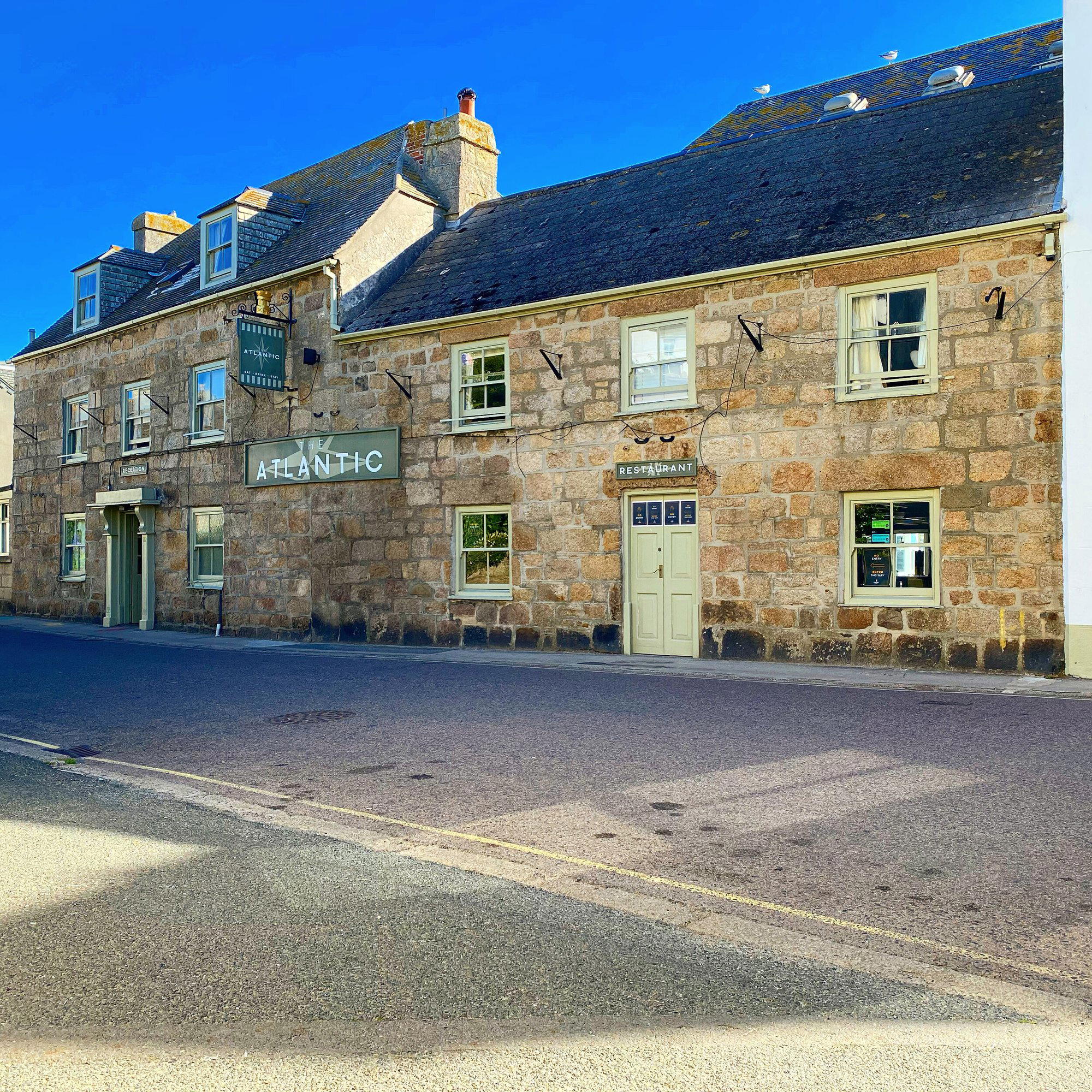
Bars in St Mary S
All bars in St Mary S →
Details
- Romantic
- Classic
- Scenic
- Cozy
- Elegant
- Well Known
- Romantic Getaway
- Family Vacation
- Anniversary
- Weekend Escape
- Historic Building
- Waterfront
- Garden
- Panoramic View
- Pool
- Restaurant
- Bar
- Garden
- Room Service
- Waterfront
- Garden
Historic stone passageways and dark cosy basement bar blend with contemporary refurbished interiors; romantic dining in conservatory with grapevine and soft lighting; commanding views of the archipelago from turrets and ramparts.