Rosewood Mandarina






AHEAD Awards AHEAD Americas Guestrooms Shortlist · Esquire Best New Hotels · Town & Country Hotel Awards
Spread across 565 acres where Nayarit's jungle meets the Pacific, Rosewood Mandarina arranges 134 rooms across three distinct ecosystems — beach, flatlands, and mountain — each with a private plunge pool. Rates from $1,100 per night position it at the upper tier of Mexico's Pacific coast luxury market, beside the adjacent One&Only Mandarina and well above the Puerto Vallarta hotel mainstream.

Pearl is the En Primeur Club membership app — saves, bookings, and concierge access live there. Same editors, same standards.
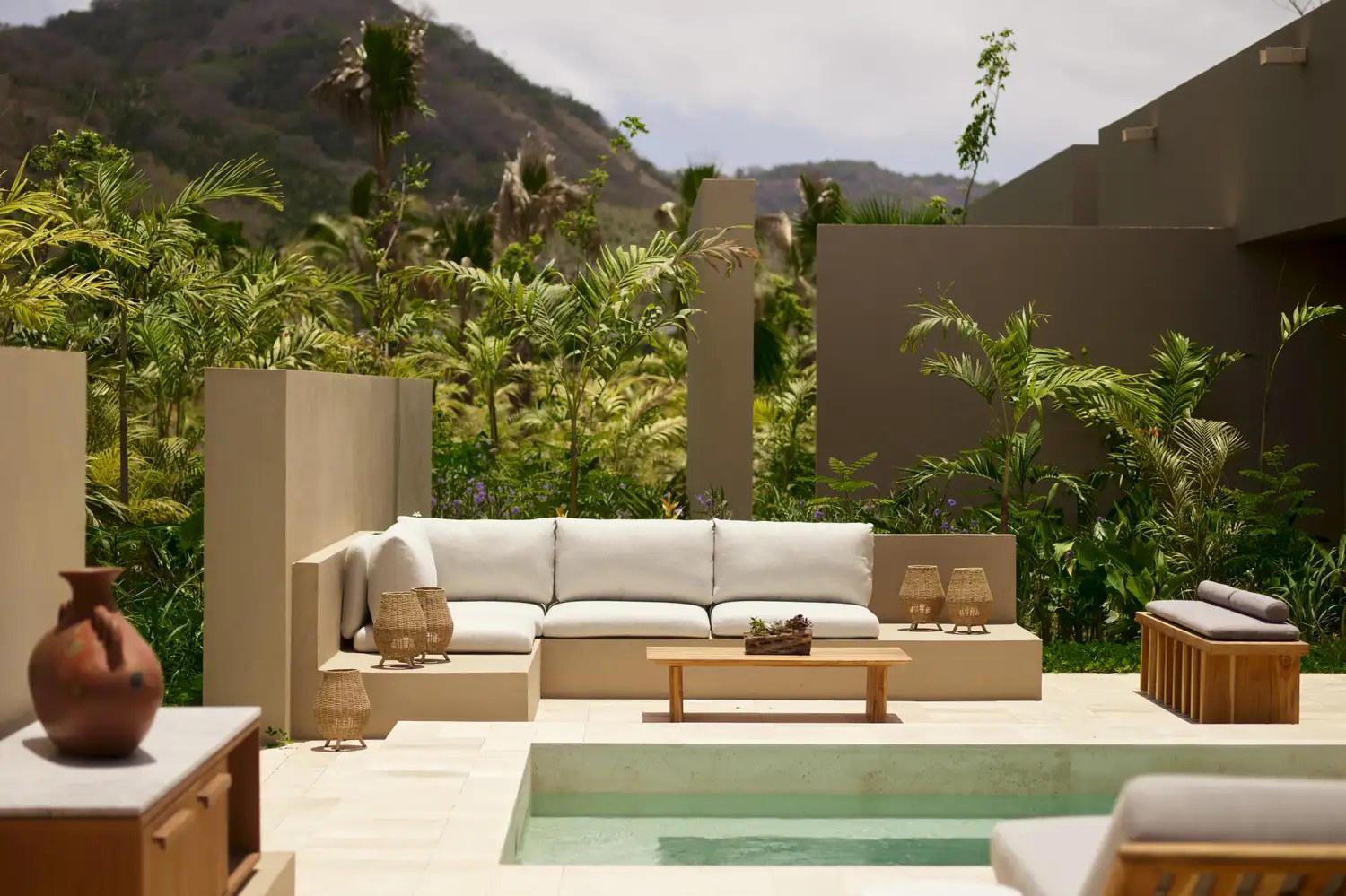
Where the Jungle Meets the Pacific: Setting and Design
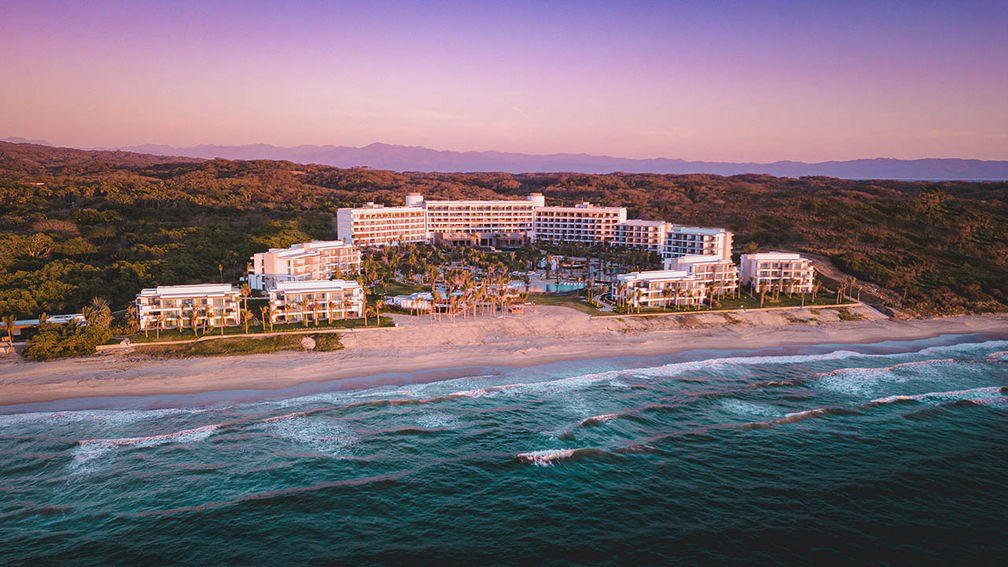
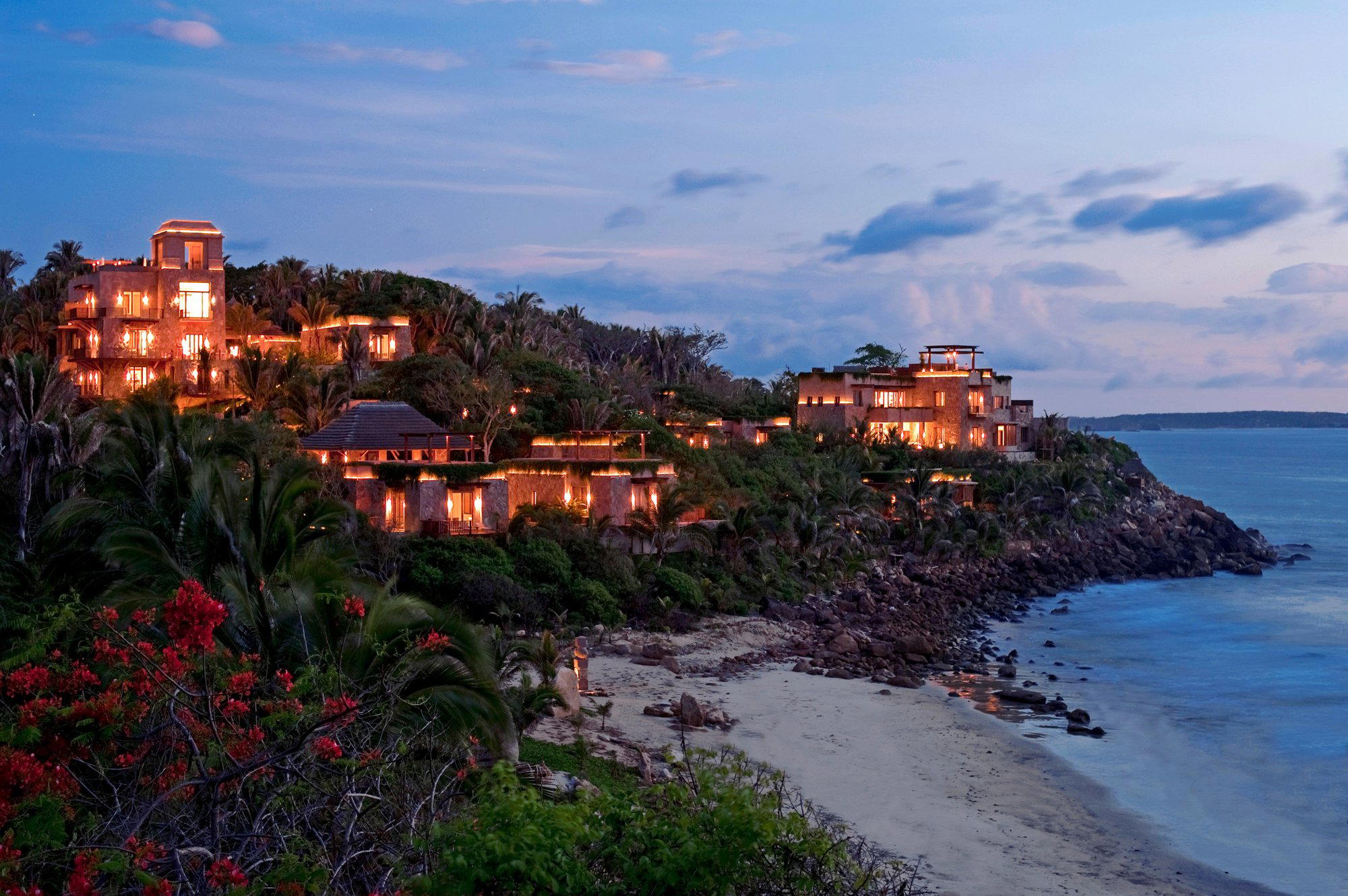
On Mexico's Riviera Nayarit, the 565-acre Mandarina development has become one of the more architecturally ambitious resort projects on the country's Pacific coast. The site already housed the One&Only; Mandarina, which opened in 2020, and the arrival of Rosewood Mandarina adds a second distinct property to what is effectively a luxury compound governed by a single geography — a stretch of Nayarit coastline where dense jungle descends toward a mile-long beach. The two hotels share the terrain but operate independently, each with its own design language and guest profile.
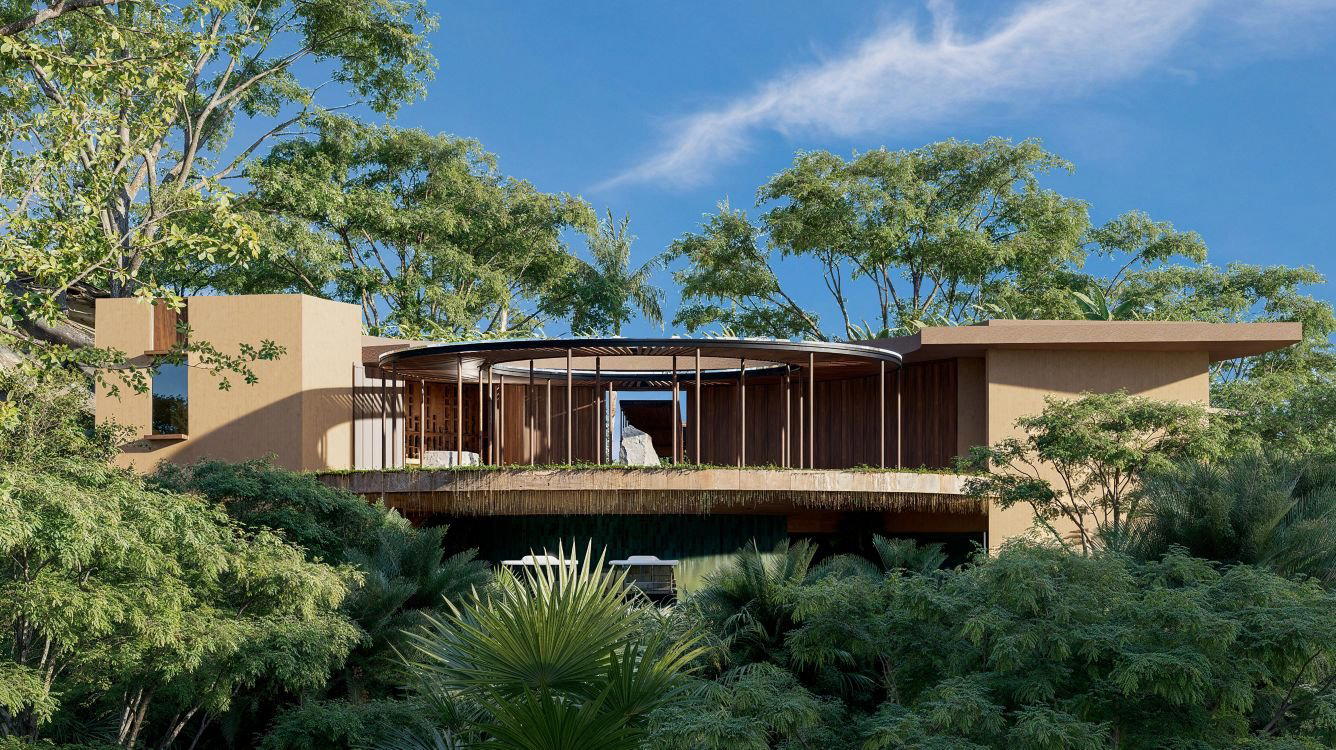
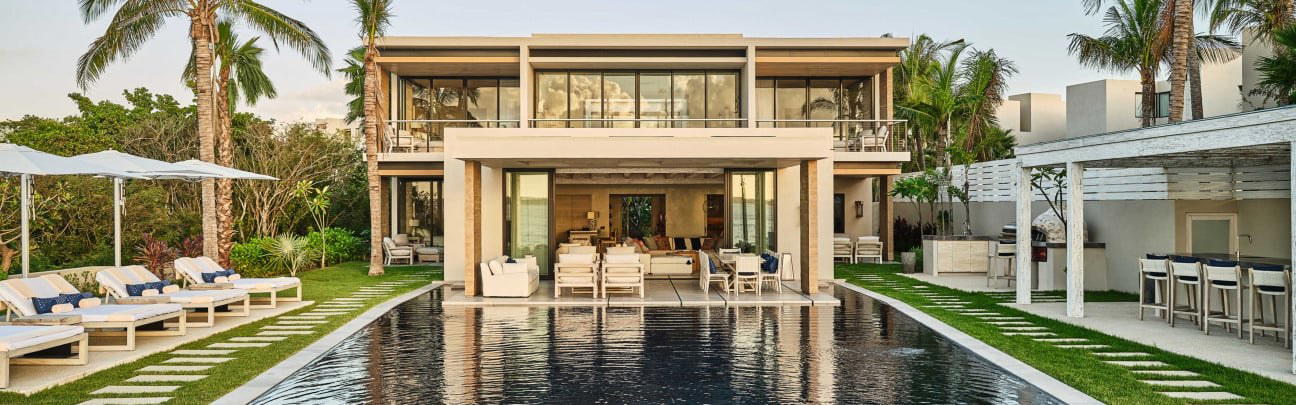
What distinguishes Rosewood Mandarina's spatial conception is the deliberate decision to read the land as three separate environments rather than flatten it into a conventional beach resort. Beachfront rooms place guests within earshot of the Pacific, where pelicans move above the waterline and local fishermen free dive for octopus off the shared surf break. The Flatlands suites occupy middle ground, with walking-distance access to four main pools and the alfresco restaurant. Mountain suites, reached by golf cart along a winding ascent, open onto panoramic views of the jungle canopy, the sea beyond, and, after dark, nothing but the sounds of the forest. This vertical arrangement across ecosystems is unusual in the Mexican resort context, where most luxury properties orient entirely toward the coast and treat interior terrain as service infrastructure.
The 134 rooms each include a private plunge pool, a design choice that speaks to the property's positioning: at rates from $1,100 per night for doubles, the expectation of private water access at every room category is part of the value proposition rather than a villa-tier upgrade. Compared to how properties like Montage Los Cabos or Zadun, A Ritz-Carlton Reserve in Los Cabos approach tiered amenity access, Rosewood Mandarina's across-the-board plunge pool inclusion shifts the hierarchy away from room category and toward ecosystem preference.
Three Hotels in One Site
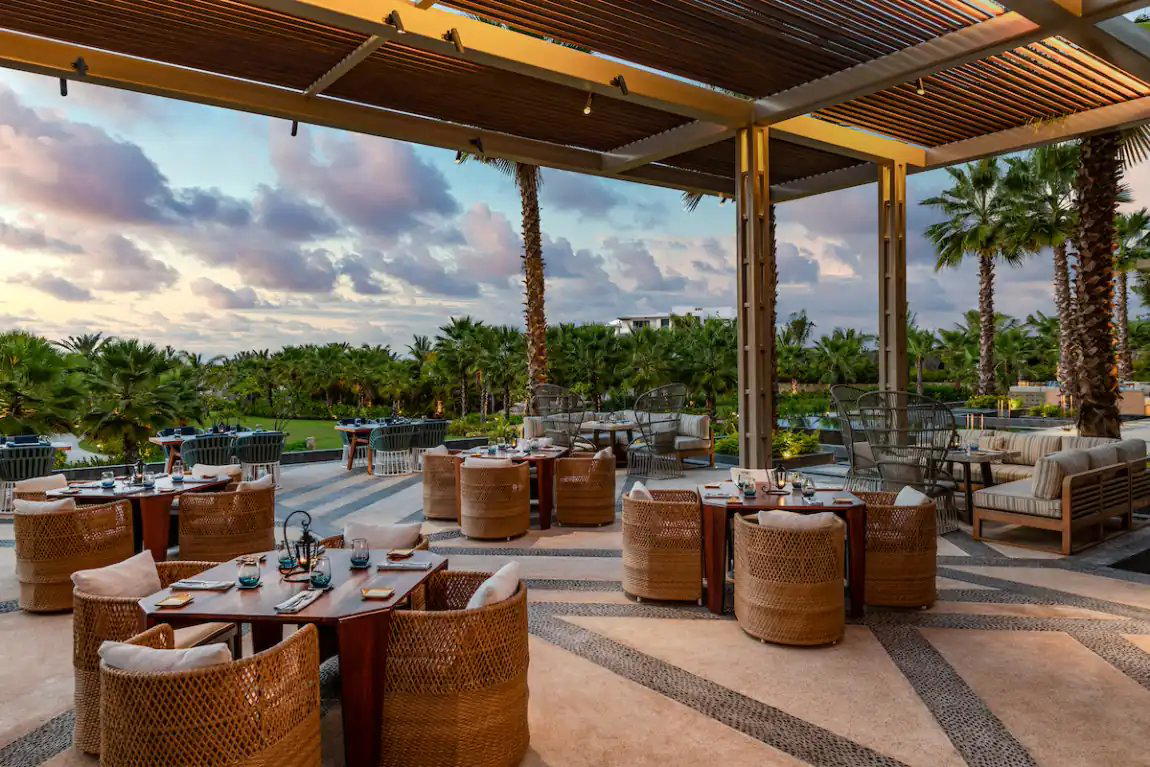
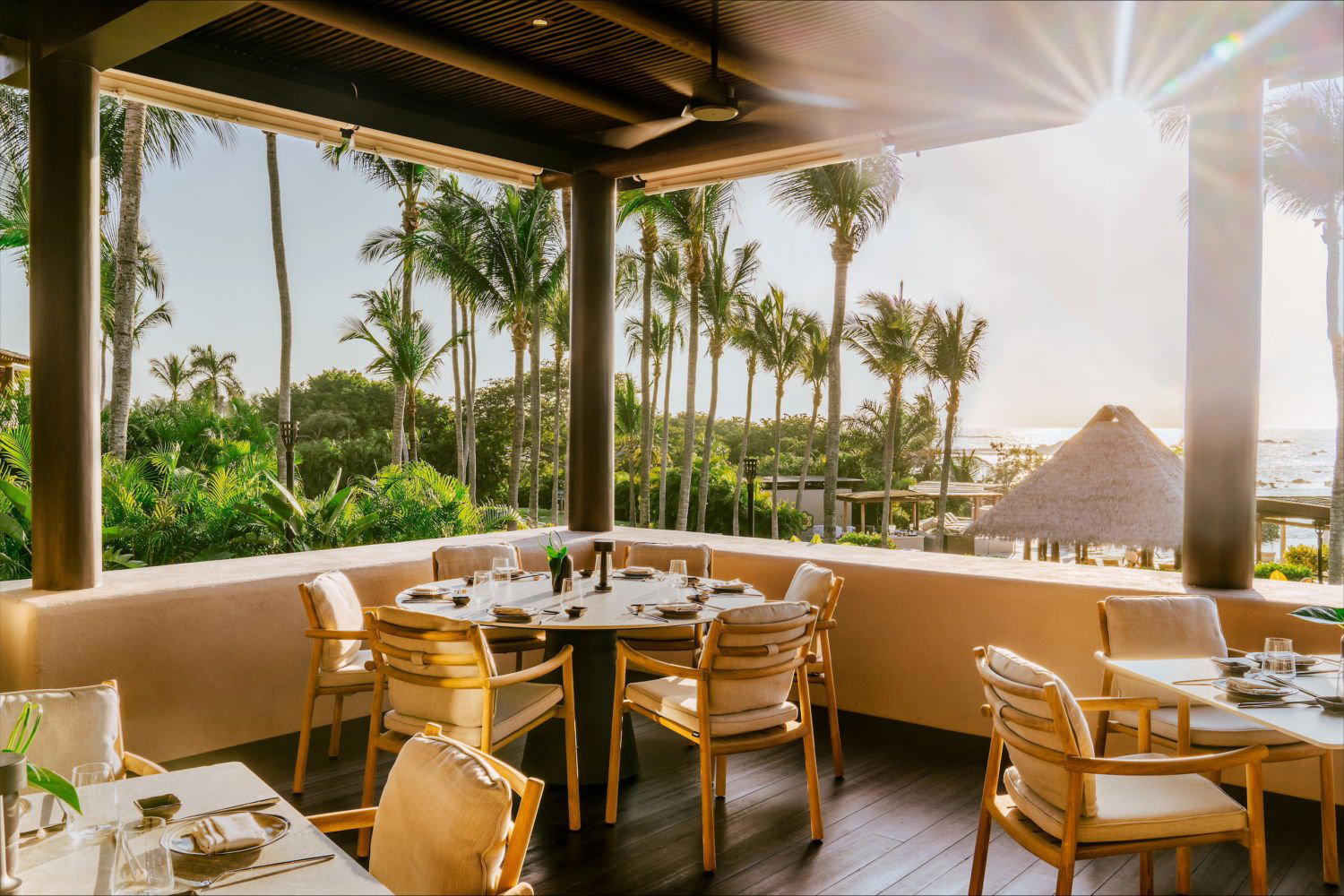
The ecosystem structure does more than organize the rooms geographically — it creates meaningfully different experiences within the same property. Guests choosing the beach zone get immediacy: the ocean, the surf, the fishermen, the pelicans, and the rhythm of a working coastline. Families drawn to the Flatlands tier get the practical convenience of pool proximity, the kids club, and direct access to La Cocina Mandarina, the open-air restaurant serving Mexican seafood. The mountain tier operates on a different register entirely: the Japanese-inspired Toppu restaurant and the cliffside Barra Peñasco cocktail lounge are both positioned at elevation, making the upper zones feel less like a resort and more like a secluded compound that happens to be part of one.
This internal differentiation makes Rosewood Mandarina harder to categorize alongside conventional beach properties. It is not primarily a surf resort, a family resort, or a couples retreat, it holds all three simultaneously across its vertical range. Properties like Susurros del Corazón, Auberge Resorts Collection in Punta de Mita or Maroma in Riviera Maya each hold a more singular identity. Rosewood Mandarina's segmentation is by terrain, which keeps the property from feeling overbuilt while accommodating genuinely different guest motivations.
Food, Culture, and the Wixárika Presence
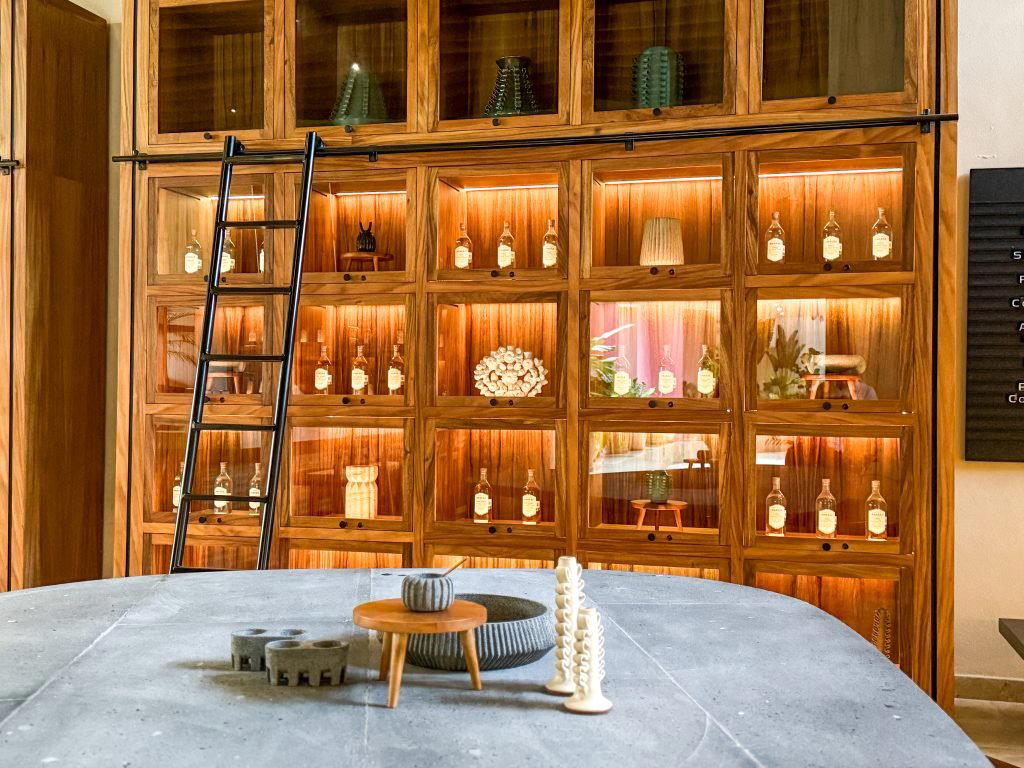
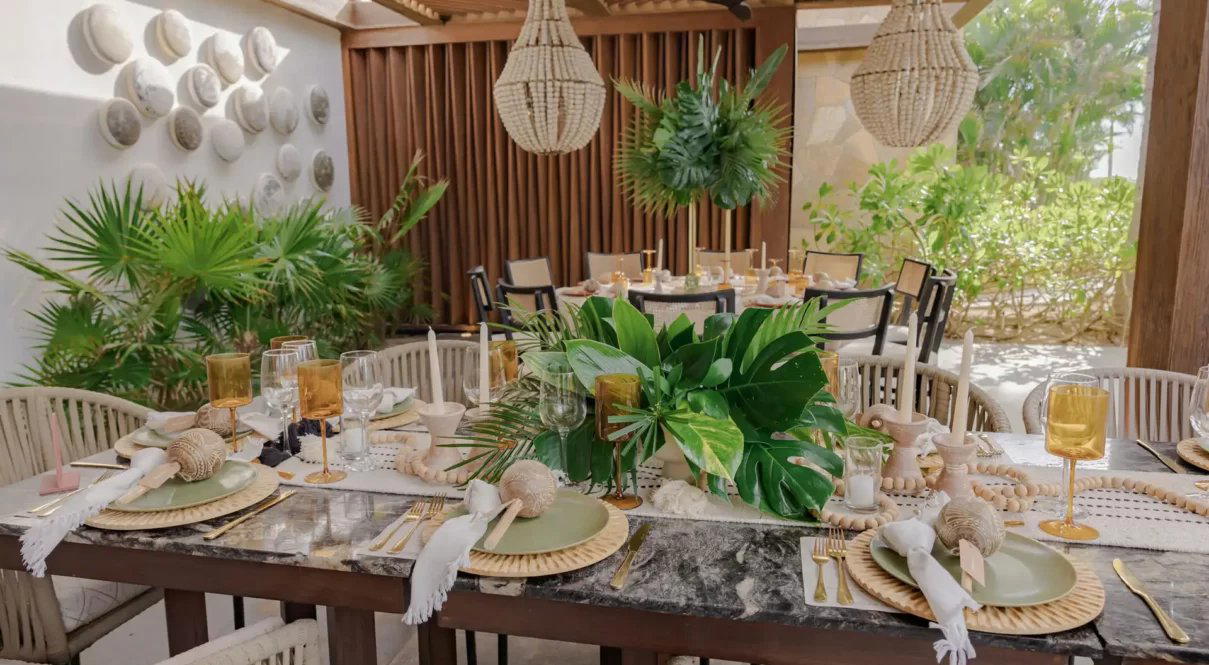
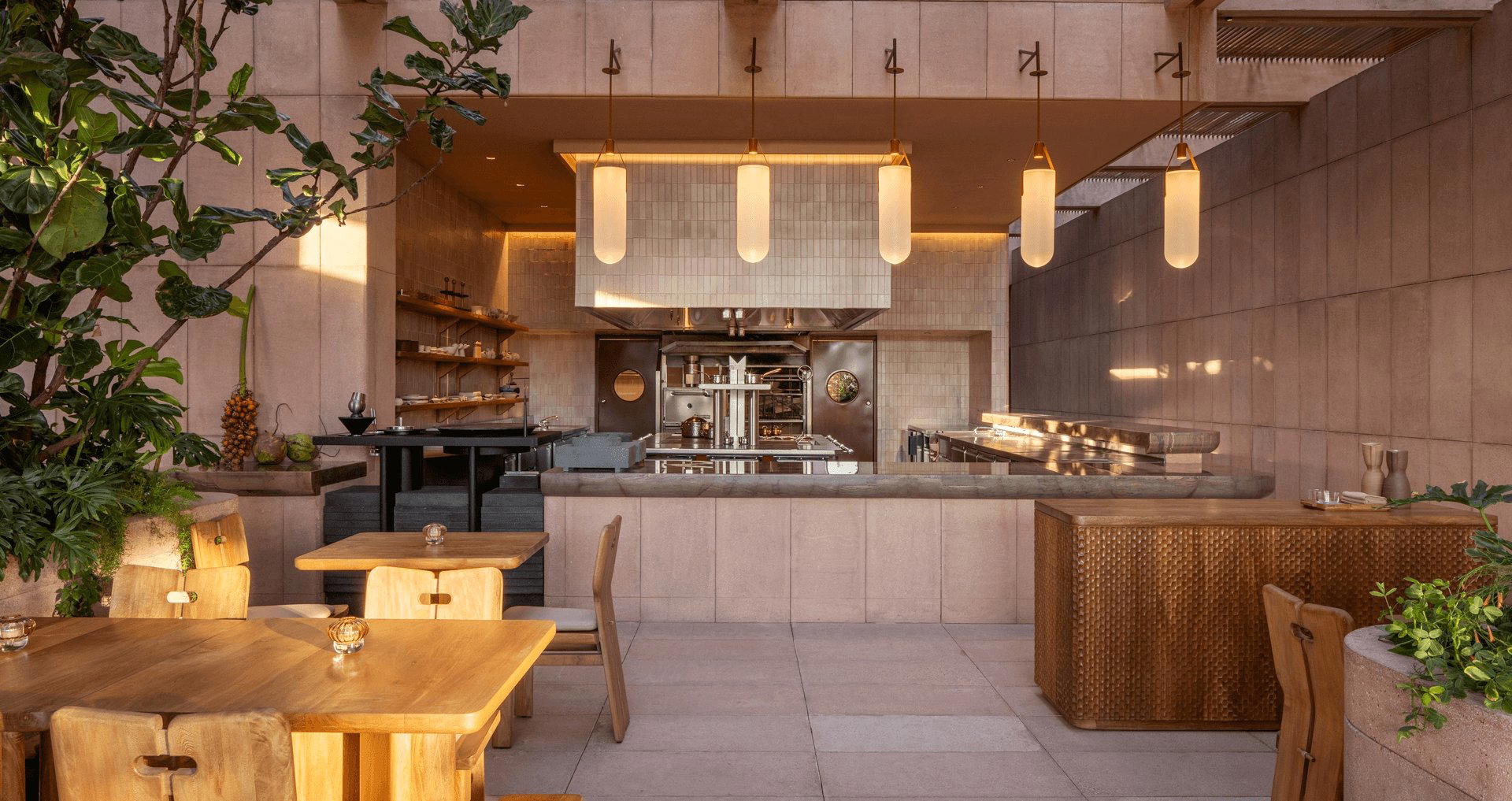
La Cocina Mandarina, the main alfresco restaurant, operates in a space that reads more like a gallery than a dining room. Wooden shelves display ceramics and beaded figurines made by the Wixárika, the Indigenous community whose territory covers much of Nayarit and Jalisco. The presence of Wixárika craft inside the restaurant's architectural frame is not decorative tokenism but a reflection of the region's actual cultural geography. The Wixárika are one of Mexico's most intact Indigenous communities in terms of ceremonial practice and artistic tradition, and their beadwork and yarn paintings command serious attention in contemporary Mexican art contexts. A resort that makes this visible inside its primary food space is making an editorial choice about what the place means, not just what it looks like.
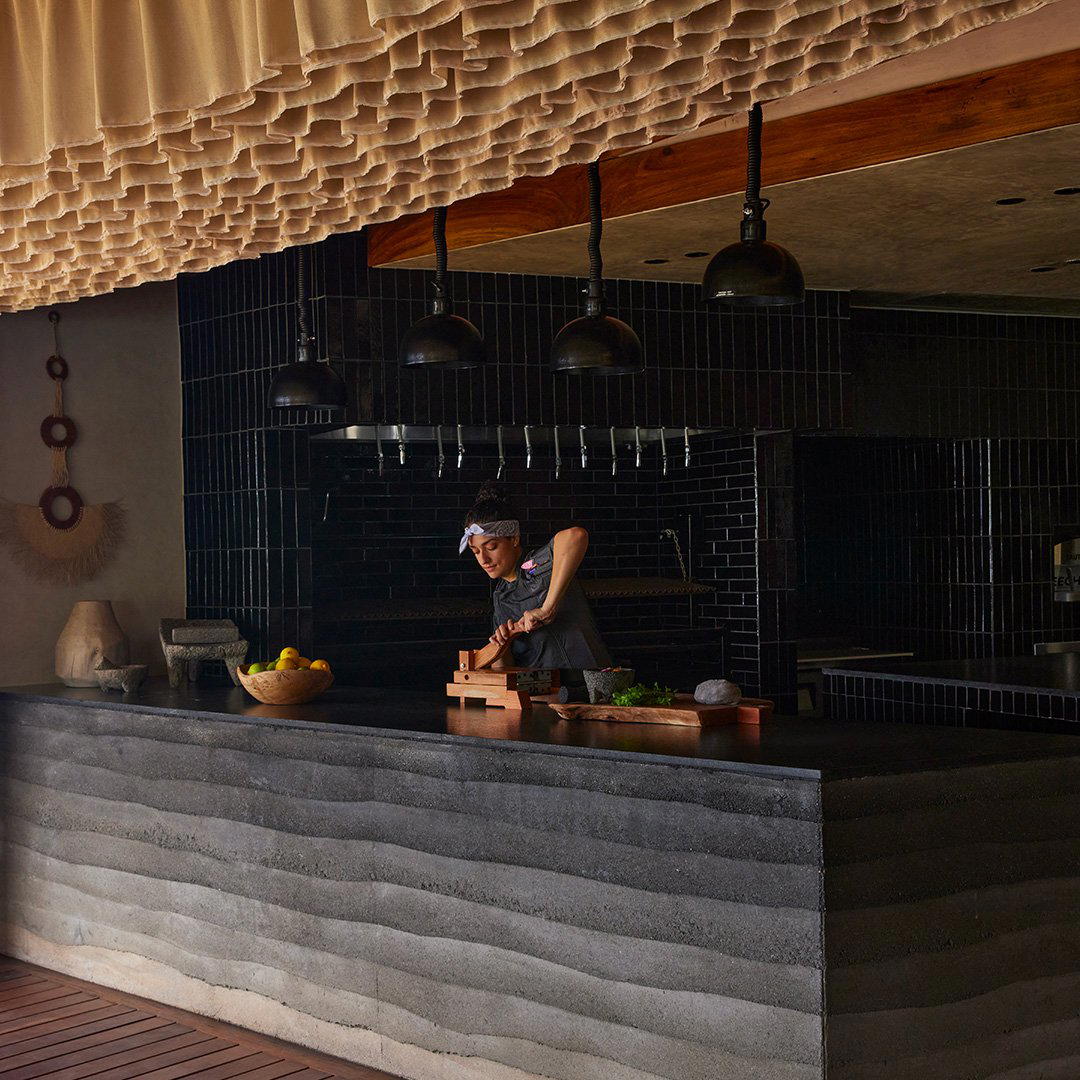
The food at La Cocina Mandarina leans into the Pacific coast's ingredient strengths, charred shrimp aguachile, lobster tacos, fresh tortillas from an open comal. These are not fusion interpretations but direct expressions of the regional seafood pantry. Mexico's Pacific coast, from Sinaloa through Nayarit and down to Jalisco, has a distinct seafood cooking tradition that differs sharply from the Gulf side or from Mexico City's restaurant culture. The aguachile format in particular is Sinaloan in origin and has become one of the cleaner ways to read the quality of local shrimp sourcing, how it's prepared at La Cocina reflects the same principles governing the better seafood restaurants operating in Puerto Vallarta's Zona Romántica, which you can explore further in our full Puerto Vallarta restaurants guide.
Activities and the Architecture of Doing Nothing
The activity list at Rosewood Mandarina is extensive: four ziplines across the jungle canopy, polo, horseback riding, hiking trails, pickleball courts, and a guacamole-making class among them. A hike to a 500-year-old tree within the property's acreage adds genuine natural scale to the experience. The spa offers treatments that incorporate regional materials, including a tobacco-and-peyote balm massage that draws on local ceremonial plant traditions, a practice that sits at the edge of what most international luxury spas will incorporate and signals how seriously the property engages with its Nayarit context.
But the design of the physical space, the private plunge pools, the secluded mountain suites, the Barra Peñasco lounge at the cliff edge, is structured as much around non-activity as activity. The property does not require engagement with its programming in the way that all-inclusive formats in Cancún or the Riviera Maya do. That distinction matters at $1,100 per night: guests are buying optionality rather than a curated schedule. Compared to Hotel Esencia in Tulum or Chablé Yucatán in Mérida, which each build their identity around deliberate stillness, Rosewood Mandarina offers a denser activity infrastructure alongside that stillness, the choice to use none of it is available, and the design supports it.
Planning Your Stay
Rosewood Mandarina is located in Tepic, Nayarit 63724, and is accessible from the Licenciado Gustavo Díaz Ordaz International Airport in Puerto Vallarta, which serves direct routes from major North American cities. The Mandarina development sits north of Puerto Vallarta proper, along the Riviera Nayarit corridor that also includes Punta de Mita. Doubles start from $1,100, placing the property at the upper end of Mexico's Pacific coast luxury tier alongside the adjacent One&Only; Mandarina and in a comparable bracket to Las Ventanas al Paraíso, A Rosewood Resort in San José del Cabo. The 134 rooms across three ecosystems mean the property has meaningful scale without the anonymity of a large beach hotel. Families, couples, and solo travelers will each find a zone calibrated to their pace, but the room type choice is the most consequential decision at booking.
For travelers considering alternative scales and price points in the Puerto Vallarta area, options like Hotel Mousai, Casa Velas, Hacienda San Angel, Casa Kimberly, and BellView Boutique Hotel each occupy different positions in the city's accommodation spectrum. Further afield in Mexico, Xinalani in Quimixto, Playa Viva in Juluchuca, Las Alamandas in Costalegre, Casa Silencio in San Pablo Villa de Mitla, Casa de Sierra Nevada, A Belmond Hotel in San Miguel de Allende, Etéreo, Auberge Resorts Collection in Punta Maroma, Palmaïa-The House of AïA in Playa del Carmen, and Casa Polanco in Mexico City each represent distinct takes on Mexican luxury hospitality across different geographies. For those comparing international reference points in the broader luxury hotel tier, The Fifth Avenue Hotel in New York City, Badrutt's Palace Hotel in St. Moritz, and Hôtel de Paris Monte-Carlo sit in the same global conversation around large-footprint prestige properties at refined nightly rates.
Comparable Spots, Quickly
Comparable venues nearby, for context on price, style, and recognition.
| Venue | Cuisine | Price | Awards | Notes |
|---|---|---|---|---|
| Rosewood MandarinaThis venue (the venue you are viewing) | barefoot luxury resort with suite-style accommodations | $750–1,000 | AHEAD Awards AHEAD Americas Guestrooms Shortlist · Esquire Best New Hotels | Not listed |
| Hotel Mousai | Contemporary luxury all-inclusive resort with Five Diamond designation, blending modern design with natural tropical elements and gold-accented finishes. | $750–1,000 | Michelin Selected · La Liste Top Hotels | Garza Blanca |
| BellView Boutique Hotel | Historic boutique with antique furnishings and colonial Mexican architecture | $100–200 | 1 Michelin Key | Centro |
| Casa Velas | colonial hacienda-style boutique resort | Not listed | Forbes 4-Star · Preferred Hotels Member | residential |
| Casa Kimberly | Historic celebrity love nest with colonial luxury | Not listed | 1 Michelin Key | Downtown Puerto Vallarta |
| Hacienda San Angel | Colonial hacienda with lush gardens and hilltop location | $200–300 | 1 Michelin Key · Mr & Mrs Smith Seal of Approval | Col Centro |
Recognition history
Dated appearances from independent guides and award organizations, with the underlying list record or original source where available.
AHEAD Awards AHEAD Americas Guestrooms Shortlist
AHEAD Awards · AHEAD Americas Awards 2026 Shortlist - Guestrooms
Conde Nast Hot List Hotels
Conde Nast
Esquire Best New Hotels
Esquire
Town & Country Hotel Awards
Town & Country
Travel + Leisure It List Hotels
Travel + Leisure
Full recognition history (8 entries)
AHEAD Awards AHEAD Americas Resort Shortlist
AHEAD Awards · AHEAD Americas Awards 2026 Shortlist - Resort
AHEAD Awards AHEAD Americas Suite Shortlist
AHEAD Awards · AHEAD Americas Awards 2026 Shortlist - Suite
Architectural Digest 2025 Architectural Digest Great Design Hotel Award Winners
Architectural Digest
Continue exploring
More in Puerto Vallarta
Hotels in Puerto Vallarta
All hotels in Puerto Vallarta →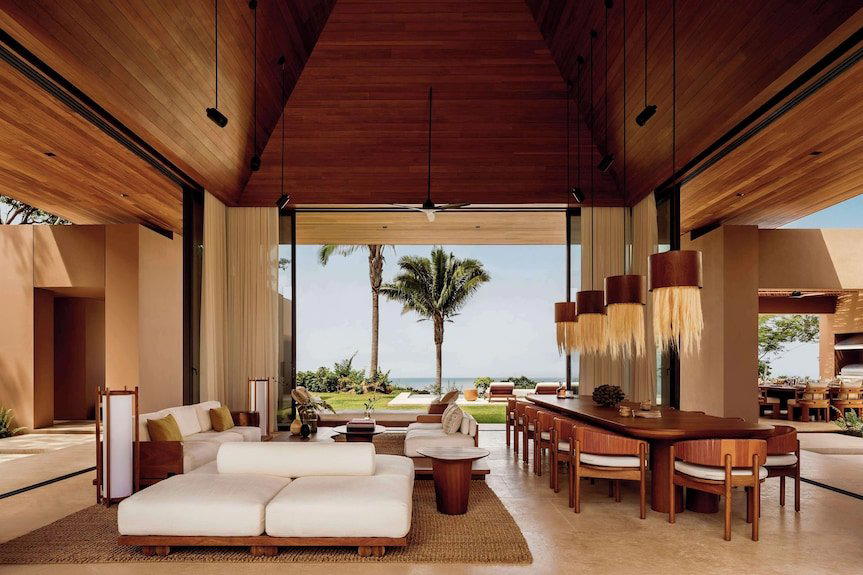
Bars in Puerto Vallarta
All bars in Puerto Vallarta →
Details
- Elegant
- Sophisticated
- Scenic
- Ornate
- Honeymoon
- Romantic Getaway
- Family Vacation
- Wellness Retreat
- Beachfront
- Infinity Pool
- Private Villa
- Butler Service
- Panoramic View
- Pool
- Spa
- Fitness Center
- Room Service
- Concierge
- Valet Parking
- Kids Club
- Beach Access
- Mountain
- Garden
- Wheelchair Accessible
Serene and immersive with open-air spaces, natural light, lush surroundings, and a laid-back yet sophisticated atmosphere.