
Paperbark Camp sits in bushland above Jervis Bay, where canvas-walled treehouses on raised timber platforms place guests inside the paperbark forest rather than beside it. The design format belongs to a small tier of Australian eco-retreats that trade resort amenity for environmental immersion. For travellers routing south from Sydney along the NSW South Coast, it occupies a distinct position in the region's accommodation mix.
Pearl is the En Primeur Club membership app — saves, bookings, and concierge access live there. Same editors, same standards.
- Address
- 571 Woollamia Rd, Woollamia NSW 2540, Australia
- Phone
- +61 2 4441 6066
- Website
- paperbarkcamp.com.au
- Directions
- Get directions
 Saves & bookings on Pearl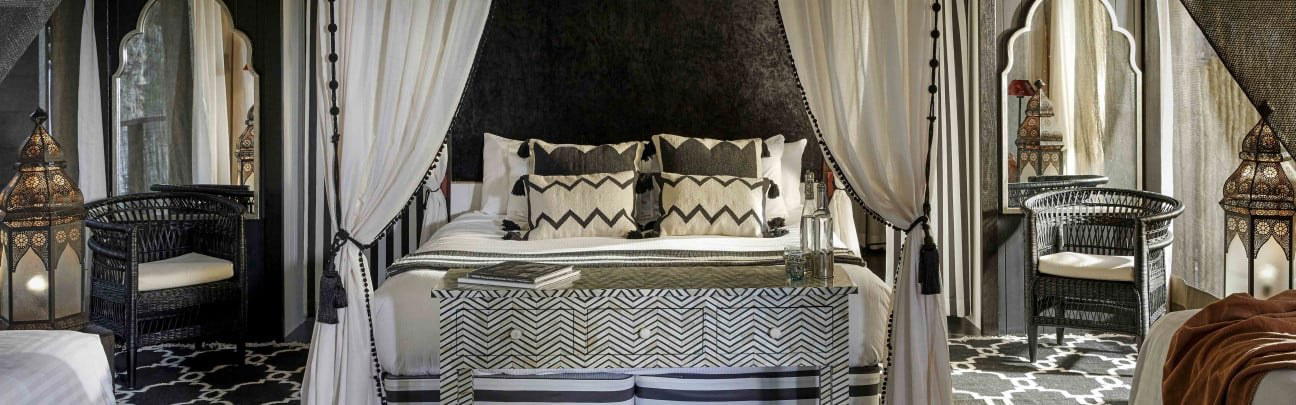
Canvas, Timber, and the Paperbark Forest
The NSW South Coast has accumulated a recognisable tier of design-conscious retreats over the past two decades, properties where the physical structure is the editorial statement. Paperbark Camp, on Woollamia Road outside Jervis Bay, belongs to that cohort. The accommodation format here is the treehouse tent: canvas-walled structures on raised timber platforms, lifted above the forest floor and positioned within a stand of paperbark melaleuca. The architectural ambition is not to sit beside the bush but to insert the guest inside it. When wind moves through the canopy, you feel it. When the light shifts at dusk, the canvas diffuses it. The separation between interior and exterior is largely conceptual.
This approach places Paperbark Camp in a specific and small competitive set within Australian eco-hospitality. It is not the polished-timber lodge format of Southern Ocean Lodge in Kingscote, which uses glass and concrete to frame wilderness from a considered distance. Nor is it the urban-adjacent nature retreat model found at properties like Bells at Killcare on the Central Coast. Paperbark Camp commits more completely to the canvas tent as a structural choice, a decision that carries weather into the room as well as light.
The Design Logic of the Platform Tent
Globally, luxury camping has split between two approaches. One takes a permanent structure and strips it back to suggest informality. The other takes an impermanent form, the tent, and engineers it to deliver genuine comfort without betraying the material honesty of the format. Paperbark Camp follows the second path. The platform construction is load-bearing and refined, which manages both the moisture of the forest floor and the sightlines into the tree canopy. Canvas walls remain the primary enclosure, which means acoustic intimacy with the surrounding bush is not a marketing promise but a structural inevitability.
In the broader context of Australian eco-stays, this positions Paperbark Camp closer to the bush camp tradition than to the resort tradition. Properties like Wildman Wilderness Lodge in Marrakai, in the Northern Territory, operate in a similarly immersive register, where the environment is the primary amenity. At Paperbark Camp, the specific environmental character is the paperbark forest and the Jervis Bay hinterland, a coastal bushland zone with significant birdlife, tidal creeks, and the proximity of one of the clearest water bays on the Australian coast.
Location and the Jervis Bay Context
Woollamia sits inside the Jervis Bay region, approximately 200 kilometres south of Sydney. The drive from Sydney takes roughly two and a half to three hours, placing Paperbark Camp within the extended weekend range for Sydney-based travellers. The surrounding area draws visitors for snorkelling and diving in Jervis Bay's protected waters, dolphin and whale watching, and access to Booderee National Park. The camp's position in the Woollamia bush keeps it removed from the beach townships of Huskisson and Vincentia while remaining within easy driving distance of both.
The South Coast corridor between Kiama and Batemans Bay has developed a recognisable character in Australian domestic travel: more nature-focused than the Southern Highlands, less commercially dense than the Hunter Valley. Paperbark Camp sits within that register. Travellers routing along this coast often combine it with stops at local oyster producers, Booderee's botanic gardens, or the white-sand beaches of Hyams Beach. For a broader picture of the region's accommodation and dining options, our full Woollamia restaurants guide maps what's available across price tiers.
Where It Sits in the Australian Luxury Retreat Tier
Australian premium accommodation has diversified considerably. At one end, city-based luxury hotels like Capella Sydney and The Tasman in Hobart define the urban premium tier through architectural restoration and formal service models. At the other end, regional design properties have claimed a separate category, one where the environment, not the service ratio, is the primary offer.
Within this regional tier, properties vary by how much physical comfort they trade against environmental authenticity. Lake House in Daylesford and Cape Lodge in Wilyabrup maintain more conventional hotel infrastructure alongside their landscape settings. Paperbark Camp trades more of that conventional comfort for structural honesty with the natural environment. Whether that is a trade-off or a feature depends on what the traveller is seeking, and the camp is clearly designed for visitors who consider canvas walls and forest acoustics the point, not the compromise.
For travellers who want the far end of the environmental immersion dial, the comparison with international eco-property models is instructive. Globally, the format closest to Paperbark Camp sits between the East African tented camp tradition and the Australian bush camp tradition. Both treat the tent as a credible long-term structure rather than a temporary concession to convenience.
Planning Your Stay
Paperbark Camp draws from a primarily domestic Australian audience, with Sydney the most logical origin point given the drive time. Peak season aligns with Australian school holidays, particularly summer (December through January) and Easter. The spring shoulder months, September through November, offer the advantage of wildflower season in the surrounding bush and generally stable weather before summer heat builds. Bookings at properties of this format and regional profile typically require advance planning for school holiday periods; contacting the property directly through its website is the standard approach. For context on comparable retreats in the Australian coastal and bush market, properties like Jonah's at Palm Beach and Ashdowns of Dover serve different segments of the NSW coastal market and illustrate the range of formats available along the coast.
Comparable Spots, Quickly
| Venue | Cuisine |
|---|---|
| Paperbark CampThis venue — the venue you are viewing | This venue |
| Capella Sydney | World's 50 Best |
Recognition history
Dated appearances from independent guides and award organizations, with the underlying list record or original source where available.
Michelin Guide New Hotels New Hotel
Michelin Guide New Hotels
Mr & Mrs Smith Smith Seal of Approval
Mr & Mrs Smith
Michelin Selected
Michelin
Continue exploring
More in Woollamia
Hotels in Woollamia
Browse all →
Restaurants in Woollamia
Browse all →
Wineries in Woollamia
Browse all →
At a Glance
- Romantic
- Quiet
- Rustic
- Scenic
- Bohemian
- Intimate
- Romantic Getaway
- Honeymoon
- Anniversary
- Weekend Escape
- Destination Wedding
- Waterfront
- Garden
- Terrace
- Panoramic View
- Private Dining
- Restaurant
- Bar
- Waterfront
- Garden
- Restaurant
- Bar
Candlelit, romantic atmosphere with natural ventilation from sea breezes, low-voltage solar lighting, and open-air design that blends indoor and outdoor spaces seamlessly.
Know Before You Go
- Getting there
- 571 Woollamia Rd, Woollamia NSW 2540, Australia