
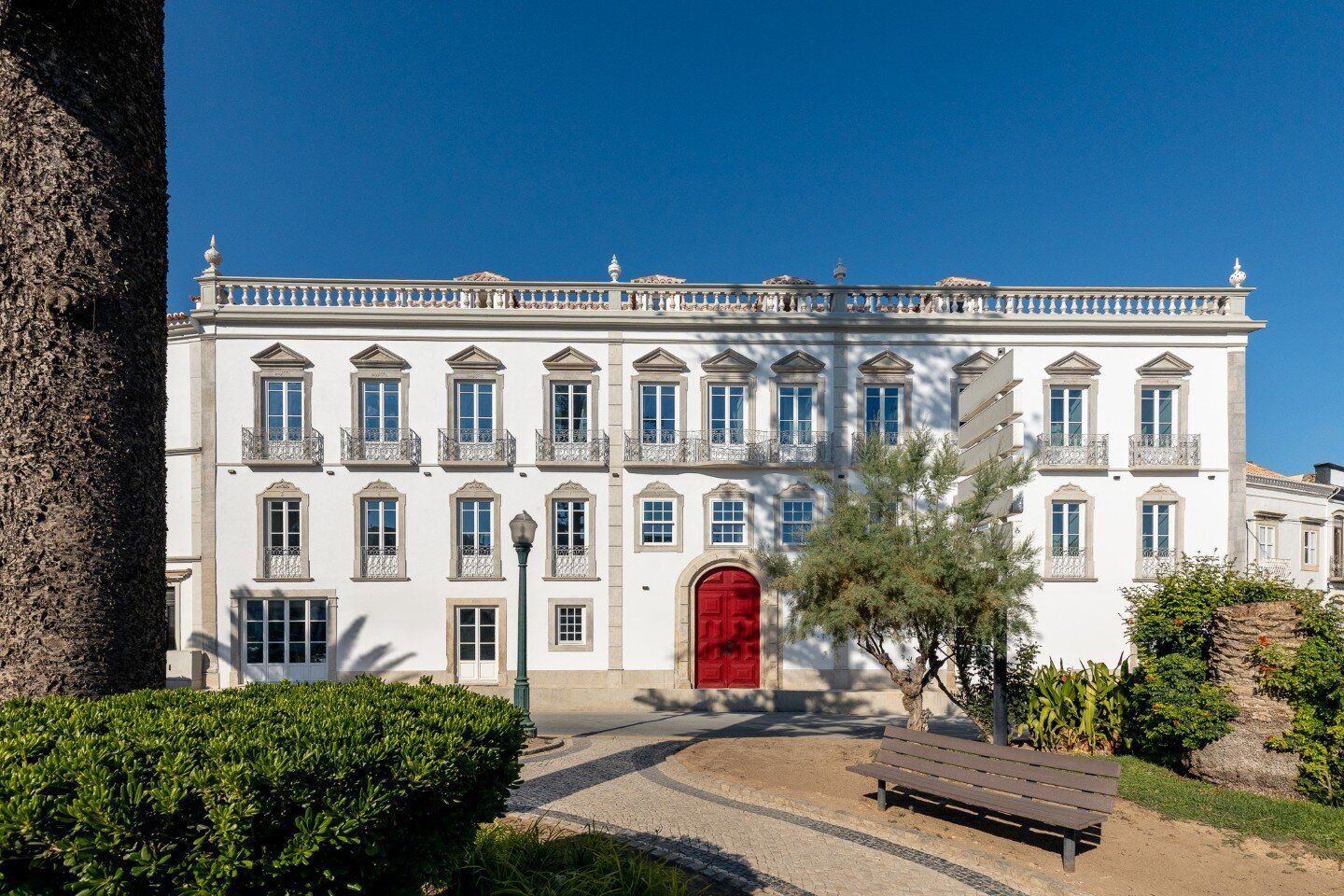
A restored 18th-century palace on Tavira's Praça Dr. António Padinha, Palácio de Tavira occupies one of the eastern Algarve's most historically layered addresses. The property sits within walking distance of the town's Roman bridge and riverside market, positioning it as a base for travellers who want architecture, food, and quiet in roughly equal measure.
An Algarve Town That Earns Slower Travel
Eastern Algarve operates at a different frequency from the resort corridor between Faro and Lagos. Tavira, with its Moorish grid of whitewashed streets, multi-arched Roman bridge, and tiled church facades, attracts travellers who have graduated from beach-first itineraries and want a town with actual weight to it. Hotel supply here reflects that preference: the properties that work leading in Tavira are the ones that read as extensions of the town's character rather than interruptions of it. Palácio de Tavira, at Praça Dr. António Padinha 35 and 37, is the clearest expression of that approach the town currently offers.
The Approach: What the Building Does Before You Arrive
The address puts you on one of Tavira's main civic squares, which means the approach is through cobbled lanes rather than a hotel driveway. That transition matters. By the time you reach the entrance, the pace has already shifted. Eighteenth-century palace architecture in southern Portugal tends toward contained grandeur: thick stone walls, interior courtyards, proportioned rooms that keep summer heat out and carry sound differently from modern construction. Palácio de Tavira has been restored within that tradition rather than renovated away from it, which is a meaningful distinction in a town where the built environment is the primary asset. For context on what genuine restoration looks like at this tier, properties like Casa da Calçada in Amarante and Carmo's Boutique Hotel in Ponte de Lima have set the benchmark for palace and manor conversions in northern Portugal; eastern Algarve has fewer examples, which raises the stakes for the ones that exist.
Where It Sits in the Algarve Hotel Conversation
The Algarve's premium hotel tier has consolidated largely around the western corridor, where properties like the Anantara Vilamoura Algarve Resort in Quarteira, the Bela Vista Hotel & Spa in Praia da Rocha, and the EPIC SANA Algarve in Albufeira compete on spa facilities, golf access, and resort scale. The Conrad Algarve operates in the same western bracket, with resort infrastructure that Tavira neither has nor is trying to replicate. Palácio de Tavira competes on different terms entirely: historic fabric, town-centre position, and a scale that keeps the experience contained. Within Tavira specifically, Colégio Charm House occupies the same boutique, heritage-led niche, and the two properties represent the town's serious hotel options for travellers who want character over amenity count.
The Dining Programme: Palace Kitchens and Algarve Tradition
Historic palace hotels in Portugal operate under a particular culinary expectation. The dining programme is rarely the destination in its own right — that role belongs to the town's restaurant scene — but it frames the stay significantly. The Algarve's food tradition runs on cataplana cooking, fresh Atlantic fish and shellfish, citrus from local groves, and carob and fig in ways that rarely appear on resort menus but define what the region actually tastes like. A palace hotel in Tavira that connects its kitchen to that tradition rather than defaulting to international hotel formats makes a stronger case for itself as a place to stay rather than simply sleep. Specific dining details for Palácio de Tavira are not confirmed in our data, so travellers should verify current restaurant hours and format directly with the property before arrival. For the broader Tavira food scene, our full Tavira restaurants guide covers the town's dining options with editorial depth.
What can be said with confidence is the architectural context in which any meal takes place. An 18th-century palace dining room in southern Portugal carries a physical authority that modern hotel restaurants cannot manufacture: ceiling height, stone or azulejo tile surfaces, light coming through windows set into walls of serious depth. That context shapes every meal served within it, regardless of the menu format.
Bars, Drinks, and the Tavira Evening
Tavira after dark is quieter than the resort towns to the west, which is a quality, not a deficiency. The town's bar scene rewards walking rather than destination-seeking: riverside spots along the Gilão, small squares with outdoor tables, the kind of evening structure that a palace hotel is well placed to anchor. For anyone who wants to extend beyond the property, our full Tavira bars guide maps the town's options by character and location.
The Surrounding Town: Why Location Here Is an Argument
Praça Dr. António Padinha is one of the better addresses in Tavira's civic fabric. The square sits within the old town, which means the Roman bridge, the market buildings along the Gilão riverfront, and the network of churches and tiled streets are accessible on foot. Tavira's island beach (Ilha de Tavira) requires a short ferry crossing, which is part of the experience rather than an inconvenience. The town also sits in easy reach of the Ria Formosa natural park, one of the Algarve's defining ecological features. For travellers who want to extend into the region, our full Tavira experiences guide covers the area's activity and cultural options, and our full Tavira wineries guide addresses the wine dimension of the eastern Algarve, which is underexplored relative to the Alentejo properties to the north like Herdade da Malhadinha Nova in Albernoa.
Comparable Properties Elsewhere in Portugal
For travellers building a broader Portuguese itinerary around heritage properties, Palácio de Tavira sits in a peer conversation that includes Casa das Penhas Douradas in Manteigas, Casas da Lapa in Seia, and Hotel Casa Palmela in Setubal. All four properties trade on architectural character and regional rootedness rather than resort infrastructure. In urban contexts, Altis Avenida Hotel in Lisbon and Altis Porto Hotel in Porto represent the city-centre palace format at larger scale. Casa Mãe Hotel in Lagos offers the closest western Algarve equivalent for travellers who want heritage character closer to the surf coast. And for those who extend further afield, properties like Aman Venice represent the international ceiling of the palazzo-conversion format that Palácio de Tavira is playing in at a more accessible tier.
Planning a Stay
Tavira runs on a distinct seasonal rhythm. The town is busiest between late June and August, when Ilha de Tavira draws beach travellers and room rates at heritage properties reflect that demand. May, June, September, and October offer the most favourable conditions: warm enough for the island and the river, quiet enough in the streets that the town's architectural character registers properly. For a town-centre palace, proximity to the square also means ambient noise from the surrounding streets , a practical detail worth considering if you are a light sleeper during high season. Booking should be done directly with the property or through reputable channels; specific rates and availability are not confirmed in our data. Our full Tavira hotels guide compares the town's full accommodation options with editorial context, and 3HB Faro is worth noting for travellers flying in via Faro Airport who need a first or last night close to the terminal before continuing east to Tavira.
Frequently Asked Questions
- Is Palácio de Tavira more low-key or high-energy?
- The property reads as low-key in the most considered sense of the term. Tavira itself is a town that rewards slowness, and a restored 18th-century palace on a civic square compounds that quality rather than working against it. Travellers arriving from the resort corridor to the west should expect a marked change of register: no poolside animation, no programmed entertainment, no lobby designed to generate buzz. What the property offers instead is architectural calm, central position, and a town that holds genuine historical interest. The energy, such as it is, comes from the town rather than the hotel.
- What's the most popular room type at Palácio de Tavira?
- Specific room-type data is not confirmed in our current records. In restored palace hotels of this period and scale in Portugal, the most sought-after rooms tend to be those that retain original architectural details , coffered ceilings, deep-set windows, period tile work , rather than those with the largest floor plans. Rooms on upper floors of 18th-century Algarve palaces typically offer views across the square or the surrounding old town roofline, and those tend to carry a premium in both price and booking lead time. Verify current room categories and availability directly with the property.
Preferential Rates?
Our members enjoy concierge-led booking support and priority upgrades at the world's finest hotels.
Access the Concierge