NG AFYON

World Luxury Hotel Awards WLHA Country Winner
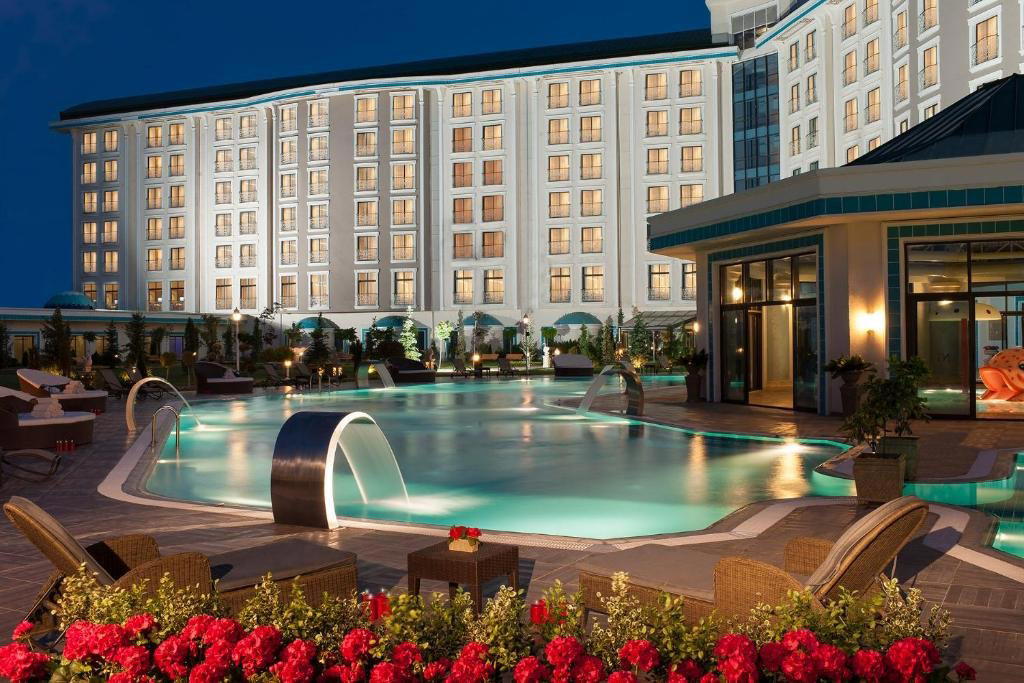
NG Afyon holds dual recognition as a Country Winner for Luxury Hotel and a Continent Winner for Luxury Hot Spring Hotel, placing it among the leading thermal properties in Turkey. Positioned on Atatürk Bulvarı in central Afyonkarahisar, the property draws on the region's centuries-old geothermal tradition. For travellers combining thermal wellness with architectural comfort, it occupies a distinct tier in the Turkish spa-hotel market.

Pearl is the En Primeur Club membership app, where members save venues, book tables and use the concierge.
Where Geothermal Tradition Meets Architectural Ambition
Afyonkarahisar has long occupied an unusual position in Turkey's hospitality map. The city sits above one of Anatolia's most productive geothermal belts, and for centuries its hot springs attracted travellers making the overland crossing between Istanbul and the Aegean coast. That tradition did not translate into luxury hotel infrastructure until relatively recently. For most of the twentieth century, the thermal facilities here were functional rather than refined: concrete pools, municipal-style bathhouses, and boarding houses that prioritised access over atmosphere. The emergence of properties that take the hot spring as an architectural centrepiece, rather than a utilitarian amenity, marks a structural shift in how the city positions itself regionally.
NG Afyon, at Atatürk Bulvarı No:14 in the Erkmen district, represents that repositioning in its most awarded form. The property has received recognition as a Country Winner for Luxury Hotel and as a Continent Winner for Luxury Hot Spring Hotel, the latter placing it in direct competition with geothermal properties across the entirety of Europe and beyond. Earning both simultaneously suggests the property is doing something architecturally and operationally consistent rather than relying on location alone.
The Physical Logic of a Hot Spring Hotel
The design challenge specific to luxury thermal properties is one that general hotel architects rarely confront: how do you integrate a geothermal source, with its mineral content, humidity, and temperature gradients, into an environment that reads as polished rather than purely functional? The properties that solve this problem well tend to do so through material choices that work with mineral water rather than against it, spatial planning that treats the thermal facilities as the primary public rooms rather than basement amenities, and lighting schemes calibrated to the particular atmosphere of steam and stone.
Afyonkarahisar's geothermal water is rich in calcium bicarbonate and reaches the surface at temperatures that vary by source but are generally in the range typical of established European thermal resorts. The mineral load that makes the water therapeutically interesting also creates specific demands on surfaces, fixtures, and finishes. Properties that have invested in materials and maintenance to match those demands present a markedly different experience from those that have not, and the gap is immediately visible to anyone who has spent time across the thermal-hotel category.
Within Turkey's broader thermal corridor, which extends from Bursa in the northwest down through Afyonkarahisar and into areas near Denizli, the design standard has risen considerably over the past decade. The most direct domestic comparators are properties in Bursa's Çekirge district, where Ottoman-era hamam culture gives thermal bathing a deeper architectural vocabulary, and certain newer developments near Pamukkale. NG Afyon's continental award positions it above that domestic reference frame and into a tier where the comparison shifts to internationally recognised spa hotels. For travellers familiar with the thermal-wellness category in Central Europe, that framing is a meaningful calibration point.
Afyonkarahisar as a Destination
The city itself rewards attention beyond the hotel. Afyonkarahisar's old town rises sharply around a volcanic rock formation, with a Seljuk-era castle visible from most of the lower city. The regional cuisine carries a strong identity: the area produces some of Turkey's most respected kaymak (clotted cream) and sucuk (dried sausage), and local pastry traditions bear the imprint of centuries of caravan-route trade. These are not incidental details. For travellers making a purposeful visit to a thermal destination, the food culture of the surrounding city determines how much richness the trip carries beyond the pool. Afyonkarahisar delivers more on that front than its relatively low international profile might suggest. See our full Afyonkarahisar restaurants guide for coverage of where to eat in the wider city.
Accessibility follows a pattern common to mid-sized Anatolian cities: well-connected by intercity coach from both Istanbul (roughly five to six hours) and Ankara (roughly three hours), and reachable by high-speed rail from certain directions, though the station sits at some distance from the centre. Travellers prioritising comfort over economy will typically fly to one of the major hubs and arrange private transfer, which is the standard approach for guests arriving at properties in this award tier.
Placing NG Afyon in Turkey's Luxury Hotel Field
Turkey's luxury hotel sector has diversified significantly. The Istanbul grand-hotel tradition, represented by properties like the palace conversions along the Bosphorus, occupies one end of the spectrum. Resort clusters on the Aegean and Mediterranean coasts, including developments in Bodrum, Göcek, and Belek, occupy another. What has grown more quietly is the interior wellness tier: properties in non-coastal cities that compete on thermal credentials, architectural quality, and a slower, more restorative rhythm than beach resorts can offer.
NG Afyon sits firmly in that interior wellness tier and holds the awards to substantiate the claim. Among the broader NG Hotels portfolio, sister properties include NG ENJOY in Sapanca and NG Phaselis Bay in Kemer, which together suggest a group with consistent investment in wellness and resort formats across different Turkish geographies. For travellers comparing thermal options across Turkey, properties like BN Hotel Thermal & Wellness in Mersin represent the category from a different coastal and geological context.
Further afield, the continental competitive set that NG Afyon's Luxury Hot Spring Hotel award implies is worth considering. Ajwa Cappadocia in Ürgüp and Argos in Cappadocia in Nevsehir show how design-led properties in Anatolia's interior can achieve international recognition; NG Afyon does the same within the specific thermal sub-category. For travellers who benchmark against Aegean design properties, Alavya in Alacati and KestelINN Alaçatı in Cesme occupy a parallel niche in the boutique-hotel tier, though the geothermal element is specific to Afyonkarahisar and its geological context.
Planning a Stay
The awards record suggests this property operates closer to the best of its domestic tier, which carries practical implications. Properties in this bracket in Turkey tend to book ahead during national holiday periods, particularly the Bayram breaks in spring and autumn when domestic travel peaks and thermal destinations see concentrated demand. Visiting outside those windows, in late January through March or in October, typically offers both availability and the particular appeal of immersive thermal bathing during cooler weather. The address on Atatürk Bulvarı places the property centrally within Afyonkarahisar, which makes independent city exploration direct from the hotel.
For travellers assembling a broader Turkey itinerary that includes thermal wellness alongside coastal and cultural elements, the routing options are practical: Afyonkarahisar sits between Istanbul and the Aegean coast, making it a logical stop rather than a detour. Renaissance Izmir Hotel and MACAKIZI BODRUM in Bodrum Mugla represent the Aegean end of that circuit, while Crowne Plaza Ankara anchors the capital approach. Booking for NG Afyon is leading handled through the property directly or via a travel specialist familiar with the NG Hotels group, given that website and phone details are not currently listed in public directories.
Side-by-Side Snapshot
Comparable venues nearby, for context on price, style, and recognition.
| Venue | Cuisine | Price | Awards | Notes |
|---|---|---|---|---|
| NG AFYONThis venue (the venue you are viewing) | Contemporary luxury thermal resort | $200–300 | World Luxury Hotel Awards WLHA Country Winner | Not listed |
| Maxx Royal Belek Golf Resort | Luxurious all-inclusive beach resort with extensive sports and entertainment facilities | Not listed | Michelin Selected · Star Wine List | Belek |
| The Montgomerie Golf | Luxurious all-inclusive beach and golf resort | $500–750 | Leading Hotels of World Member | Belek |
| Güral Premier Tekirova | Turkish architectural style resort set in pine forests | Not listed | World Luxury Hotel Awards WLHA Regional Winner | Tekirova |
| Tomtom Suites | Historic restoration of a 19th-century Franciscan convent preserving original architectural features with contemporary luxury design. | $300–500 | Michelin Selected · Small Luxury Hotels of the World Member | Tomtom |
| JW Marriott Hotel Istanbul Marmara Sea | Contemporary seaside luxury retreat | Not listed | Michelin Selected · Forbes 4-Star | Ataköy |
Recognition history
Dated appearances from independent guides and award organizations, with the underlying list record or original source where available.
World Luxury Hotel Awards WLHA Country Winner
World Luxury Hotel Awards
Full recognition history (2 entries)
World Luxury Hotel Awards WLHA Continent Winner
World Luxury Hotel Awards
Details
- Elegant
- Modern
- Scenic
- Sophisticated
- Ornate
- Family Vacation
- Wellness Retreat
- Weekend Escape
- Infinity Pool
- Rooftop Pool
- Destination Spa
- Panoramic View
- Pool
- Spa
- Fitness Center
- Room Service
- Concierge
- Business Center
- Valet Parking
- Kids Club
- Garden
- Elevator
- Wheelchair Accessible
Elegant and relaxing atmosphere with spotless facilities, green outdoor areas, and rejuvenating thermal waters praised in guest reviews.