Hotel Trinity
Hotel Trinity enters the Austin hotel conversation with little verified public data attached, which changes how a serious traveler should read it. In a city where luxury ranges from estate-style retreats to design-led neighborhood hotels, the useful question is not hype but fit: service expectations, booking clarity, and how much certainty a guest needs before committing.
Pearl is the En Primeur Club membership app — saves, bookings, and concierge access live there. Same editors, same standards.
- Address
- Austin, United States
- Directions
- Get directions
 Saves & bookings on Pearl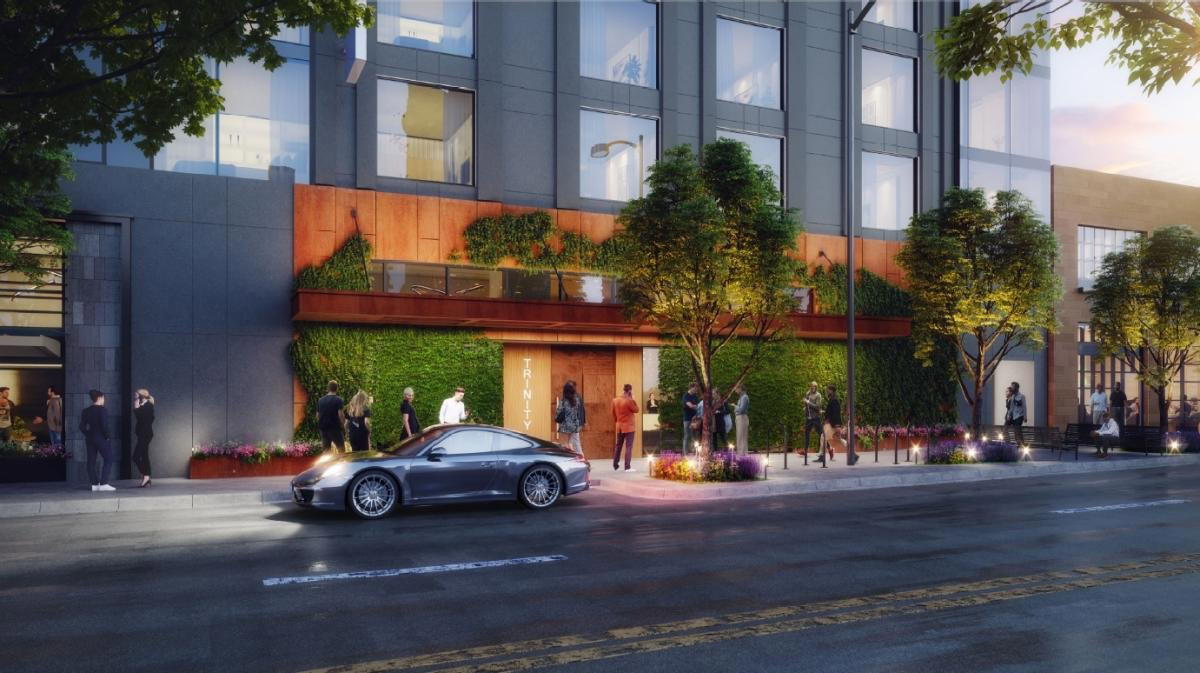
Arrival, atmosphere, and the Austin service question
Austin hotel arrivals tend to announce their intentions before a guest reaches the desk. Downtown towers work through scale, valet choreography, and proximity to convention traffic. South Congress and East Austin properties trade on neighborhood texture, music history, and walkable nights out. Estate-style stays lean into privacy, gardens, and a slower tempo. Hotel Trinity sits inside that broader Austin conversation, but the public record supplied here is unusually spare: no address, star rating, room count, hotel group, style designation, website, phone number, awards, or price range is available in the venue database.
That absence matters. In premium hospitality, service philosophy is not only expressed through polished language; it appears in verifiable signals. A listed reservation channel, published room categories, repeatable guest standards, clear arrival instructions, and credible third-party recognition all help a traveler understand what kind of experience a hotel is prepared to deliver. Without those signals, the editorial assessment has to shift from description to decision-making. Hotel Trinity can be discussed as an Austin hotel name, but not responsibly described as a particular style of stay, service model, or luxury tier without stronger source data.
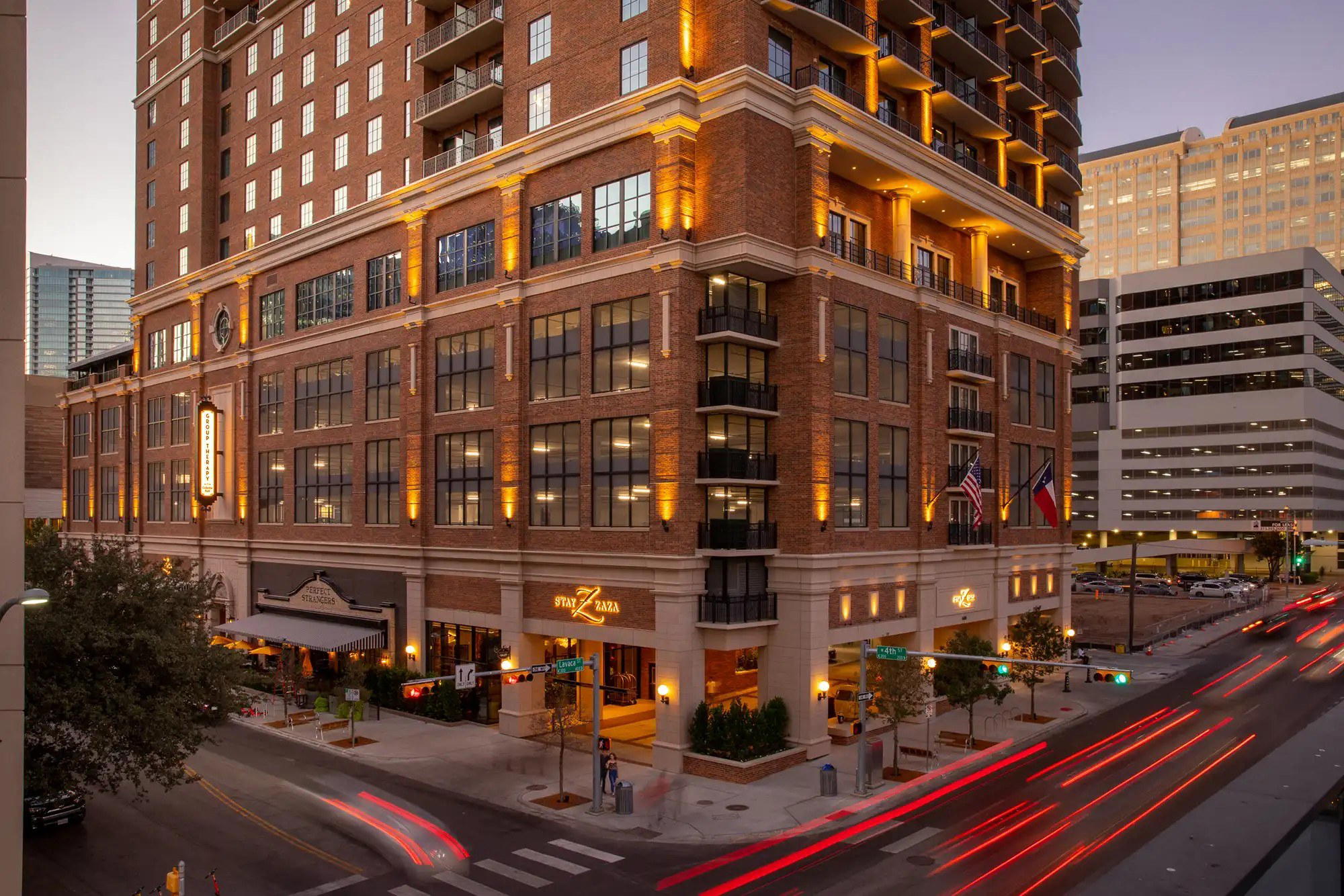
Austin is an instructive city for that distinction because its hotel scene has widened quickly. The comparison set now includes estate hospitality at Commodore Perry Estate, Auberge Resorts Collection, design-forward central-city stays such as Austin Proper Hotel, lifestyle hotels including Hotel ZaZa Austin, and smaller neighborhood properties such as The Heywood Hotel. Against that field, the first editorial task is not to romanticize Hotel Trinity. It is to ask what can be verified, what remains unknown, and what those gaps mean for travelers who care about service precision.
What Austin hotels now compete on
The city’s premium hotel market has split into several recognizable lanes. Large-format luxury emphasizes predictability: staffing depth, all-day operations, meeting infrastructure, and rooms designed for business and leisure overlap. Boutique hospitality emphasizes editorial identity: fewer keys, sharper design choices, neighborhood knowledge, and a greater dependence on front-desk fluency. Member-club and lifestyle properties draw from social programming, dining rooms, and lounge culture. Smaller independent hotels often win when staff can turn local intelligence into a practical stay, from where to eat after a late arrival to which neighborhood makes sense after an afternoon meeting.
That is the context in which Hotel Trinity has to be read. With no price range, there is no reliable way to position it as value-led, luxury-priced, or mid-market. With no address, neighborhood comparison is limited to city-level context. This may sound cautious, but caution is a service to the reader. Austin’s hotel inventory spans central business addresses, campus-adjacent stays, East Side nightlife bases, South Congress design hotels, and residential-feeling retreats. A hotel’s location often determines the guest experience as much as the room itself.
For travelers comparing Austin stays, documented alternatives provide clearer coordinates. ARRIVE Austin belongs to the East Austin conversation, where restaurants, bars, and street-level social energy shape the stay. Hotel Saint Cecilia speaks to South Austin’s music-and-design lineage. Fairmont Austin Gold Experience sits in the service-within-a-large-hotel category, where lounge access and dedicated guest handling define the premium proposition. Soho House Austin maps to a membership-inflected hospitality model. Hotel Trinity cannot be placed in one of those lanes from the available record alone.
Service philosophy, when the evidence is thin
Service in a city like Austin is often less formal than in New York, London, or Paris, but that does not mean it is casual in the operational sense. Strong hotels here tend to translate informality into speed, warmth, and practical competence. The better version is a staff that can read the difference between a music-weekend guest, a political visitor, a tech traveler, and a couple using the city as a food-and-drink base. The weaker version is vague friendliness without systems behind it.
That does not disqualify the property; it simply means the traveler should not assume a defined service culture. In premium travel, unknowns have a cost. A missing phone number makes pre-arrival clarification harder. A missing website prevents confirmation of room types and policies. A missing address prevents judgment about transport, walkability, and neighborhood fit. A missing price range prevents honest comparison with Austin’s documented hotel set.
The practical conclusion is direct: Hotel Trinity may interest travelers who are already cross-checking local sources, corporate travel systems, or private booking channels, but it is not a set-and-forget choice based on the supplied data. The stronger play is to treat it as a lead requiring verification rather than a finished recommendation. Travelers who prioritize anticipatory service should confirm, before committing, how arrival is handled, whether there is a staffed desk, what room categories exist, whether late arrival is supported, and what cancellation terms apply. Those questions are not administrative noise. They reveal the operating culture.
Dining, drinking, and the city around the stay
Austin hotel choice is unusually tied to dining and drinking patterns. The city’s serious food scene is not confined to formal hotel restaurants, and the strongest itinerary often moves between barbecue, Mexican regional cooking, contemporary tasting formats, natural wine bars, coffee, and late-night music. A hotel that gives clean access to those circuits can matter more than a hotel with a louder lobby. Because Hotel Trinity’s address is not available here, its relationship to Austin’s dining geography cannot be responsibly mapped.
That uncertainty should push travelers toward wider planning. The city rewards neighborhood sequencing: East Austin for a dense evening of bars and restaurants, South Congress for design retail and hotel-adjacent dining, downtown for event proximity, and residential pockets for quieter returns. EP Club’s broader city coverage can help triangulate that decision through Our full Austin restaurants guide, Our full Austin bars guide, Our full Austin experiences guide, and Our full Austin wineries guide. For lodging comparisons across the city, Our full Austin hotels guide gives the reader a cleaner view of the field.
The key point is that a hotel’s restaurant is only one part of Austin hospitality. Service also shows in concierge judgment, realistic drive-time advice, and the ability to steer guests away from overstuffed schedules. In a city where events can reshape traffic and room demand, especially around major festivals, sports weekends, university dates, and conference periods, logistical intelligence becomes part of luxury.
How Hotel Trinity compares with the broader luxury hotel set
Across the United States, premium hotels are increasingly judged by how clearly they define the guest relationship. Some properties sell sanctuary and seclusion, as seen in desert and resort contexts such as Amangiri in Canyon Point. Others work through city polish and high-touch urban service, a lane associated with properties such as The Fifth Avenue Hotel in New York City, Raffles Boston in Boston, and The Beverly Hills Hotel in Los Angeles. Rural and food-led stays, including Troutbeck in Amenia, SingleThread Farm Inn in Healdsburg, and Sage Lodge in Pray, compete on a different rhythm, where setting and culinary access carry much of the value.
Austin contains elements of each model but rarely copies them directly. Its hospitality culture tends to resist heavy ceremony. The polished local version is personal, fast, informed, and lightly handled. That is why documentation becomes so useful. A property with a recognized hotel group, verified awards, listed room categories, or a clear service tier gives the traveler evidence of how that Austin ease is operationalized.
International comparisons sharpen the same point. Palace hotels such as Hôtel de Paris Monte-Carlo in Monte Carlo and Badrutt's Palace Hotel in St. Moritz telegraph service through history, scale, and institutional memory. Smaller high-design retreats such as Aman Venice in Venice, Kona Village, A Rosewood Resort in Kailua Kona, and Four Seasons at The Surf Club in Surfside rely on clarity of setting, brand standards, and guest expectation. Hotel Trinity needs comparable evidence before it can be placed in that continuum with confidence.
Planning notes for Austin travelers
No address, phone number, website, price range, booking method, room inventory, dress code, or hours are available. For a traveler, those omissions should shape the planning process. Confirm the official booking path through a trusted source, verify the physical address before arranging transport, ask for current cancellation terms, and clarify arrival procedures if landing late. Austin can be easy to enjoy and awkward to improvise at the wrong hour, particularly when events compress hotel availability and ride times.
Price comparison also requires caution. Austin rates can swing sharply around South by Southwest, Formula 1, Austin City Limits, university weekends, legislative sessions, and major conferences. Compare live quotes against documented hotels in the same intended neighborhood rather than against the city average. Service expectations should be matched to evidence: if a property cannot confirm staff coverage, arrival details, room type, and cancellation terms clearly, that uncertainty belongs in the value calculation.
In Context
Comparable venues nearby, for context on price, style, and recognition.
| Venue | Cuisine | Price | Awards | Notes |
|---|---|---|---|---|
| Hotel TrinityThis venue — the venue you are viewing | Not listed | $$$$ | 4-Star | Not listed |
| Hotel San José | Not listed | $$$$ | 4-Star | South River City, urban bungalow-style with Texas minimalist design |
| Frame Hotel - Treehouse | Not listed | $$$$ | 4-Star | South River City, quiet luxury residential retreat |
| South Congress Hotel | Not listed | $$$$ | 4-Star | South River City, Boutique hotel designed as the living room of South Congress neighborhood |
| Thompson Austin | Not listed | $$$$ | 4-Star | Downtown, Contemporary luxury high-rise blending urban sophistication with Austin's lively culture. |
| Hotel Ella | Arts District, Historic boutique mansion | $$$$ | 4-Star | Not listed |
Continue exploring
More in Austin
Hotels in Austin
Browse all →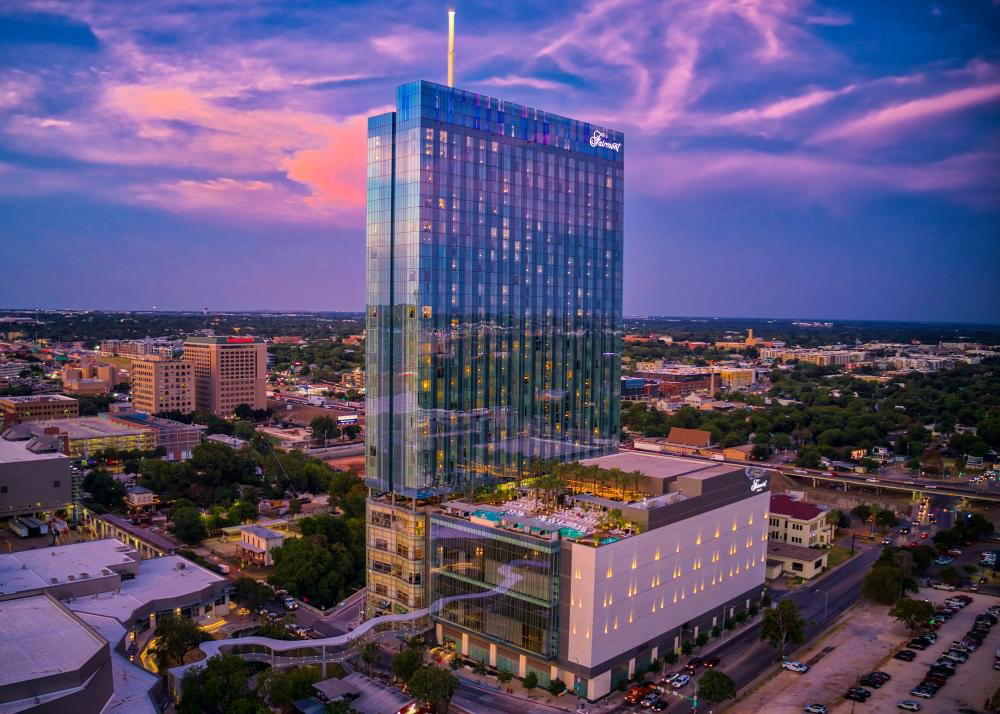
Bars in Austin
Browse all →
Restaurants in Austin
Browse all →
At a Glance
- Sophisticated
- Elegant
- Modern
- Intimate
- Quiet
- Business Trip
- Group Retreat
- Celebration
- Weekend Escape
- Rooftop Pool
- Design Destination
- Private Dining
- Pool
- Fitness Center
- Concierge
- Business Center
- Valet Parking
- Wi Fi
- Restaurant
- Bar
- Room Service
- Skyline
- Street Scene
- Pool
- Fitness Center
- Concierge
- Business Center
- Valet Parking
- Wi Fi
- Restaurant
- Bar
- Room Service
Private, residentially inspired, and cosmopolitan, with a refined club-like rooftop energy and polished luxury design.