Four Seasons Resort and Residences
The Four Seasons Resort and Residences at Deer Valley occupies the upper tier of Utah mountain hospitality, where ski-in/ski-out access meets the brand's signature service architecture. Positioned in the Deer Valley corridor near Heber City, it competes directly with the Wasatch Range's most design-forward properties and draws guests who treat the mountain as a year-round destination rather than a winter-only proposition.

Pearl is the En Primeur Club membership app — saves, bookings, and concierge access live there. Same editors, same standards.
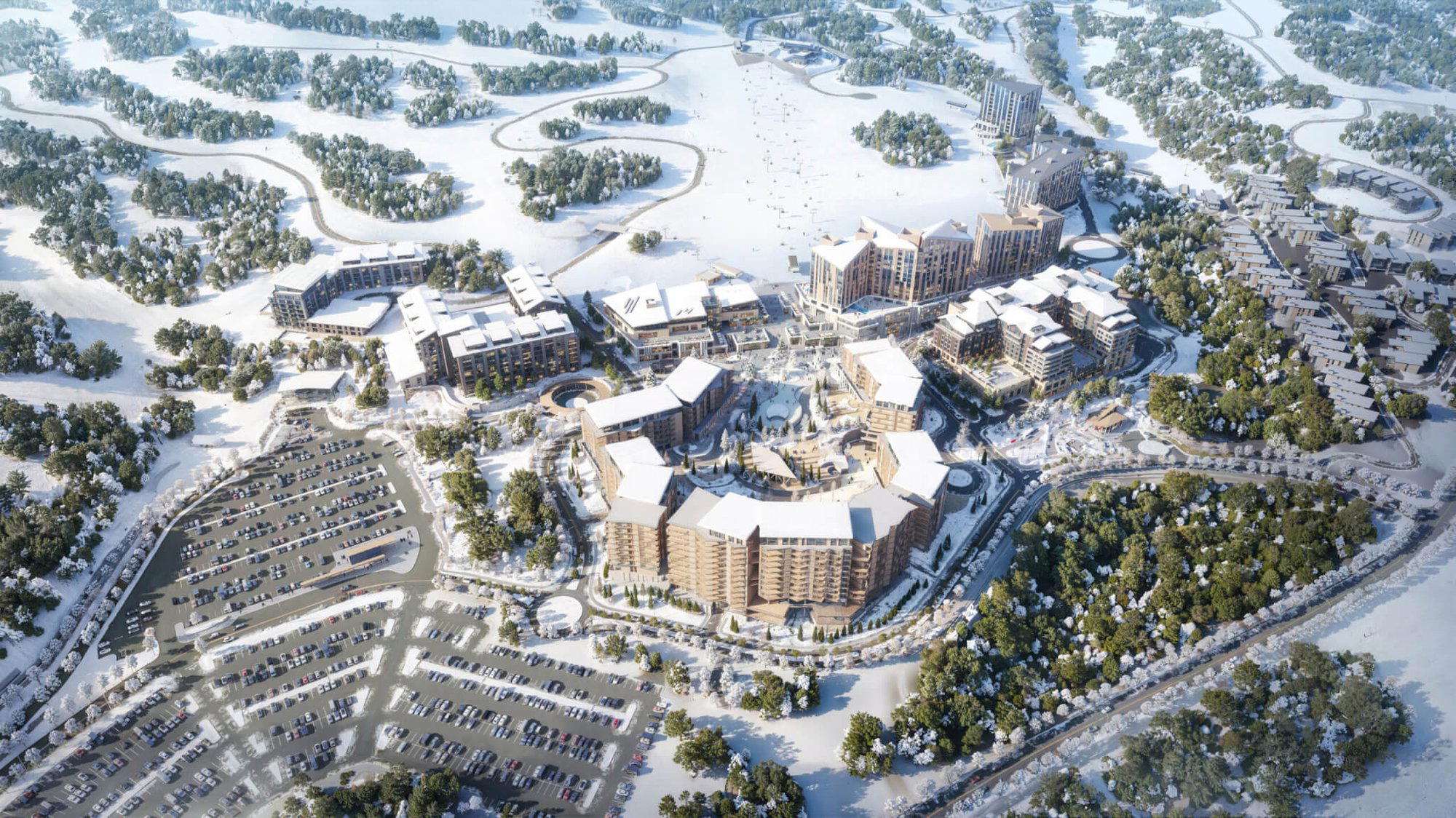
Where the Wasatch Range Meets Branded Precision
Utah's high-altitude resort corridor has spent the last decade sorting itself into two distinct tiers: large-footprint properties that trade on brand recognition and amenity volume, and a smaller cohort of design-led independents that compete on spatial intimacy and architectural specificity. The Four Seasons Resort and Residences at Deer Valley operates firmly in the first category, but with a level of material investment and site sensitivity that keeps it in genuine conversation with the second. In a market where the gap between a credentialed international brand and a thoughtfully conceived boutique has narrowed considerably, that positioning matters.
Deer Valley itself sets the competitive frame. The resort, one of the few in North America that maintains a skier-only policy, has consistently attracted a guest profile willing to pay a premium for controlled conditions, polished grooming, and a terrain experience that prioritizes quality over capacity. That ethos maps directly onto the kind of guest the Four Seasons property is designed to receive. The mountain's character shapes the hotel's competitive set as much as any brand decision does.
The Design Logic of a Mountain Property at This Tier
High-altitude resort architecture in the American West has passed through several phases: the faux-alpine lodge era of the 1980s and 1990s, the oversized-timber aesthetic that dominated the 2000s, and a more recent shift toward properties that use local materials and site-responsive geometry without resorting to pastiche. The Four Seasons Deer Valley sits within this most recent moment, where the design brief at properties of this caliber typically prioritizes sightline management, thermal comfort, and the creation of interior environments that feel anchored to their elevation rather than imported from a generic luxury template.
For comparison, properties like Amangiri in Canyon Point have demonstrated that the American West rewards architecture willing to submit to its landscape rather than impose upon it. The same principle applies in the Deer Valley corridor, where the relationship between a building and its mountain backdrop either reads as intentional or exposes itself as an afterthought. At the Four Seasons level, that relationship is treated as a primary design variable, not a secondary concern.
The residences component of the property introduces a further design consideration that is increasingly common among mountain properties competing for long-term ownership interest alongside transient guests. The mixed hotel-and-residence format, visible at properties like Waldorf Astoria Deer Valley Resort and Residences nearby, creates a different spatial and social dynamic than a pure hotel. Common areas carry a permanence of use that shapes how they are designed and maintained; the lobby and communal spaces must function for someone on a two-night ski trip and someone who has owned a unit for fifteen years. Getting that balance right is architecturally and programmatically difficult, and the properties that manage it well tend to feel less like hotels wearing residential clothes and more like coherent environments that happen to accommodate both.
Mountain Hospitality at the Brand's Upper Register
The Four Seasons brand operates across a wide range of property types globally, from urban towers to island retreats, but its mountain properties occupy a specific sub-tier within that portfolio. Four Seasons at The Surf Club in Surfside illustrates the brand's capacity for site-specific design collaboration, a partnership with a historically significant beach club that forced the property to earn its placement rather than simply occupy it. The Deer Valley property faces an analogous challenge: Deer Valley's own identity is so established that the hotel must serve it rather than attempt to supersede it.
That dynamic is not distinctive to this brand or this mountain. Post Ranch Inn in Big Sur and Sage Lodge in Pray both operate under the same structural logic: the landscape has prior claim on the guest's attention, and the property's role is to deepen rather than redirect that relationship. Where the Four Seasons model diverges from smaller, more idiosyncratic properties is in its service infrastructure. The brand's staffing ratios, training protocols, and operational consistency are among the more extensively documented in the industry, and at a mountain property where a guest's day can turn on something as logistical as ski valet timing or equipment storage, that operational depth is not incidental.
The Deer Valley Context: Year-Round Demand and the Off-Season Question
Deer Valley's transition from a primarily winter destination to a year-round resort has been one of the more deliberate transformations in American mountain hospitality over the past decade. The expansion of summer programming, including hiking, mountain biking, and the long-running Deer Valley Music Festival, has given properties in the corridor a rationale for twelve-month operation that was harder to sustain a generation ago. For a property like the Four Seasons, this matters architecturally as well as commercially: spaces designed only for après-ski sensibility read as under-utilized and slightly melancholy in July, while properties that design for seasonal range tend to hold their spatial logic more coherently across the calendar.
Guests comparing options in the broader mountain West will find relevant reference points at Dunton Hot Springs in Dunton, which operates a radically different format, and at Canyon Ranch Tucson, where programming depth rather than seasonal sport is the primary retention mechanism. The Deer Valley property sits between those poles: sport-anchored but not sport-dependent, amenity-rich enough to hold a guest's attention when the mountain's own programming creates the primary draw. The hotel has 134 rooms and suites, and its smart casual atmosphere suits a reservation-recommended stay at a five-star price tier. Internationally, the comparison tier extends to properties like Badrutt's Palace Hotel in St. Moritz, where the alpine resort brand and the hotel brand have co-evolved over generations to the point of being nearly indistinguishable in the market's perception.
Planning Your Stay
The Deer Valley corridor in general, and properties at this price tier in particular, demand advance planning regardless of season. Winter bookings for peak weeks around Christmas, New Year's, and President's Day historically fill months ahead; summer dates around the music festival follow a similar pattern. Advance booking helps coordinate ski school, equipment rental, dining, and spa access before arrival, which reduces first-day friction.
Guests weighing alternatives in the immediate area should consider the Waldorf Astoria Deer Valley as particularly direct competitor in terms of format and positioning, and the Washington School House Hotel in Park City as a smaller, more characterful alternative for travelers who prioritize intimacy over amenity scale. Those looking at the broader premium mountain category across the West will find useful comparison points at Meadowood Napa Valley for wine-country resort format and at SingleThread Farm Inn in Healdsburg for the kind of programmatic integration between land, food, and accommodation that represents a different but increasingly influential model of premium hospitality.
Quick Comparison
Comparable venues nearby, for context on price, style, and recognition.
| Venue | Cuisine | Price | Awards | Notes |
|---|---|---|---|---|
| Four Seasons Resort and ResidencesThis venue — the venue you are viewing | Contemporary alpine resort with private residences blending indoor-outdoor living | $$$$ | 5-Star | Not listed |
| Waldorf Astoria Deer Valley Resort and Residences | luxury alpine resort with branded residences | $$$$ | 5-Star | Deer Valley East Village |
| Goldener Hirsch, Auberge Collection | European-style chalet with modern mountain residences | $$$$ | 5-Star | Silver Lake Village |
| Sorrel River Ranch Resort & Spa | rustic luxury ranch resort | $$$$ | 4-Star | Moab |
| Cliffrose Springdale, Curio Collection by Hilton | boutique riverside lodge with gardens | $$$$ | 4-Star | Springdale |
| The Cliff Lodge | Ski-in/ski-out mountain resort flagship property | $$$$ | 4-Star | Snowbird |
Continue exploring
More in Heber City
Hotels in Heber City
Browse all →
Restaurants in Heber City
Browse all →
At a Glance
- Elegant
- Sophisticated
- Scenic
- Ornate
- Honeymoon
- Romantic Getaway
- Family Vacation
- Weekend Escape
- Group Retreat
- Ski In Ski Out
- Panoramic View
- Spa
- Pool
- Fitness Center
- Room Service
- Concierge
- Valet Parking
- Kids Club
- Mountain
- Spa
- Pool
- Fitness Center
- Room Service
- Concierge
- Valet Parking
- Kids Club
Enveloping warmth from rich woods, natural stone, and organic textures, blending modern alpine elegance with panoramic mountain views for a sophisticated, restorative atmosphere.