Bab Al Shams Desert Resort & Spa

Less than an hour from Dubai's downtown towers, Bab Al Shams Desert Resort & Spa offers a counterpoint to the city's usual register: 113 rooms in low-slung sandstone architecture, private terraces facing open dunes, and a deliberately quieter pace. Owned by Jumeirah and part of the Rare Finds collection, it prices from $681 per night and draws guests who return specifically for the desert silence the city cannot provide.
 Discover on Pearl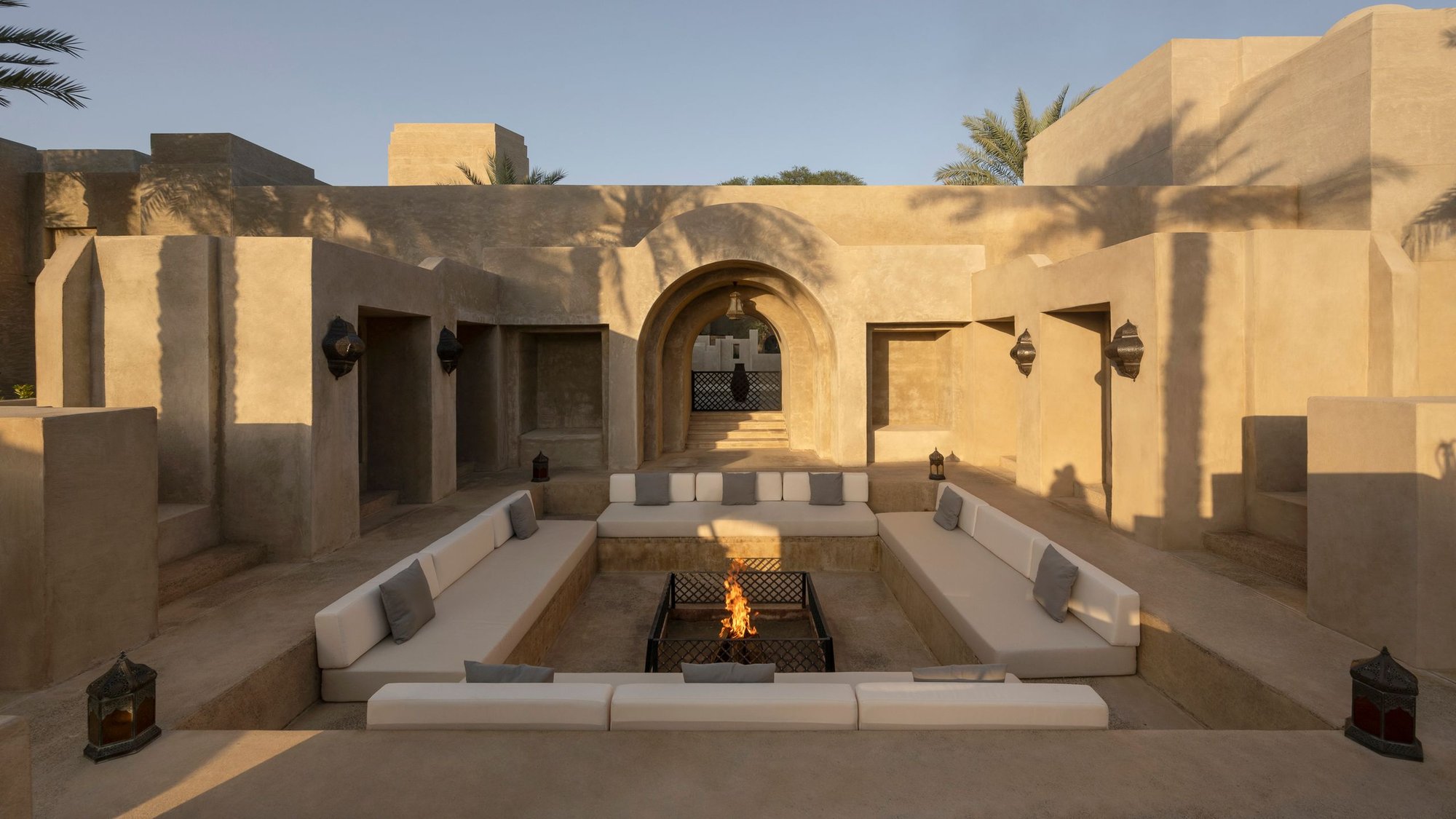
Where the Dunes Begin and the City Recedes
The approach to Bab Al Shams along Al Qudra Road is its own kind of recalibration. Dubai's skyline dissolves in the rear-view mirror, replaced by a flat, tawny horizon that opens up as the resort materialises from the sand. The buildings are low, the palette is weathered sandstone, and the construction keeps a deliberately modest profile against the dunes. This is not the Dubai of glass towers and waterfront spectacle. It is, by design, something closer to the opposite.
That contrast is precisely what brings guests back. In a city where most luxury hotels compete on verticality and sea views, the desert resort format occupies a separate category altogether. Bab Al Shams belongs to Jumeirah's portfolio — the same group behind the sprawling, high-gloss Jumeirah Marsa Al Arab on the waterfront — but the two properties share almost nothing in character. Where city-side Jumeirah properties lean into the grand gesture, Bab Al Shams draws on a quieter architectural tradition: courtyard layouts, shaded arcades, and a sense of enclosure that feels borrowed from historic Arabian fort towns rather than from contemporary hospitality design.
The Regulars Know What They're Coming For
Guests who return to Bab Al Shams more than once tend to self-select around a specific preference: silence. The surrounding desert supplies it without effort, and the resort's architecture reinforces it. With 113 rooms, the property sits in a scale bracket that is neither intimate nor overwhelming , large enough for families with children (it is openly family-oriented), small enough that the pool terraces and outdoor spaces do not feel crowded, particularly outside school holiday windows.
Spring is the window most returning guests target. From March through May, desert temperatures remain manageable for outdoor activity, and the quality of light in the early morning and at dusk is unlike anything the summer months permit. Those who have done the desert experience in peak winter find the shoulder months in spring carry fewer tour groups and more stillness. Sunrise camel rides and guided dune walks, activities tied to the surrounding landscape, are both easier to arrange and easier to enjoy when the temperature stays below 35°C.
The resort is part of Jumeirah's Rare Finds collection, a sub-portfolio that groups properties offering experiences departures from the group's mainstream city offerings. That positioning is relevant context: Rare Finds properties are selected precisely because they sit outside the standard luxury-hotel playbook, which shapes expectations around service style, programming, and pace. Guests arriving from an Atlantis The Royal experience or a downtown Address Downtown stay should treat Bab Al Shams as a different category of trip, not a comparable one.
Rooms, Views, and What the Upgrade Actually Buys
The 113 rooms and suites divide along a familiar premium logic: garden courtyard views on the lower end, desert-facing terraces on the upper. The desert view is the argument for the room upgrade. Private terraces and patios come standard across categories, and space is generous throughout. The entry-level deluxe rooms are measured and restrained by Dubai standards, though the Royal Suites at the leading end recover the sense of scale that the building's exterior deliberately suppresses.
Pricing, from $681 per night, places Bab Al Shams above mid-market desert options in the UAE but below the ultra-luxury desert resorts , a positioning that makes sense given the 113-room footprint and the Jumeirah ownership context. For comparison, smaller and more remote desert properties in the UAE, such as the Anantara Qasr al Sarab Desert Resort in the Liwa Desert or the Arabian Nights Village in Abu Dhabi, tend to price at similar or higher levels while offering a more remote, lower-capacity experience. Bab Al Shams, by contrast, offers accessibility , under an hour from central Dubai , as part of its value proposition. That proximity is a genuine trade-off: it allows the resort to function as a two-night escape rather than a destination trip, but it also means the surrounding desert does not carry the same sense of remove as properties deep in the Liwa or on offshore island settings like the Desert Islands Resort & Spa by Anantara in Al Dhafra.
Where Bab Al Shams Fits in Dubai's Wider Hotel Picture
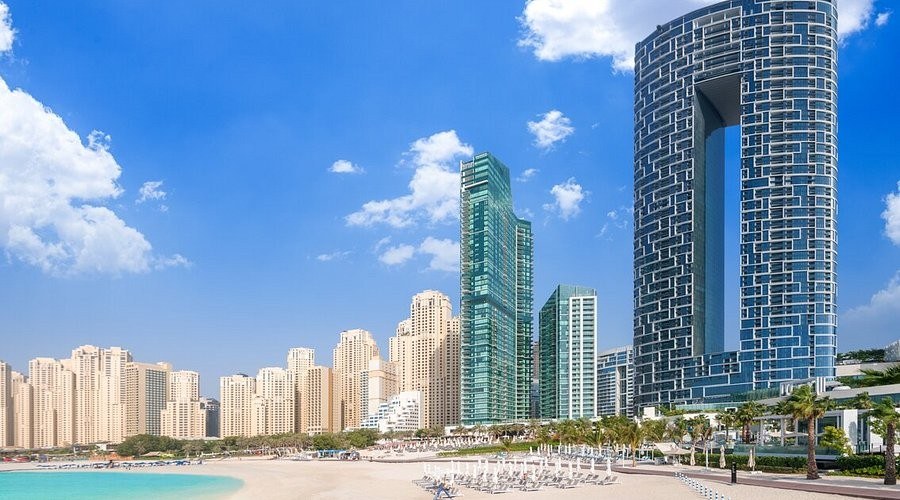
Dubai's hotel market has developed a clear split between high-density urban luxury and experience-led escape properties. The urban tier includes beach-and-tower addresses like the Address Beach Resort and the The Lana, which compete on skyline access, F&B programming, and proximity to shopping districts. Bab Al Shams operates in a separate register entirely, and guests who book it specifically for the desert experience consistently report that the absence of the city's ambient noise and visual density is the feature, not an incidental byproduct.
For families, the property's scale and orientation make it a logical choice. For couples or solo travellers seeking a more withdrawn or design-led desert experience, the smaller boutique properties at Sharjah's Al Badayer Retreat by Sharjah Collection offer a contrasting model, with lower capacity and a stronger design identity. The trade-off there is distance and programming depth , Bab Al Shams, with Jumeirah's operational infrastructure behind it, offers more consistent service and a broader activity slate.
The international comparator for the format, broadly speaking, is the high-desert resort that offsets its remoteness with considered amenity depth. Properties like Amangiri in Canyon Point occupy that category at the leading end globally. Bab Al Shams does not compete at that level of design or price, but it shares the same structural logic: a landscape that does most of the work, supported by a resort built not to compete with it but to make it legible.
Planning details are worth addressing directly. The resort sits off Al Qudra Road, opposite Endurance City, roughly 45 minutes from central Dubai by road depending on traffic. There is no metro access; a transfer by car or taxi is the practical route. Peak booking pressure falls in the November-to-February window, when desert temperatures attract the broadest range of guests. Spring bookings from March onward carry less competition for dates while offering conditions that many returning guests consider better suited to outdoor programming. For the full Dubai hotel picture, including urban alternatives across all price tiers, see our full Dubai guide.
Comparable Options
A compact peer set to orient you in the local landscape.

At a Glance
- Romantic
- Scenic
- Elegant
- Quiet
- Opulent
- Honeymoon
- Romantic Getaway
- Family Vacation
- Wellness Retreat
- Infinity Pool
- Private Villa
- Destination Spa
- Panoramic View
- Pool
- Spa
- Fitness Center
- Room Service
- Concierge
- Kids Club
- Restaurant
- Garden
- Terrace
- Garden
- Mountain
Cozy and tranquil Arabian heritage atmosphere with tasteful desert-inspired decor, peaceful pool areas, and serene lighting creating utmost calmness.