Loews Nashville Hotel at Vanderbilt Plaza
Located on one of Nashville's most established addresses, Loews Nashville Hotel at Vanderbilt Plaza sits along the corridor connecting Vanderbilt University to the city's broader Midtown grid. The property occupies a position in Nashville's evolving hotel market where neighbourhood context and dining programming increasingly determine how a stay reads against the competition. Check the EP Club Nashville guide for full comparative context.
Pearl is the En Primeur Club membership app — saves, bookings, and concierge access live there. Same editors, same standards.
- Address
- 2100 West End Ave, Nashville, TN 37203
- Phone
- +1 615 320 1700
- Website
- loewshotels.com
- Directions
- Get directions
 Saves & bookings on Pearl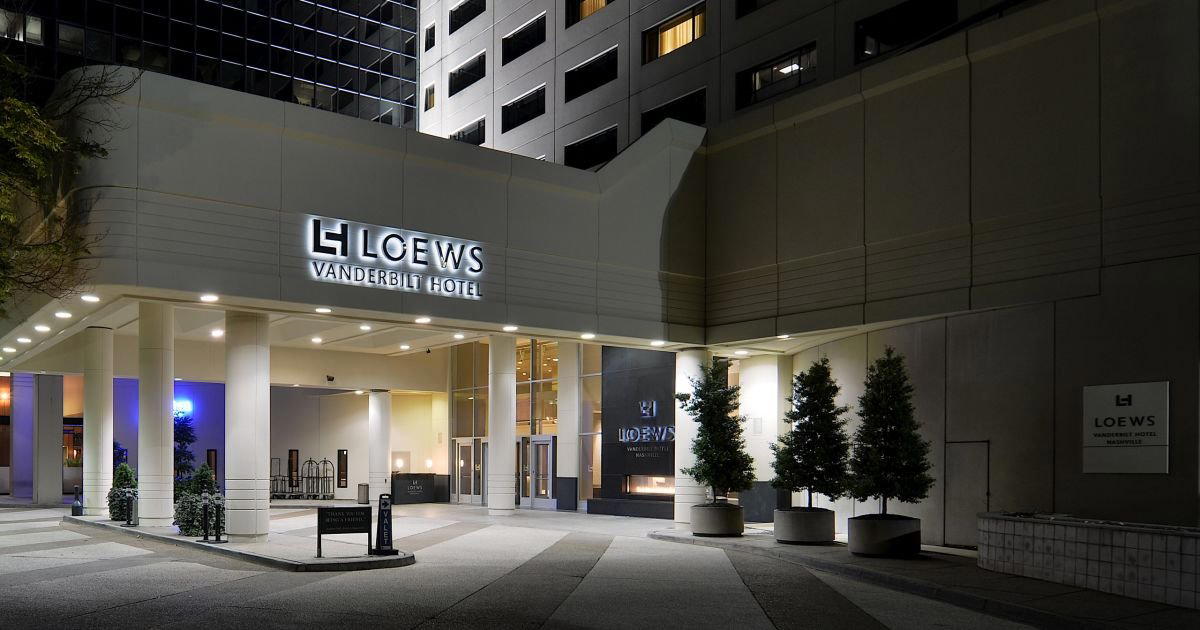
West End and the Hotel That Anchors It
West End Avenue has functioned as Nashville's connective tissue between the university district and the downtown core for decades. The stretch running past Vanderbilt carries a different register than Broadway's neon corridor or the Gulch's developer-driven density: quieter, more residential in character, with an address logic that positions properties here closer to the city's academic and medical institutions than its honky-tonk economy. Hotels on this corridor have historically drawn a mix of visiting faculty, healthcare professionals, and travellers who prefer a few blocks of distance from Lower Broad's foot traffic. Loews Nashville Hotel at Vanderbilt Plaza occupies that positioning, at an address that is self-explanatory in its geography.
Nashville's hotel market has segmented sharply since 2018. The downtown and SoBro zones absorbed most of the branded luxury entrants, including properties comparable to Conrad Nashville and the Thompson Nashville, while the Gulch attracted design-led independent operators. West End sits in a third category: institutionally anchored, with demand driven less by leisure tourism and more by the university and medical corridor. That context shapes what a property here needs to deliver, and how its food and beverage programming should read against peers.
The Dining Question on West End
Across Nashville's hotel tier, the dining programme has become the primary differentiator. Properties like Soho House Nashville and the Bobby Hotel built their identities partly through rooftop and bar concepts that drew non-staying guests. The The Hermitage Hotel, operating since 1910, carries its dining programme as a historical institution in its own right. Even newer entrants like 1 Hotel Nashville have anchored their food identity around a coherent culinary point of view tied to the brand's broader ethos.
For a West End address, the dining context differs. The surrounding neighbourhood supports a cluster of independent restaurants, coffee shops, and casual operations serving the Vanderbilt community. A hotel dining programme here competes less with downtown's high-profile openings and more with the walkable neighbourhood options that guests on this corridor tend to use. The strategic question for any West End hotel is whether its food and beverage outlets serve as genuine destinations pulling from outside the property, or whether they function primarily as in-house convenience. These are not equivalent propositions, and the answer shapes everything from staffing depth to wine programme ambition.
Nashville's broader dining scene has moved toward a more serious culinary identity over the past decade, with a cohort of chef-driven independent restaurants earning recognition beyond the city's own press. That shift has raised the baseline expectation for hotel dining across the market, including properties outside the downtown core. Visitors who have eaten well in Nashville's independent restaurant scene arrive with calibrated expectations that a hotel restaurant has to meet, or risk losing dinner covers to the street entirely.
Where Loews Nashville Hotel at Vanderbilt Plaza Sits in the Nashville Field
Nashville's current hotel field spans a wide range of positioning. On the heritage end, The Hermitage Hotel holds a category of its own as the city's only surviving grand hotel from the early twentieth century. On the design-led independent end, Bode Nashville targets a younger, longer-stay traveller with a different price logic. The branded luxury tier, represented by properties including Conrad Nashville, competes on points programs, suite inventory, and the credibility of an international flag. West End Avenue properties occupy a distinct niche in this map, drawing on neighbourhood stability rather than destination glamour.
Comparable positioning can be found in university-adjacent hotel corridors in other American cities, where the demand base is reliable but the leisure premium is lower than at downtown addresses. The analogy in the luxury tier might be something like Troutbeck in Amenia, which leans into its specific geographical and cultural context rather than competing with urban flagships, or Raffles Boston, which built its dining and bar programme as a way to draw neighbourhood residents as well as hotel guests. The logic in each case is the same: define the property's relationship to its immediate community before competing on the broader luxury axis.
Practical Orientation for Visitors
West End Avenue runs northwest from downtown Nashville, with 2100 West End placing guests within walking distance of Vanderbilt University's campus and a short drive or rideshare from the downtown core. The address sits closer to Centennial Park, with its full-scale Parthenon replica, than to the Broadway entertainment district, which changes the experiential texture of a stay here considerably. Guests oriented toward lower Broadway's live music venues or the SoBro dining cluster will find the commute manageable but present. Those with business at Vanderbilt, Vanderbilt University Medical Center, or the broader West End commercial corridor will find the address directly convenient.
Nashville's hotel market prices dynamically around major events, particularly CMA Fest in June, the NFL draft when held in the city, and large conventions at the Music City Center. West End properties tend to see less acute price spikes during pure leisure events than downtown addresses, though the overall market tightening during peak periods affects all tiers. Booking windows vary accordingly, and travellers with date flexibility are generally better positioned on this corridor than in the downtown core during event weeks.
Nashville's independent restaurant scene rewards that kind of itinerary more than a single-venue approach.
Nashville's West End corridor operates in a different register, but the underlying question about dining programme ambition remains the same wherever a hotel sits in the market.
Budget Reality Check
Comparable venues nearby, for context on price, style, and recognition.
| Venue | Price | Awards | Notes |
|---|---|---|---|
| Loews Nashville Hotel at Vanderbilt PlazaThis venue — the venue you are viewing | $$$$ | 4-Star | Not listed |
| Holston House Nashville | $$$$ | 4-Star | Downtown, Restored Art Deco boutique hotel |
| Noelle Nashville Downtown | $$$$ | 4-Star | Printer's Alley, immersive historic boutique hotel celebrating Nashville's creative community |
| The Nash | $$$ | 4-Star | Arts District, Lifestyle-inspired boutique refuge blending Southern hospitality with creative New Nashville aesthetic, featuring bold design with approachability. |
| Kimpton Aertson Hotel | $$$$ | 4-Star | Music Row, Boutique hotel blending industrial grit with polished Nashville style in a mixed-use development. |
| The Bankers Alley Hotel Nashville, Tapestry Collection by Hilton | $$$ | 4-Star | Printer's Alley, Boutique lifestyle hotel in a historic 1900 building renovated in 2024, positioned as a cultural destination blending art, music, and cuisine. |
Continue exploring
More in Nashville
Hotels in Nashville
Browse all →
Bars in Nashville
Browse all →
Restaurants in Nashville
Browse all →
Wineries in Nashville
Browse all →
At a Glance
- Sophisticated
- Elegant
- Modern
- Business Trip
- Wedding
- Weekend Escape
- Historic Building
- Wi Fi
- Fitness Center
- Room Service
- Concierge
- Business Center
- Valet Parking
- Street Scene
- Wi Fi
- Fitness Center
- Room Service
- Concierge
- Business Center
- Valet Parking
Sophisticated music-centric atmosphere with cozy firepit patio, stylish bar featuring craft cocktails, and elegant spaces illuminated by chandeliers.