← Guides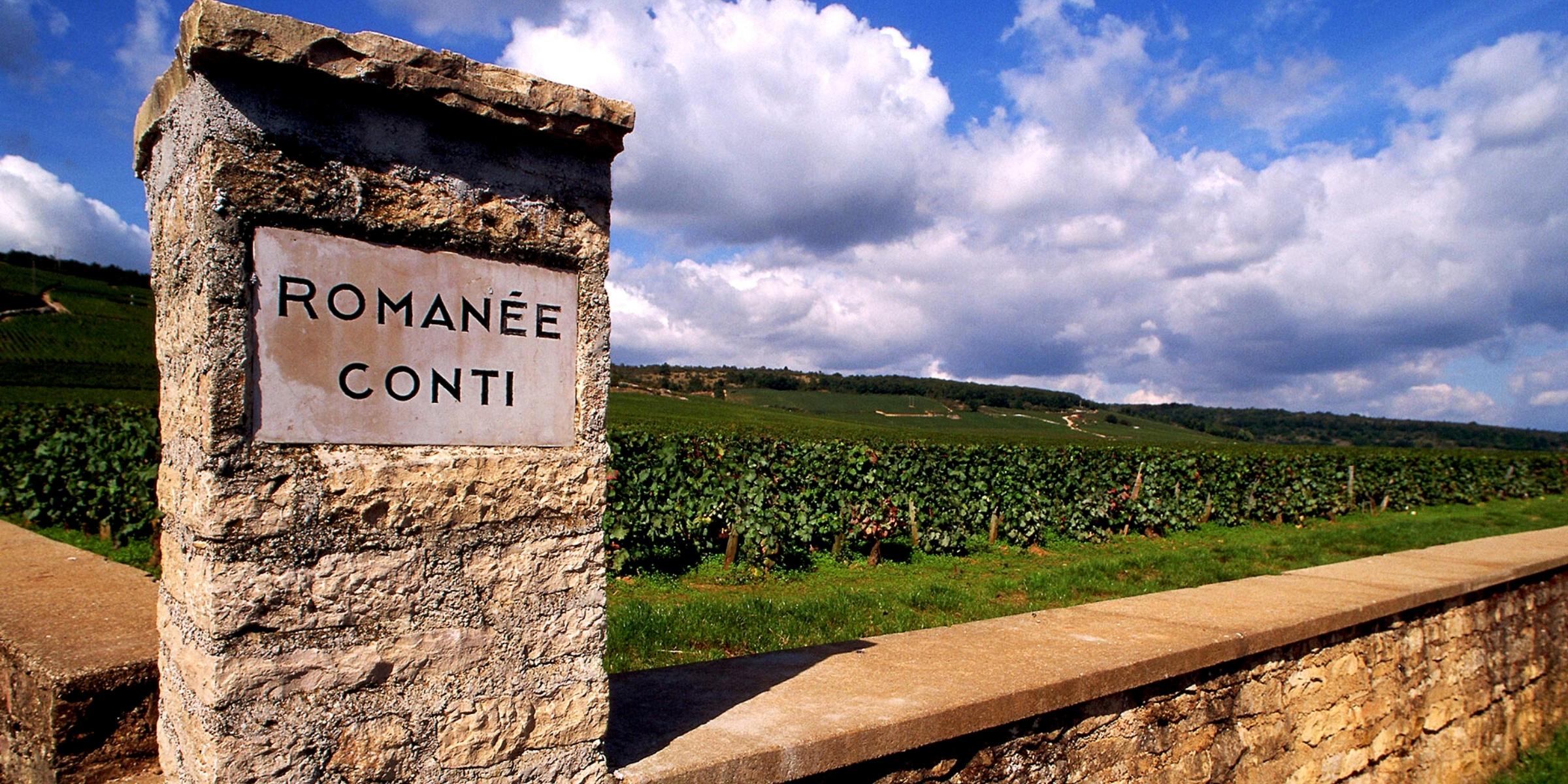
Decanter’s 2026 Hall of Fame crowns Lalou Bize-Leroy’s path from Maison Leroy at 23 to Domaine Leroy’s biodynamic grands crus.
Decanter’s 2026 Hall of Fame crowns Lalou Bize-Leroy’s path from Maison Leroy at 23 to Domaine Leroy’s biodynamic grands crus.
Lalou Bize-Leroy Decanter Hall of Fame 2026 recognizes the Paris-born Burgundy proprietor who took control of Maison Leroy at 23, co-directed Domaine de la Romanée-Conti from 1974, and created Domaine Leroy from two 1988 acquisitions. For collectors, the honor brings the method into focus: biodynamics from the outset, severe sorting, old-vine preservation, and a refusal to separate wine from the life of the vine (Wikipedia1).
Marcelle Leroy, known throughout Burgundy as Lalou Bize-Leroy, has never occupied the margins of the Côte d'Or. She owns Domaine Leroy and Domaine d'Auvenay, two names found near the summit of many Burgundy cellars, and her career passes through three institutions: Maison Leroy, Domaine de la Romanée-Conti, and the domaine she formed in 1988. Decanter's 2026 Hall of Fame recognition2 arrives after seven decades in which she moved from négociant buyer to co-director of DRC, then to proprietor of a domaine with 22 hectares, 19 ares and 85 centiares.
Decanter's 2026 Hall of Fame award places Lalou Bize-Leroy among the wine figures whose work changed how Burgundy growers and collectors think about viticulture. She built that standing through négociant selection, DRC stewardship, and two domaines farmed with a level of attention that made vineyard practice a collector signal (Decanter3).
One telling way to read the Lalou Bize-Leroy Decanter recognition is through the dates. In 1955, Henri Leroy gave his daughter control of Maison Leroy's négociant business when she was 23. In 1974, she became co-director of Domaine de la Romanée-Conti alongside Aubert de Villaine. In 1988, she purchased Domaine Charles Noëllat in Vosne-Romanée and Domaine Philippe Rémy in Gevrey-Chambertin, then combined those vineyards to form Domaine Leroy. In 1992, she left DRC and focused on Domaine Leroy and Domaine d'Auvenay.
That sequence explains why the bottles carry such authority. Maison Leroy trained her eye for selection. DRC placed her inside Burgundy's most scrutinized vineyard culture. Domaine Leroy and Domaine d'Auvenay gave her control from vine to bottle.
Maison Leroy began in 1868 with François Leroy, then passed through Joseph Leroy and Henri Leroy, who took charge in 1919. Henri's attention eventually turned toward Domaine de la Romanée-Conti, where he had been a loyal customer and friend of Edmond Gaudin de Villaine. In 1942, when Jacques Chambon sold his half of DRC, Henri Leroy purchased it.
Lalou Bize-Leroy grew up beside that ambition. Born in Paris in 1932 to Henri Leroy and Simone Brun, she trained with her father at Maison Leroy and wanted to work at his side. When he gave her control of the négociant business in 1955, she began buying wines for the maison, a role that valued tasting acuity before public reputation could do any work for her.
Decanter's profile cites bottles from the 1960s and 1970s that still frame the Maison Leroy period for serious drinkers: 1962 La Romanée, 1966 Grands Echezeaux, and 1971 Corton. Those references make older Maison Leroy bottles a distinct study within Burgundy collecting. The label carries the judgment of the buyer as clearly as the site.
Her personal life also remained close to the Côte. She married Marcel Bize in 1958, and their daughter, Perrine Fenal, was born in 1963. Fenal later became the current co-director of Domaine de la Romanée-Conti. Lalou's sister was Pauline Roch. In her youth, Lalou was an avid rock and mountain climber, a detail that sits naturally beside her later preference for physical observation in the vineyard.
In 1974, upon Henri Leroy's retirement, Lalou Bize-Leroy was named co-director of Domaine de la Romanée-Conti, working alongside Aubert de Villaine. For 18 years, she stood at the center of Burgundy's most closely watched domaine, during a period when DRC's wines and vineyard practices carried influence well beyond Vosne-Romanée.
Her departure in 1992 reshaped her career. She resigned from DRC to focus on her two domaines, and Perrine Fenal succeeded her in the role. The timing matters: by then, Domaine Leroy already existed, and Domaine d'Auvenay had come into her sole ownership through family vines she had inherited jointly with her sister Pauline.
The defining move came in 1988. Bize-Leroy purchased Domaine Charles Noëllat in Vosne-Romanée and Domaine Philippe Rémy in Gevrey-Chambertin, with the backing of Japanese partners, and used those holdings as the nucleus of Domaine Leroy. The domaine's red-wine focus gave her a direct line to some of Burgundy's most coveted Pinot Noir territory.
Domaine Leroy now comprises 22 hectares, 19 ares and 85 centiares. Its holdings include eight village-level vineyards, eight premiers crus, and nine grands crus. Across the estate, there are 26 wines. That architecture gives collectors a path through Burgundy's hierarchy, from village sites to grands crus, while keeping the Leroy hand unmistakable.
Bize-Leroy's conversion to biodynamics in 1988 came among Burgundy's earliest. She began the approach at her domaines from the outset, pairing organic and biodynamic cultivation with low yields and rigorous sorting. Many growers later adopted parts of this philosophy, even as certified-biodynamic domaines in Burgundy remained comparatively few.
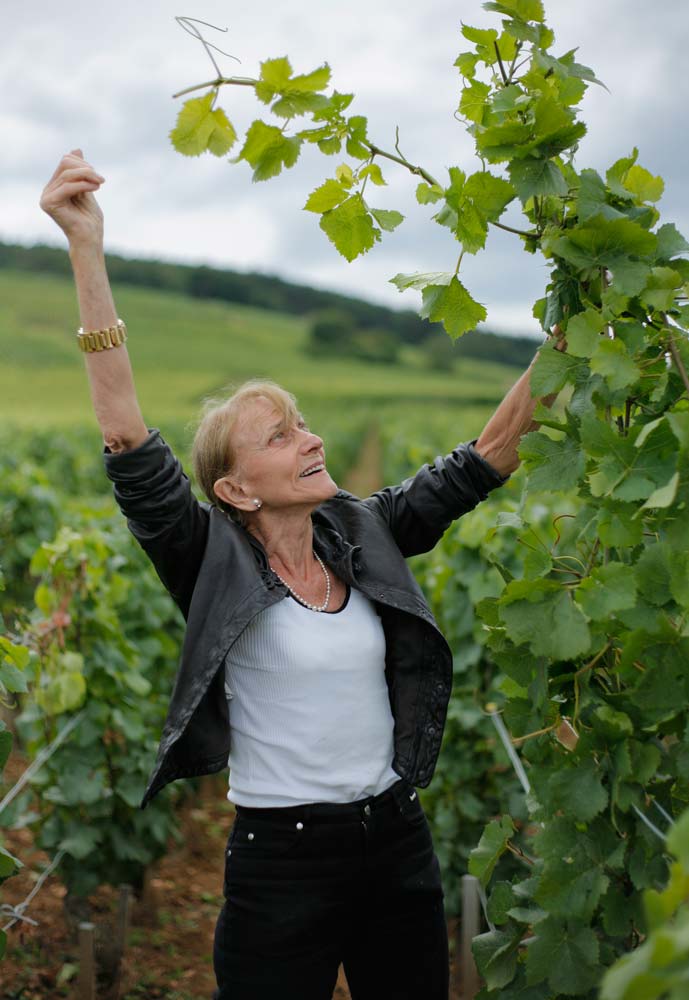
The chronology makes the influence easy to trace. Domaine Leflaive became certified biodynamic in 1997, Domaine Trapet Père et Fils in 2009, Domaine du Comte Liger-Belair in 2012, and DRC in 2016. Bize-Leroy's own turn came earlier, when biodynamics in Burgundy still required conviction ahead of consensus.
"Among other treatments, the vines receive herbal teas and plant decoctions tailored to the season, weather and temperature."
, Lalou Bize-Leroy, proprietor, Decanter2
The detail is practical rather than decorative. At Domaine Leroy, biodynamic work extends to the timing of bottling, which follows fruit days, when the moon passes through the fire constellations of Aries, Sagittarius and Leo. Her preference is for Sagittarius and Leo. The calendar enters the cellar.
Two vineyard techniques explain the domaine's visual and philosophical distinction. The first is repiquage, replanting vines one by one by massal selection, taking cuttings from a diverse group of healthy, high-quality old vines rather than replacing an entire block at once. The second is tressage, in which vine tips are folded back over themselves instead of being hedged. Bize-Leroy has described the vine tip, the apex, as the force that pulls the vine from the ground. Once the shoots are set, the canopy is left untrimmed to encourage photosynthesis.
For drinkers, this is central to the glass. The Leroy signature begins with farming before fermentation: preservation of vine age, minute selection, and a belief that the plant's vitality carries through to the bottle. The resulting wines are discussed for concentration and power, but the process starts with restraint in the vineyard.
Domaine Leroy's map reads like a collector's Burgundy itinerary. The village-level holdings include Auxey-Duresses Les Lavières in white, and red wines from Pommard Les Trois Follots and Les Vignots, Nuits-Saint-Georges Au Bas de Combe, Aux Allots and Aux Lavières, Vosne-Romanée Aux Genevrières, Chambolle Les Fremières, and Gevrey-Chambertin.
The premier cru tier runs through Volnay Santenots du Milieu, Savigny-lès-Beaune Les Narbantons, Nuits-Saint-Georges Aux Vignerondes and Aux Boudots, Vosne-Romanée Aux Brûlées and Les Beaux Monts, Chambolle-Musigny Les Charmes, and Gevrey-Chambertin Aux Combottes. If you are building a Burgundy cellar, those names offer a study in village character as much as producer style.
The grand cru holdings are the domaine's highest-profile wines: Corton-Charlemagne in white, then Corton Renardes, Romanée-Saint-Vivant, Richebourg, Clos de Vougeot, Musigny, Clos de la Roche, Latricières-Chambertin, and Chambertin in red. The list moves from the hill of Corton to Vosne-Romanée, Vougeot, Chambolle-Musigny, Morey-Saint-Denis, and Gevrey-Chambertin. It also explains why allocation and provenance matter so much with Domaine Leroy. The domaine covers a broad sweep of the Côte d'Or, while each wine remains held to the same house standard.
If you travel the Côte, these appellations resolve into villages, slopes, walls, and small changes in exposure that reveal themselves slowly over repeated visits. A day that begins in Vosne-Romanée and ends in Gevrey-Chambertin traces the same geography that shaped Domaine Leroy's 1988 formation.
Domaine d'Auvenay gives the Lalou Bize-Leroy story another register. The domaine is the home in the hills above St-Romain that she shared with Marcel Bize, who lived from 1924 to 2004, and where she still resides. While Domaine Leroy focuses on red wine, Domaine d'Auvenay initially centered on white wine.
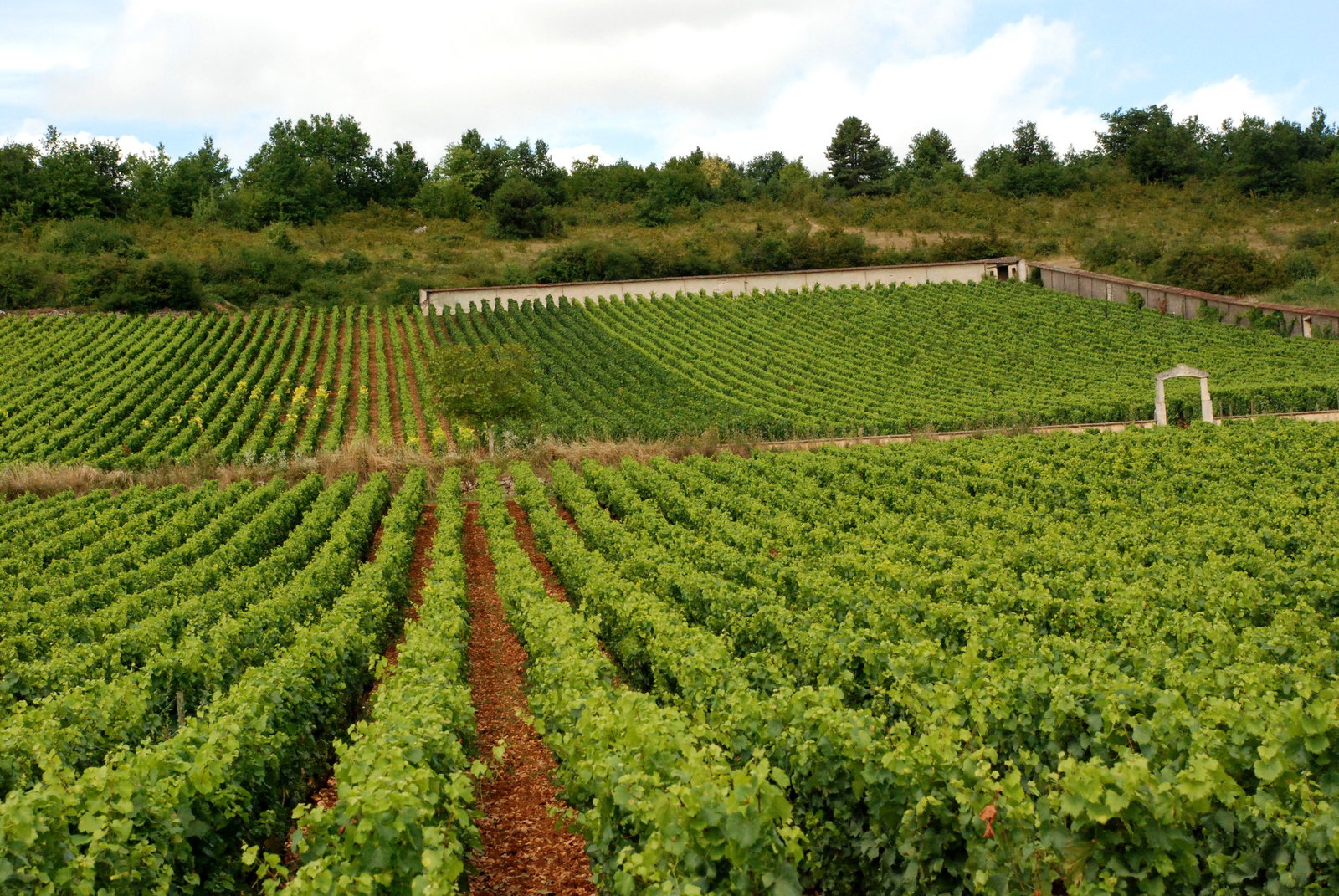
The holdings began with vineyards in Auxey-Duresses and Meursault. Bize-Leroy later added parcels in Puligny-Montrachet and Meursault, including Chevalier-Montrachet, Criots-Bâtard-Montrachet, and Bâtard-Montrachet. The domaine also includes red wines from Bonnes-Mares and Mazis-Chambertin.
That white-wine emphasis gives her work a wider frame than Pinot Noir alone. At d'Auvenay, Chardonnay carries the same farming logic into different appellations, different textures, and different aging expectations. The St-Romain setting also gives the domaine physical distance from the better-known addresses of the Côte, which suits a producer whose wines often reach collectors through tightly held channels rather than open display.
The pairing for a Burgundy itinerary is clear: Domaine Leroy frames the red-wine question through Vosne-Romanée, Gevrey-Chambertin, Chambolle-Musigny, and the grands crus; Domaine d'Auvenay draws the eye toward Meursault and Puligny-Montrachet, then back to the hills above St-Romain. Together, they make Bize-Leroy's career larger than any single village.
The Lalou Bize-Leroy Decanter Hall of Fame 2026 award arrives as collectors scrutinize provenance, farming, and allocation with the same care they once reserved for appellation alone. Domaine Leroy and Domaine d'Auvenay bottles already sit in the category where condition, storage history, and trusted channels matter as much as the label. Scarcity begins in the vineyard, then tightens through selection.
Her career also helps explain a broader Burgundy pattern. Biodynamics, massal selection, vine-by-vine replanting, and canopy decisions now appear in the language of many serious domaines. Bize-Leroy adopted biodynamics in 1988, long before several famous neighbors received certification. She made viticulture part of the wine's identity, rather than a line of technical copy.
The name Leroy can appear across Maison Leroy, Domaine Leroy, and Domaine d'Auvenay, and each carries a different meaning. Maison Leroy reflects the négociant house and her decades of selection. Domaine Leroy reflects her own estate holdings formed from the 1988 acquisitions. Domaine d'Auvenay reflects the estate she owns outright, with a strong white-wine identity and grand cru holdings in Chevalier-Montrachet, Criots-Bâtard-Montrachet, and Bâtard-Montrachet.
Vosne-Romanée, Gevrey-Chambertin, Meursault, Puligny-Montrachet, and St-Romain each hold part of the Bize-Leroy story. For collectors, the next chapter to follow sits where it always has for Lalou Bize-Leroy: the vine, the parcel, the selection table, and the bottle that makes those decisions visible decades later.
Get the App
Take the shortlist into the En Primeur Club app for concierge access, saved places, and the next step after discovery.
Get Exclusive AccessMore from the editors