← Guides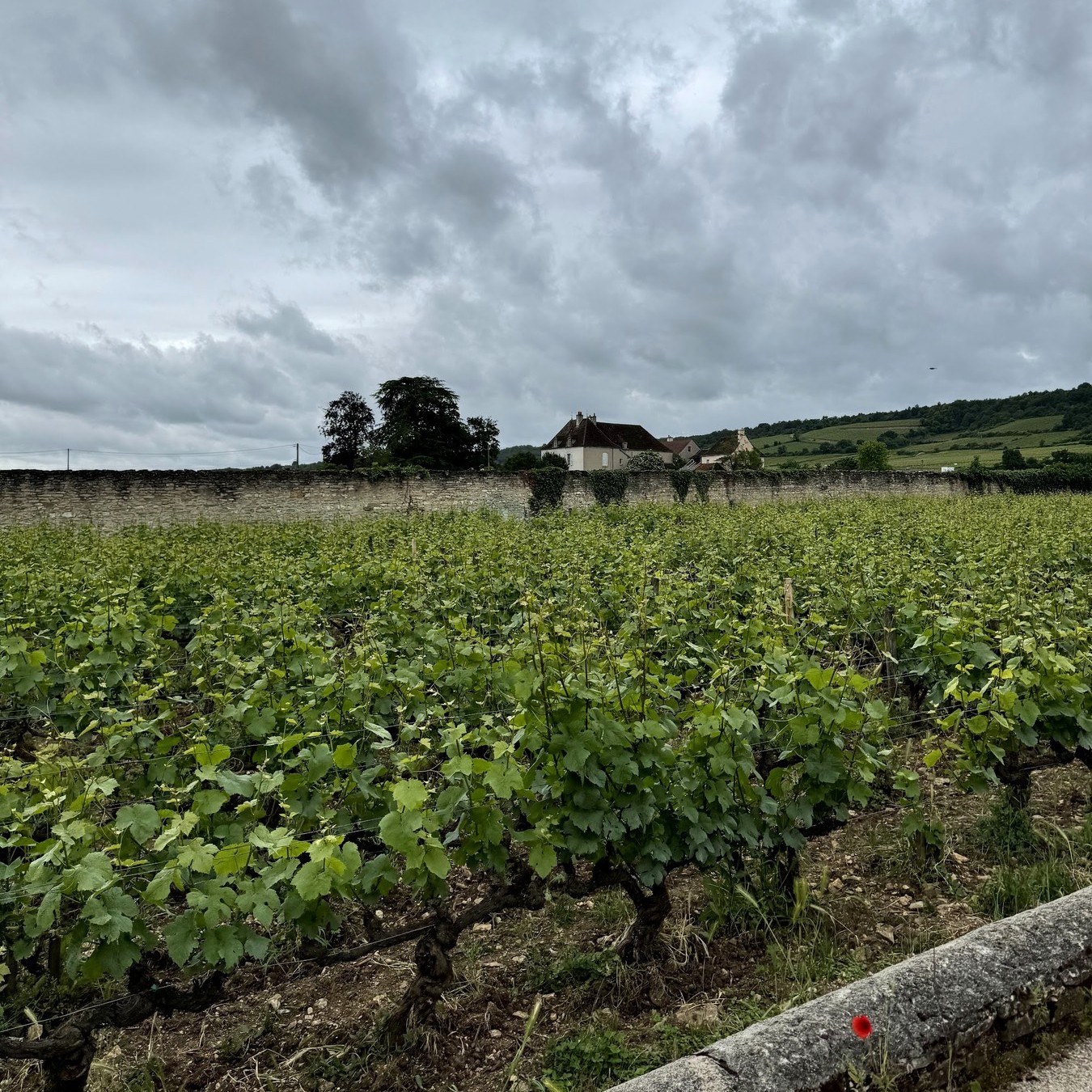
Jeremy Seysses hosted our tasting at Domaine Dujac in Morey-Saint-Denis, at a cellar table of unlabelled bottles including a 2022 Aux Malconsorts.
Jeremy Seysses hosted our tasting at Domaine Dujac in Morey-Saint-Denis, at a cellar table of unlabelled bottles including a 2022 Aux Malconsorts.
We arrived at Domaine Dujac in Morey-Saint-Denis, in the Côte de Nuits. Jeremy Seysses, who leads the winemaking, received us and hosted the tasting himself in the working cellar, among the barrels.
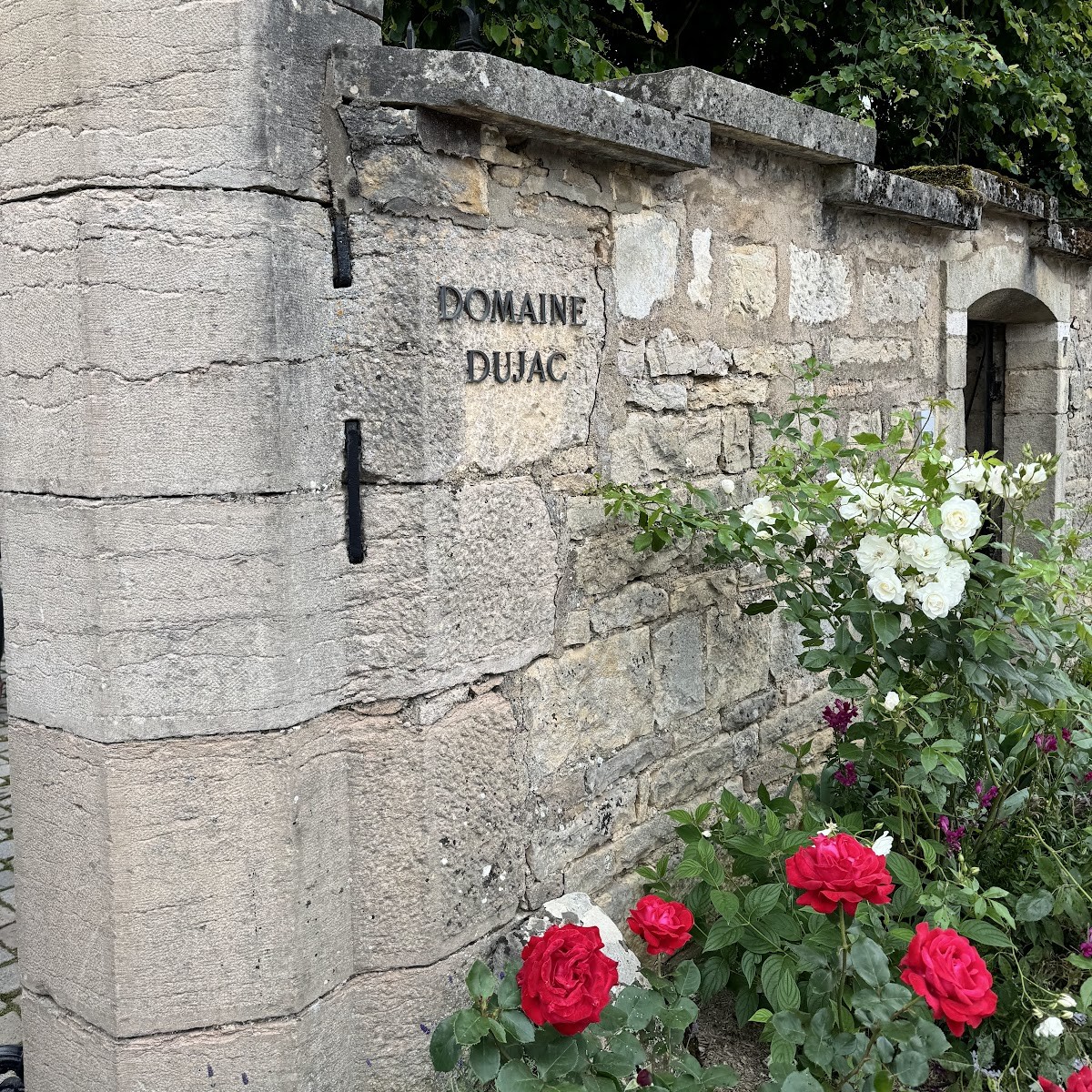
We came in past rows of vines under a grey sky to the stone entrance, where roses flowered beside the gatepost carved DOMAINE DUJAC.
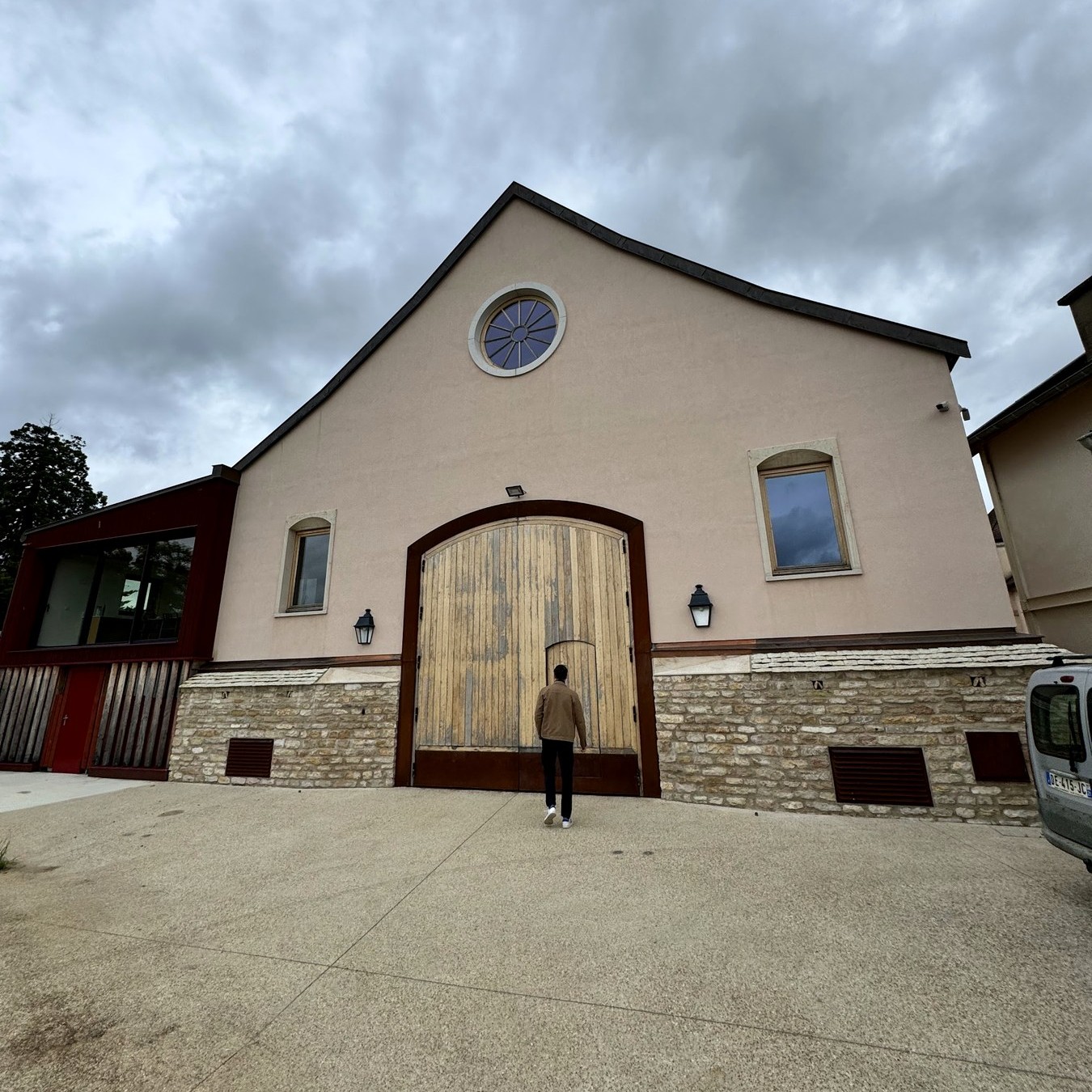
The winery building is cream render, with a round window and a large arched timber door. We went from that door into the working cellar.
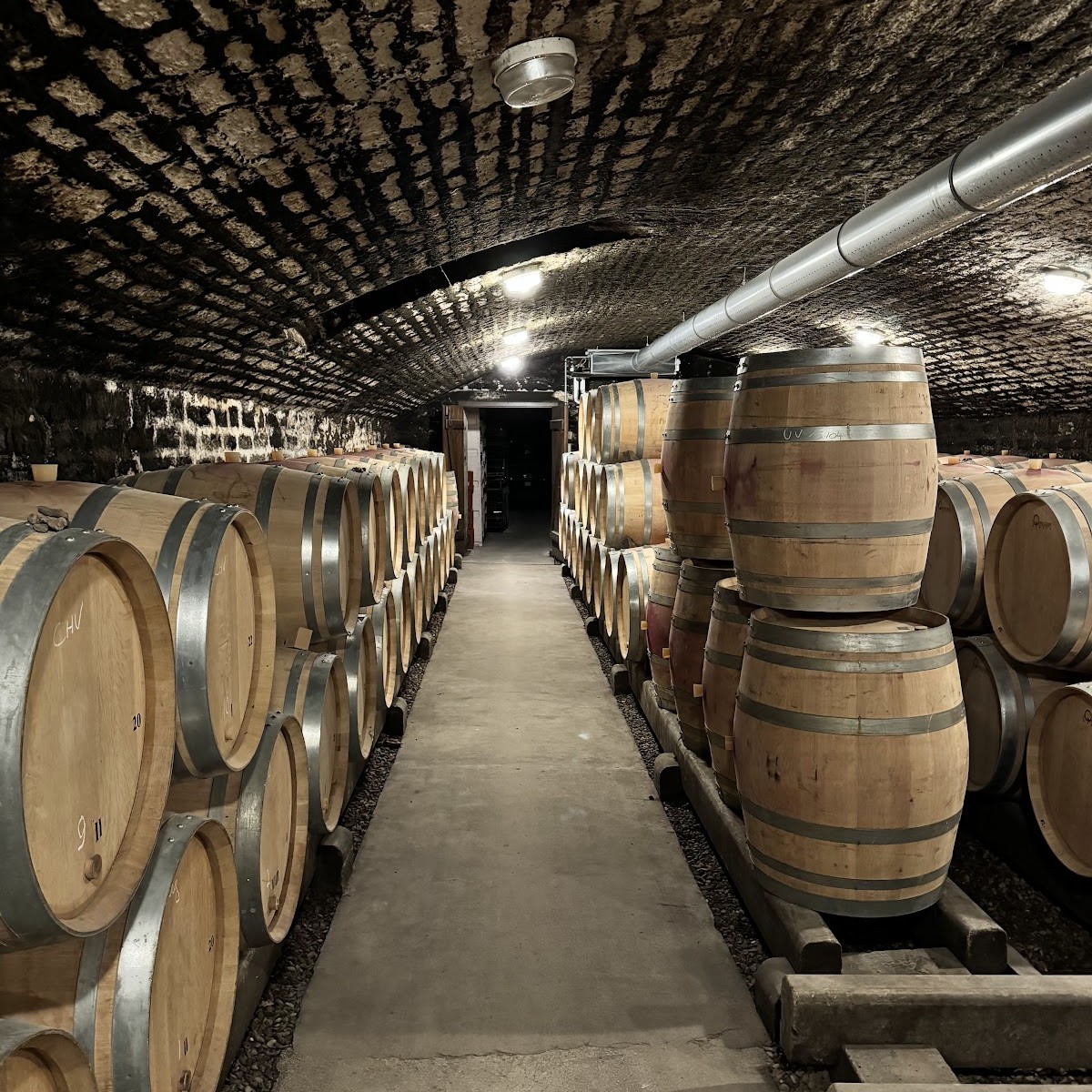
Barrels stand close together under a low vaulted stone ceiling, with pipes running through the room and a pipe running along the vault. Storage, hoses and cellar equipment stay in view. It was a setting that put the wine close to the work behind it.
A cloth covered the tasting table, marked with wine rings. The table was modest. On the cloth were a corkscrew, broad-bowled glasses with wine in them, a few loose corks, and about ten unlabelled bottles with printed corks, lined up against a metal cage of stored wine.
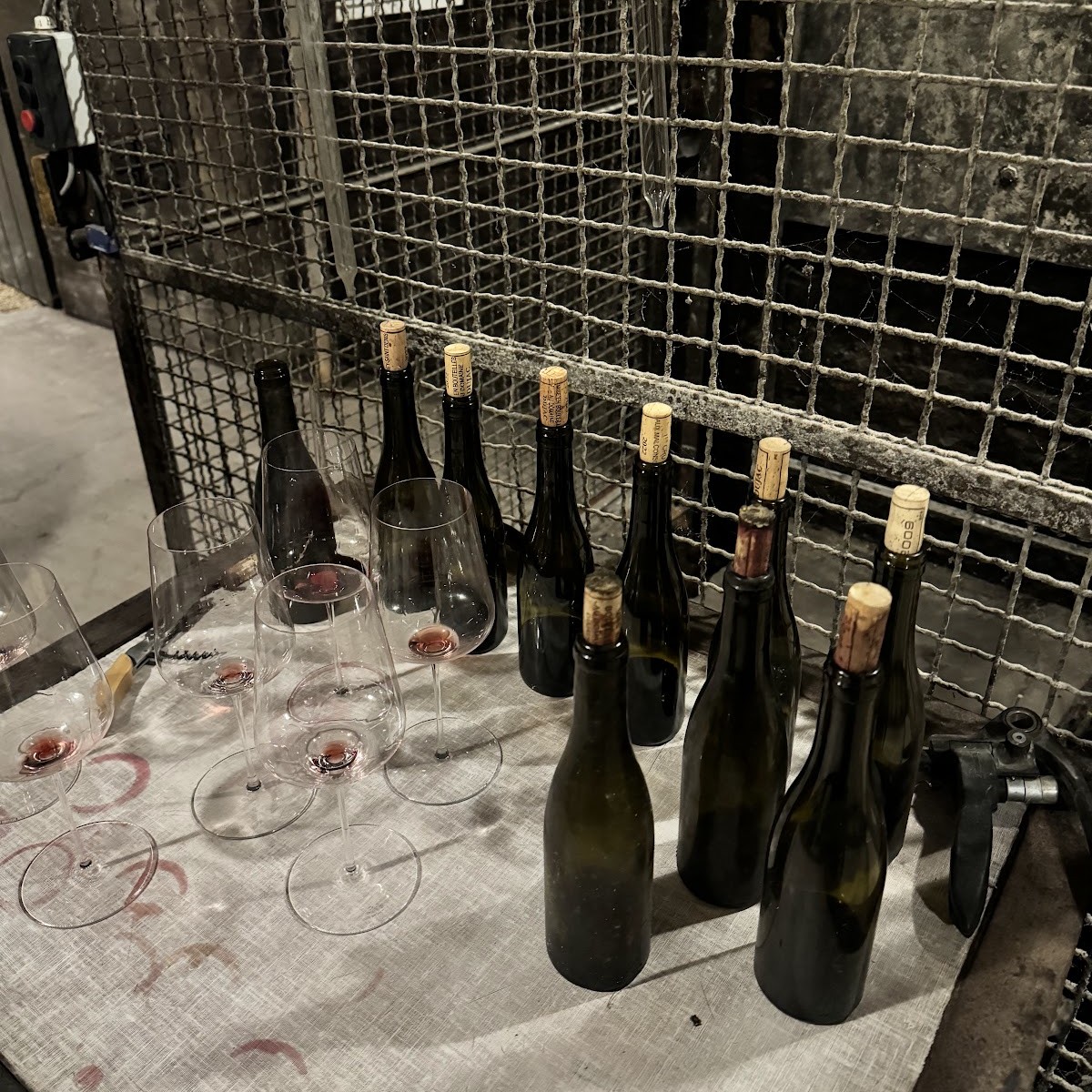
The wines on the table included a 2022 Vosne-Romanée premier cru Aux Malconsorts, a 2022 Morey-Saint-Denis and a 2009 Clos Saint-Denis, and several corks were printed "mis en bouteilles au domaine". The 2022 Morey-Saint-Denis showed red fruit on the nose, a peppery lift from the whole bunches, and a note of damp earth. Medium-bodied and smooth, it displayed black cherry and raspberry, fine tannins, fresh acidity and a finish of black pepper. The 2022 Aux Malconsorts showed red cherry, wild strawberry and crushed stone, with a hint of wilted rose petal. Medium-bodied and markedly mineral, it displayed dark fruit, a velvety texture and fine, lacy tannins. From a warm vintage, the 2009 Clos Saint-Denis showed sweet red cherry and a discreet wood spice. Elegant, intense and precise, it displayed round tannins and a mineral, long finish.
Jacques Seysses founded Domaine Dujac in 1968 after buying Domaine Marcel Graillet in Morey-Saint-Denis.1 The name is a contraction of "du Jacques." Before Burgundy, Jacques worked in the family biscuit business. His father, Louis Seysses, owned Biscuits Belin, Jacques became marketing director, and Louis backed the purchase of the domaine. His love of wine came from that same father, and the two of them visited the greatest growers of the day. He learned vinification with Gérard Potel at Domaine de la Pousse d'Or during the 1966 and 1967 harvests.
The 1968 vintage was sold to négociants. Rosalind Boswell, whom he married in the early 1970s, became central to the estate. The domaine began with about five hectares and stands at 17.5 hectares. In 2014 the family leased Puligny-Montrachet premier cru Les Folatières and Les Combettes, which took the white wines into the Côte de Beaune. Morey-Saint-Denis remains home.
Jeremy began making wine alongside his father in 1994 and joined his parents in 1998. Our host was part of that transition himself, not a hospitality team interpreting it. His wife, Diana Snowden Seysses, born in Napa and a 2001 UC Davis graduate in viticulture and enology, joined in the early 2000s, and his brother Alec joined in 2003. Jeremy leads the winemaking, Diana is the oenologist, and Alec handles the commercial and administrative side.
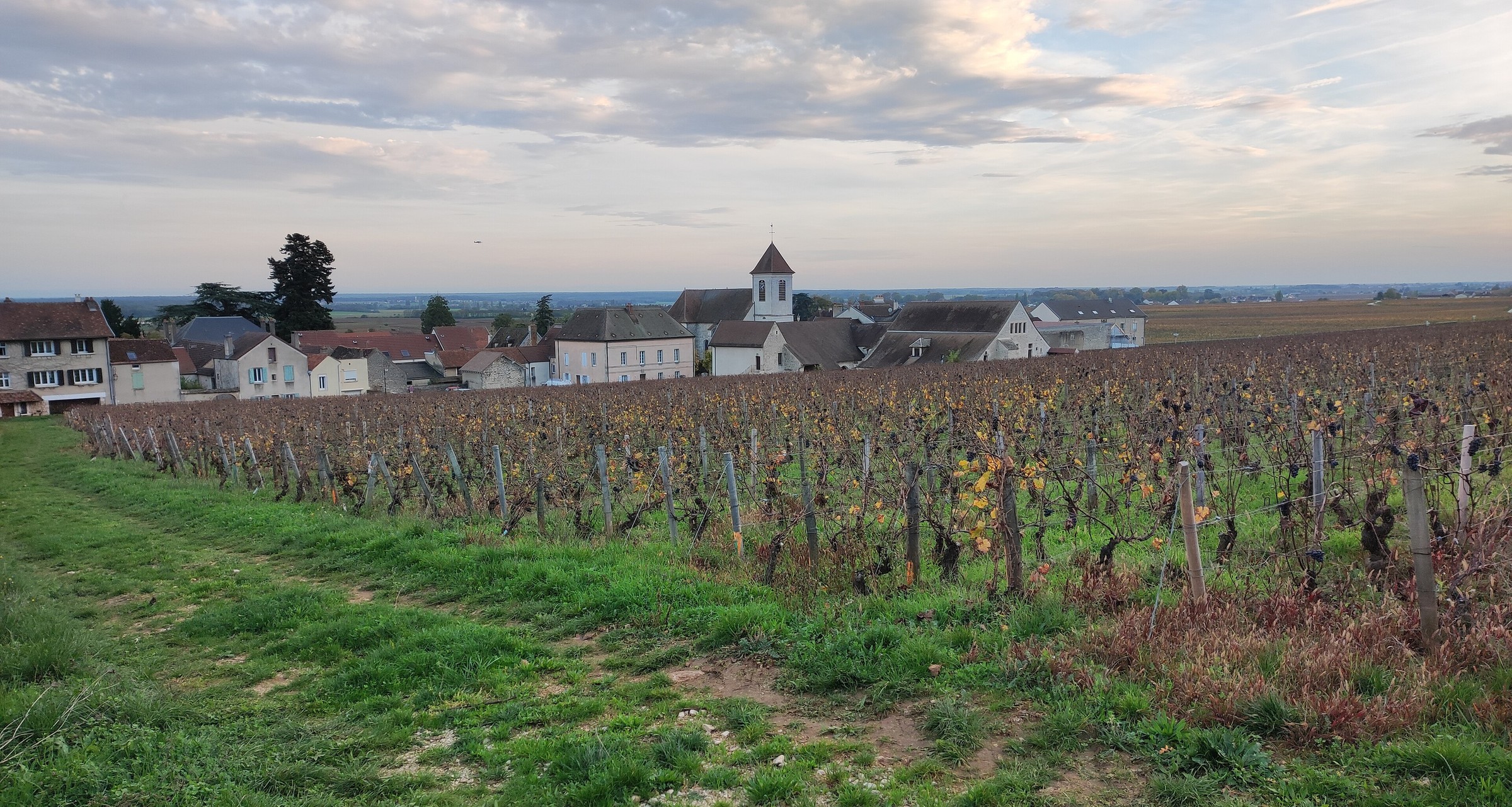
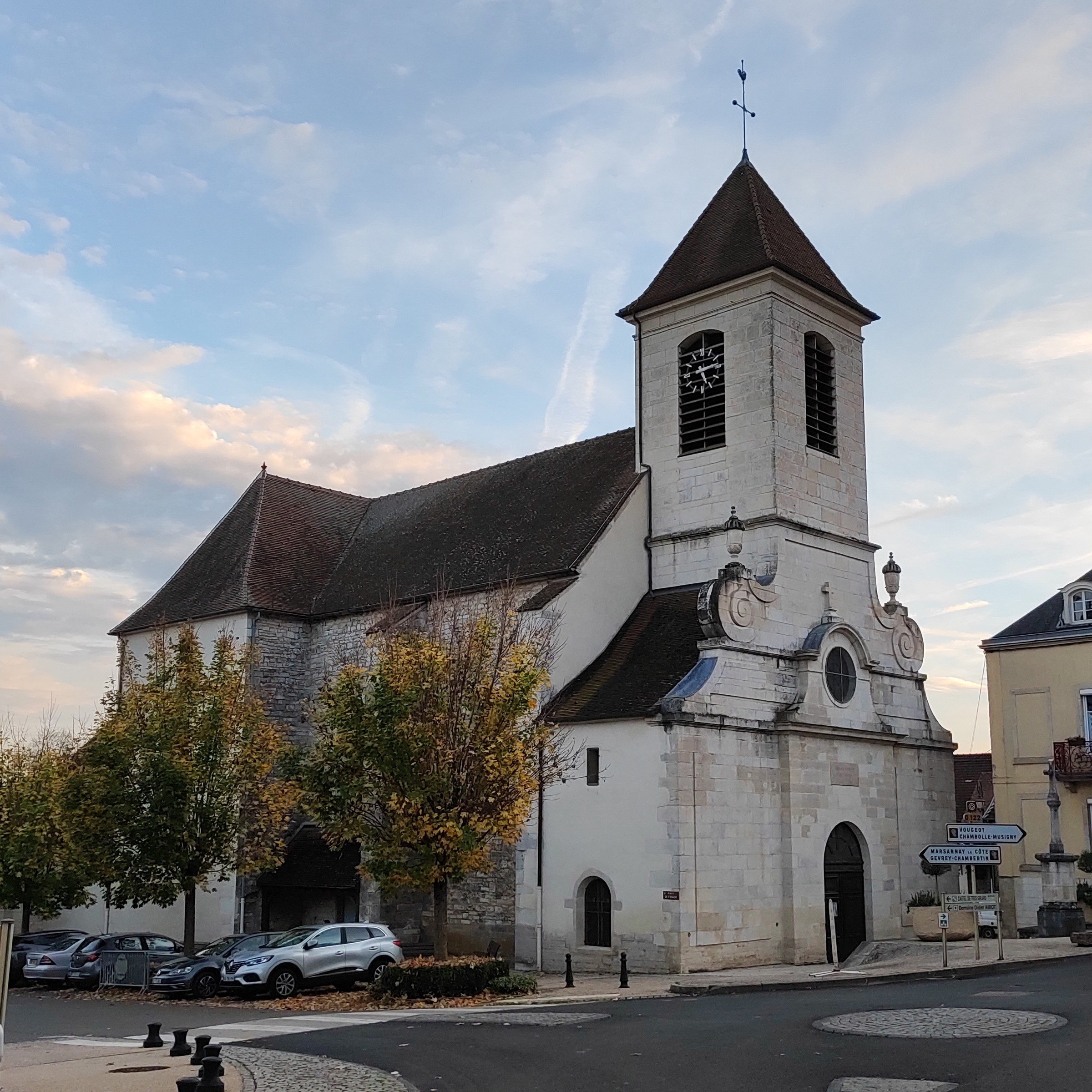
Morey-Saint-Denis, between Gevrey-Chambertin and Chambolle-Musigny, was Morey-en-Montagne until 1927, when it took the name of Clos Saint-Denis, and the appellation dates from 1936.
Dujac began organic trials on four hectares in 2001, farmed the estate organically by 2008 and received certification in 2011. Biodynamic preparations have been in use since 2003, and the domaine holds no biodynamic certification. A five-year trial in Clos de la Roche set biodynamic rows beside organic ones. Diana Snowden Seysses told Opening a Bottle that the biodynamic rows had "a bit more acidity (measurably) and energy (intuitively)."
In the mid-2000s Dujac and Étienne de Montille jointly bought about 13 hectares of Thomas-Moillard vineyards and split Malconsorts between them. The purchase fell in the 2005 vintage, and Dujac's first Malconsorts, though estate fruit, was released under the Fils & Père label. The 2022 Malconsorts is bottled as Domaine Dujac, since the parcel belongs to the domaine, not under the Fils & Père label.
Jeremy and Jacques set up Dujac Fils & Père in 2000. With partner growers in Gevrey, Morey and Chambolle, the team controls farming, yields and picking dates, and those wines are aged with about 50 percent new oak.
Under Jacques, Dujac fermented with whole bunches and aged the wine in new oak. He believed ripe stems softened hard tannins and that a destemmer bruised the fruit. The share has varied with the vintage and the parcel, from heavy destemming in 2001 to 70 to 100 percent in 2019. Jeremy Seysses told Opening a Bottle that in Gevrey "whole-cluster spiciness can come across a little gimmicky."2
Fermentation uses indigenous yeasts only and lasts around two weeks, with light punch-downs early and pumpovers later. After a light pneumatic pressing, the wines move by gravity into the cellar we stood in and spend about 14 to 18 months in oak. Barrel wood is bought two years ahead. New oak runs at about 100 percent for the grands crus, 60 to 80 percent for the premiers crus and about 40 percent for the village wines.
Dujac's Morey-Saint-Denis premier cru takes in Les Millandes, Les Charrières, Les Ruchots and Les Sorbès.3 About 1.95 hectares of Clos de la Roche face east, from 276 to 308 metres, on slopes of 4 to 23 percent, over Prémeaux limestone and Comblanchien scree.4 Domaine Hubert Lignier, a neighbour in Morey-Saint-Denis, also holds Clos de la Roche.
Nearby, Clos Saint-Denis covers about 1.30 hectares and faces east-southeast, on a slope of about 13 percent, at 284 to 309 metres.5
South of Gevrey-Chambertin, the Aux Combottes holding covers 1.5 hectares.6 It faces due east at 271 to 282 metres, on crinoidal limestone.
The highlight was sitting at a plain cellar table with Jeremy Seysses, among the barrels, with unlabelled bottles that included a 2022 Aux Malconsorts. The visit with Jeremy gave the family history a present-day setting.
This is a notable visit because you have time with the family member who makes the wine, in the working cellar, at a table of unlabelled bottles including a 2022 Aux Malconsorts. The domaine is still run by the family, so you can ask directly about the farming and the stem-inclusion choices. Jeremy, Diana and Alec keep the winemaking, the oenology and the commercial side among themselves, and the farming has continued through organic certification and biodynamic trials.
The visit suits Burgundy collectors who follow stem inclusion and want the family that practices it. It suits travellers whose idea of a Côte de Nuits day is time with the person who makes the wine. It also suits anyone assembling a day in Morey-Saint-Denis around Clos de la Roche and Clos Saint-Denis.
Domaine Dujac does not list public visits or a booking page. To arrange a visit, email concierge@enprimeurclub.com.
Domaine Dujac is in Morey-Saint-Denis, in Burgundy's Côte de Nuits.
Jeremy is Jacques and Rosalind's son. He joined the domaine in 1998, leads the winemaking, and hosted our tasting in the working cellar.
The domaine received organic certification in 2011, after trials begun in 2001 and organic farming across the estate by 2008.
Jacques Seysses fermented with whole bunches. The share has varied since, from heavy destemming in 2001 to 70 to 100 percent in 2019, depending on the vintage and the parcel. Fermentations use indigenous yeasts only.
The domaine does not list public visits. Email concierge@enprimeurclub.com to arrange one.
Image credits: Christophe Finot / Wikimedia Commons, CC BY-SA 3.0.
Get the App
Take the shortlist into the En Primeur Club app for concierge access, saved places, and the next step after discovery.
Get Exclusive AccessMore from the editors