← Guides
Discover the ins and outs of the Bordeaux en primeur 2026 campaign, including key dates, tasting events, and tips for navigating this exciting wine buying experience. Stay informed and take full advantage of your investment.
Discover the ins and outs of the Bordeaux en primeur 2026 campaign, including key dates, tasting events, and tips for navigating this exciting wine buying experience. Stay informed and take full advantage of your investment.
The 2026 Bordeaux en primeur campaign is open to any collector willing to engage, but the wines that matter most, from the classified growths of the Médoc to the right-bank icons of Pomerol, will be allocated and gone before most buyers realize the window has closed. The single best route for most readers is a relationship with a specialist UK or US merchant who holds a standing allocation from the châteaux they care about. Without that relationship already in place, the campaign is harder than it looks.
En primeur is not a public sale. It is a rationing system dressed in the language of a sale. The châteaux release barrel samples to the trade in late spring, typically April through June of the year following the harvest, and négociants in the Place de Bordeaux then offer those wines to merchants worldwide at an opening price. The merchant's allocation is fixed. When it is gone.
The wines that generate greater competition are not hard to name: Pétrus, Le Pin, Lafleur, and the five first growths, Latour, Margaux, Haut-Brion, Mouton Rothschild, and Lafite, along with a handful of right-bank cult producers whose combined annual production runs to a few thousand cases. A merchant who receives a small parcel of Pétrus en primeur will have spoken to the buyer before the offer email goes out. That is not cynicism; it is how the system has always worked.
The 2025 vintage, the wines being sold as en primeur in 2026, will carry its own quality narrative, and that narrative will shape pricing. A warm, dry growing season in the Gironde tends to produce concentrated, early-drinking Merlot on the right bank and structured, age-worthy Cabernet Sauvignon in the Médoc. The precise character of the 2025 harvest emerged from the primeur tastings themselves, so the campaign is also a discovery process: you are buying a wine that exists only in barrel, on the basis of early samples and the producer's projection of what it will become.
En Primeurs Week 2026,1 presenting the 2025 vintage, runs from April 20 to 23, 2026, in Bordeaux. The grand tasting on April 20 takes place at Hangar 14, 173 Quai des Chartrons,2 with three time slots: 9am to 11.30am, 11.30am to 2pm, and 2pm to 4.30pm.2 The château tastings by appellation run April 21 to 23 from 9.30am to 6pm2 at host châteaux. These tastings are limited to industry professionals and the press;2 to attend, contact wine merchant firms and participating estates, or email primeurs@ugcb.net.2 Registration is now open via the official UGCB registration link,1 though places for the château tastings are subject to availability and confirmations will be sent by email.1

The commercial releases follow the tasting week. Releases ran from late April through June, with the bulk arriving before Vinexpo Asia.3 The release calendar for individual châteaux is not published in advance by the estates themselves. To illustrate the spread: Pontet Canet 2025 released on 29 April;4 Cheval Blanc on 11 May;4 Lafite Rothschild and Carruades de Lafite on 20 May;5 Mouton Rothschild and Petit Mouton on 3 June;4 Haut-Brion on 9 June;4 and Château Margaux on 10 June.4 Merchants receive notice from the Place de Bordeaux with little lead time, sometimes 24 to 48 hours. If you are waiting for a public announcement before contacting your merchant, you are already behind.
Four realistic routes into the 2026 campaign exist, ranked by reliability for the wines that matter most.
Specialist UK merchants with Place de Bordeaux allocations. Berry Bros. & Rudd, Justerini & Brooks, Farr Vintners, and Bordeaux Index are among the merchants with long-standing négociant relationships and direct château allocations. Their en primeur offers go to existing clients first, often by email to account holders before any public listing. Opening an account before the campaign begins, and making your interests known to a named contact, is the single most effective thing a new buyer can do.
US importers and fine wine retailers. In the United States, merchants such as Benchmark Wine Group, Acker, and K&L Wine Merchants participate in the campaign through their own négociant channels. Allocation sizes are smaller than in the UK, the Place de Bordeaux has historically directed the majority of its volume toward the UK and Asian markets, but the wines are available. The same principle applies: an existing account and a stated preference improve your odds materially.
Direct château mailing lists. A small number of châteaux, particularly on the right bank, sell a portion of their production directly to private clients. Château Angélus and Château Pavie, for example, maintain client lists, though access to those lists is itself competitive and typically requires an introduction or a prior purchase history. The châteaux do not publish their direct-sale policies publicly; contact the estate directly to explore this route.
En primeur platforms and aggregators. Sites such as Liv-ex and specialist en primeur platforms allow buyers to compare offers across merchants and, in some cases, purchase directly. These are useful for mid-tier classified growths where allocation pressure is lower, but for a leading wines, the platform offer arrives after the merchant's own clients have been served.
The experience of buying en primeur is less glamorous than the marketing suggests and more intellectually engaging than the skeptics allow. You are not tasting a finished wine. You are tasting a barrel sample, drawn in the weeks after the harvest, and projecting forward five, ten, or twenty years. The sample will be more tannic, more angular, and less expressive than the bottled wine will eventually be. Reading it requires experience and a degree of faith in the producer.
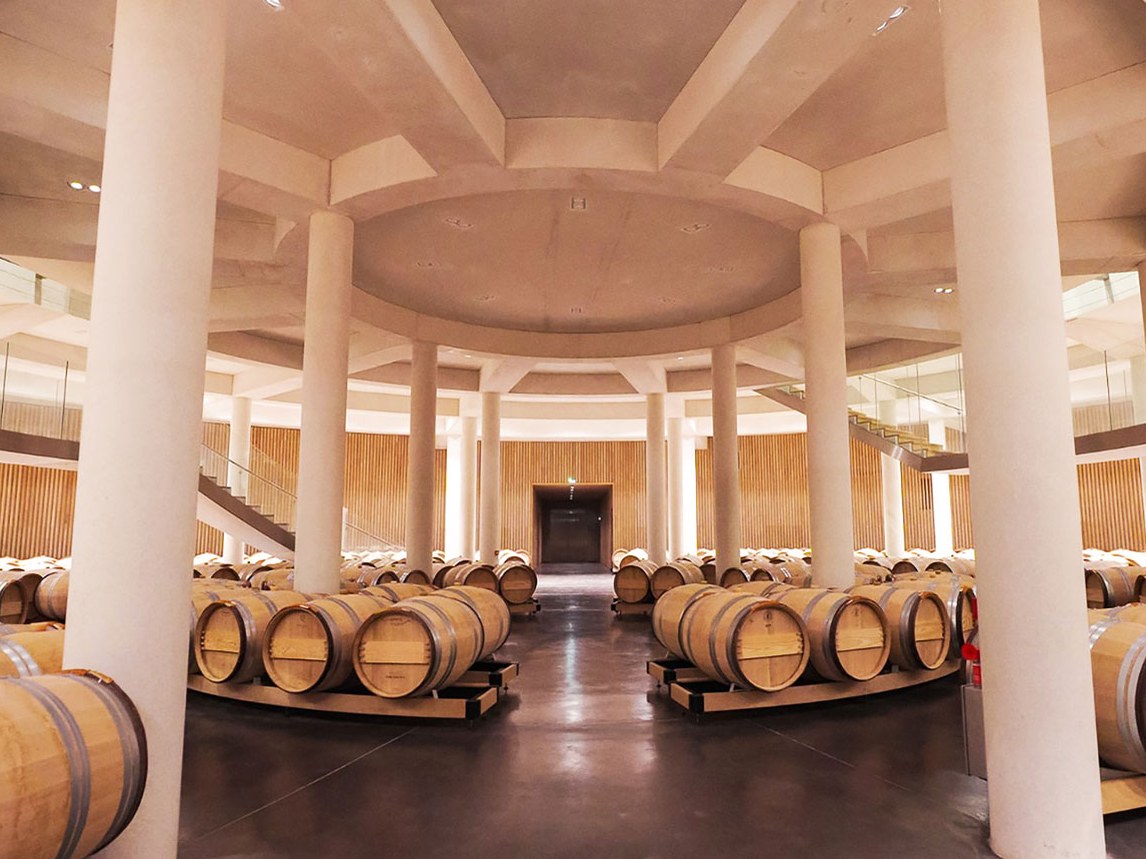
En Primeurs Week 2026 brought together nearly 5,000 wine industry professionals,7 négociants, critics, and buyers from across the world, tasting through dozens of barrel samples in a single day, making notes that will drive purchasing decisions worth millions of pounds before the week is out. The atmosphere is professional and focused. Places for the château tastings are subject to availability; contact participating estates or email primeurs@ugcb.net2 to explore access.
For most buyers, the experience is mediated through a merchant. The offer arrives by email: a wine, a price per bottle in bond, with duty and VAT only becoming relevant if the wine is later taken into physical delivery,8 a quantity available, and a deadline. You commit and pay; the wine is bottled and delivered to your cellar or a bonded warehouse. Storage in bond costs approximately £15 per 12×75 per year.9 The gap between purchase and delivery is the defining feature of en primeur: you are buying on trust, on critical assessment, and on your own read of the vintage.
The crowd you share this process with, at the tastings, at the merchant events, in the online forums, skews toward serious collectors, trade professionals, and a growing cohort of younger buyers who came to Bordeaux through the secondary market and are now engaging with the primary campaign for the first time. The conversation is technical and opinionated. Disagreements about vintage quality are genuine and sometimes heated.
The insiders who consistently secure the wines they want do a few things differently from the general buying public.
They build merchant history before the campaign opens. A buyer who has purchased across multiple vintages, including the less-celebrated years, is a more reliable client than one who appears only in the great vintages. Merchants allocate their best wines to their best clients. Buying a classified growth en primeur in a prior campaign, even in modest quantity, establishes you in the system.
They buy the second wine as an entry point. Petit Mouton 2025 is available at £732 per case of six,4 a meaningful step below the grand vin, and Carruades de Lafite and Pavillon Rouge du Château Margaux follow similar logic. Buying the second wine consistently signals commitment to the estate and, over time, can open access to the grand vin allocation.
They engage with the full release calendar, not just the headline names. The 2026 campaign's competitive intensity will depend on how critics assess the 2025 vintage; if the consensus is mixed, the window for building relationships at lower cost is wider. Lagrange 2025 (St-Julien) is available at £182 per case of six,10 the kind of entry point where allocation pressure is low and the relationship-building value is real.
They watch the release calendar actively. Because merchant offers arrive with little notice, insiders monitor their email during the campaign window, roughly May through June, and respond quickly. A short offer window on a wine with limited bottles available is a literal deadline, not a figure of speech.
| Route | Access to Top Wines | Lead Time Required | How to Engage | Best For |
|---|---|---|---|---|
| UK specialist merchant (Berry Bros., Farr Vintners, Justerini & Brooks) | High, direct château allocations | Open account before campaign; ideally prior purchase history | Account + named contact; respond to offer emails promptly | Serious collectors targeting first growths and right-bank icons |
| US fine wine retailer (K&L, Benchmark, Acker) | Medium, smaller allocations than UK | Account before campaign opens | Email list signup; direct contact with buyer | US-based collectors; mid-tier classified growths |
| En primeur platform / Liv-ex | Low for top wines; medium for crus bourgeois and second wines | None, open to all | Register at Liv-ex; compare merchant offers | Price comparison; mid-tier and second wines |
| Secondary market / auction | High, most wines available post-release | None | Christie's, Hart Davis Hart, Sotheby's Wine | Buyers who missed the primary campaign; specific back-vintages |
| Direct château mailing list | Variable, right-bank estates only; list access competitive | Relationship-dependent; no published policy | Contact estate directly; prior purchase history helps | Collectors with existing château relationships |
The secondary market deserves more credit than it typically receives in en primeur discussions. For most classified growths, the bottled wine is available at auction or through merchants' existing stock within a few years of the vintage. The price premium over en primeur varies by wine and vintage; for a leading wines in celebrated years, en primeur is often the lower-cost entry point, but for mid-tier estates in average vintages, the secondary market price can be comparable or lower, with the added advantage of tasting the finished wine before you buy.
For collectors who want the Bordeaux experience without the allocation pressure, the Cru Bourgeois category, estates such as Château Phélan Ségur in Saint-Estèphe or Château Poujeaux in Moulis, offers quality at prices where allocation is not a constraint. Siran 2025 is available at £126 per case of six10 and Giscours 2025 at £252 per case of six,10 both available through most fine wine merchants at prices well below the first growths, though Giscours is itself a Margaux Third Growth.
The en primeur campaign rewards patience, relationship-building, and a sustained interest in Bordeaux as a region, not just as an investment vehicle. If you are buying to drink, the campaign makes most sense for wines you intend to cellar for a decade or more: the grand vins of the Médoc first growths, the great Pomerols, a leading Saint-Émilions. These wines need time, and buying en primeur gives you the longest possible cellar window.
If you are buying primarily for investment, the calculus is more complex. En primeur prices for a leading wines have historically offered a discount to the eventual bottled price in celebrated vintages, but that discount has narrowed as the campaign has become more globally competitive. The 2026 campaign's investment case will depend on the 2025 vintage quality and on the pricing decisions of the châteaux, which have, in recent years, been willing to open at prices that leave less room for appreciation than in earlier decades. Mouton Rothschild 2025 released at €300 per bottle ex-négoces, available in the UK at around £1,824 per case of six,10 a reference point for where the top of the market is currently priced.
If you are new to Bordeaux and want to understand the region before committing significant capital, the campaign is a useful education. Attending a merchant's en primeur tasting event, most UK specialists host these in May and June, puts you in a room with barrel samples, critics' notes, and buyers who have been doing this for decades. For independent critical guidance, Jane Anson's Inside Bordeaux subscription costs €110 a year,11 giving access to tasting reports and notes across the campaign.
The 2026 en primeur campaign is worth engaging with if you already have, or are willing to build, a relationship with a specialist merchant before April. The allocation system is not designed for the occasional buyer who appears in great vintages; it is designed for the client who has been present across the cycle.
For a leading wines, Pétrus, Le Pin, the first growths in a celebrated year, the allocation list is the only route that reliably works. The secondary market exists and is liquid, but you will pay for the privilege of waiting. For the broader campaign, covering the hundreds of classified and cru bourgeois estates that release en primeur, access is genuinely open to any buyer with an account at a reputable merchant and the discipline to respond quickly when the offer arrives.
The 2025 vintage's quality will be the defining variable. If the critical consensus emerging from the April 20 to 23 tasting week1 is strong, competition will be intense and pricing will reflect it. If the vintage is mixed, strong in the Médoc, uneven on the right bank, or vice versa, the campaign will be more navigable, and the opportunity to build merchant relationships at lower cost will be real. Either way, the campaign is a window into how Bordeaux actually works: a system built on relationships, rationing, and the long game of collecting. For most buyers, the second wine and the cru bourgeois tier are the smarter entry points; the grand vin rewards only those who have already done the groundwork, and that groundwork, more than any single vintage, is what the campaign is about.
The commercial releases for the 2025 vintage (sold as 2026 en primeur) begin in late April, following the UGCB tasting week in Bordeaux from April 20 to 23. Individual châteaux do not publish their release dates in advance. Merchants receive offers from the Place de Bordeaux with as little as 24 to 48 hours' notice before passing them to clients. The campaign does not operate on a published drop schedule, confirm directly with your merchant when they expect to receive offers for the specific wines you want.
No. The vast majority of en primeur buying happens remotely, through merchant offer emails and online accounts. Travel to Bordeaux for the Union des Grands Crus tasting week is possible for trade and press, and some private buyers attend through merchant invitations, but it is not required to secure an allocation. Most UK and US specialist merchants host their own en primeur tasting events in May and June, where you can taste barrel samples without traveling to France.
En primeur wines are typically bottled and available for delivery roughly 18 to 24 months after the harvest, so wines from the 2025 vintage, purchased during the 2026 campaign, would generally arrive in 2027 or early 2028. The exact timeline varies by château and by the merchant's delivery arrangements. Wines are usually held in bond until delivery, and buyers can choose to leave them in a bonded warehouse for ongoing storage.
It can be, particularly for the mid-tier classified growths and cru bourgeois estates where allocation pressure is lower. For first-time buyers, the campaign is as much an education as a purchasing opportunity: attending a merchant's tasting event, reading the critical assessments as they emerge in April and May, and comparing prices across merchants builds the knowledge base that makes future campaigns more navigable. Starting with a second wine or a cru bourgeois, rather than committing significant capital to a first growth on a first campaign, is the approach most experienced collectors would recommend.
This is a genuine risk, though historically rare among the classified growths. The standard protection is to buy through a merchant who holds the wine in a bonded warehouse in your name, rather than on the merchant's own balance sheet. UK merchants regulated by the HMRC bonded warehouse system offer a degree of protection; if the merchant fails, the wine in bond remains yours. The specific terms vary by merchant, review the contract carefully before committing, and ask your merchant explicitly how your purchase is protected in the event of insolvency.
Get the App
Take the shortlist into the En Primeur Club app for concierge access, saved places, and the next step after discovery.
Get Exclusive AccessMore from the editors