Union Transfer
Union Transfer at 1026 Spring Garden St occupies a converted warehouse in Philadelphia's Spring Garden neighborhood, functioning as one of the city's anchor mid-capacity concert venues. The room's industrial bones — exposed brick, high ceilings, a wide standing floor — shape every show, placing the crowd close to the stage in a way that larger arenas cannot replicate. For live music in Philadelphia, it sits in a distinct tier between club and arena.

Pearl is the En Primeur Club membership app — saves, bookings, and concierge access live there. Same editors, same standards.
- Address
- 1026 Spring Garden St, Philadelphia, PA 19123
- Phone
- (215) 232-2100
- Website
- utphilly.com
- Directions
- Get directions
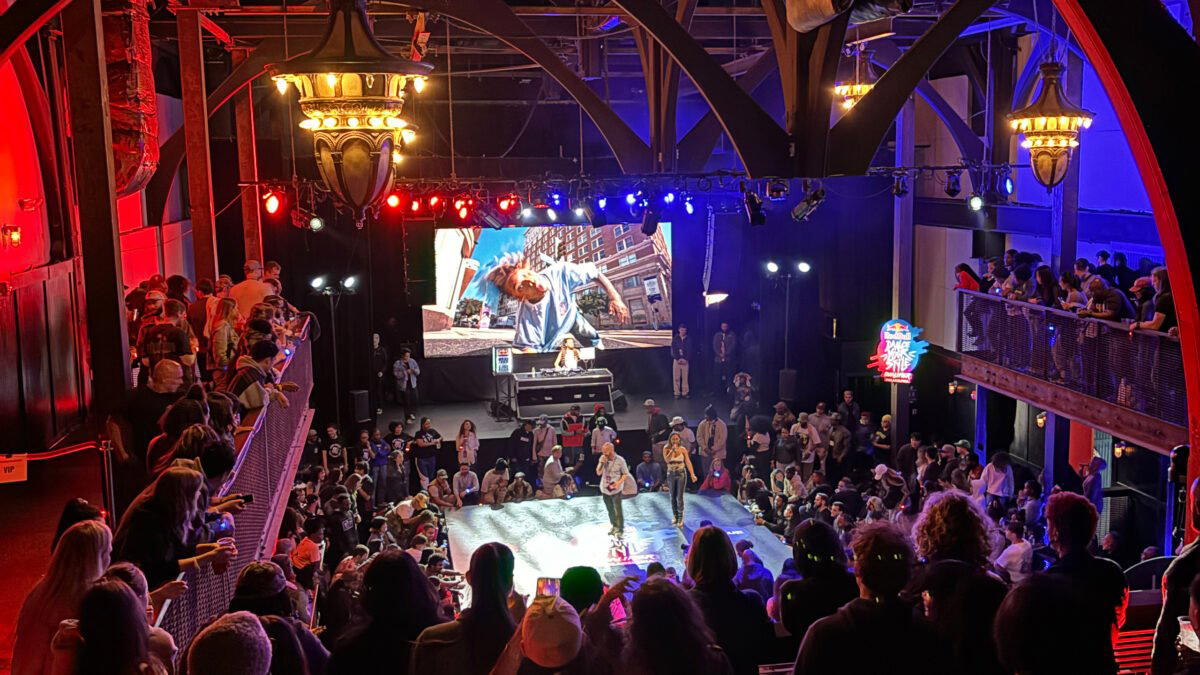
Spring Garden's Industrial Stage
Philadelphia's mid-capacity venue scene has long operated in the gap between 300-person club shows and 5,000-seat arenas, and few rooms have held that position as consistently as Union Transfer. The converted warehouse at 1026 Spring Garden St carries the physical logic of its origins: exposed brick walls, a ceiling that climbs well above the crowd, and a floor plan that keeps even the back of the room within reasonable sightlines of the stage. That geometry is not incidental — it is the reason the room persists as a reference point for touring acts working in the 500-to-1,200 capacity range across the American market.
Spring Garden sits north of Center City, in a corridor that has gradually accumulated independent venues, breweries, and food-and-drink operators over the past decade. Union Transfer anchors the northern end of that drift, drawing a crowd that arrives by foot from Fairmount or by transit from across the city. The surrounding blocks have a low-rise industrial character that still reads as transitional — which, for a live music venue, is often the right neighborhood temperature. Areas that are fully gentrified tend to price out the venues that made them interesting in the first place.
The Craft at the Bar, and What It Says About the Room
In American live music venues, the bar program has historically been an afterthought, a row of domestic draft handles and a speed-rail pour. That calculus has shifted in the past decade, particularly at independently operated rooms that need to compete with both club-scale venues and the expanding craft bar scene in cities like Philadelphia. The bartenders working a room like Union Transfer operate in a context shaped by that shift: the crowd arrives with higher baseline expectations, the margins on a well-constructed cocktail outperform a cheap beer pour, and the bar becomes a functional part of the venue's identity rather than a waiting area between sets.
Philadelphia's broader bar scene provides the competitive context. The city's cocktail program has matured significantly, with venues like 12 Steps Down and 1501 Passyunk Ave establishing a standard for craft-forward service in neighborhood settings. 48 Record Bar, which pairs vinyl programming with a considered drinks list, represents the format closest to Union Transfer's music-and-bar combination. The pressure those venues create filters up into how operators at mid-capacity rooms think about what goes behind the bar. A bartender working a 1,000-person show night is managing both volume and quality, which demands a different kind of discipline than a 40-seat cocktail bar, faster build times, a tighter menu, and the ability to read a crowd moving between sets.
Nationally, the question of craft bar programming inside live music venues has been addressed with varying degrees of ambition. Kumiko in Chicago and Jewel of the South in New Orleans represent one end of the spectrum, destination cocktail bars where the program is the primary offering. Julep in Houston and ABV in San Francisco sit in a middle tier where the drinks list is carefully considered but the room serves multiple functions. Union Transfer operates closer to that functional middle: the bar matters, but the stage remains the organizing principle of the experience.
Further afield, venues like Bar Leather Apron in Honolulu, Superbueno in New York City, and The Parlour in Frankfurt on the Main demonstrate how the bartender's craft has become a vehicle for a venue's broader identity, regardless of format or geography. The common thread is intentionality: a bar program that reflects a point of view rather than simply covering the bases.
The Live Music Context in Philadelphia
Philadelphia's venue ecosystem has historically skewed toward the extremes, the 200-person club on one end, the Wells Fargo Center on the other. The mid-capacity tier, which in other American cities is anchored by rooms in the 800-to-1,500 range, has fewer permanent fixtures in Philadelphia than the market size would suggest. Union Transfer's longevity at 1026 Spring Garden St reflects both the demand for that format and the difficulty of sustaining it. Independently operated rooms at this scale face margin pressure from ticketing fees, production costs, and the increasingly fragmented attention of a touring circuit that has concentrated around a smaller number of blockbuster acts.
The venue's programming has leaned toward independent and alternative touring acts, which positions it in a different booking lane than corporate-operated rooms. That distinction matters for the audience experience: independent programming tends to take more risks on developing artists, which means the room functions as a discovery space as well as a destination for established names. 637 Philly Sushi Club represents the kind of adjacent nightlife operation that feeds off the same audience demographic, suggesting a broader ecosystem around the Spring Garden corridor that rewards visitors willing to move between venues over the course of a night.
Seasonally, the indoor format works in Union Transfer's favor during Philadelphia's winter months, when outdoor programming at competing venues goes dark. The room's heating and sound isolation make it a consistent draw from October through April, when the city's live music calendar tends to concentrate in fixed indoor spaces. Summer shows carry a different energy, the crowd arrives lighter, the bar volume increases, but the room's ventilation and layout handle high-attendance nights with reasonable comfort.
Know Before You Go
Planning Notes
- Address: 1026 Spring Garden St, Philadelphia, PA 19123
- Neighborhood: Spring Garden, north of Center City
- Capacity tier: Mid-capacity (approximately 500–1,200 depending on configuration)
- Format: Standing floor with balcony; general admission for most shows
- Getting there: Accessible by SEPTA from Center City; limited street parking in the immediate area on show nights
- Booking: Tickets sold through standard online ticketing platforms; advance purchase recommended for headlining shows
- Leading season: October through April for consistent programming; summer shows available but the indoor room suits cooler months
- Bar access: Multiple bar points on the floor and balcony; expect volume-driven service on busy show nights
Comparable Options
| Venue | Cuisine | Price | Awards |
|---|---|---|---|
| Union TransferThis venue — the venue you are viewing | This venue | $20–30 | Not listed |
| Next of Kin | Cocktails, bar snacks | $20–30 | Not listed |
| Sacred Vice Brewing – Berks (taproom) | Brewery taproom; beer-focused, vinyl music selection | $20–30 | Not listed |
| Tria | Not listed | $30–50 | Star Wine List |
| Irwin's | Not listed | $50–100 | Esquire Best New Restaurants #11 |
Continue exploring
More in Philadelphia
Bars in Philadelphia
Browse all →
Restaurants in Philadelphia
Browse all →
Details
- Energetic
- Industrial
- Well Known
- Lively
- Group Outing
- Casual Hangout
- Private Event
- Live Music
- Historic Building
- Standalone
- Standing Room
- Craft Beer
Historic industrial concert-hall atmosphere with high-energy crowds, strong lighting production, and multiple full bars.