Plaza Mariachi
Plaza Mariachi on Nolensville Pike sits at the center of Nashville's most concentrated Latin American corridor, where Mexican entertainment complexes have replaced the strip-mall model with something closer to a market hall. The venue brings together food, live music, and cultural programming under one roof, making it a reference point for understanding how the city's immigrant communities have shaped its south side.
Pearl is the En Primeur Club membership app — saves, bookings, and concierge access live there. Same editors, same standards.
- Address
- 3955 Nolensville Pk, Nashville, TN 37211
- Phone
- +1 615 373 9292
- Website
- plazamariachi.com
- Directions
- Get directions
 Saves & bookings on Pearl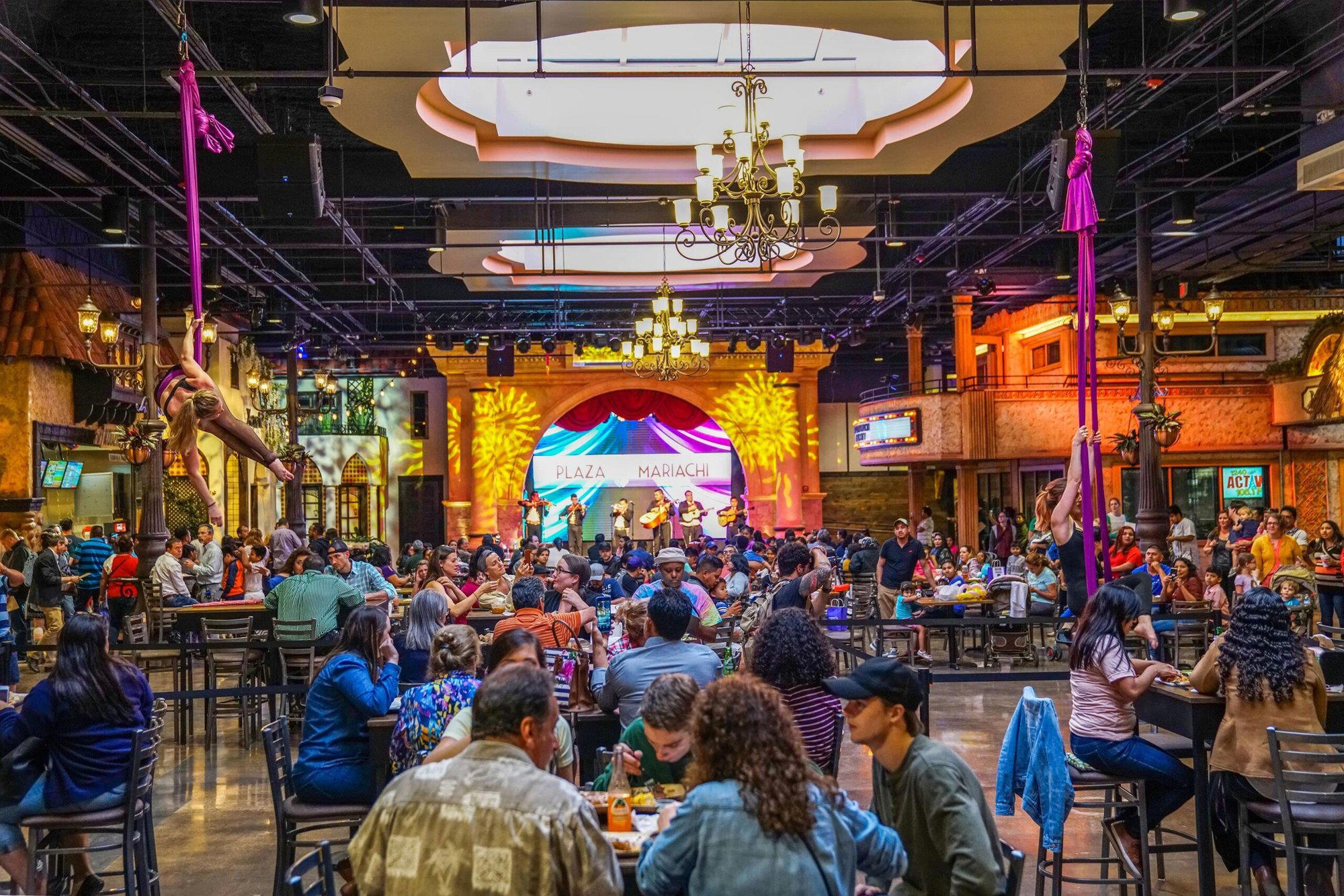
Nolensville Pike and the Architecture of Latin Nashville
Approaching the stretch of Nolensville Pike where Plaza Mariachi sits, the visual grammar shifts decisively. The corridor running south from downtown Nashville has, over the past two decades, become the city's most concentrated Latin American commercial strip, with taquerias, panaderias, and quinceañera boutiques occupying storefronts that once served a different demographic entirely. Plaza Mariachi belongs to that transformation not as an outlier but as its most organized expression, a venue that attempts to consolidate what the surrounding blocks do in fragmented form: food, music, retail, and gathering space under a single roof. For anyone trying to understand how Nashville's Latin community has built a parallel hospitality culture largely invisible to the city's downtown tourism circuit, this is the logical starting point.
The Space Before the Meal
Indoor market hall formats have a specific logic: they work when the perimeter pulls you in multiple directions at once, when the noise and movement create enough density to feel like a destination rather than a waiting room. Plaza Mariachi operates on that model. Before sitting down to eat, visitors typically pass through a space designed around spectacle as much as function, with a central performance area that activates on weekends and a retail perimeter that keeps the eye moving. The approach borrows from Mexican mercado tradition, where commerce and culture are not separated but layered, and where the meal is embedded in a broader social occasion rather than treated as an isolated transaction. That format has found traction in a handful of American cities, particularly where Latin populations are large enough to sustain a venue at this scale.
Reading the Menu as a Regional Survey
The editorial angle here is progression, how a meal at Plaza Mariachi sequences through Mexican regional cooking in a way that more narrowly focused restaurants cannot. The market format permits a breadth of offering that a single-concept kitchen typically resists. A table might open with antojitos, the category of masa-based street food, before moving through main dishes that reflect multiple Mexican states rather than a single culinary tradition. This kind of regional survey format has become more common in American Mexican dining as the cuisine distances itself from the Tex-Mex template that dominated for decades. Whether a given dish traces to Oaxacan mole tradition, Jalisco birria preparation, or the seafood-forward cooking of Veracruz depends on which vendors or kitchen stations are active at any given time, which is part of the market hall's inherent variability. That variability is a feature rather than a flaw for diners who want to explore rather than simply eat.
The drink sequence follows similar logic. Aguas frescas, horchata, and tamarind-based drinks represent the non-alcoholic opening register, calibrated to balance the heat and spice that run through much of the food. For those ordering from the bar, margarita variations and micheladas provide the primary anchors. Compared to the technical cocktail programs being built at venues like Superbueno in New York City or the fermentation-focused work at Kumiko in Chicago, the bar program here operates at a different register entirely, prioritizing accessibility and volume over craft experimentation. That is not a criticism; it is a reflection of the format and the audience.
Where Plaza Mariachi Sits in Nashville's Drinking Culture
Nashville's bar scene has diversified considerably beyond the Broadway honky-tonk corridor. The craft programs at venues like 417 Union and 5th and Taylor, the neighborhood anchor role of 12 South Taproom and Grill, and the coffee-to-cocktail continuity at 8th and Roast all point to a city that has developed a more textured hospitality culture than its party-tourism reputation suggests. Plaza Mariachi sits outside that craft-focused conversation, occupying a different tier where entertainment programming and cultural authenticity drive the value proposition more than bar technique. That positioning makes it complementary to rather than competitive with downtown Nashville's established bar circuit. The comparison points that matter more here are drawn from Latin-focused venues in other Southern cities: the communal food-and-drink model that venues like Julep in Houston and Jewel of the South in New Orleans have each approached from different directions.
The Music Component
Live music at Plaza Mariachi is not background programming. The central performance space is built to support full banda, mariachi, and norteño ensembles, genres that require both physical space and acoustic volume that most Nashville venues are not configured to handle. Weekend evenings bring performances that shift the venue's energy considerably, moving it from a daytime family destination toward something closer to a dancehall. This dual-mode operation is common in large Mexican entertainment venues and represents a different approach to hospitality programming than the fixed-format dinner-and-show model. The music is a structural feature of the experience, not an add-on, and visitors who arrive expecting a quiet dinner on a Saturday night are misreading the format.
Planning Your Visit
Plaza Mariachi is located at 3955 Nolensville Pike, south of downtown Nashville in the corridor that defines the city's Latin commercial district. The venue is accessible by car, with parking available on site, and sits at a reasonable distance from the downtown core for visitors who want to move between the central city and the south side in a single evening. For broader context on how this venue fits into Nashville's wider food and bar circuit, our full Nashville restaurants guide maps the city's dining by neighborhood and category. Walk-in dining is the default assumption for market hall formats of this type, though weekend evenings during live performance hours attract the largest crowds, and arriving earlier in the evening gives more flexibility in positioning and pace. Those planning around the music should treat the performance schedule as the organizing variable for the visit.
For readers who follow the craft cocktail circuit across American cities, venues like ABV in San Francisco, Bar Leather Apron in Honolulu, and The Parlour in Frankfurt represent the technical precision end of the hospitality spectrum. Plaza Mariachi operates at the opposite register, where scale, culture, and communal energy do the work that technique does elsewhere. Neither mode is superior; they are simply designed for different kinds of evenings.
Continue exploring
More in Nashville
Bars in Nashville
Browse all →
Restaurants in Nashville
Browse all →
Hotels in Nashville
Browse all →
Wineries in Nashville
Browse all →
At a Glance
- Lively
- Energetic
- Rustic
- Group Outing
- Celebration
- Casual Hangout
- Live Music
- Historic Building
- Lounge Seating
- Booth Seating
- Classic Cocktails
Current opening hours
- Monday
- 11 AM–9 PM
- Tuesday
- 11 AM–9 PM
- Wednesday
- 11 AM–10 PM
- Thursday
- 11 AM–12:30 AM
- Friday
- 11 AM–1 AM
- Saturday
- 11 AM–2 AM
- Sunday
- 11 AM–11 PM
Hours can change for holidays and private events. Last verified .
Festive and cultural atmosphere with traditional Mexican marketplace decor, live music, and energetic entertainment.
Know Before You Go
- Getting there
- 3955 Nolensville Pk, Nashville, TN 37211