Holy Grale
A converted church on Bardstown Road, Holy Grale is Louisville's most-discussed craft beer destination, where rotating taps drawn from Belgian, German, and American independent producers sit inside vaulted Gothic architecture. The setting frames the drinking seriously: this is a bar built around sourcing discipline, not spectacle, and the selection reflects a genuine point of view about what belongs on draft.

Pearl is the En Primeur Club membership app, where members save venues, book tables and use the concierge.
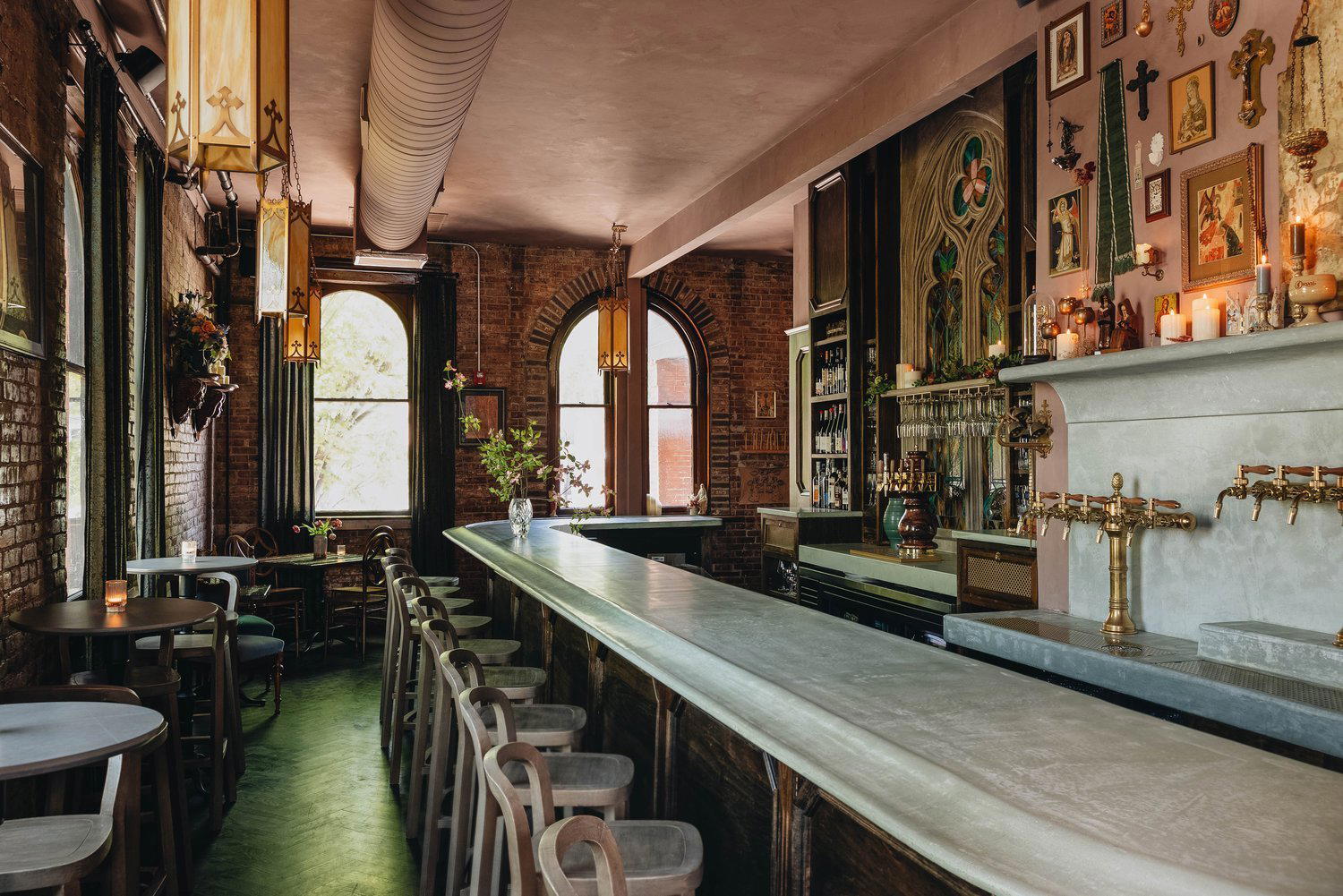
A Church That Became Louisville's Craft Beer Standard
Bardstown Road runs southeast from the edge of Old Louisville through the Highlands, accumulating bars, restaurants, and record shops as the neighbourhood grows denser and younger. The strip rewards walking, but Holy Grale, at 1034 Bardstown Rd, earns a deliberate stop rather than a casual detour. The building is a former Presbyterian church, and the Gothic Revival architecture, vaulted ceilings, stone detailing, arched windows, does not disappear behind the bar program. It frames it. Drinking here carries a faint ceremony to it, even on a Wednesday evening, and that atmosphere is not manufactured; it's structural, literal, and old.
Louisville's craft beer scene sits in a specific position relative to its better-known neighbours. The city is defined internationally by bourbon, and that gravity pulls most visitor attention toward distilleries and whiskey bars. Craft beer operates in the margins of that narrative, which means the bars that take it seriously are left to build their own reputation without much tourism infrastructure supporting them. Holy Grale has done exactly that, establishing itself as a reference point for draft selection on a street where the competition tends toward cocktails and wine.
The Sourcing Logic Behind the Taps
The editorial angle that defines Holy Grale is not the building, it's the selection discipline. Craft beer bars exist on a spectrum from broad accessibility to genuine curation, and what separates the serious end of that spectrum is sourcing decisions: which producers a bar prioritises, how often the list rotates, and whether the range reflects an actual position on quality or simply follows market trends.
Holy Grale operates at the sourcing-forward end of that spectrum. The tap list draws heavily from Belgian and German traditions alongside American independent producers, a combination that signals a preference for process-driven brewing over novelty releases. Belgian farmhouse ales, German lagers, and American wild fermentation projects share space in a way that rewards drinkers who approach the list with some framework rather than defaulting to the most familiar name on the board. The rotating nature of the drafts means the list at any given visit will differ from the one documented in a review written three months prior, which is part of the point: the sourcing is ongoing, not curated once and repeated.
The geography differs, but the underlying commitment to knowing where the product comes from and why it matters is the same posture.
Where Holy Grale Sits in Louisville's Bar Ecosystem
Louisville's drinking culture has matured considerably in the past decade. The cocktail end of the market has grown more technical, with bars on and around Bardstown Road building serious programs. Bar Vetti and Big Bar represent the cocktail side of the Highlands' bar culture, while 8UP refined Drinkery & Kitchen operates in a different register entirely, rooftop, broader format, aimed at a different type of evening. Holy Grale occupies a category largely on its own: a specialist draft program inside a space that commands more architectural presence than almost any bar in the city.
That architectural presence matters as a sourcing analogy. The bar didn't build something from scratch to signal seriousness; it found a structure with inherent weight and committed to programming that could justify the space. That's a different kind of curatorial instinct than opening a designed bar, and it shapes the atmosphere in ways that a fit-out never quite replicates. You can feel the decision behind it.
For context on how draft-focused bars operate at the top of their category in other American cities, Kumiko in Chicago and Jewel of the South in New Orleans demonstrate the same general principle applied to spirits: category depth paired with a physical environment that takes the product seriously. Julep in Houston and Superbueno in New York City extend that comparison further, showing how bars with a genuine sourcing point of view tend to build loyal regulars faster than broader-format operators. The Parlour in Frankfurt on the Main offers the international parallel: a bar built around a specific product category where sourcing discipline is the whole argument.
When to Go and How to Think About the Visit
Bardstown Road tends to get crowded on weekend evenings, particularly during the warmer months when Louisville's outdoor dining and drinking culture accelerates. Holy Grale, given the size and acoustic qualities of a converted church, handles volume differently than a purpose-built bar, the space absorbs noise in some ways and amplifies it in others, and a quiet Tuesday visit will feel substantially different from a Saturday at peak. Neither is wrong, but they are different experiences of the same building.
The bar's location at 1034 Bardstown Rd places it well within walking distance of the Highlands' surrounding restaurant concentration, which makes it a practical anchor for an evening that moves between dinner and drinks without requiring transport. Planning around that geography rather than treating Holy Grale as a standalone destination makes the most of the neighbourhood's density.
Visitors who engage most directly with Holy Grale's program tend to arrive with some prior exposure to Belgian or German brewing styles, or at least some openness to working through a rotating list with guidance. The tap selection is not designed to be immediately legible to someone who drinks primarily domestic lager, and the bar doesn't appear to make apologies for that. The list is the point of view. Engaging it seriously is the appropriate response.
For broader context on what Louisville's food and drink scene offers across categories and neighbourhoods, our full Louisville restaurants guide maps the city's strongest options across price points and formats. The META bar listing aggregates comparable programs worth tracking across the platform.
In Context: Similar Options
A quick peer reference to anchor this venue in its category.
| Venue | Price | Awards |
|---|---|---|
| Holy GraleThis venue (the venue you are viewing) | $30–50 | Not listed |
| META | $20–30 | World's 50 Best #39 |
| The Old Seelbach Bar | $20–30 | Not listed |
| Pretty Decent | $20–30 | Pinnacle Guide 2 Pins · Top 500 Bars Best Bars #490 |
| Hereafter | $10–20 | Not listed |
Continue exploring
More in Louisville
Bars in Louisville
All bars in Louisville →
Restaurants in Louisville
All restaurants in Louisville →
Holy Grale
The drinks
- Natural wine
- Craft beer
Signature drinks: Kölsch.
Details
- Lively
- Cozy
- Historic
- Bohemian
- Casual Hangout
- Group Outing
- After Work
- Historic Building
- Beer Garden
- Courtyard
- Standalone
- Seated Bar
- Lounge Seating
- Outdoor Terrace
- Private Rooms
- Craft Beer
- Natural Wine
- Low Abv
Current opening hours
- Monday
- 5–10 PM
- Tuesday
- 5–10 PM
- Wednesday
- 5–10 PM
- Thursday
- 5–11 PM
- Friday
- 5–11 PM
- Saturday
- 2–11 PM
- Sunday
- 2–10 PM
Hours can change for holidays and private events. Last verified .
Inviting and casual with historic charm; features stained glass windows, a gorgeous courtyard, and a cozy former choir loft; lively yet relaxed atmosphere blending reverence with modern dining.