Drinking at Altitude: La Paz and the Rooftop Bar Format At 3,640 metres above sea level, La Paz occupies a physical register that most cities cannot claim. The altitude shapes everything from how food tastes to how quickly alcohol metabolises, a fact that the city's better bars have learned to work with rather than ignore. The rooftop format, common across Latin America as a social institution, takes on a different character here: the sky is closer, the air thinner, and the panoramic reward proportionally greater. Azotea, positioned on Avenida de la Fuerza Naval, operates inside that context. The address places it within La Paz's urban fabric, where rooftop access is less a design flourish and more a declaration of intent. La Paz's bar scene has developed unevenly over the past decade. The city's drinking culture has historically defaulted to singani, Bolivia's grape-based spirit, produced in the high-altitude valleys of Tarija and Cinti, alongside chicha and local beer. What has shifted is the number of venues willing to treat those native ingredients as the foundation of a serious cocktail programme, rather than as novelty additions to an otherwise international menu. Azotea sits in that smaller cohort. You can compare its approach to internationally recognised bars that have built reputations on spirit-of-place thinking: Café La Trova in Miami built its identity on Cuban spirits and son traditions; Jewel of the South in New Orleans grounds its programme in the city's historical cocktail canon. The logic is the same even when the geography differs: the drink should make an argument about where you are. The Cocktail Programme: Singani, Altitude, and Native Ingredients Singani is the starting point for understanding what a thoughtful La Paz cocktail bar can do. Produced under a denomination of origin in the high valleys of Bolivia, singani is distilled from Muscat of Alexandria grapes at altitudes between 1,600 and 3,000 metres. It carries a floral, aromatic profile that separates it from pisco (its more internationally distributed Peruvian and Chilean cousin) and positions it as a bartender's ingredient rather than just a base spirit. The singani sour, equivalent in cultural weight to a pisco sour in Lima, is the entry point for most visitors, but more technically ambitious programmes push further: infusions with local herbs, combinations with API (a spiced corn and clove drink traditional to Bolivian markets), or structures that introduce the grape spirit's delicacy against bitter or smoked elements. The broader trend in South American craft cocktail bars has moved toward source transparency: naming the producing valley, specifying the grape, acknowledging the altitude of production as a flavour variable. Bars in this tier, analogous in ambition to Kumiko in Chicago or Bar Leather Apron in Honolulu, both of which treat provenance as a programme pillar, distinguish themselves by the depth of that sourcing logic. At Azotea, the rooftop setting reinforces the argument: you are drinking something produced in altitude, at altitude, in a city whose own character is inseparable from its elevation. For those exploring the wider La Paz cocktail scene before or after a visit, 591 Bar and Art and Beer each represent different positions in the local market, 591 in the number referring to La Paz's telephone prefix, a venue with its own neighbourhood identity, and Art and Beer with a format that crosses creative programming with social drinking. Azotea occupies a different register: the rooftop is the primary spatial argument, and the drinks should carry that ambition. The Setting and What It Asks of You Rooftop bars in high-altitude cities require a different kind of visitor patience. The cold arrives earlier and sharper than street level, even in the warmer months between October and March, when La Paz's dry season makes outdoor evenings viable. Layering is practical advice, not a stylistic preference. Sunset at 3,640 metres moves fast, and the light changes quickly over the surrounding valley and the cable car lines that thread across La Paz's vertical topography. The visual reward from a well-positioned rooftop is not incidental to the experience, it is the frame in which the drink is consumed. Visitors arriving from lower altitudes should account for acclimatisation before treating a rooftop bar as the first stop. Alcohol's effects are amplified at altitude, and the responsible move is to give the body 24 to 48 hours to adjust before adding spirits to the equation. This is standard altitude travel knowledge, but it matters here more than in most bar contexts because the city's elevation is genuinely significant rather than a marketing talking point. Practically: Azotea's address on Avenida de la Fuerza Naval is accessible by taxi and app-based transport from central La Paz and the Miraflores district. Arriving before 7pm on Fridays and Saturdays is a reasonable precaution. Dress code information is not formally specified, but the rooftop format in La Paz skews smart-casual without the formality of a hotel bar. For a broader overview of where Azotea sits within the city's eating and drinking options, our full La Paz restaurants guide maps the scene across price points and neighbourhoods. Placing Azotea in the Global Rooftop Bar Conversation The rooftop bar format has become so widespread internationally that the format itself no longer signals quality, what matters is what a venue does with the position. The bars that have built lasting reputations in this space tend to combine spatial advantage with programme depth: Dear Irving in New York City layered theatrical ambiance over a serious cocktail menu; Superbueno in New York City grounded its identity in Latin spirit traditions and technique; The Parlour in Frankfurt on the Main used its format to anchor a neighbourhood identity. The pattern is consistent: the view draws the first visit, the programme earns the return. Azotea's position in La Paz is compelling precisely because the city itself is so infrequently on the international bar circuit. While Lima and Buenos Aires attract the majority of South American cocktail travel press, Bolivia's singani-based culture and its genuinely different altitude context offer something that neither city replicates. Bars in less-covered cities that work with local spirits intelligently, as Julep in Houston does with American whiskey tradition, or Experimental Bistro in Taipei does with Taiwanese spirits, tend to offer the kind of drinking experience that justifies the detour. Azotea makes that case for La Paz. Frequently Asked Questions Is Azotea more formal or casual?The rooftop format and La Paz's general bar culture skew toward smart-casual rather than formal. No dress code is formally documented, but the setting suggests you will be comfortable in evening clothes without needing to dress for a hotel bar occasion. If you are visiting during cooler months (May through August), a jacket is practical as much as stylistic.What cocktail do people recommend at Azotea? What is well-established about La Paz cocktail culture is that singani-based drinks, particularly singani sours and local spirit-forward long drinks, define the quality tier at bars working with Bolivian ingredients. That is the category to navigate at any serious La Paz rooftop venue.What is the main draw of Azotea?The combination of rooftop position and altitude context is the primary draw, drinking at 3,640 metres with La Paz's cityscape as the backdrop. For visitors interested in Bolivia's singani culture, the bar's positioning within the city's cocktail scene makes it a reference point for understanding how the local spirit tradition translates to a premium bar format.How hard is it to get in to Azotea?No formal reservation system is currently documented, which suggests walk-in access. Rooftop bars in La Paz operate on limited capacity by physical design, so weekend evenings can fill quickly. Arriving early in the evening is the most reliable strategy.Is Azotea good value for a bar? La Paz generally prices bar experiences below comparable venues in Lima or Buenos Aires, which positions Bolivian cocktail bars as strong value in a South American context, though that benchmark should be confirmed on the ground.What makes Azotea's setting different from other rooftop bars in South America?La Paz's status as one of the highest capital cities on earth means that the altitude is a genuine environmental variable rather than a scenic backdrop. At 3,640 metres, the physical experience of being on a rooftop, the air pressure, the light quality, the pace at which cold arrives after sunset, differs materially from rooftop bars in Bogotá, Lima, or Buenos Aires. That geographical specificity, combined with a cocktail culture built around singani (a spirit produced under Bolivian denomination of origin), makes the context here distinct from any other major South American bar city.

Pearl is the En Primeur Club membership app, where members save venues, book tables and use the concierge.
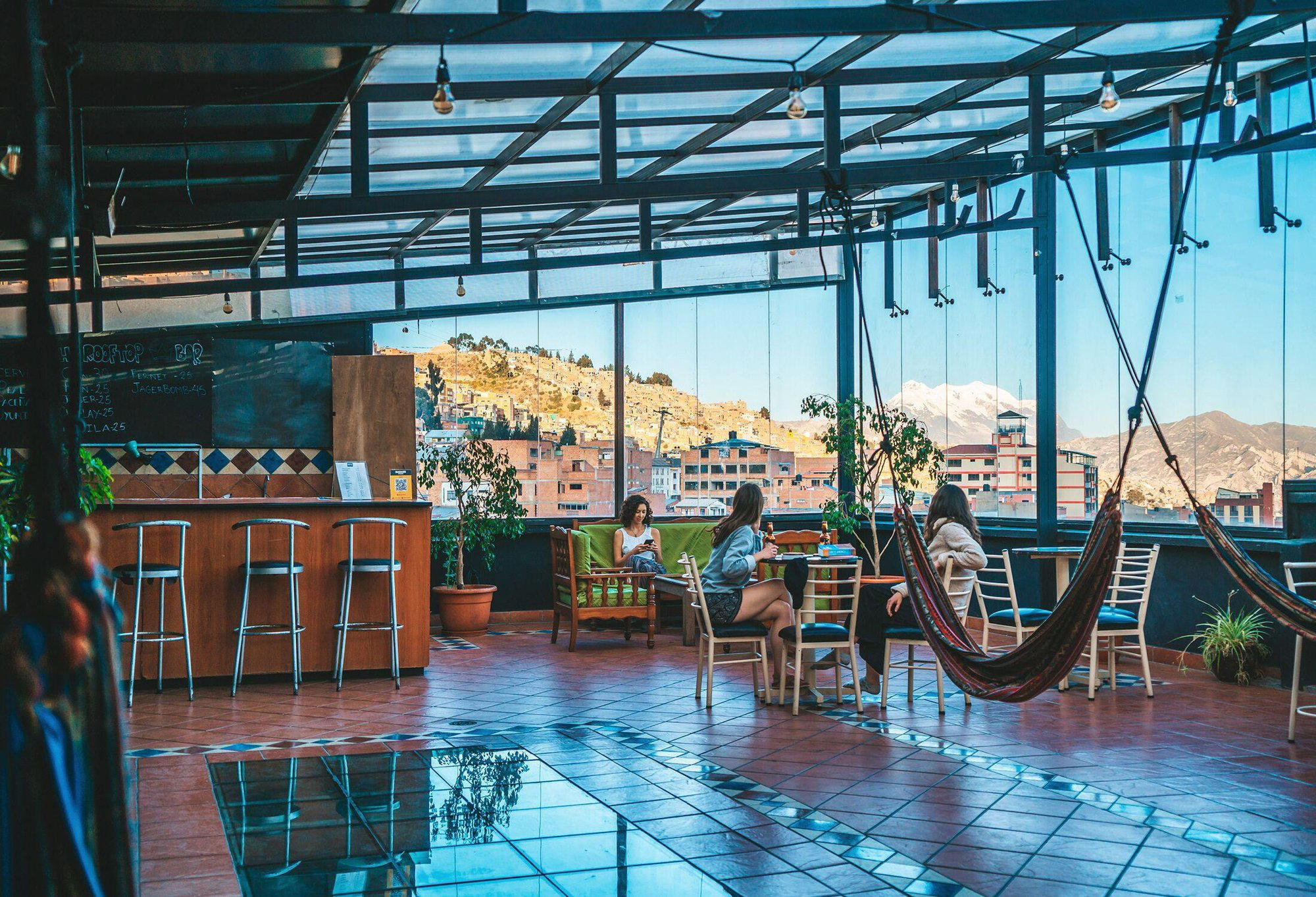
Drinking at Altitude: La Paz and the Rooftop Bar Format
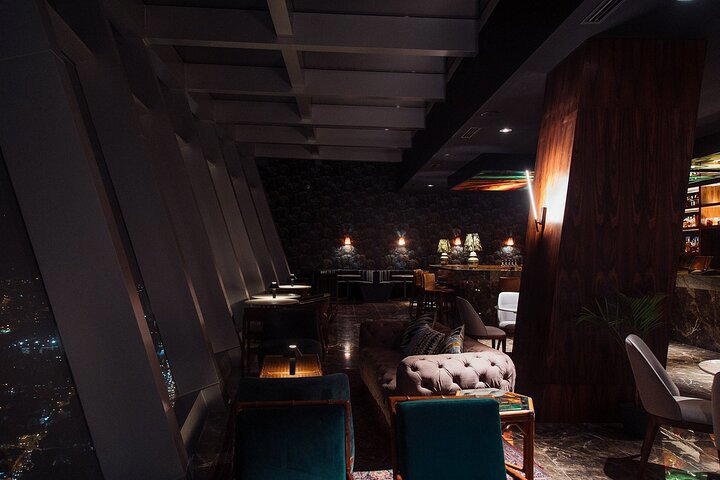
At 3,640 metres above sea level, La Paz occupies a physical register that most cities cannot claim. The altitude shapes everything from how food tastes to how quickly alcohol metabolises, a fact that the city's better bars have learned to work with rather than ignore. The rooftop format, common across Latin America as a social institution, takes on a different character here: the sky is closer, the air thinner, and the panoramic reward proportionally greater. Azotea, positioned on Avenida de la Fuerza Naval, operates inside that context. The address places it within La Paz's urban fabric, where rooftop access is less a design flourish and more a declaration of intent.
La Paz's bar scene has developed unevenly over the past decade. The city's drinking culture has historically defaulted to singani, Bolivia's grape-based spirit, produced in the high-altitude valleys of Tarija and Cinti, alongside chicha and local beer. What has shifted is the number of venues willing to treat those native ingredients as the foundation of a serious cocktail programme, rather than as novelty additions to an otherwise international menu. Azotea sits in that smaller cohort. You can compare its approach to internationally recognised bars that have built reputations on spirit-of-place thinking: Café La Trova in Miami built its identity on Cuban spirits and son traditions; Jewel of the South in New Orleans grounds its programme in the city's historical cocktail canon. The logic is the same even when the geography differs: the drink should make an argument about where you are.
The Cocktail Programme: Singani, Altitude, and Native Ingredients
Singani is the starting point for understanding what a thoughtful La Paz cocktail bar can do. Produced under a denomination of origin in the high valleys of Bolivia, singani is distilled from Muscat of Alexandria grapes at altitudes between 1,600 and 3,000 metres. It carries a floral, aromatic profile that separates it from pisco (its more internationally distributed Peruvian and Chilean cousin) and positions it as a bartender's ingredient rather than just a base spirit. The singani sour, equivalent in cultural weight to a pisco sour in Lima, is the entry point for most visitors, but more technically ambitious programmes push further: infusions with local herbs, combinations with API (a spiced corn and clove drink traditional to Bolivian markets), or structures that introduce the grape spirit's delicacy against bitter or smoked elements.
The broader trend in South American craft cocktail bars has moved toward source transparency: naming the producing valley, specifying the grape, acknowledging the altitude of production as a flavour variable. Bars in this tier, analogous in ambition to Kumiko in Chicago or Bar Leather Apron in Honolulu, both of which treat provenance as a programme pillar, distinguish themselves by the depth of that sourcing logic. At Azotea, the rooftop setting reinforces the argument: you are drinking something produced in altitude, at altitude, in a city whose own character is inseparable from its elevation.
For those exploring the wider La Paz cocktail scene before or after a visit, 591 Bar and Art and Beer each represent different positions in the local market, 591 in the number referring to La Paz's telephone prefix, a venue with its own neighbourhood identity, and Art and Beer with a format that crosses creative programming with social drinking. Azotea occupies a different register: the rooftop is the primary spatial argument, and the drinks should carry that ambition.
The Setting and What It Asks of You
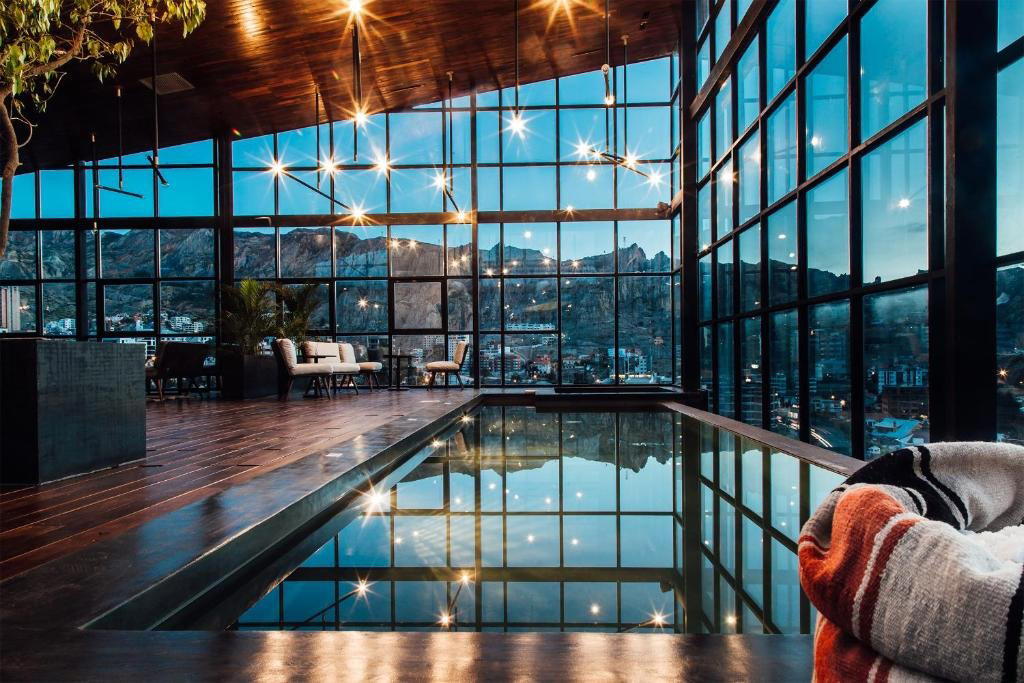
Rooftop bars in high-altitude cities require a different kind of visitor patience. The cold arrives earlier and sharper than street level, even in the warmer months between October and March, when La Paz's dry season makes outdoor evenings viable. Layering is practical advice, not a stylistic preference. Sunset at 3,640 metres moves fast, and the light changes quickly over the surrounding valley and the cable car lines that thread across La Paz's vertical topography. The visual reward from a well-positioned rooftop is not incidental to the experience, it is the frame in which the drink is consumed.
Visitors arriving from lower altitudes should account for acclimatisation before treating a rooftop bar as the first stop. Alcohol's effects are amplified at altitude, and the responsible move is to give the body 24 to 48 hours to adjust before adding spirits to the equation. This is standard altitude travel knowledge, but it matters here more than in most bar contexts because the city's elevation is genuinely significant rather than a marketing talking point.
Practically: Azotea's address on Avenida de la Fuerza Naval is accessible by taxi and app-based transport from central La Paz and the Miraflores district. Arriving before 7pm on Fridays and Saturdays is a reasonable precaution. Dress code information is not formally specified, but the rooftop format in La Paz skews smart-casual without the formality of a hotel bar. For a broader overview of where Azotea sits within the city's eating and drinking options, our full La Paz restaurants guide maps the scene across price points and neighbourhoods.
Placing Azotea in the Global Rooftop Bar Conversation
The rooftop bar format has become so widespread internationally that the format itself no longer signals quality, what matters is what a venue does with the position. The bars that have built lasting reputations in this space tend to combine spatial advantage with programme depth: Dear Irving in New York City layered theatrical ambiance over a serious cocktail menu; Superbueno in New York City grounded its identity in Latin spirit traditions and technique; The Parlour in Frankfurt on the Main used its format to anchor a neighbourhood identity. The pattern is consistent: the view draws the first visit, the programme earns the return.
Azotea's position in La Paz is compelling precisely because the city itself is so infrequently on the international bar circuit. While Lima and Buenos Aires attract the majority of South American cocktail travel press, Bolivia's singani-based culture and its genuinely different altitude context offer something that neither city replicates. Bars in less-covered cities that work with local spirits intelligently, as Julep in Houston does with American whiskey tradition, or Experimental Bistro in Taipei does with Taiwanese spirits, tend to offer the kind of drinking experience that justifies the detour. Azotea makes that case for La Paz.
Continue exploring
More in La Paz
Restaurants in La Paz
All restaurants in La Paz →
Hotels in La Paz
All hotels in La Paz →
Details
- Romantic
- Scenic
- Modern
- Trendy
- Elegant
- Date Night
- Special Occasion
- Rooftop
- Panoramic View
- Design Destination
- Hotel Bar
- Outdoor Terrace
- Lounge Seating
- Craft Cocktails
- Waterfront
- Mountain
Lively and far-reaching rooftop atmosphere with epic sunset views over water and mountains.