Aura HiFi
Aura HiFi sits within Charlotte’s growing bar culture, where listening-room energy, cocktail technique, and neighborhood drinking habits increasingly overlap. With public venue data limited, the sensible read is contextual: treat it as part of the city’s shift toward more intentional late-night rooms rather than a conventional restaurant-bar listing.

Pearl is the En Primeur Club membership app — saves, bookings, and concierge access live there. Same editors, same standards.
- Address
- 200 Pavilion Blvd, Charlotte, NC 28262
- Phone
- (980) 264-7769
- Hours
- Mon–Thu ClosedFri 7 PM–2 AMSat 3 PM–2 AMSun Closed
- Website
- aurahifi.com
- Directions
- Get directions
- Booking
- Book on OpenTable
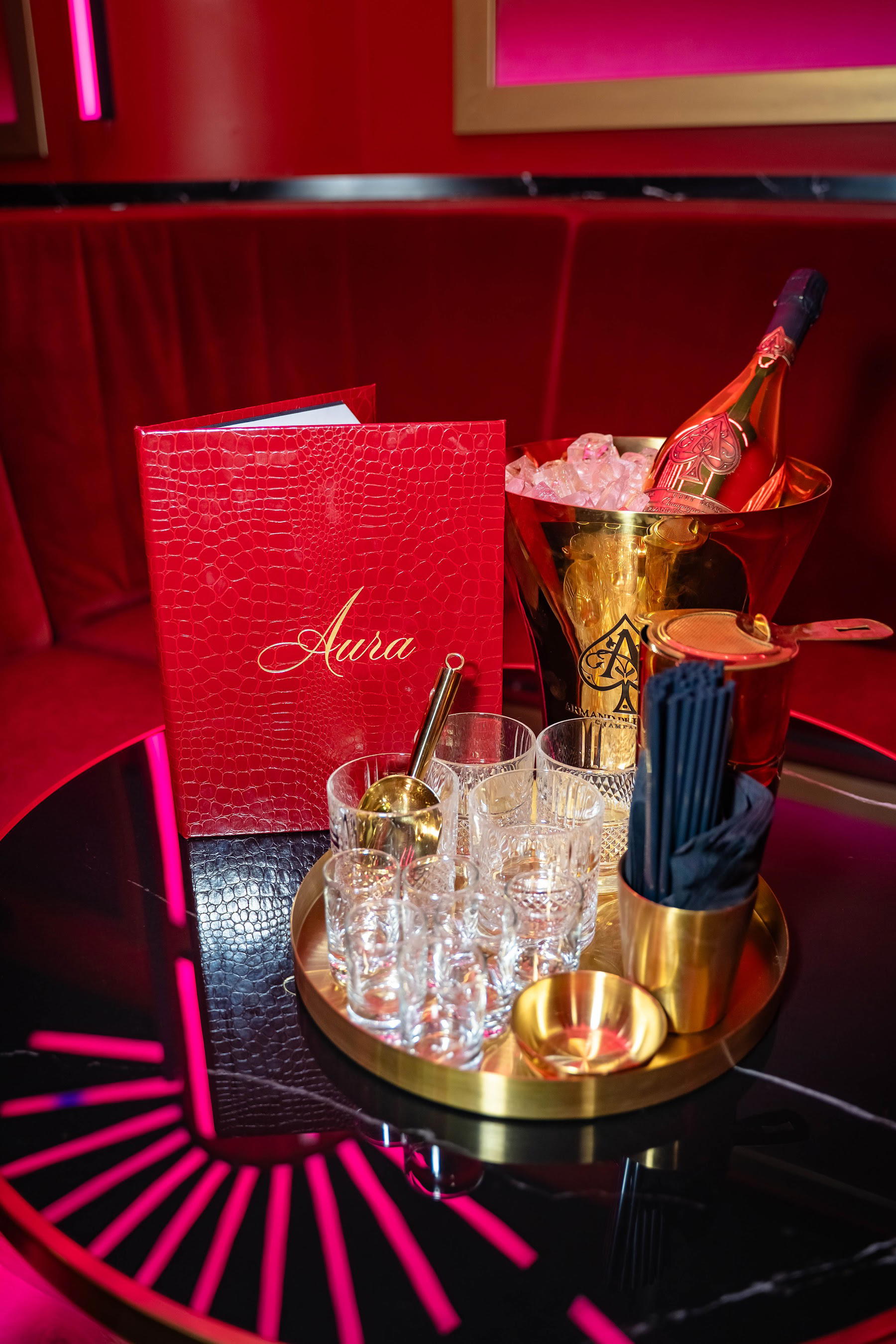
Sound, Glassware, and the New Charlotte Bar Room
Approaching a hi-fi bar is different from approaching a standard cocktail address: the first signal is not a host stand or a backbar, but the room’s relationship to sound. In Charlotte, where the drinking scene has long balanced brewery culture, polished hotel bars, and neighborhood restaurants with serious cocktail ambitions, the listening-room format adds a more deliberate rhythm. The premise is simple enough: music is not background filler, and drinks are not merely a way to occupy the hand. The room asks guests to pay attention to sequence, volume, lighting, and pacing.
Aura HiFi belongs to that newer category of bar experience, a format that has gained traction in American cities as vinyl rooms, Japanese-style listening bars, and cocktail lounges borrow from one another. The model rewards restraint. A drink program in this setting does not need theatrical smoke or overloaded garnish to read as serious; it needs balance, temperature control, glass choice, and a menu structure that makes sense across a full evening. Charlotte has enough high-energy drinking rooms. The more interesting question is where a quieter, sound-conscious bar fits inside the city’s broader after-dark habits.
Aura HiFi is a bar at 200 Pavilion Blvd, Charlotte, NC 28262, USA, priced at about $60 per person. That leaves the bar defined more by format than by public detail. What can be said with confidence is that the venue sits in Charlotte, United States, and should be read against the city’s developing bar culture rather than through the usual checklist of menu, chef, and price bracket.
Why Listening Bars Have Become a Cocktail Format, Not Just a Music Format
The modern listening bar has roots in postwar Japanese jazz kissaten and later vinyl-focused rooms, but its recent American version is less doctrinaire. In practice, the format has become a way for operators to slow down the cocktail experience. Instead of placing every table in a contest for speed and turnover, these rooms often invite longer dwell time, lower lighting, and more deliberate service. That shift changes the bar’s economics and its mood. A guest is not only buying a drink; they are buying access to a room organized around controlled sound and attention.
For cocktail programs, the format pushes menus toward clarity. Drinks that work in loud party bars do not always work in listening rooms. Heavy sugar, oversized builds, and maximal garnish can feel clumsy when the surrounding room is asking for focus. The better fit is usually a concise list: spirit-forward classics, lower-ABV options, carefully diluted stirred drinks, and bright highballs that do not fight the setting. The editorial point is broader: Charlotte’s cocktail audience is now large enough to support rooms where technique and ambience share equal billing.
That is a meaningful change for a city whose hospitality identity has often been explained through growth. New residents, banking-sector traffic, sports weekends, convention business, and neighborhood development have all fed a wide drinking market. The result is variety, but also sameness: plenty of attractive rooms can deliver a competent old fashioned or a citrus-driven sour. A hi-fi concept has to do more than serve correct drinks. It has to make the entire evening feel composed, from the first track to the final glass cleared from the table.
Charlotte's Bar Scene Is Splitting Into More Specific Tribes
Charlotte drinking used to be easy to summarize from the outside: beer, patios, game-day traffic, and restaurant bars with polished Southern hospitality. That summary now misses too much. The city has a growing set of venues that function as cultural rooms as much as drinking rooms, where art, music, wine, coffee, and cocktails overlap. The pattern mirrors other midsize American cities that have matured beyond one dominant nightlife identity. Instead of asking whether a bar is formal or casual, the better question is what kind of attention it asks from the guest.
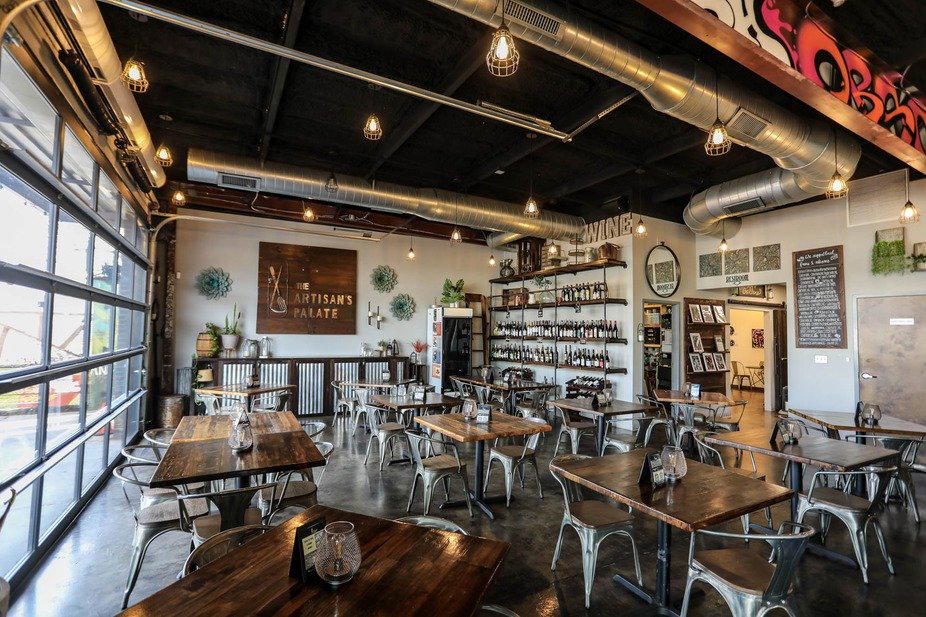
For a useful local comparison, Artisan’s Palate points toward the art-and-hospitality side of the city’s bar culture, while Bar à Vins places wine at the center of the evening. 300 East represents the durable restaurant-bar model, where food, neighborhood familiarity, and drinks sit together rather than separating into specialist lanes. Azul Tacos And Beer shows another side of the city’s casual drinking map, built around a different tempo and expectation.
Placed among those references, Aura HiFi reads less like a conventional bar listing and more like a signal of specialization. Charlotte is no longer only choosing between brewery taprooms and white-tablecloth lounges. It has room for hybrid spaces, which is where a hi-fi bar earns attention. The format is not for every drinker. It suits guests who want the room to have editorial control: the playlist matters, the lighting matters, and the pace of service matters. That selectivity is part of the appeal, provided the drinks can support the concept rather than hide behind it.
What a Cocktail Program Has to Prove in a Hi-Fi Room
A sound-led room can seduce guests before the first drink arrives, but the cocktail program has to carry the second half of the argument. In this format, the bar team’s choices are exposed. A Manhattan served too warm, a daiquiri that has lost its snap, or a highball without enough carbonation becomes easier to notice in a room built for concentration. The bar’s ambition cannot rest on music alone. It has to appear in dilution, balance, prep, and the discipline to edit.
There is also a question of menu readability. A long list can feel democratic, but it can also dilute the point of a listening-room bar. A shorter list often tells guests more: a few stirred drinks, a few shaken drinks, something bitter, something bright, something nonalcoholic or lower proof, and a seasonal adjustment if the kitchen or bar has the infrastructure to support it. Look for whether the menu has a point of view, not whether it has a clever name.
The bartender’s creative vision, in a room like this, should feel architectural rather than performative. The strongest programs in this category tend to manage transitions across the night. Early drinks is lighter and more aromatic; later drinks can become more spirit-forward or bitter. That progression mirrors how music programming often works, moving through mood instead of stacking isolated tracks. If Aura HiFi is operating in that tradition, the useful test is simple: does the second drink make more sense because of the first?
Peer References Beyond Charlotte
Charlotte is not developing in isolation. Across the United States, cocktail bars have moved away from hidden-door theatrics and toward rooms with clearer specialist identities. Some are built around Latin cocktail history, some around technical experimentation, some around aperitif culture, and some around wine-adjacent drinking. The comparison is not about sameness; it is about how a bar declares its purpose.
In Miami, Café La Trova connects drinks to Cuban cantinero tradition, music, and performance, creating a room where the cultural frame is explicit. In Albuquerque, Happy Accidents reflects a different path, one shaped by creative cocktail development and a city scale that allows personality to come forward without coastal formality. In Seattle, Roquette shows the appeal of a more European drinking grammar, where aperitifs, technique, and room tone guide the experience.
Those references help clarify the Charlotte question. A hi-fi bar does not need to compete by copying larger markets. Its relevance comes from translating a global format into local habits. Charlotte guests may arrive from dinner in South End, a hotel in Uptown, a neighborhood evening in NoDa, or a weekend built around sports and restaurants. The bar has to catch that mixed audience without flattening its identity. That is where restraint becomes commercially useful, not just aesthetically pleasing.
How to Read the Room Before Judging the Drinks
A practical way to assess a music-forward cocktail bar is to pay attention before ordering. Is the sound level intentional or merely loud? Are seats arranged for conversation, listening, or both? Does the staff guide guests toward drinks that fit the room, or simply recite ingredients? Does the menu make space for nonalcoholic drinking, lower-proof pacing, and different levels of commitment? These details reveal more than décor vocabulary.
The strongest listening bars manage a paradox: they create a controlled environment without making guests feel overmanaged. That balance can be hard to sustain in a fast-growing city, where new concepts often feel pressured to perform on social media before they have refined service. A bar like Aura HiFi will be judged by whether it resists that trap. The name signals audio culture, but the night succeeds only if sound, service, and cocktail execution operate as one system.
That standard is demanding, yet fair. Charlotte has enough competent places to drink that a specialist room needs a sharper reason to exist. A well-built hi-fi bar gives the city a slower register, a place for people who care about records, glassware, and the space between rounds. It is not necessarily a substitute for a restaurant bar, wine bar, or late-night beer room. It is a different occasion.
Planning Notes for a Sparse Public Record
Because the public record is limited, planning should begin with verification from a current official channel before travel across Charlotte. Do not assume walk-in availability, late-night service, or a full food offering from the hi-fi label alone. Listening-room concepts can operate with limited capacity, variable programming, or event-led nights, and those details change the evening more than they would at a standard neighborhood bar.
The safer approach is to treat it as a planned stop rather than a casual fallback until public logistics are confirmed. Build the evening around proximity once the address is verified, then decide whether it is a first-drink room, a post-dinner stop, or the main event.
- Selema
- Anita
- Jolene
- Frida
- Kaylani
- Carmen
- Roxanne
Reputation & Price
Comparable venues nearby, for context on price, style, and recognition.
| Venue | Cuisine | Price | Notes |
|---|---|---|---|
| Aura HiFiThis venue — the venue you are viewing | University City, lounge | $50–100 | Not listed |
| Soul Gastrolounge | NoDa, lounge | $50–100 | Not listed |
| Novelty House Rooftop | Not listed | $30–50 | Uptown, rooftop_bar |
| Graham St. Pub & Patio | Uptown, pub | $10–20 | Not listed |
| Resident Culture Brewing Company | Not listed | $20–30 | Commonwealth Park, beer_bar |
Continue exploring
More in Charlotte
Bars in Charlotte
Browse all →
Restaurants in Charlotte
Browse all →
Hotels in Charlotte
Browse all →
Wineries in Charlotte
Browse all →
Details
- Energetic
- Trendy
- Modern
- Sophisticated
- Lively
- Intimate
- Date Night
- Late Night
- Group Outing
- Celebration
- Special Occasion
- Private Event
- Live Music
- Standalone
- Design Destination
- Lounge Seating
- Booth Seating
- Standing Room
- Private Rooms
- Classic Cocktails
- Craft Cocktails
- Bottle Service
- Tequila
- Whiskey
- Gin
- Rum
Current opening hours
- Monday
- Closed
- Tuesday
- Closed
- Wednesday
- Closed
- Thursday
- Closed
- Friday
- 7 PM–2 AM
- Saturday
- 3 PM–2 AM
- Sunday
- Closed
Hours can change for holidays and private events. Last verified .
Low-lit, glamorous lounge setting with ornate, modern decor and a strong focus on high-fidelity sound, creating an upscale nightclub feel that evolves from relaxed early evening vibes into a lively, high-energy late-night atmosphere.