1790 wine cave

A wine cave and bar in Folegandros's Chora, 1790 received a White Star listing on Star Wine List in August 2024, placing it in the island's small but growing tier of serious wine destinations. The cave setting gives the drinking experience a texture that rooftop terraces and harbour-front bars cannot replicate. For those willing to seek it out, the format rewards patience.
 Discover on Pearl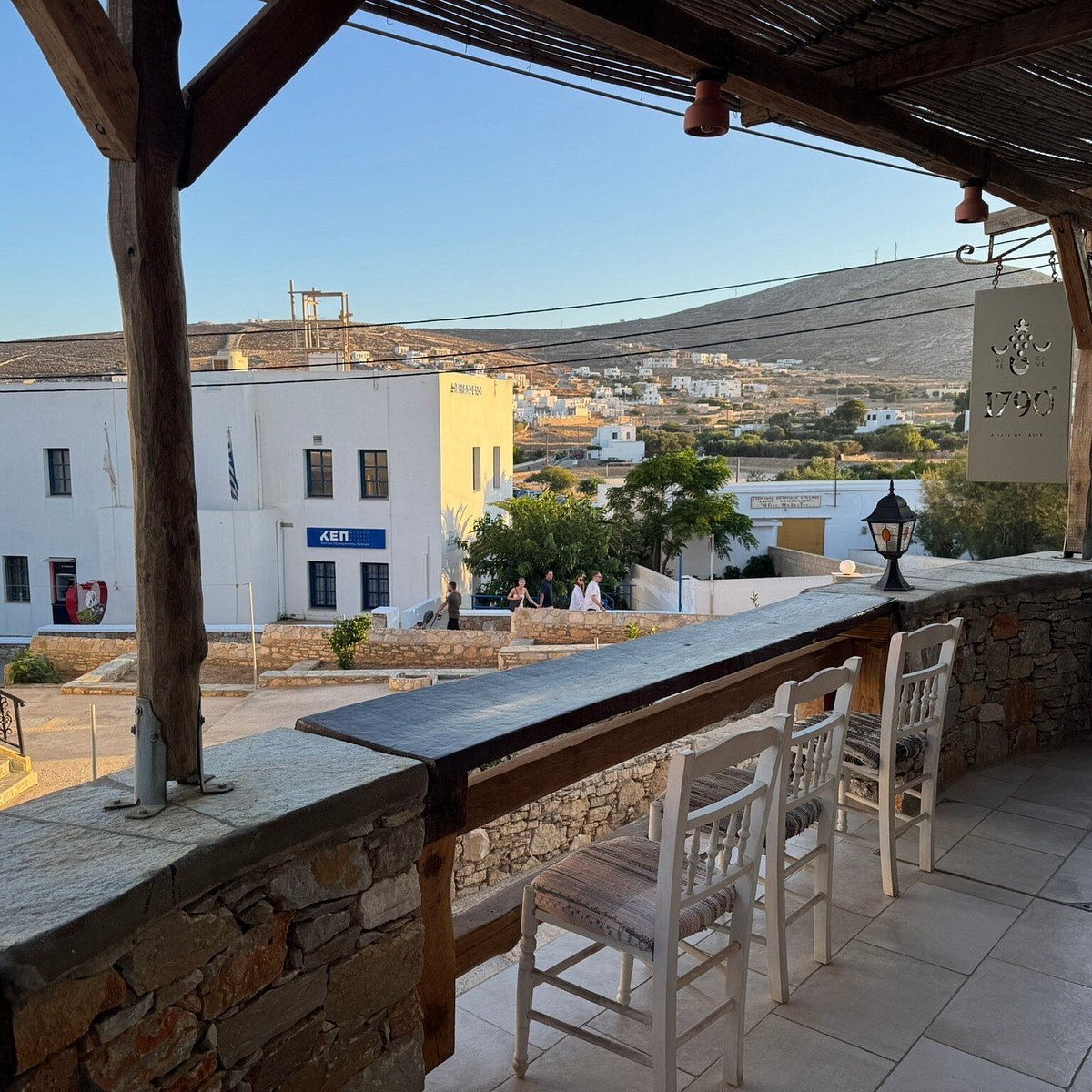
Stone, Candlelight, and the Weight of the Cyclades
Folegandros does not receive visitors the way larger Cycladic islands do. There are no cruise ship queues at the port, no branded beach clubs amplified by DJ sets. What the island offers instead is a particular quality of quiet, broken only by the sound of footsteps on flagstone and, in the evenings, the low conversation of people who came specifically to be here. It is inside that atmosphere that 1790 Wine Cave occupies its niche: a subterranean space in Chora, the island's hilltop capital, where the architecture does most of the talking before a single glass is poured.
Cave bars and cellar wine spaces have proliferated across the Aegean in recent years, but they tend to sort into two categories: those that use the aesthetic as decoration and those where the physical space is genuinely constitutive of the drinking experience. The distinction matters. A barrel-vaulted ceiling and walls cut from volcanic stone alter temperature, acoustics, and light in ways that change how wine behaves in the glass and how a guest perceives time. At 1790, the name itself signals an orientation toward age and depth rather than seasonal novelty.
The shortlist, unlocked.
Hard-to-book tables, cellar releases, and concierge-planned trips.
Get Exclusive Access →What the Star Wine List Recognition Signals
The venue carries a Star Wine List award for 2026, a credential from one of the more demanding wine-list assessment programmes operating across Europe. Star Wine List evaluates depth of selection, provenance transparency, and curation rigour rather than sheer volume, which means recognition in that system is a proxy for editorial seriousness about what is being poured. For a wine cave on an island as small as Folegandros, that signal is notable. It places 1790 in a peer set defined not by geography but by the ambition of its list, alongside recognised wine bars in larger, more competitive cities.
For context on how that credential compares within the Greek archipelago: venues like Loggia Wine Bar in Sifnos Island operate in the same Cycladic register, and the emergence of recognised wine programmes on smaller islands reflects a broader shift in how the Greek wine scene is being taken seriously internationally. The conversation has moved well beyond Santorini Assyrtiko and into indigenous varieties from less-charted terroir, and a curated cave cellar is one of the formats through which that conversation is happening most fluently.
The Cave as a Wine Programme in Itself
The editorial angle assigned to Greek wine bars increasingly has to grapple with a format question: is the programme the list, or is the programme the environment that shapes how the list is experienced? In the case of 1790, both appear to be intentional. The cave setting is not incidental. Underground spaces maintain a narrower ambient temperature range than surface-level rooms, which is relevant both to wine storage and to how a glass evolves from pour to final sip. A Xinomavro or an aged Monemvasia-Malvasia in a stone cellar at consistent cool temperature reads differently than the same wine in an air-conditioned rooftop bar.
This is the reason cellar and cave formats command a specific kind of loyalty from wine-focused travellers. The format is inherently anti-spectacle, which on Folegandros, an island that has built its identity around anti-spectacle, is coherent. Guests who make the effort to reach Chora by ferry and then find 1790 are self-selected for a certain appetite: they want the list, the room, and the pace to align. When those three elements work, a cave wine experience on a small Cycladic island is among the more complete drinking encounters available in Greece.
Placing 1790 in the Greek Wine Bar Scene
Greece's wine bar scene has matured substantially in the past decade. Athens, in particular, has developed a credible tier of programme-led bars, with venues like Barro Negro in Athens and Hope So in Kolokinthou representing the kind of technically focused, list-driven approach that Star Wine List tends to recognise. Island venues have historically lagged that tier, constrained by logistics, supply chains, and the seasonal compression of their trade. That 1790 has earned recognition in the same framework is evidence of a programme that operates above the island-tourist baseline.
The comparison set for 1790 is not the wine lists at Mykonos beach clubs or the house carafes at tavernas in Naoussa. It is closer to Loggia Wine Bar in Sifnos and the handful of other small-island venues treating Greek wine as a serious editorial project. That peer set is growing, slowly, and 1790 is among the earliest from Folegandros to enter it.
Getting There and What to Expect
Folegandros is accessible by ferry from Piraeus and from several Cycladic island hubs, with crossing times varying considerably by route and vessel speed. The island's scale means Chora, where 1790 is located, is effectively the social and commercial centre. The address places it within the Chora village proper, which is compact enough that orientation on foot is direct once you arrive. Because the venue is a cave space, the physical approach, descending or entering through a low threshold into the cool of the rock, is part of the experience rather than a preamble to it.
No booking details are available through this publication, and the venue does not list a phone or website in public records at the time of writing. On an island with limited digital infrastructure, the working assumption is that walk-in capacity exists, though visiting during shoulder season, May to June or September to October, reduces the friction of summer peak demand. The island's tourist season is concentrated and short; visiting outside July and August generally produces a slower, more attentive pace of service at most venues.
For travellers building a broader Greek bar and wine itinerary, the contrast between 1790's cave format and the rooftop or beach-facing formats elsewhere is worth planning around. Alemagou Beach Bar and Restaurant in Mykonos and Rumors in Vouliagmeni sit at one end of the Greek drinking spectrum; 1790 occupies the other, and that contrast is instructive about how varied the category has become.
See our full Folegandros restaurants guide for additional context on eating and drinking on the island. For reference on how other serious Greek wine and bar programmes operate, the listings for Mitilini in Mytilene, AVENUE in Thessaloniki, Red Nose Bar in Volos, The Bipolar Bar in N Psihiko, and Galaxy Restaurant and Bar in Pagkpati each demonstrate different points on the country's bar development arc. For international comparison, Bar Leather Apron in Honolulu is another programme-led venue operating in a geographically isolated market, a useful analogue for what 1790 is attempting within the constraints of island logistics.
Frequently Asked Questions
- What kind of setting is 1790 Wine Cave?
- 1790 Wine Cave is a subterranean wine bar located in Chora, the hilltop capital of Folegandros, Greece. The cave format, cut from the island's stone, provides a cooler, more enclosed atmosphere than surface-level bars, and the venue holds a Star Wine List award for 2026, signalling a curated wine programme rather than a general drinks menu. Pricing is not listed in public records at the time of writing.
- What drink is 1790 Wine Cave famous for?
- The venue's Star Wine List recognition for 2026 points to a wine-focused programme as its defining credential. Star Wine List evaluates curation depth and provenance rather than cocktail technique, so wine, likely with Greek varieties among them, is the primary draw. No specific list or signature pour is documented in public records.
- What is 1790 Wine Cave known for?
- 1790 is known for operating a recognised wine programme inside a cave space in one of the Cyclades' quieter, less-touristed islands. The 2026 Star Wine List award places it in a peer set of editorially serious wine bars across Greece, which is uncommon for a venue of this scale and island location. The cave setting and the island's anti-spectacle identity are mutually reinforcing.
- Can I walk in to 1790 Wine Cave?
- No website or phone number is listed in available public records for 1790, so advance booking through official channels is not currently documented. The assumption for a venue of this format on a small island is that walk-in visits are possible, though visiting in shoulder season (May to June or September to October) rather than the July to August peak will reduce any wait. The Star Wine List recognition suggests this is a venue worth prioritising on a Folegandros visit.
- Why is a wine cave format particularly well suited to Folegandros?
- Folegandros has built its appeal around restraint: fewer visitors, less development, and a pace of life that separates it from the more commercialised Cycladic islands. A cave wine bar with a curated list and no digital footprint fits that identity precisely. The 2026 Star Wine List award confirms the programme is credible on its own terms, not simply a function of the island's romantic atmosphere.
Fast Comparison
These are the closest comparables we have in our database for quick context.
| Venue | Cuisine | Price | Awards | Notes |
|---|---|---|---|---|
| 1790 wine cave | This venue | |||
| Line | World's 50 Best | |||
| Barro Negro | World's 50 Best | |||
| Baba au Rum | World's 50 Best | |||
| The Bar in Front of the Bar | World's 50 Best | |||
| The Clumsies | World's 50 Best |
Need a Table?
Our members enjoy priority alerts and concierge-led booking support for the world's most difficult bars and lounges.
Get Exclusive AccessThe shortlist, unlocked.
Hard-to-book tables, cellar releases, and concierge-planned trips.
Get Exclusive Access →