Plymouth Gin

One of Britain's oldest working distilleries, Plymouth Gin operates from a 15th-century Refectory on Southside Street in Plymouth's historic Barbican quarter. A 2025 Pearl 3 Star Prestige award places it among the most recognised spirits producers in the EP Club ratings. The distillery's address alone tells half the story: this is where English gin-making has its deepest roots.
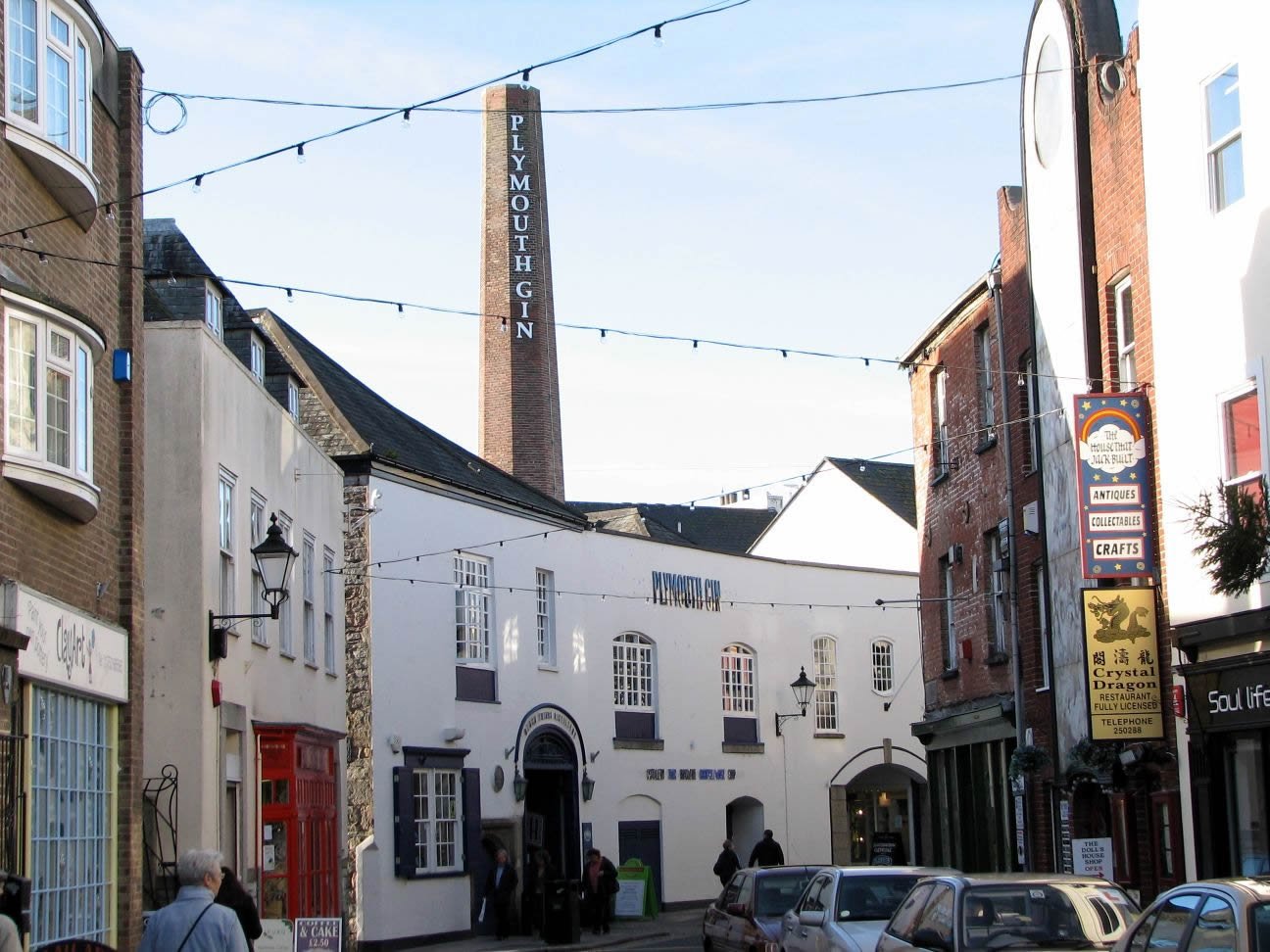
Where English Gin Found Its Anchor
Southside Street in Plymouth's Barbican quarter has the character of a working waterfront that forgot to gentrify. Cobblestones, chandlery facades, and the smell of the Tamar estuary at low tide define the approach. The building at number 60 predates the distillery by centuries: the 15th-century Refectory that now houses Plymouth Gin was already old when the Mayflower pilgrims used it as a staging point before their 1620 departure. That historical weight is not incidental to the gin. It shapes how the brand positions itself, and it explains why the distillery functions as both a working spirits producer and a site of genuine historical significance in British maritime culture.
In the geography of English gin, Plymouth occupies a specific and defended position. London Dry dominates the international conversation, but Plymouth Gin holds a Protected Geographical Indication, meaning the spirit can only be produced within the city of Plymouth. That legal boundary is rare for a gin. It aligns Plymouth Gin more closely with appellation-controlled spirits — Cognac, Champagne, Scottish Single Malts — than with the open-category London Dry style that producers anywhere can adopt. The PGI is, in effect, the closest thing gin has to a terroir designation, and Plymouth's claim to it rests on over two centuries of continuous production on this site.
The PGI as a Terroir Argument
Terroir arguments in spirits are contested territory, and gin is harder to pin to place than whisky or cognac because the base spirit can travel. But Plymouth's case has specific structural support. The water source, drawn from Dartmoor, carries a mineral profile distinct from the chalk-filtered water that characterises London production. Dartmoor granite filtration produces softer, slightly earthier water chemistry, and distillers working with it have historically noted that the resulting spirit integrates botanicals differently than harder water sources. Whether or not the difference is dramatic enough to constitute terroir in the strict oenological sense, the argument is coherent rather than merely commercial.
The botanical recipe used at Plymouth skews earthier and slightly less juniper-forward than classic London Dry formulations, with a notable emphasis on root botanicals. That profile has been consistently described by spirits writers as rounder and more maritime in character, which aligns with what the local water and Devon provenance would suggest. For visitors approaching the distillery from an interest in how place shapes production , the same interest that draws serious drinkers to Dornoch Distillery in Dornoch or Dunphail Distillery in Dunphail , Plymouth offers a version of that question framed through geography and legal protection rather than just production philosophy.
Recognition and What It Signals
Plymouth Gin received a Pearl 3 Star Prestige rating from EP Club in 2025. In the EP Club framework, that places it in the highest prestige tier, alongside producers recognised for quality, heritage, and visitor experience rather than volume alone. The award reflects a broad assessment rather than a single dimension, which matters for a distillery that operates simultaneously as a working producer, a heritage site, and a visitor destination.
Compared to Scottish single malt distilleries of similar heritage standing, such as Aberlour in Aberlour or Cardhu in Knockando, Plymouth operates in a different spirits category but occupies an analogous cultural position: a producer whose identity is inseparable from its location and whose longevity provides a form of authority that newer entrants cannot replicate. The difference is that whisky distilleries benefit from an age-statement culture that makes provenance legible on the bottle; gin does not carry that shorthand, so the building and the PGI do additional work in communicating the same kind of long-standing regional commitment.
Among gin producers specifically, the contrast with Beefeater Gin in London is instructive. Both are heritage English gin producers with serious histories, but Beefeater operates under the London Dry designation, which is a style category rather than a geographical lock. Plymouth's protected status means it is, structurally, a more bounded and place-specific producer , which is either a constraint or a distinction depending on how you weigh authenticity against flexibility.
The Distillery as Visitor Experience
Distillery tourism in Britain has expanded substantially over the past decade, and visitor expectations have moved with it. The Glenturret in Crieff and its associated two-Michelin-star dining investment represent one end of the spectrum: total immersion, premium pricing, and hospitality that competes with country house hotels. Plymouth sits in a different register, where the building itself carries the experiential weight rather than additional built infrastructure.
The Refectory's medieval architecture provides a context that most spirit producers globally cannot access. The vaulted spaces predate industrialisation entirely, and the working distillery equipment occupies the same rooms where pilgrims sheltered four centuries ago. That combination is not common. For the visitor arriving at Southside Street, the experience is less about curated luxury and more about encountering genuine historical depth in a functioning production context. Tours run from the distillery and provide access to both the production area and the building's history. Booking directly through the distillery is the standard approach; walk-in availability varies with season, and the Barbican attracts significant tourist footfall in summer, making advance planning sensible for specific session times.
Plymouth and Its Spirits Context
Plymouth as a city has an underexplored food and drink identity beyond the gin distillery. The Barbican area, where the distillery sits, concentrates most of the city's hospitality interest. For visitors structuring time around the distillery, our full Plymouth restaurants guide maps the broader eating options in the city, while our full Plymouth bars guide covers the cocktail and drinking scene that naturally pairs with a distillery visit. Those looking to stay near the Barbican will find our full Plymouth hotels guide useful for proximity-based planning.
Beyond gin, Plymouth's wider drinks scene is part of a southwest England drinks corridor that extends into wine production. Balfour Winery in Staplehurst represents the English wine category that has grown in seriousness over the same period that craft spirits have expanded, and the two categories increasingly draw from the same audience of regionally-minded drinks enthusiasts. Our full Plymouth wineries guide covers what the broader region offers for those whose interest in provenance-led production extends beyond gin. For context on distilleries operating with a comparable emphasis on place and production method, our full Plymouth experiences guide maps the visit-worthy options across categories.
For comparison with other prestige spirits producers operating at the intersection of heritage and active production, Terre Rouge and Easton Wines in California and Abadía Retuerta in Sardón de Duero both operate from historically significant sites where the physical setting functions as an active part of the visitor proposition rather than mere backdrop. That pattern holds at Plymouth: the address is not decoration. It is, along with the PGI designation, the core of the argument that this gin is from somewhere specific and that the somewhere matters.
Frequently Asked Questions
- What is the atmosphere like at Plymouth Gin?
- The distillery occupies a 15th-century Refectory in Plymouth's Barbican quarter, one of the city's most historically dense neighbourhoods. The physical environment is stone, vaulted, and working , not a purpose-built visitor centre but a functioning production space inside a medieval building. The area around Southside Street has a maritime character that complements the distillery's history. Plymouth Gin holds a 2025 Pearl 3 Star Prestige rating from EP Club, which reflects the combined quality of production and visitor experience. Pricing for tours should be confirmed directly with the distillery, as it is not listed in current data.
- What is the leading spirit to try at Plymouth Gin?
- Plymouth produces under a Protected Geographical Indication, which restricts production to the city of Plymouth and represents the closest regulatory parallel to a wine appellation in the gin category. The house style leans toward earthier, root-forward botanical profiles compared to classic London Dry formulations, partly attributed to Dartmoor water sourcing. For the full range of expressions available, confirming directly with the distillery on current production is more reliable than any external listing. The 2025 EP Club Pearl 3 Star Prestige award covers the producer's overall output rather than a single expression.
- What is the main draw of Plymouth Gin?
- The combination of a Protected Geographical Indication , rare for any gin , and a production site with documented history going back to the 15th century positions Plymouth as one of the most place-specific gin producers in Britain. Plymouth is not a large city by UK standards, and the distillery sits at the heart of the Barbican's historical concentration, making it the clearest single point of entry into the city's drinks identity. The 2025 EP Club Pearl 3 Star Prestige award adds formal recognition to a heritage claim that already carries considerable documentary weight. For visitors with broader spirits interests, Accendo Cellars in St. Helena offers a useful point of comparison in how provenance-led producers in other categories communicate place through both product and visitor experience.
Access the Cellar?
Our members enjoy exclusive access to private tastings and priority allocations from the world's most sought-after producers.
Access the Concierge