Markham Vineyards

Markham Vineyards sits along Highway 29 in St. Helena, where Napa Valley's northern reach produces Cabernet-focused wines that have earned a Pearl 3 Star Prestige rating from EP Club in 2025. The property occupies a stretch of valley floor with the Mayacamas range as its backdrop, placing it among the mid-valley estates that define the region's structural red wine character. Visit in autumn when harvest activity animates the property and the surrounding vineyard rows turn amber.
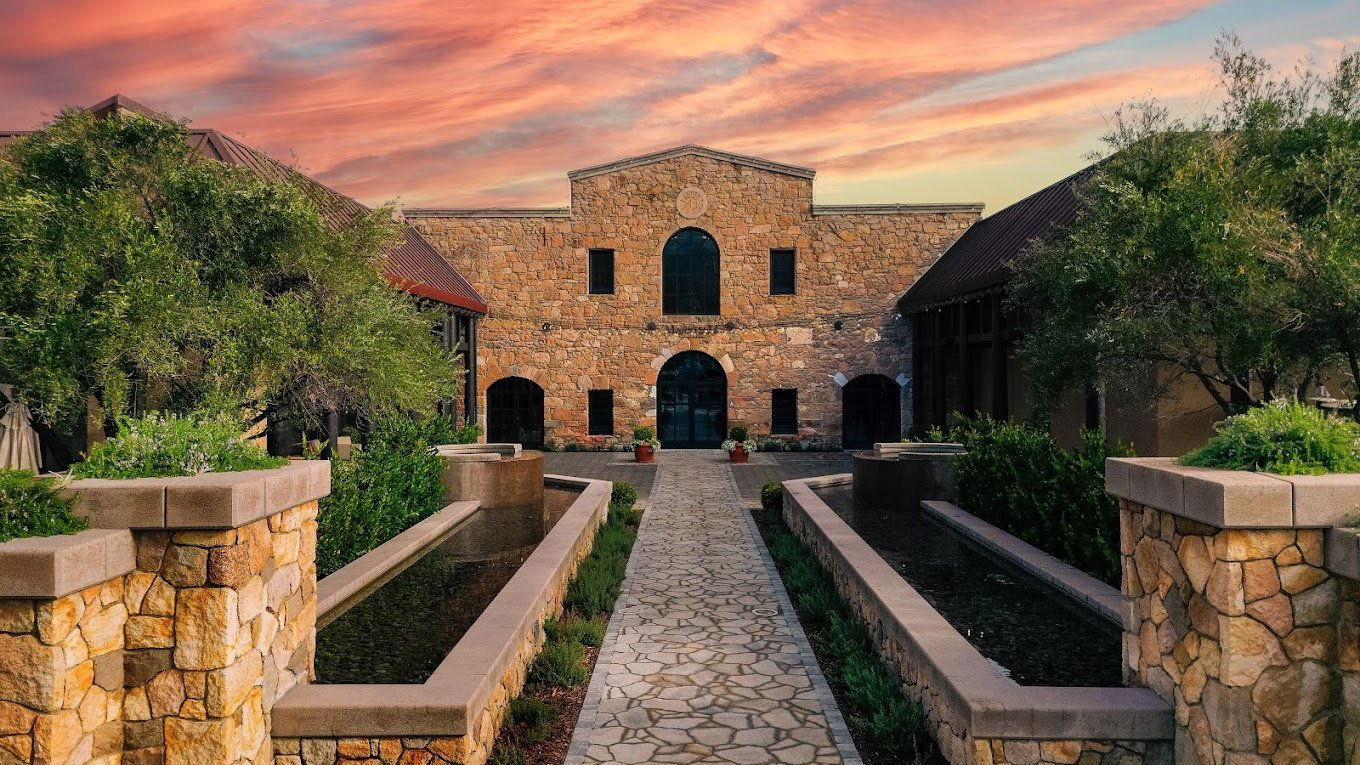
Highway 29, Heading North: The St. Helena Approach
The drive north on Highway 29 through St. Helena concentrates the visual argument for why Napa Valley commands the prices it does. The road narrows, the canopy thickens, and the vine rows run in parallel lines toward the Mayacamas foothills to the west and the Vaca range to the east. Markham Vineyards sits on the eastern shoulder of that corridor at 2812 St Helena Hwy North, the kind of address that places a winery in the thick of mid-valley Cabernet country rather than at its margins. The stone winery building registers immediately — a structure that reads as part of the valley's longer agricultural history rather than a recent architectural statement.
That physical positioning matters more than it might seem. The valley floor along this stretch of Highway 29 has historically produced wines of a particular weight and tannic structure, the result of alluvial soils that retain warmth through the growing season. Properties here are in conversation with the same terroir as neighbours including Charles Krug, one of the valley's oldest established estates, and Dana Estates, which operates at the premium end of hillside and valley-floor Cabernet production. Markham's address places it within that established corridor rather than at the fringes of it.
The Vineyards, the Valley Floor, and the Light
The editorial angle that tends to underserve Napa Valley properties is the physical one. Wine writing fixates on what is in the glass; the sense of place that surrounds how the wine is made and tasted gets compressed into a sentence or two. At Markham, the vineyard setting is worth slowing down for. The valley floor here sits at modest elevation, which means the light in the morning comes flat and direct across the vine rows, catching the dew and the green of the canopy before the heat builds. By early afternoon in summer, the Mayacamas ridge starts to funnel a marine influence from the west, moderating temperatures and allowing the grapes to retain acidity as they accumulate sugar. This diurnal temperature shift is the mechanical explanation for why Napa Cabernet can carry both ripeness and structure simultaneously — and it is visible in the rhythm of the land around the winery.
Autumn changes the calculus entirely. During harvest, typically from late August through October depending on the block and variety, the property takes on a working-winery character that tasting visits outside that window cannot fully replicate. Fruit moves from vine to crush pad, the air carries a fermentation note that becomes ambient around any active Napa winery in September, and the vine leaves shift from green to amber and red before dropping. Visiting during this window, particularly in mid-September when Cabernet harvest is often underway, connects the wine in the glass to the agricultural process in a way that off-season visits rarely achieve. Booking ahead for autumn visits is advisable given that harvest season draws visitors across the entire valley simultaneously.
Where Markham Sits in the St. Helena Peer Set
St. Helena wineries occupy a spectrum that runs from single-vineyard boutique producers with mailing-list allocation models to larger estate operations with a broader public-facing hospitality program. Markham sits closer to the estate end of that range, with a production footprint that allows for tasting room access without the months-long waitlist that characterises the allocation-only tier. That positioning makes it a different kind of proposition from allocation-focused producers like Accendo Cellars or the hillside estate model represented by Chappellet Winery on Pritchard Hill. It also means that Markham operates in a more accessible price and access tier than the ultra-premium end represented by producers such as Brand Napa Valley.
That accessibility does not indicate a compromise in the seriousness of the wine program. The EP Club Pearl 3 Star Prestige rating for 2025 places Markham within a recognised tier of quality, reflecting a program that delivers consistent regional expression rather than a one-vintage anomaly. In a competitive set that includes properties working the same valley-floor terroir and the same Cabernet-dominant variety mix, a sustained Prestige rating carries more weight than a single award cycle would suggest.
For comparison across California wine regions, the mid-valley Napa model is distinct from what producers on the Central Coast are doing. Adelaida Vineyards in Paso Robles works with Rhône varieties and limestone soils that produce wines of an entirely different structural profile. Alban Vineyards in Arroyo Grande sits at the Syrah-focused edge of California's warmer interior. Oregon's Adelsheim Vineyard in Newberg operates in the Pinot-dominated Willamette Valley, a cooler climate context with fundamentally different variety logic. Placing Markham against those peers clarifies what St. Helena valley-floor Cabernet represents: a warm-climate, structured red wine tradition that has no close equivalent in the domestic wine map.
The Wine Program: Cabernet in Context
Napa's premium identity has been Cabernet-heavy for decades, and the valley floor around St. Helena produces Cabernet of a particular type: darker fruit, a firmer tannic architecture, and enough acidity from the cool nights to sustain a decade or more of bottle age. Markham's program reflects that tradition. While specific current release details from the database are not confirmed here, the property's location and production history position it squarely within the valley-floor Cabernet category rather than the mountain-fruit or single-clone niche models. Bordeaux blending varieties, Merlot and Chardonnay among them, have historically also featured in the Markham portfolio, which is consistent with the broader Napa estate model that produces a range across varieties while anchoring the program in Cabernet.
The comparison with international Cabernet regions is useful here. Abadía Retuerta in Sardón de Duero works with Tempranillo on meseta soils that produce wines of a different structure and origin entirely. The Napa valley-floor model is warmer, more fruit-forward in its early expression, and supported by a hospitality infrastructure , tasting rooms, seasonal events, on-site food , that Spanish estate wineries rarely replicate at the same scale. That hospitality dimension is part of what distinguishes Napa as a wine destination beyond the wines themselves.
Planning a Visit to Markham
Markham Vineyards is accessible directly off Highway 29 in St. Helena, making it a direct stop on a north-valley itinerary that might also include other producers along the same corridor. St. Helena sits roughly equidistant between Yountville to the south and Calistoga to the north, making it a natural midpoint for a day of valley tastings. For those planning a longer stay, the full St. Helena hotels guide covers properties across the valley with proximity to the Highway 29 corridor in mind.
Visitors extending their time in St. Helena will find the town itself dense with dining options relative to its size. The St. Helena restaurants guide covers the range from wine-country bistro to more serious tasting-menu formats. For evening drinks, the bars guide for St. Helena maps the town's more compact but serious cocktail and wine bar options. And for those building a full programme around the region's producers, the complete St. Helena wineries guide and the St. Helena experiences guide provide structured itinerary support across both wine and cultural programming.
Outside the Napa context, producers like Aberlour in Aberlour represent how a different production tradition, Scotch whisky in this case, builds a visitor experience around a heritage site. The comparison is instructive: Napa has compressed what took Scottish distilleries a century of visitor infrastructure development into a much shorter window, and the sophistication of the tasting experience at properties across the valley, Markham included, reflects that acceleration.
Frequently Asked Questions
- What is the general vibe at Markham Vineyards?
- Markham sits in the accessible estate tier of St. Helena's winery scene: a valley-floor property with a working agricultural presence and a tasting room format that does not require advance allocation or mailing-list status. The EP Club Pearl 3 Star Prestige rating for 2025 confirms a quality-serious program within a hospitality format that is more open than the boutique-allocation end of the St. Helena peer set. It reads as a proper Napa estate rather than a showroom, with the stone building and vineyard surroundings doing more atmospheric work than any interior design brief could.
- What is the signature bottle at Markham Vineyards?
- Specific current release data is not confirmed in the EP Club database, but the property's position on the St. Helena valley floor places its Cabernet Sauvignon at the centre of the program by logic of terroir and regional tradition. Valley-floor St. Helena Cabernet of this appellation produces wines of dark fruit, firm structure, and medium-to-long ageing potential , the defining profile of mid-valley Napa production. The EP Club Pearl 3 Star Prestige recognition for 2025 suggests the program is delivering on that promise at a consistent level. For verified current release and pricing information, contacting the winery directly is the most reliable route.
Access the Cellar?
Our members enjoy exclusive access to private tastings and priority allocations from the world's most sought-after producers.
Access the Concierge