
One of Portugal's oldest continuously operating wine estates, José Maria da Fonseca sits in Azeitão on the Setúbal Peninsula and holds a Pearl 3 Star Prestige award for 2025. The estate anchors the region's identity as a serious wine-producing zone south of Lisbon, with a heritage that predates most of Portugal's modern wine institutions. Visit for the combination of architectural history and sustained winemaking prestige.
Where the Setúbal Peninsula's Wine Story Begins
South of Lisbon, where the Serra da Arrábida drops toward the Atlantic and the clay-limestone soils of the Setúbal Peninsula accumulate centuries of viticultural memory, wine estates tend to carry weight that newer operations elsewhere in Portugal are still working to earn. The Azeitão corridor is one of the older production zones on this stretch of coastline, and José Maria da Fonseca, on Rua José Augusto Coelho in the centre of Azeitão, occupies a position in that tradition that few Portuguese wine addresses can claim on comparable terms. Its 2025 Pearl 3 Star Prestige award from EP Club places it among the higher-rated wine experiences in the country, though the estate's significance was never contingent on any single external measure. It is one of the reference points against which others in the region are implicitly compared.
The Peninsula's Position in Portuguese Wine
The Setúbal Peninsula is often underread relative to the Douro, the Alentejo, or even the Dão, but its credentials for serious wine production are older than most. The region's denominação de origem controlada covers both Palmela and Setúbal, the latter historically associated with fortified Moscatel de Setúbal, a style that requires extended skin contact and produces wines with oxidative complexity and a long-aging potential that puts the finest examples well outside everyday wine categories. The peninsula also produces red wines under the Palmela DOC, where Castelão (locally called Periquita in older usage) performs with a regional specificity difficult to replicate elsewhere. Within this geography, estates that have operated across multiple generations carry an institutional authority distinct from newer projects, however technically accomplished those newer projects may be. For comparison, Portugal's established wine addresses across other regions — Herdade do Esporão in Reguengos de Monsaraz, Adega Cartuxa in Évora, or Quinta do Vallado in Peso da Régua — each derive part of their authority from duration: the fact of continuity across eras of Portuguese wine culture. José Maria da Fonseca operates within that same logic on the Setúbal Peninsula.
Reading the Estate Through Its Region
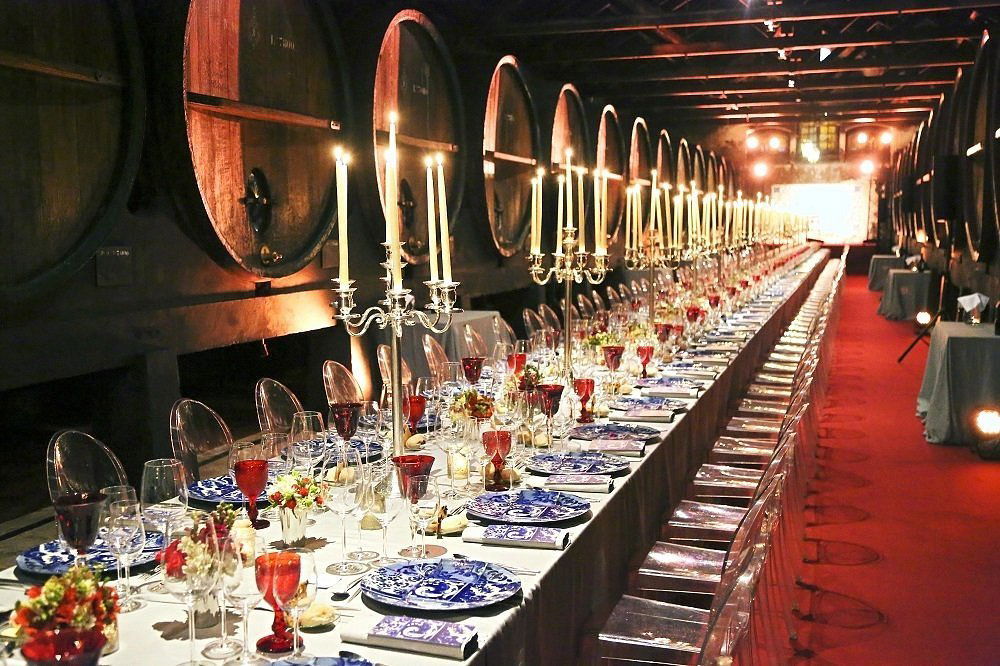
Azeitão itself is not a conventional wine-tourism village in the way that parts of the Douro or Alentejo have been designed for visitors. It is a working town with a serious estate tradition, and the addresses worth noting here tend to be operational rather than decorative. José Maria da Fonseca's premises on Rua José Augusto Coelho reflect that character: this is a production and heritage site in an active town, not a rural retreat built around visitor theatrics. That distinction matters for how you approach a visit. The experience is grounded in the wine and the archive, not in landscape spectacle, which puts it in a different category from, say, the river-view drama of Quinta do Bomfim in Pinhão or the terrace-and-valley format typical of premium Douro properties. In Azeitão, the draw is the depth of the material , the wines themselves, the cellars, the record of production , rather than the setting as backdrop.
The nearby Bacalhôa Vinhos provides a useful point of comparison within the same town: a large, internationally-oriented operation with a different ownership trajectory and a broader range of grape varieties across multiple Portuguese regions. The two estates represent different models of Setúbal Peninsula production, and visiting both gives a more complete picture of Azeitão's wine identity than either would alone.
Winemaking Tradition as Institutional Argument
The editorial angle that makes José Maria da Fonseca worth serious attention is not novelty , it is the opposite. In an era when wine marketing frequently privileges disruption, minimal-intervention rhetoric, and founder-as-auteur narratives, an estate whose credibility rests on generational continuity and accumulated process knowledge makes a different kind of argument. The wines here are not experiments. They are the product of an approach refined across long time horizons, which is precisely why the estate's Moscatel de Setúbal , a style requiring patience from vineyard through cellar , is the format most likely to reward a serious taster. Fortified wines aged over years or decades, showing the oxidative complexity and dried-fruit concentration that Moscatel accumulates slowly, are not available from estates that have been operating for a decade. That is a structural fact about wine production, not a marketing position.
Portugal's established fortified-wine addresses provide a useful comparison class. Blandy's Wine Lodge in Funchal, Churchill's in Vila Nova de Gaia, and Quinta do Seixo (Sandeman) in Tabuaço all trade in the same logic: the value of what they offer is inseparable from the time it has taken to produce it. José Maria da Fonseca on the Setúbal Peninsula occupies an analogous position, but for a style of fortified wine with far lower international name recognition, which means the discovery component is still intact for most visitors.
Planning Your Visit to Azeitão
Azeitão sits roughly 40 kilometres south of Lisbon, accessible by road through the A2 or via regional bus connections, though a car gives considerably more flexibility for reaching the estate and exploring the surrounding Serra da Arrábida. For visitors building a broader itinerary in the area, EP Club's full Azeitão wineries guide maps the production landscape across the peninsula, while the Azeitão restaurants guide, hotels guide, bars guide, and experiences guide cover the full visitor infrastructure of the town. Booking ahead is advisable for estate visits, as heritage wine properties in this tier , particularly those with guided cellar access , frequently operate on a structured tour format with fixed time slots. Specific hours, booking method, and pricing are leading confirmed directly with the estate, as these details vary seasonally and are not fixed in EP Club's current record for this property.
Azeitão in the Wider Portuguese Wine Calendar
Spring and autumn are generally the more rewarding seasons for wine-focused travel on the Setúbal Peninsula: spring for the landscape before the summer dry heat, and late autumn for the post-harvest period when production teams are most present and cellar visits carry the most educational weight. Summer visits are possible and popular given the proximity to the Arrábida coast, but the combination of high temperatures and peak tourist volume in the wider Setúbal region makes the cooler shoulder months preferable for visitors whose priority is the wine rather than the beach. For context on how Azeitão compares to other Portuguese wine-visit formats, the Douro properties listed above and the Alentejo addresses in EP Club's database operate with different seasonal logics, but the same general principle applies: harvest-adjacent timing gives visits more operational texture.
Frequently Asked Questions
- What kind of setting is José Maria da Fonseca?
- José Maria da Fonseca is a heritage wine estate in the town of Azeitão on the Setúbal Peninsula, approximately 40 kilometres south of Lisbon. The property holds a Pearl 3 Star Prestige award from EP Club for 2025, placing it among the higher-rated wine addresses in Portugal. Unlike rural retreat-style estates, this is a town-centre production and heritage site with a character shaped by its operational continuity rather than by designed visitor scenery.
- What do visitors recommend trying at José Maria da Fonseca?
- The estate's deepest association is with the Setúbal Peninsula's DOC wines, particularly Moscatel de Setúbal, a fortified wine style built on extended maceration and extended aging that requires generational commitment to produce at the highest level. The Palmela DOC reds based on Castelão are also regionally specific. Both categories reflect the estate's 2025 Pearl 3 Star Prestige recognition and its long position in Portuguese wine.
- What's the defining thing about José Maria da Fonseca?
- The defining quality is duration: an uninterrupted production history on the Setúbal Peninsula that places the estate in a different category from newer Portuguese wine projects. The 2025 Pearl 3 Star Prestige award from EP Club confirms current relevance, but the estate's authority derives primarily from its accumulated time in production, which directly affects the age and complexity available in older-vintage wines , something that cannot be compressed into a shorter operational timeline.
- How hard is it to get in to José Maria da Fonseca?
- Specific booking details are not currently confirmed in EP Club's record for this property. Given its standing as a Pearl 3 Star Prestige estate in Azeitão, structured visit slots are likely to require advance booking, particularly during peak travel months. Contacting the estate directly ahead of your planned travel date is the practical course of action, especially for group visits or cellar-access tours.
- Is José Maria da Fonseca relevant to visitors primarily interested in Moscatel de Setúbal as a wine style rather than Fonseca as a brand?
- Yes, significantly so. Moscatel de Setúbal as a DOC category is one of Portugal's most historically grounded fortified wine styles, and José Maria da Fonseca is among its most associated producers on the peninsula. The estate's Pearl 3 Star Prestige recognition for 2025 suggests that the wines continue to perform at a level consistent with serious wine tourism, making it a substantive stop for anyone tracing the style through its origin geography rather than through international market familiarity. The Setúbal Peninsula DOC context, rather than the brand alone, is the frame most useful for understanding what the estate offers.
A Pricing-First Comparison
These are the closest comparables we have in our database for quick context.
| Venue | Price | Awards | Notes |
|---|---|---|---|
| José Maria da Fonseca | Pearl 3 Star Prestige (2025) | This venue | |
| Bacalhôa Vinhos | |||
| Blandy's Wine Lodge | |||
| Churchill's | |||
| Cockburn's Port | |||
| Graham's Port |
Access the Cellar?
Our members enjoy exclusive access to private tastings and priority allocations from the world's most sought-after producers.
Access the Concierge