

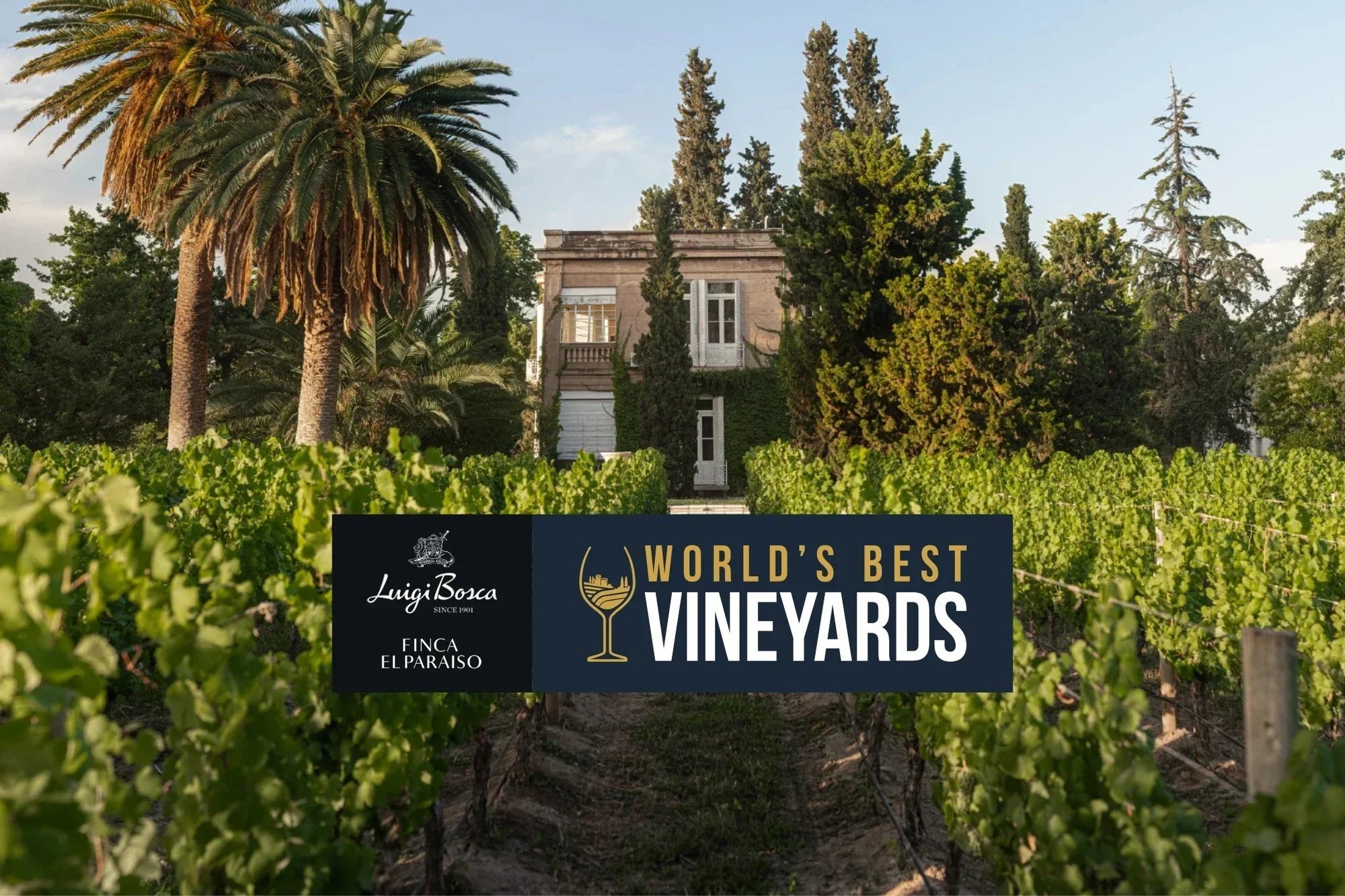
Finca El Paraíso carries Luigi Bosca's century-plus winemaking history into one of Maipú's most agriculturally rooted estate settings. The property earned a Pearl 2 Star Prestige rating in 2025, placing it among Mendoza's more serious estate destinations. A visit here is as much about understanding how vineyard management shapes the Malbec character of this sub-appellation as it is about tasting the finished wines.
Maipú's Estate Tradition and Where Finca El Paraíso Sits Within It
Maipú occupies a quieter register in the Mendoza wine conversation than its neighbour Luján de Cuyo, yet its alluvial soils and older vine stock have long supplied the raw material for some of the region's most structured reds. The district rewards visitors who look past the larger, more visitor-processed operations and seek out properties where the connection between land management and what ends up in the glass remains legible. Finca El Paraíso, the estate address of Luigi Bosca at El Paraíso 1926 in Maipú, belongs to that category. The Luigi Bosca family has been working Mendoza vineyards for well over a century, and the Finca El Paraíso site represents the agricultural core of that long-run commitment. For the full picture of what Maipú offers across different producer styles and scales, the our full Maipú wineries guide maps the district's range in useful detail.
Arriving at the Finca: Land Before Label
The approach to an estate winery in Maipú rarely resembles the choreographed arrival experiences found at higher-altitude boutique properties. Here the vineyards come first — rows of trained vines running toward the Andes foothills, the cordillera visible on clear mornings with a clarity that reminds you how directly this landscape shapes growing conditions. Finca El Paraíso reads as a working estate before it reads as a visitor destination, which is precisely the signal that distinguishes it from a tasting room operation. The production facilities and vineyard blocks occupy the same ground, and that physical integration shapes every tasting conversation that follows.
This kind of estate coherence is worth contrasting with what you find at some of Maipú's more compartmentalised operations, where wine tourism infrastructure and actual viticulture sit on separate sites. Properties like Finca Flichman and Bodega Antigal each approach the estate-visitor balance differently, and understanding those differences helps position what Finca El Paraíso offers.
Viticulture as the Central Argument
The editorial angle that matters most at Finca El Paraíso is not the wine list or the hospitality format — it is the relationship between how the land is managed and what the wines express. Mendoza's better producers have spent the past two decades moving away from high-intervention, yield-maximising viticulture toward approaches that take soil health and vine stress more seriously. The shift reflects both a global conversation about organic and regenerative farming and a local recognition that Mendoza's old-vine Malbec blocks produce more interesting wine when the farming respects rather than overwhelms the terroir signal.
Luigi Bosca's long tenure in this specific part of Maipú means the estate has accumulated the kind of vine-age and soil knowledge that newer or relocated operations simply cannot replicate. Old vines are not a marketing category at a place like this , they are a practical reality that affects canopy management, water use, and the character of the fruit that reaches the winery. Maipú's lower elevation relative to the high-altitude plantings in parts of Luján or the Uco Valley produces a different thermal profile: warmer nights, earlier ripening windows, and Malbec expressions that tend toward a rounder, more immediate fruit register rather than the angular structure of mountain-altitude sites.
For comparison, operations further afield such as Bodega Colomé in Molinos and Bodega DiamAndes in Tunuyán demonstrate how altitude and regional geology pull the Malbec character in markedly different directions. Tasting across those differences is one of the more instructive things a serious wine visitor can do in Argentina.
Recognition and What It Signals
Finca El Paraíso earned a Pearl 2 Star Prestige rating in 2025, which places it in a tier of Mendoza estate producers that EP Club's assessment framework recognises for consistent quality across viticulture, production, and visitor experience. That rating puts it in proximity with other serious Maipú addresses, including Bodega López and El Enemigo (Casa Vigil), though each property operates from a distinct production philosophy and targets a different end of the quality-price spectrum.
The 2 Star Prestige designation is not awarded to operations that trade on heritage alone. It requires that the current programme , vineyard management, winemaking decisions, visitor engagement , justifies the recognition on its own terms. For a property with Luigi Bosca's historical depth, that distinction matters: it confirms the estate is performing in the present rather than coasting on accumulated reputation.
For broader Argentine wine context, the contrast with estates in other regions is instructive. Bodega El Esteco in Cafayate operates in Salta's Torrontés-dominant northern corridor, while Abadía Retuerta in Sardón de Duero offers a Spanish estate parallel that illustrates how European wine culture has shaped Mendoza's own estate ambitions. Even a comparison as lateral as Aberlour in Aberlour , a Scottish distillery with its own long production lineage , points to how legacy operations manage the tension between tradition and contemporary relevance.
The Visitor Experience in Practical Terms
A wine estate visit in this part of Maipú is most productive when treated as an educational encounter rather than a leisure afternoon. The vineyards themselves carry as much information as the tasting room: row orientation, vine training systems, cover crop management between rows, and the presence or absence of synthetic intervention are all readable on a walkthrough for anyone paying attention. Bringing those observations to a guided tasting concentrates the learning considerably.
Booking logistics for Finca El Paraíso are leading handled through Luigi Bosca's central reservation channels. Phone and website details are not published within this record, so direct outreach via official Luigi Bosca contact channels or through a Mendoza wine-focused travel specialist is the practical path. Given the property's 2 Star Prestige standing and the tighter visitor calendars that serious estate visits involve, planning four to six weeks ahead during the March-April harvest season and the October-November pre-harvest period is advisable. Those windows bring the most activity to the vineyard and the most context to a tasting.
Maipú's broader visitor infrastructure rewards a full-day commitment. The district sits within easy reach of Mendoza city, and properties like Finca Agostino make logical complements to a Finca El Paraíso visit, allowing a comparison of estate scales and styles within the same appellation. For accommodation and dining in the area, our full Maipú hotels guide, our full Maipú restaurants guide, our full Maipú bars guide, and our full Maipú experiences guide provide the surrounding context needed to build a coherent itinerary around an estate visit of this calibre.
Frequently Asked Questions
What wines is Finca El Paraíso - Luigi Bosca known for?
Luigi Bosca's Finca El Paraíso sits in the Maipú sub-appellation of Mendoza, a district historically associated with Malbec and Cabernet Sauvignon from lower-elevation sites. The estate's long vine history in this specific terroir produces Malbec expressions that reflect the warmer thermal profile of Maipú rather than the higher-altitude character found in parts of the Uco Valley. The 2025 Pearl 2 Star Prestige award confirms the programme's standing within the Mendoza peer set.
What makes Finca El Paraíso - Luigi Bosca worth visiting?
The combination of over a century of estate history in Maipú and a current 2 Star Prestige rating places Finca El Paraíso in a tier of Mendoza producers where both heritage and present-day performance are verifiable. For visitors interested in the relationship between low-intervention viticulture, old vine blocks, and the character of estate-grown Malbec, the property offers a more grounded encounter than many of Mendoza's visitor-facing operations. The Maipú appellation context adds a useful counterpoint for anyone also visiting Luján or Uco Valley estates.
How far ahead should I plan for Finca El Paraíso - Luigi Bosca?
Phone and website details are not currently listed for direct booking reference. Contact through Luigi Bosca's official channels or a Mendoza specialist is the recommended approach. Given the estate's award standing and the stronger visitor demand during harvest season (March to April) and the October to November pre-harvest window, four to six weeks' advance planning is a reasonable baseline. Outside those peak periods, the lead time requirement is likely shorter, though confirming availability before travel is always advisable for a property at this level.
Where the Accolades Land
Comparable venues for orientation, based on our database fields.
| Venue | Awards | Cuisine | Notes |
|---|---|---|---|
| Finca El Paraíso - Luigi Bosca | Pearl 2 Star Prestige (2025); Mendoza | This venue | |
| Bodega Antigal | |||
| Bodega López | |||
| El Enemigo (Casa Vigil) | |||
| Finca Agostino | |||
| Finca Flichman |
Access the Cellar?
Our members enjoy exclusive access to private tastings and priority allocations from the world's most sought-after producers.
Access the Concierge