Costa de Oro Winery

Costa de Oro Winery sits on Nicholson Avenue in Santa Maria, California, where the valley's cold-climate viticulture has built a quiet but serious reputation. The winery holds a Pearl 2 Star Prestige designation for 2025, placing it among Santa Maria's recognized producers. For visitors exploring the Santa Barbara County wine corridor, it represents a focused stop in one of California's most compelling Pinot and Chardonnay regions.
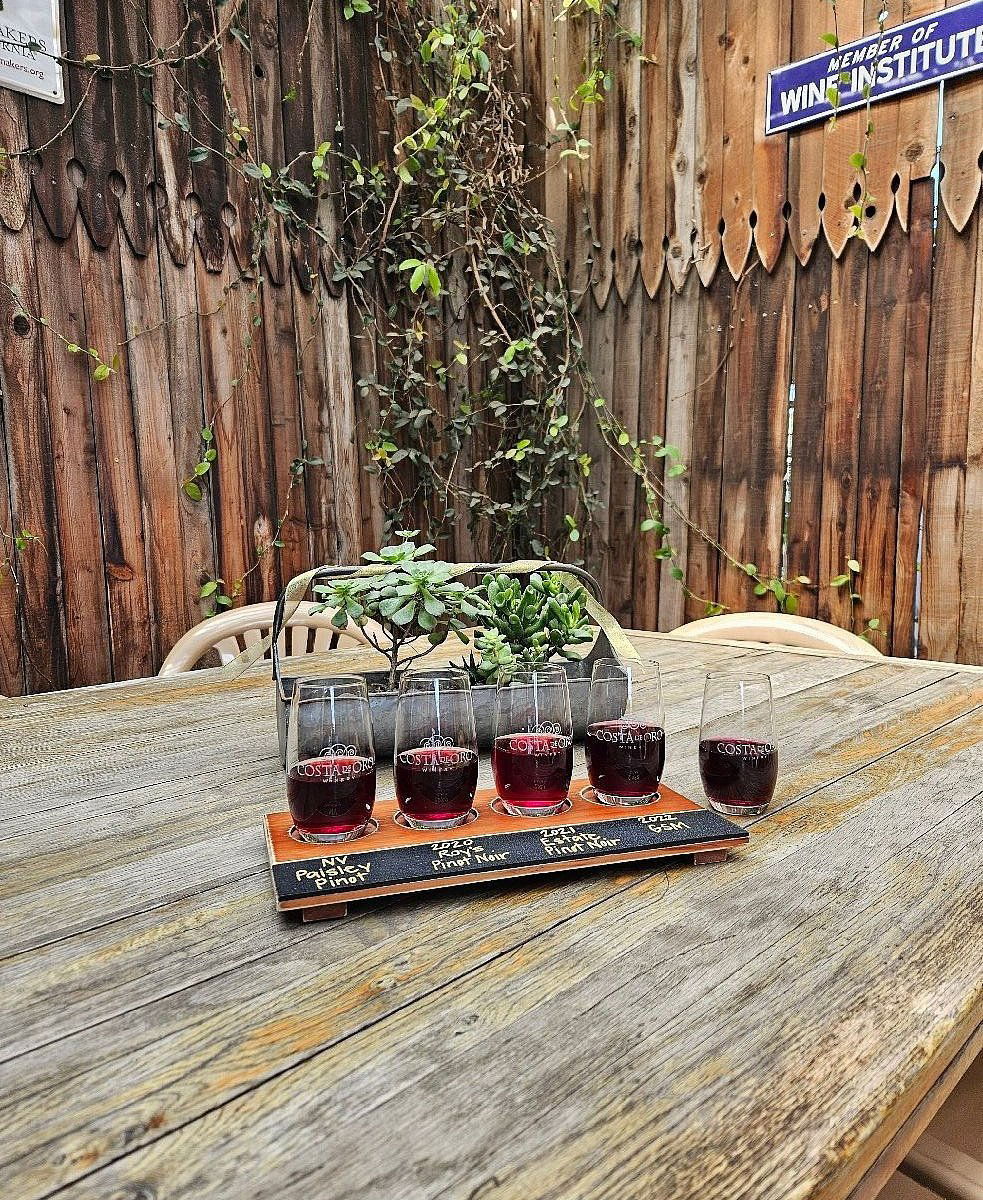
Santa Maria's Cold-Climate Logic
Santa Maria Valley operates on a different thermal calendar than most of California wine country. The valley's transverse orientation pulls marine air off the Pacific directly eastward, keeping afternoon temperatures low enough that Pinot Noir and Chardonnay ripen slowly across a long growing season. That cooling effect is the defining variable here, and it explains why the valley's producers consistently show more acid structure and less confected fruit than warmer Central Coast appellations. Among the wineries that have built their programs around this thermal reality, Costa de Oro Winery, at 1331 Nicholson Avenue, represents a producer with recognized standing in that peer group — holding a Pearl 2 Star Prestige designation for 2025.
The Pearl 2 Star Prestige award places Costa de Oro within a selective tier of Santa Maria producers whose work has drawn formal critical attention. For context, that recognition puts it alongside other valley operations that have moved beyond regional novelty and into the kind of consistent quality that earns repeat attention from informed tasters. Nearby, properties like Presqu'ile Winery and Cambria Estate Winery occupy their own positions in the valley's quality spectrum, and the presence of multiple award-recognized producers on relatively close ground says something about the appellation's depth rather than any single estate's dominance.
The Tasting Room and the Visit Format
The address on Nicholson Avenue places Costa de Oro slightly removed from the more heavily trafficked wine road circuits that funnel visitors between tasting stops in the Santa Ynez Valley. Santa Maria proper is a working agricultural city rather than a curated wine-tourism destination, which shapes the experience before you arrive. There is no designed village backdrop, no row of boutique shops along the approach. What the location offers instead is directness: you are in the valley, close to the vineyards that the wines come from, without the infrastructural theater that has accumulated around more tourist-dependent wine regions.
Tasting room visits in this part of Santa Maria Valley tend to be less stage-managed than those at properties that have invested heavily in hospitality infrastructure. The focus defaults to the wine itself, which suits the style of visitor who comes here with some baseline knowledge of the appellation rather than someone seeking a general introduction to California wine. That distinction matters when assessing what kind of visit Costa de Oro is likely to deliver. Visitors with questions about how the valley's fog patterns affect the growing season or how Santa Maria Pinot compares structurally with, say, Russian River will find the setting more conducive to that kind of conversation than a high-volume tasting operation would allow.
For those building a Santa Maria itinerary, it is worth noting that the valley rewards patience and a deliberate pace. The wineries are not densely clustered in a single walkable area, and most visits require driving between properties. Booking in advance is advisable for any serious tasting appointment, particularly for producers working with limited production. The full Santa Maria wineries guide maps the valley's current roster and helps structure a multi-stop visit effectively.
The Appellation as Context
Santa Maria Valley earned its appellation status in 1981, one of the earlier California AVA designations, and its reputation has been built largely on Burgundian varieties. The valley floor sits at elevations that, combined with the marine cooling, create harvest conditions measurably different from Paso Robles to the north or the warmer pockets of Santa Barbara County. Bien Nacido Estate is the valley's most cited single-vineyard source, supplying fruit to producers across the region and functioning almost as a quality benchmark for the appellation as a whole. Foxen Vineyard and Winery has operated in the area for decades and represents the kind of long-form commitment to the valley that adds credibility to newer producers working alongside it. Rancho Sisquoc Winery occupies a more secluded eastern reach of the valley, offering a different physical experience of the appellation's scale.
Costa de Oro sits within this ecosystem of established names, and the 2025 Pearl 2 Star Prestige recognition signals a level of quality that earns a place in any serious survey of what the valley is currently producing. For visitors comparing producers across the region, that credential offers a useful signal when prioritizing stops on a limited itinerary.
Santa Maria Beyond the Tasting Room
Santa Maria as a city has less visitor infrastructure than the more tourism-oriented towns in Santa Barbara County, which affects how you plan around a winery visit. The dining scene is centered on local agricultural produce and has a more utilitarian character than Solvang or Los Olivos. Anyone planning to spend a day or more in the area should cross-reference the full Santa Maria restaurants guide and the full Santa Maria hotels guide before confirming logistics. The Santa Maria bars guide and Santa Maria experiences guide round out what the city offers beyond wine.
For visitors whose interest in cold-climate California wine extends beyond this valley, the wider California wine corridor offers useful comparisons. Adelaida Vineyards in Paso Robles works with a different thermal profile but shares an emphasis on site-driven viticulture. Accendo Cellars in St. Helena sits at the opposite end of California's prestige hierarchy, where Cabernet rather than Pinot defines the conversation. Further afield, Adelsheim Vineyard in Newberg offers a Pacific Northwest counterpoint for anyone tracking how Burgundian varieties translate across different cool-climate latitudes. International reference points like Abadía Retuerta in Sardón de Duero and Aberlour in Aberlour represent how different wine cultures approach the same fundamental question of terroir expression, even if the varieties and methods differ substantially from what Santa Maria produces.
Who This Visit Is For
Costa de Oro's position in the Santa Maria Valley, combined with its 2025 Pearl 2 Star Prestige recognition, makes it a logical stop for visitors who approach the valley with some understanding of what makes the appellation interesting. This is not a destination designed for casual wine tourism built around scenic backdrops and easy crowd-pleasing pours. The valley's identity is tied to a specific climatic argument, and the producers who work here honestly tend to make wines that reward attention rather than immediate accessibility.
For anyone building a focused Santa Maria itinerary around cold-climate Pinot and Chardonnay, Costa de Oro belongs on the shortlist. The award credential for 2025 is a current signal worth taking seriously. Practical details on visiting, including hours and booking arrangements, are worth confirming directly with the winery before your trip, as this information was not available at time of publication.
Frequently Asked Questions
What's the atmosphere like at Costa de Oro Winery?
Costa de Oro sits in Santa Maria proper rather than a purpose-built wine village, which gives the visit a more direct, agricultural character than tasting rooms in more heavily touristed parts of Santa Barbara County. The setting reflects the valley's working identity rather than its wine-tourism infrastructure. The winery holds a Pearl 2 Star Prestige designation for 2025, which positions it as a quality-focused producer rather than a high-volume hospitality operation. Pricing details were not available at time of publication.
What's the signature bottle at Costa de Oro Winery?
Specific current releases were not available for this publication. Santa Maria Valley's defining varieties are Pinot Noir and Chardonnay, shaped by the valley's marine-cooled growing conditions, and producers working here typically focus their programs on those cold-climate grapes. Costa de Oro's Pearl 2 Star Prestige recognition for 2025 suggests a level of quality in its current releases worth investigating directly. The winery's address at 1331 Nicholson Avenue is the most reliable starting point for current availability and allocation information.
What's Costa de Oro Winery leading at?
The 2025 Pearl 2 Star Prestige award places Costa de Oro among Santa Maria's recognized producers, which in the context of this appellation points toward the cold-climate Pinot Noir and Chardonnay that define the valley's identity. Santa Maria is one of California's most coherently argued cool-climate wine regions, and producers earning formal recognition here tend to be making wines that express that argument clearly. For visitors to the city, it sits within a peer set that includes other award-recognized valley estates worth comparing directly.
Access the Cellar?
Our members enjoy exclusive access to private tastings and priority allocations from the world's most sought-after producers.
Access the Concierge