
Falstaff Winery - 2 Stars
Château Quinault L’Enclos gives Libourne a rare city-vineyard expression of Saint-Émilion: enclosed, quiet, gravelly, and shaped under Château Cheval Blanc stewardship. The interest here is terroir rather than spectacle, with Merlot, Cabernet Franc, and Cabernet Sauvignon translating a warm urban microclimate into a polished Right Bank red with fresh acidity and measured structure.

Pearl is the En Primeur Club membership app — saves, bookings, and concierge access live there. Same editors, same standards.
- Address
- Libourne, Libournais, Nouvelle-Aquitaine, Frankreich

Approaching a walled vineyard inside Libourne changes the usual Right Bank rhythm. Instead of a long drive through open parcels, the setting compresses the experience: city edge, enclosure, gravel, and vines held inside an urban frame. That tension is the point at Château Quinault L’Enclos. It is not a château built around grand rural theatre; it is a Saint-Émilion Grand Cru Classé read through a city vineyard, where the physical limits of place sharpen the wine’s identity.
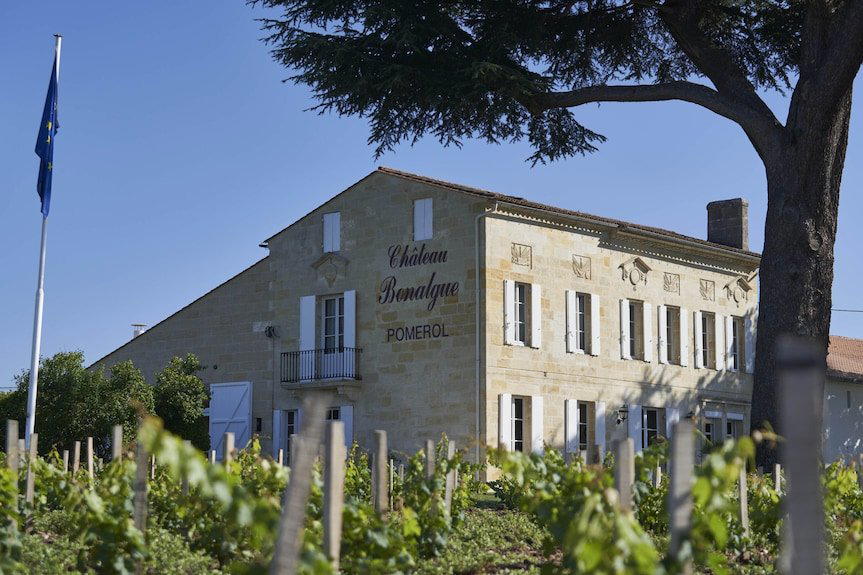
Libourne sits at the hinge of several Bordeaux conversations: river trade, Right Bank clay and gravel, and the pull of Saint-Émilion and Pomerol around it. Visitors often use the city as a base for cellar appointments, but its wine interest is not only logistical. The area rewards close reading of soil and scale, from Libourne estates such as Chateau Fleur de Jean Gue, Château Bonalgue, Château Certan-Giraud, Château de Sales, and Château Fayat to the more enclosed urban case here.
A city vineyard that makes terroir feel less abstract
The estate’s defining feature is its 19-hectare urban vineyard in Libourne, planted as a single enclosed parcel on sandy gravel and clay. In Bordeaux terms, that matters. The Right Bank is often reduced to Merlot shorthand, but gravel changes the register: it brings drainage, warmth, and a firmer structural line, especially when Cabernet Sauvignon has a meaningful role in the blend.
The usual blend is 65% Merlot, 21% Cabernet Sauvignon, and 14% Cabernet Franc, a composition that gives the wine more Cabernet framing than many Merlot-led Right Bank reds. Recent vintages show the adjustment by year rather than formula. The 2021 vintage shifted to 59% Merlot, 23% Cabernet Franc, and 18% Cabernet Sauvignon; 2020 leaned more heavily into Merlot at 78%, with Cabernet Franc completing the blend; 2019 used 74% Merlot, 12% Cabernet Franc, and 14% Cabernet Sauvignon. The lesson is practical: this is not a plushness-first Saint-Émilion reading. It is a wine shaped around freshness, savoury tone, and controlled ripeness.
Urban microclimate is warmer than much of the surrounding Right Bank, which makes harvest timing central. Earlier picking helps retain acidity and avoids the jammy profile that marked some late-20th-century Bordeaux styles. That decision is not cosmetic; it changes the drinking architecture. The wine is built to keep lift rather than chase weight.
Cheval Blanc stewardship, organic farming, and a cleaner modern line
Modern chapter began in 2008, when Bernard Arnault and Baron Albert Frère, owners of Château Cheval Blanc, acquired the estate. Under Pierre Lurton, with Pierre-Olivier Clouet involved in vineyard direction, the property was reworked from 2009 onward and entered the Saint-Émilion classification as a Grand Cru Classé in 2012. That classification is the key trust signal here, supported by outside critical recognition rather than by hospitality gloss.
Viticulture moved to 100% organic farming, with certification achieved in 2012. The vineyard is hand-harvested, and the cellar approach favours wood vats for vinification and oak aging that is assertive but not the whole story: up to 18 months, with 50% new French oak noted in the production regime. In 2021, larger 500- and 600-litre casks and 25HL foudres formed part of the aging picture, a useful sign of how the estate manages oak presence against a freshness-led style.
Critical attention has been concentrated around the recent run of vintages. The 2021 received 93/100 from Jeb Dunnuck and 93/100 from Antonio Galloni of Vinous, with Jane Anson of Inside Bordeaux at 92/100. The 2017 drew 90 from Parker, 91 from Decanter, and 91 from Wine Spectator. These numbers do not turn the wine into a luxury trophy; they place it in a serious Saint-Émilion conversation at a relatively accessible price point for the appellation.
How to think about drinking it in Libourne
The estate’s red wine is the focus, and the practical appeal is clarity: still red Bordeaux from a compact, organic, enclosed vineyard with Saint-Émilion Grand Cru Classé standing and Cheval Blanc technical influence. Younger vintages are generally better with air; the estate guidance points to roughly one hour to 90 minutes of decanting for young bottles, while older bottles need gentler handling for sediment. The suggested drinking window runs around 10 to 12 years after bottling, which puts the wine in a useful middle ground: not a decades-only collector’s object, not a simple early-drinking red.
For travellers, the format is more specialist than casual. Visits are by appointment, the atmosphere is quiet, and the draw is wine education rather than a high-volume tasting circuit. The setting suits drinkers who want to connect vineyard mechanics to what is in the glass: why gravel matters, why Cabernet Sauvignon changes a Right Bank blend, why an enclosed city parcel can ripen differently from open countryside vines.
Libourne planning is stronger when wine is treated as part of a broader stay rather than a single stop. Use Our full Libourne wineries guide to map appointments, then cross-check the city with Our full Libourne restaurants guide, Our full Libourne hotels guide, Our full Libourne bars guide, and Our full Libourne experiences guide. For wider wine-country context beyond Bordeaux, compare the editorial range with A. Margaine in Villers-Marmery, Abbaye de Fontfroide in Narbonne, Abbotts & Delaunay in Marseillette, »der Steiner« Hans Steiner in Podersdorf am See, and & Handwein in Mannheim.
The editorial case for Château Quinault L’Enclos is precise: it shows how a small urban site can produce a serious Saint-Émilion expression without mimicking the grander theatre of neighbouring appellation estates. The wine’s value lies in that tension between enclosure and classification, polish and freshness, city setting and gravel-rooted Bordeaux tradition.
Recognition history
Dated appearances from independent guides and award organizations, with the underlying list record or original source where available.
Falstaff Winery - 2 Stars
Falstaff
Continue exploring
More in Libourne
Wineries in Libourne
Browse all →
Restaurants in Libourne
Browse all →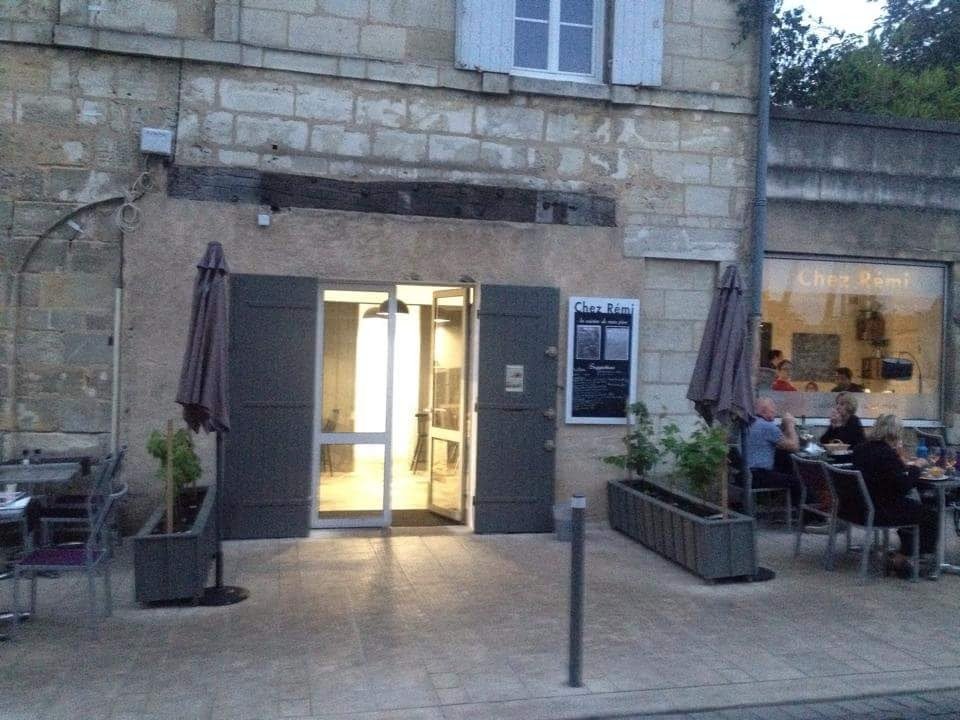
Details
- Sophisticated
- Classic
- Intimate
- Special Occasion
- Wine Education
- Solo Exploration
- Romantic Getaway
- Historic Building
- Estate Grounds
- Vineyard Tour
- Private Tasting
- Organic
- Street Scene
- Merlot
- Cabernet Franc
- Cabernet Sauvignon
- Still Red
- Private Tasting
An urban, enclosed wine estate with a refined, polished character and a rare city-vineyard setting.