
Château de Montfrin is a low-key organic estate in Montfrin, where Côtes du Rhône wines and extra virgin olive oils come from the same agricultural logic: vines, olives, river-influenced soils, and a working château setting. Its appeal is not polished cellar-door theatre but the scale and clarity of a Gard property farming around 120 hectares of vines alongside extensive olive groves.
Pearl is the En Primeur Club membership app — saves, bookings, and concierge access live there. Same editors, same standards.
- Address
- Montfrin, Occitanie, Frankreich
 Saves & bookings on Pearl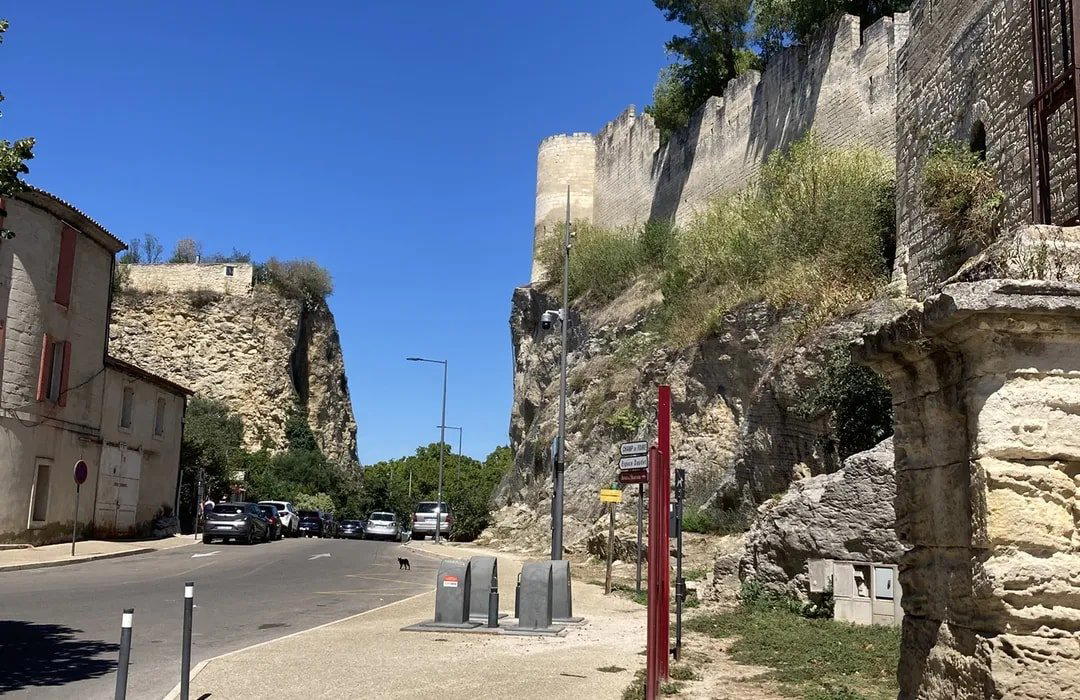
Château de Montfrin is a historic château estate in Montfrin, set in the Gard countryside between Languedoc and Provence and between the Rhône and Gard rivers. Its character is agricultural and rustic rather than urban or formal, defined by organic vineyards, extensive olive groves, classic stone-estate atmosphere, and a scenic rural setting. The first impression is therefore less about a single amenity or programmed experience than about the relationship between the château, the cultivated land around it, and the wider river-plain countryside. It is best understood as a place where setting carries much of the value: stone, vines, olive trees, and the open rural context all contribute to the estate’s sense of identity.
River-plain agriculture shapes the estate experience
The strongest point for Château de Montfrin is the landscape itself. This is a countryside estate where vineyards and olive groves are central to the identity of the place, and where the setting matters as much as any individual hospitality detail. The estate reads as part of a working agricultural environment rather than as a purely decorative château stop. That distinction is important, because the appeal comes from the impression of cultivated land and rural continuity, not from a highly polished urban-style presentation. Visitors considering it should think in terms of atmosphere, agricultural context, and the visual character of the Gard countryside.
Because only limited venue details are available, the safest way to frame a visit is through place and mood: organic vineyards, extensive olive groves, and a rustic Gard setting between Languedoc and Provence. Specific claims about grape varieties, wine ranges, cellar methods, awards, scores, tasting formats, opening arrangements, or food service should not be assumed without checking directly with the estate. This cautious framing does not weaken the venue’s profile; it simply keeps the emphasis where the confirmed information is strongest. The estate can be described with confidence as agricultural, scenic, and rooted in its countryside location, while more operational or experience-based details should remain subject to direct confirmation.
The olive groves also help define the property’s identity. They place Château de Montfrin within a broader southern landscape where agriculture, rural architecture, and river-country scenery are closely connected. For travelers, that makes the estate most compelling as a scenic agricultural château in Montfrin rather than as a venue to judge by menu, service, or accolade details. The presence of both vines and olive trees gives the property a layered rural character, suggesting a landscape shaped by cultivation rather than by hospitality design alone. In that sense, the estate’s strongest language is visual and geographic: château stonework, planted land, and the quiet texture of the Gard countryside.
A rustic château setting rather than a formalized claim
The winery’s style is rustic, classic, and scenic. That means the appeal is grounded in the château estate atmosphere, the Gard countryside, and the surrounding organic vineyards and olive groves. It should not be described as having a specific tasting format, reservation policy, noise level, seating arrangement, or hospitality program unless those details are confirmed directly. The more accurate way to present it is as a historic rural estate with a strong agricultural identity, rather than as a venue defined by a fixed visitor script. That keeps expectations aligned with what is known and avoids overstating the experience.
The price positioning is listed as $$. Travelers should treat those as details to confirm before planning a visit. In practical terms, that means using the price marker only as a broad signal, not as a substitute for current information from the estate. As with formats, access, and service details, one responsible approach is to verify directly before building a schedule around it.
What can be said confidently is that winery offers a rural estate context in Montfrin with an agricultural feel. Its identity is not built around luxury staging, chef-led dining, awards, or a named beverage program, but around a historic château landscape shaped by organic vineyards and olive groves. That makes the tone of the place quieter and more grounded: the draw is the estate’s connection to its land, its classic stone-estate character, and its position in the countryside between regional influences. For the right traveler, this kind of restraint is part of the appeal, because the property does not need to be framed through spectacle to feel distinctive.
How to place Montfrin in a wider countryside itinerary
The winery works well in planning terms as a Montfrin countryside stop with a strong sense of place. If you are building a day around the area, pair it with other Montfrin planning research in general terms, and confirm all current practical details before setting out. It is especially useful to think of the estate as an anchor for understanding the rural character of the area: a historic château, agricultural land, organic vineyards, olive groves, and the Gard setting all in one profile. That does not require assuming any particular service model; it simply places the estate within a broader countryside itinerary.
For a broader perspective, compare the winery with other options in Montfrin only in general terms. The useful distinction is not a ranking, but the estate’s profile: a historic château in the Gard countryside, organic vineyards, extensive olive groves, rustic character, and a scenic agricultural setting. It belongs in an itinerary when the priority is landscape, place, and rural atmosphere rather than a checklist of confirmed hospitality features. Approached that way, the winery is easy to understand: a countryside estate whose strongest confirmed qualities are agricultural, scenic, and deeply tied to its Montfrin setting.
Recognition history
Dated appearances from independent guides and award organizations, with the underlying list record or original source where available.
Falstaff Winery - Listed
Falstaff
At a Glance
- Rustic
- Classic
- Scenic
- Group Outing
- Solo Exploration
- Wine Education
- Estate Grounds
- Vineyard Tour
- Historic Building
- Organic
- Sustainable
- Vineyard
- Garden
- Côtes Du Rhône AOC
- Grenache
- Syrah
- Carignan
- Still Red
- Still White
- Still Rosé
- Bar Tasting
- Retail Shop Tasting
Historic château estate in the Gard countryside with an agricultural, rustic feel, defined by organic vineyards and extensive olive groves between Languedoc and Provence and the Rhône and Gard rivers.