
Caol Ila distillery sits on the eastern shore of Islay, looking directly across the Sound of Islay toward the Paps of Jura. A holder of the Pearl 4 Star Prestige award (2025), it occupies a distinctive position among the island's heavily peated distilleries, producing spirit that carries the coastal character of Port Askaig with unusual clarity. For visitors planning a serious Islay itinerary, it represents one of the most instructive tastings the island offers.
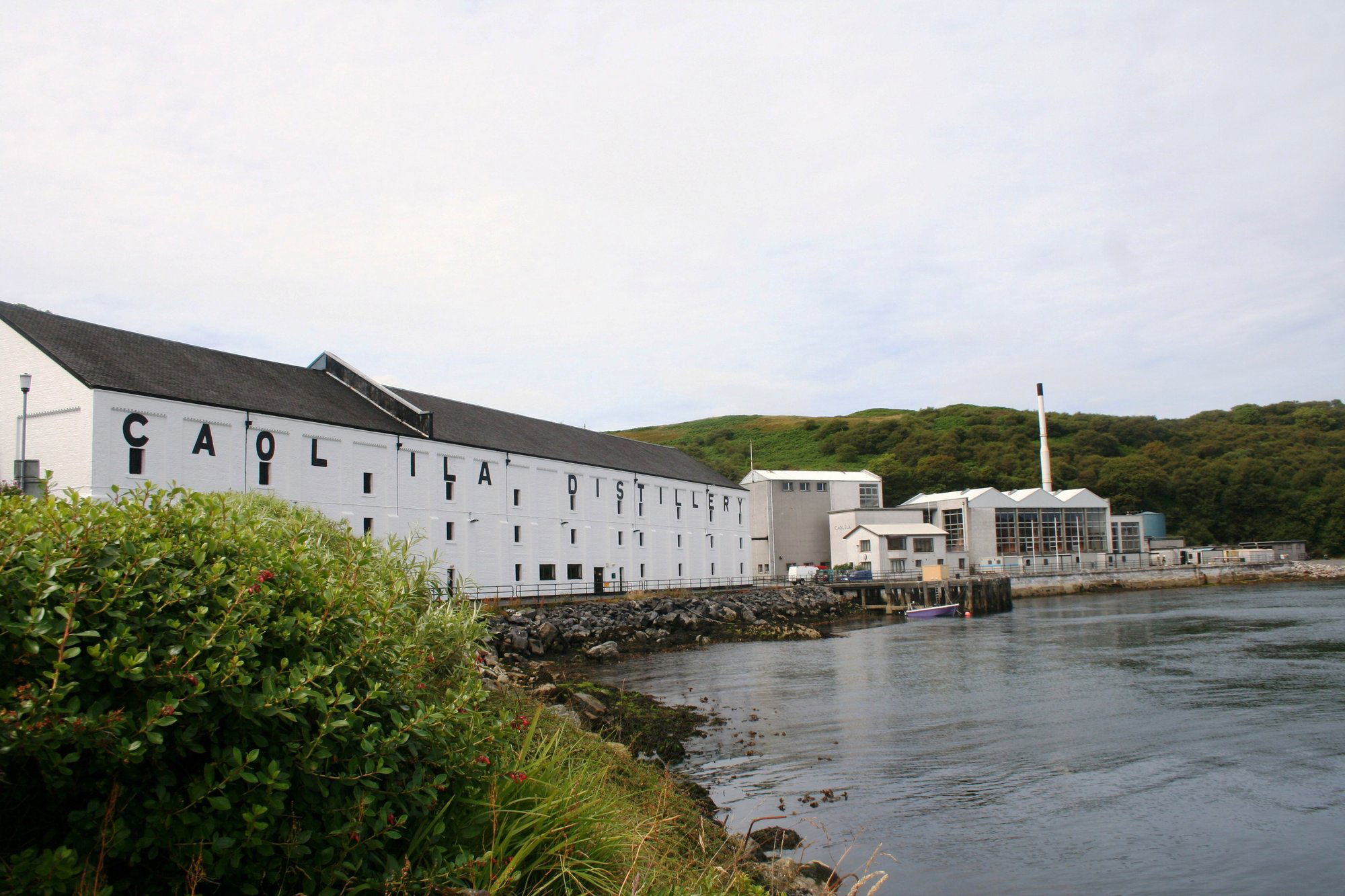
The Sound of Islay as Context
Approach Caol Ila by road from Port Askaig and the distillery announces itself through a gap in the hillside rather than through any signage. The building drops sharply toward the water, with the narrow strait between Islay and Jura filling the view from the stillhouse windows. That physical relationship between production space and geography is not decorative. Islay's east coast distilleries sit in a different sensory register from the southern shore operations at Laphroaig or Lagavulin: the salt influence arrives on a different wind line, and the proximity to Port Askaig's ferry terminal means the distillery has historically operated as a working production site rather than a visitor destination first. That orientation has slowly shifted, but the core character of the place remains production-forward.
For the broader category of Islay single malt, Caol Ila occupies a specific tier. It is one of the island's higher-volume operations, which has historically placed it in a different commercial bracket from the smaller, allocation-driven Islay names. That volume has not softened its identity: the heavily peated house style, cut from spirit running at high phenolic levels, remains consistent across its standard releases. The 2025 Pearl 4 Star Prestige award confirms its standing within a peer set that includes both island and mainland Scottish distilleries operating at serious quality thresholds.
What a Visit Feels Like
Islay distillery visits have evolved considerably over the past decade. The island once operated on an informal model where production staff doubled as guides and the experience was essentially unstructured. The better distilleries have moved toward dedicated visitor infrastructure without abandoning the sense that you are inside a functional whisky operation rather than a theme park version of one. Caol Ila's position on the water gives its tasting format a particular quality: the stillhouse view, looking across to Jura's hills, provides a geographic anchor that makes the tasting feel located in a way that a generic tasting room cannot replicate.
The format at most serious Islay distilleries now runs from standard access tours through to premium small-group experiences where cask-strength or warehouse samples enter the conversation. At this level of distillery, the staff guiding tastings tend to come with production knowledge rather than hospitality-script familiarity, which changes the quality of the dialogue available to visitors who want to ask technical questions about cut points, cask policy, or phenol measurements. That kind of access is what separates a distillery visit from a bar tasting, and it is where Caol Ila's peer set, including nearby Ardnahoe and Bunnahabhain, differentiates itself from volume-tourism operations.
Islay's East-Coast Peat Register
Islay produces the densest concentration of heavily peated single malt in Scotland, but the island's distilleries are not interchangeable. The southern coast operations, with their seaweed and iodine-forward profiles, sit in a different stylistic zone from the east-coast distilleries, where the peat reads cleaner and the maritime influence arrives more as salinity than as medicinal brine. Caol Ila is the clearest example of this east-coast register: the smoke is present and assertive, but the spirit carries enough fruit and cereal weight to give it range across different drinking contexts.
That versatility has made Caol Ila a significant component in blended Scotch for decades, a role that shaped how the distillery thought about consistency and yield before the single malt category began claiming more of its output. The blending heritage is worth understanding as context: distilleries that supplied the great blending houses at volume learned a discipline around character repeatability that smaller, single-estate-focused operations did not need. At Caol Ila, that institutional memory runs through the production approach in ways that become legible when you taste across different ages or cask types in a structured setting.
For comparison across Scottish regions, distilleries like Clynelish Distillery in Brora and Balblair Distillery in Edderton represent the Highland coastal profile, while Auchentoshan Distillery in Clydebank and Bladnoch Distillery in Bladnoch anchor the Lowland end of the spectrum. The contrast clarifies what makes Islay's east coast specifically interesting: it combines maritime character with peat intensity in a way that neither Highland nor Lowland distilleries replicate. Further afield, Deanston and Glen Garioch Distillery in Oldmeldrum offer useful regional counterpoints for visitors building a broader Scottish whisky framework.
Planning the Visit
Port Askaig is a small settlement on Islay's northeast coast, accessible by ferry from Kennacraig on the Kintyre peninsula. The crossing takes roughly two hours and runs several times daily, though frequency drops in winter and advance booking during peak summer months is advisable. The distillery sits within a short distance of the ferry terminal, which makes Caol Ila a logical first or last stop for visitors arriving or departing via Port Askaig rather than the island's southern ferry point at Port Ellen.
Visitors building a full Islay itinerary will find the northern cluster, anchored by Caol Ila, Bunnahabhain, and the newer Ardnahoe, works well as a half-day circuit. The southern distilleries require a separate journey across the island. For accommodation and dining context around the visit, the Port Askaig hotels guide and Port Askaig restaurants guide cover the practical options in the area. The Port Askaig bars guide is worth consulting for evening options after distillery visits, as local establishments typically stock ranges that go beyond what the distillery shops carry.
For the wider Islay distillery picture, the Port Askaig wineries guide maps the full set of operations accessible from this part of the island. Visitors with a broader Scottish whisky programme in mind should also consult the Port Askaig experiences guide for curated itinerary options that extend beyond individual distillery drop-ins. Mainland comparisons worth building into a longer Scotland trip include Aberlour in Aberlour for the Speyside contrast, and internationally, Abadía Retuerta in Sardón de Duero for a sense of how estate-production disciplines operate in a completely different tradition.
The Prestige Tier in Context
The 2025 Pearl 4 Star Prestige award places Caol Ila in a recognised quality bracket among Scottish distilleries operating at serious visitor and product standards. Within Islay specifically, that tier is occupied by a small number of operations that have invested in both production consistency and the infrastructure to translate that quality into a meaningful visitor experience. The award functions as a navigational signal for travellers who want to avoid the lower-tier distillery visits that have proliferated as whisky tourism has grown: large, underinvested operations where the tasting is perfunctory and the educational content thin.
At the prestige level, a distillery visit becomes something closer to the premium winery experience model that regions like Burgundy or Napa have normalised: structured, knowledgeable, and calibrated to the serious enthusiast rather than the casual tourist. Caol Ila's production scale means it can support this kind of experience without the exclusivity constraints that smaller island distilleries face, while its geographic setting on the Sound of Islay provides the kind of physical drama that makes the experience feel specific to this place rather than transferable to any whisky region.
Local Peer Set
A short peer set to help you calibrate price, style, and recognition.
| Venue | Classification | Awards | First Vintage | Notes |
|---|---|---|---|---|
| Caol Ila | 1 awards | This venue | ||
| Ardnahoe | 1 awards | |||
| Auchentoshan Distillery | 1 awards | |||
| Balblair Distillery | 1 awards | |||
| Bladnoch Distillery | 1 awards | |||
| Clynelish Distillery | 1 awards |
Access the Cellar?
Our members enjoy exclusive access to private tastings and priority allocations from the world's most sought-after producers.
Access the Concierge