Cantina Sampietrana

Cantina Sampietrana is a 1952 cooperative winery in San Pietro Vernotico, rooted in Salice Salentino’s Negroamaro and Primitivo country. The draw is not polish for its own sake, but a working cellar experience: vaulted rooms, cement fermenters, member-grown fruit, organic sourcing and tastings that connect Salento’s coastal heat, calcareous soils and village-scale wine culture.
Pearl is the En Primeur Club membership app — saves, bookings, and concierge access live there. Same editors, same standards.
- Address
- San Pietro Vernotico, Brindisi, Puglia, Italien
 Saves & bookings on Pearl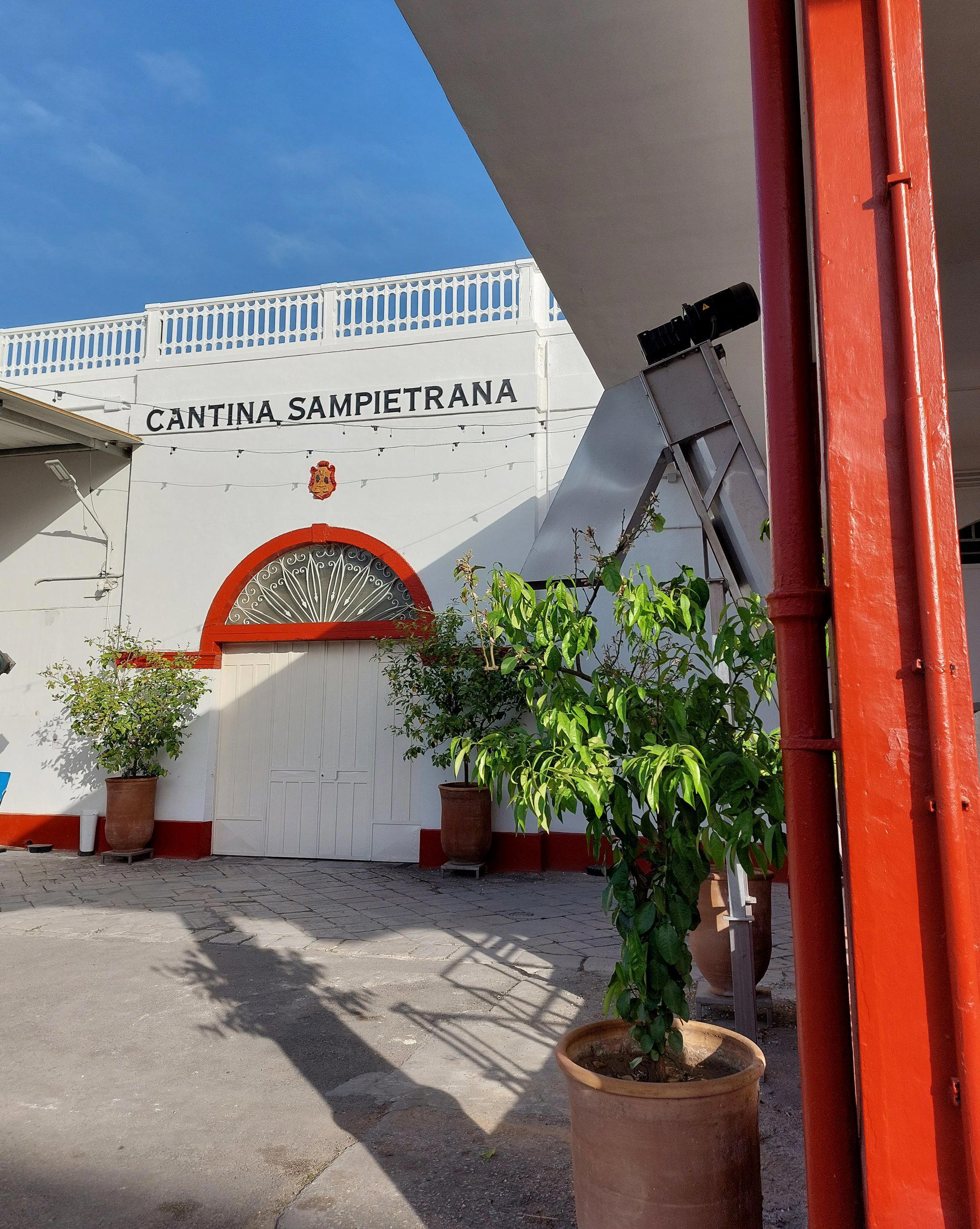
The approach to Cantina Sampietrana starts in San Pietro Vernotico, where the winery’s original 1952 building gives the experience the feeling of a working cellar rather than a showroom. That distinction is central to the visit. The architecture, the production setting and the sense of continuity all come before any polished hospitality language. Vaulted cellars, traditional cement fermenters and production areas set the tone before the glass does, making the first impression more tactile than decorative. The useful way to understand the place is through its atmosphere: historic, practical, relaxed and rooted in the center of town.
Because the public details are limited, the strongest reason to visit is not a long list of claimed services or menu specifics. It is the setting itself: an original mid-century cooperative-winery building, working production areas and a welcoming tasting room that feels authentic and educational. For travellers, that restraint is helpful. It keeps the focus on what can be clearly understood from the venue’s own character: a cellar environment where the physical spaces, rather than an elaborate script, explain much of the appeal.
A historic cooperative-winery setting
Cantina Sampietrana is best framed as a historic winery experience in San Pietro Vernotico. The original 1952 building, vaulted cellars and cement fermenters give visitors a tangible sense of how production spaces can shape the mood of a tasting. Rather than relying on luxury staging, the site’s character comes from its working areas and preserved cellar atmosphere. The result is a venue that feels grounded, with the architecture doing the quiet work of communicating age, use and local identity.
The setting also helps explain the venue clearly. This is not a generic drop-in bar description or a full restaurant profile; the information points to a visit in a real production environment. That matters for expectations. The emphasis is on cellar atmosphere, winery context and a sense of place, rather than on a broad dining program or a catalog of amenities. For travellers, the listed price of $33 per person is one concrete planning detail available here, and it gives the experience a practical reference point without changing the essential nature of the visit.
What should not be overstated is equally important. The available information supports a clear, focused picture, but not an inflated one. Cantina Sampietrana is most persuasive when described through what is actually present: the mid-century building, the vaulted spaces, the cement fermenters, the working areas and the relaxed tasting-room tone. Those details are enough to establish why the venue belongs on a wine-focused itinerary.
What the tasting room teaches about place
The tasting room is described as relaxed, welcoming, authentic and educational. That matters because the surrounding architecture does part of the interpretation. Vaulted cellar spaces, cement fermenters and working production areas create context without requiring the visit to feel formal or theatrical. In this kind of setting, education does not need to mean a rigid lesson; it can come from moving through or sitting within spaces that still carry the practical character of a winery.
For visitors who want to understand San Pietro Vernotico through wine, the winery offers a grounded starting point. The appeal is the combination of historic fabric and active winery atmosphere, not an promise of a particular menu, cuisine style or beverage program beyond the winery context itself. That clarity is useful. It tells visitors to come for the cellar setting, the feeling of authenticity and the opportunity to connect the tasting experience with the physical place where the winery’s character is most visible.
It also suits travellers building a broader San Pietro Vernotico itinerary. Pair the visit with other dining in San Pietro Vernotico, or use it as a wine-focused stop within a wider day in town. The key is to treat the winery as a historic cellar experience with a clear sense of place. It is best approached as one part of a day shaped by local context, where the winery adds texture through its building, its production atmosphere and its relaxed welcome.
Where it fits in an Italian wine itinerary
The winery makes sense for travellers who want a winery visit shaped by building, atmosphere and production context. Italy has many polished tasting rooms; this one is better understood through its original 1952 structure, atmospheric vaulted cellars, cement fermenters and working areas. That makes it especially appealing to visitors who value the texture of a real cellar environment and who are interested in how the surroundings influence the feeling of the tasting.
Within San Pietro Vernotico, the venue is distinctive as a practical, educational stop rather than a page built on accolades or invented service details. The confirmed price of $33 per person gives visitors a useful planning point. Beyond that, the available description remains deliberately focused: a relaxed and welcoming tasting room, an authentic winery setting and production spaces that help define the experience.
The editorial case is simple. Choose the winery when the purpose is to experience a historic winery setting in San Pietro Vernotico: relaxed, welcoming, authentic and grounded in the physical character of its cellar spaces. Its value lies in that groundedness. The visit is not presented as a spectacle, but as an opportunity to spend time in a cooperative-winery environment whose atmosphere comes from age, function and place.
Recognition history
Dated appearances from independent guides and award organizations, with the underlying list record or original source where available.
Falstaff Winery - Listed
Falstaff
At a Glance
- Rustic
- Classic
- Scenic
- Cozy
- Romantic
- Group Outing
- Wine Education
- Romantic Getaway
- Solo Exploration
- Special Occasion
- Family
- Vineyard Tour
- Barrel Room
- Historic Building
- Private Tasting
- Organic
- Vineyard
- Street Scene
- Salice Salentino
- Negroamaro
- Primitivo
- Malvasia Nera
- Malvasia Bianca
- Other Local Salento Grapes
- Still Red
- Still White
- Still Rosé
- Standard Tasting
- Tasting With Tour
- Food Pairing Tasting
- Themed Tasting
Historic cooperative winery housed in its original 1952 building in the historic center, with atmospheric vaulted cellars and cement fermenters, working production areas, and a relaxed, welcoming tasting room that feels authentic and educational rather than formal.