Brick House Wine Co.

A Pearl 2 Star Prestige-rated estate in the Chehalem Mountains outside Newberg, Brick House Wine Co. has built a reputation on organically and biodynamically farmed Pinot Noir, Chardonnay, and Gamay Noir. The property sits at the committed end of the Willamette Valley's sustainability spectrum, where farming philosophy shapes every bottle produced on site.
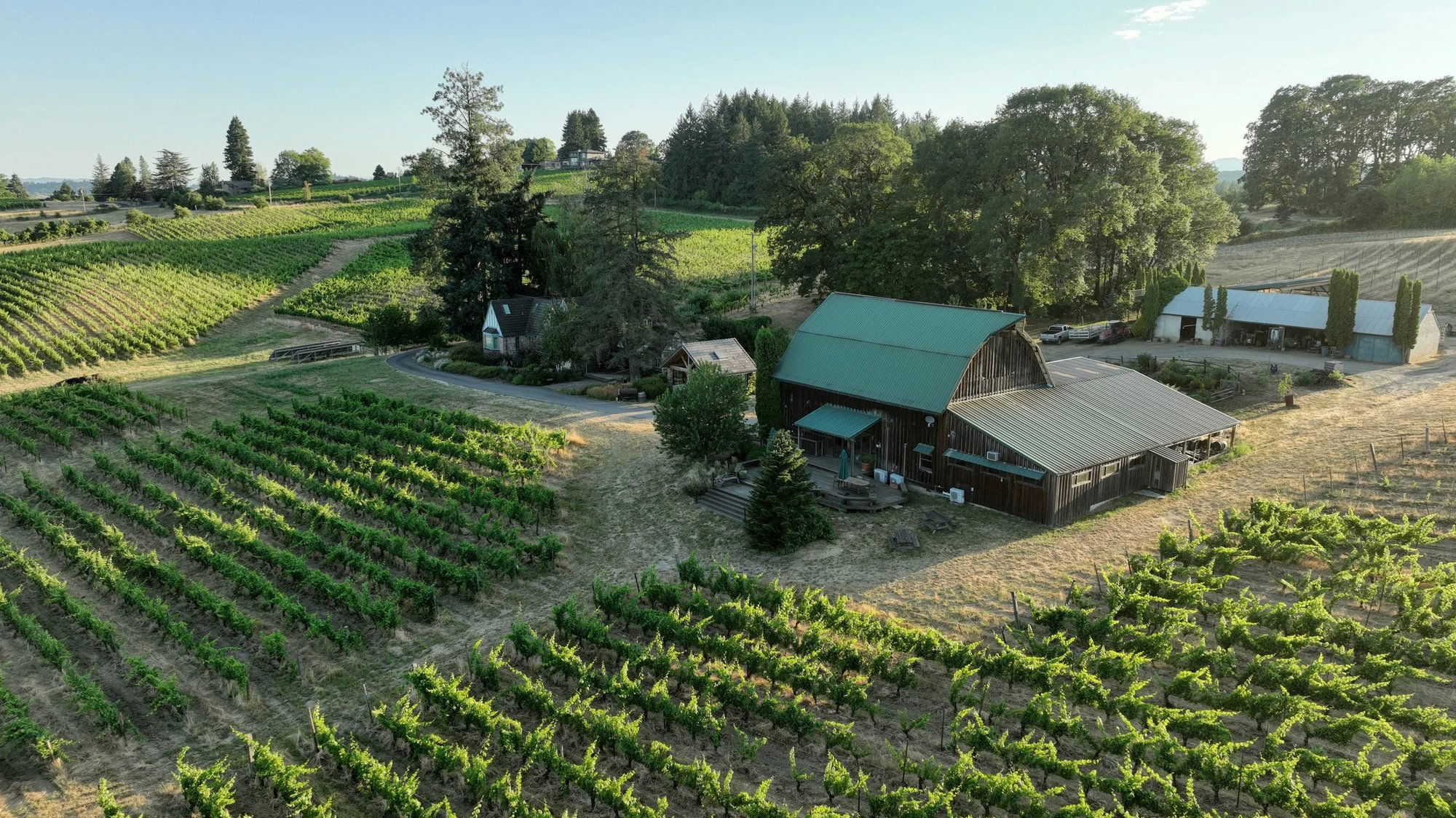
Farming First: Brick House in the Context of Willamette Valley Viticulture
The Willamette Valley's ascent as a serious Pinot Noir region has always been tied to the land rather than the cellar. What distinguishes the upper tier of that conversation today is not winemaking technique but a commitment to how the vineyards are kept. Across the Chehalem Mountains AVA outside Newberg, a small group of producers has moved beyond organic certification into fully biodynamic farming, treating the estate as a closed ecological system. Brick House Wine Co., positioned at 18200 NE Lewis Rogers Lane, belongs squarely to that cohort. Its Pearl 2 Star Prestige recognition in 2025 places it within a peer set defined not just by the quality of what ends up in bottle, but by the discipline of what does not enter the vineyard at all.
The Biodynamic Commitment in American Wine
Biodynamic viticulture remains a minority practice in American wine, even in regions where organic farming has gained broad acceptance. The distinction matters. Organic certification removes synthetic inputs; biodynamic practice goes further, requiring the estate to function as a self-sustaining organism, with specific preparations, lunar calendar farming, and the integration of animals, cover crops, and compost into the vineyard cycle. In the Willamette Valley, where cool-climate Pinot Noir is already sensitive to site expression, advocates of biodynamic farming argue that the approach amplifies what is already distinct about each block. Brick House has operated under certified biodynamic and organic principles for decades, making it one of the longer-standing proponents of that model in Oregon — a credential that carries weight in a region now crowded with newer entrants making similar claims.
That longevity matters for a broader reason. The Willamette Valley's reputation was built by producers willing to farm against conventional advice, beginning in the 1960s and 1970s. The biodynamic cohort carries a version of that same contrarian logic forward. Where neighbors might optimize for yield or consistency across vintages, the biodynamic model accepts more variation in exchange for what its practitioners describe as truer site expression. Visitors who arrive at Brick House with that context in mind will read the wines differently than those approaching purely through a quality-rating lens.
What the Estate Grows
Pinot Noir is the anchor variety here, as it is for most serious Chehalem Mountains producers. The AVA sits at elevations that temper the growing season, producing wines that tend toward structural tension rather than opulence. Among Newberg-area producers, Adelsheim Vineyard and Patricia Green Cellars represent different points on the Pinot spectrum — Adelsheim with a longer institutional history and Patricia Green with a vineyard-designate focus that has attracted significant critical attention. Brick House sits in that same serious-producer tier, but the biodynamic frame distinguishes its positioning from both. Its Chardonnay and Gamay Noir round out a small production portfolio that reflects an estate-focused model: the fruit comes from the property rather than purchased sources, which keeps volumes limited and aligns naturally with the allocation-based sales model common among top-tier Oregon producers.
Gamay Noir deserves particular note in this context. It remains a rare variety in Oregon and signals a producer willing to operate outside the Pinot Noir and Chardonnay defaults that dominate regional attention. The choice to farm it biodynamically on an estate that could simply expand its Pinot acreage speaks to an intentionality that goes beyond market positioning. For the collector or serious wine traveler, it functions as a point of differentiation within the Newberg peer set, which also includes Beaux Frères, known for dense, concentrated Pinot Noir, and Alexana Winery, which draws on multiple AVAs for its single-vineyard program.
Approaching the Property
The address on NE Lewis Rogers Lane places Brick House in the rural agricultural fringe east of Newberg, where the Chehalem Mountains begin their gradual rise from the valley floor. The approach involves narrow country roads lined with vine rows and Douglas fir, a physical reminder that this is working farmland rather than a hospitality campus designed for volume traffic. That setting is not incidental. Estates farming biodynamically tend to present themselves as places where the agriculture is legible , cover crops between rows, resident livestock, the visible evidence of a farming system rather than a manicured tasting room backdrop. Visiting with that expectation calibrated correctly makes the experience more coherent.
For those planning around a broader Newberg itinerary, the estate's rural position means it rewards deliberate scheduling rather than a spontaneous stop. A to Z Wineworks and other producers in the Newberg cluster are accessible on the same day, and the town itself has developed enough dining and accommodation infrastructure to support a multi-day wine country visit. See our full Newberg restaurants guide, our full Newberg hotels guide, and our full Newberg bars guide for the wider picture. For those building a regional wine itinerary from scratch, our full Newberg wineries guide and our full Newberg experiences guide provide useful orientation.
Where Brick House Sits in the Wider Prestige Wine Conversation
The 2025 Pearl 2 Star Prestige designation connects Brick House to a peer set that extends well beyond Oregon. Among North American estates with comparable positioning on sustainability and single-estate farming, the reference points span California and beyond. Accendo Cellars in St. Helena and Adelaida Vineyards in Paso Robles each operate with distinct regional identities but share the allocation-model, estate-focused structure that Brick House represents in Oregon. Further afield, Alban Vineyards in Arroyo Grande has pursued a similarly independent path in a variety set most California producers have ignored. Outside North America, Abadía Retuerta in Sardón de Duero demonstrates how estate integrity translates across very different climates, while Aberlour in Aberlour occupies an analogous position in Scotch whisky , a producer whose identity is inseparable from its production philosophy and place.
That comparative frame is worth holding onto when approaching Brick House. Its recognition comes not from scale or from market saturation but from the sustained application of a farming model that most producers find economically inconvenient. In a valley where Pinot Noir has attracted significant investment and a corresponding increase in generic production, the biodynamic estate-only producers occupy a smaller, more exacting niche. The 2 Star Prestige designation reflects that positioning accurately.
Planning a Visit
Brick House operates as a working estate in the Chehalem Mountains, and visits are leading arranged in advance through the winery's direct channels. Current hours, tasting formats, and booking availability are not published here, as those details change seasonally and are leading confirmed before travel. The estate's rural setting means driving is the practical approach; Newberg is roughly 25 miles southwest of Portland, making it a feasible day trip from the city or an anchor for a longer wine country stay. Those building a full itinerary should note that the Chehalem Mountains AVA rewards multiple visits across the estate, with the biodynamic farming calendar influencing what is happening on the land at different points in the year , spring bud break, summer canopy management, and harvest in September and October each present a different version of the property.
Frequently Asked Questions
What wine is Brick House Wine Co. famous for?
Brick House has built its reputation on estate-grown, certified biodynamic and organic Pinot Noir from the Chehalem Mountains AVA outside Newberg. Chardonnay and Gamay Noir round out the portfolio, with the latter being among the more unusual offerings from any serious Oregon estate. The 2025 Pearl 2 Star Prestige award situates the winery within Oregon's upper tier of recognition.
Why do people go to Brick House Wine Co.?
Visitors come primarily for the combination of long-standing biodynamic farming credentials and the estate's position in the Chehalem Mountains, one of the Willamette Valley's more compelling sub-appellations for structured Pinot Noir. Within the Newberg producer cluster, Brick House represents a specific farming philosophy that goes beyond what most certified organic producers commit to, and that context gives the tasting experience a different frame than a conventional winery visit.
Is Brick House Wine Co. reservation-only?
Brick House is a working estate with limited production, and visits to properties of this type in the Chehalem Mountains typically require advance booking rather than walk-in access. Specific reservation policies, tasting formats, and availability should be confirmed directly with the winery before travel. Phone and website details are leading sourced through current online listings, as this information can change with the season.
Access the Cellar?
Our members enjoy exclusive access to private tastings and priority allocations from the world's most sought-after producers.
Access the Concierge