Azienda Agricola Montalbino

A small organic winery in Montespertoli where the tasting format is built around vineyard, cellar, and agriturismo rather than label theatre. Azienda Agricola Montalbino is strongest for travelers who want Chianti Montespertoli DOCG, native Tuscan varieties, and a rural cellar experience anchored in the land rather than a polished showroom.
Pearl is the En Primeur Club membership app — saves, bookings, and concierge access live there. Same editors, same standards.
- Address
- Montespertoli, Tuscany, Italien
 Saves & bookings on Pearl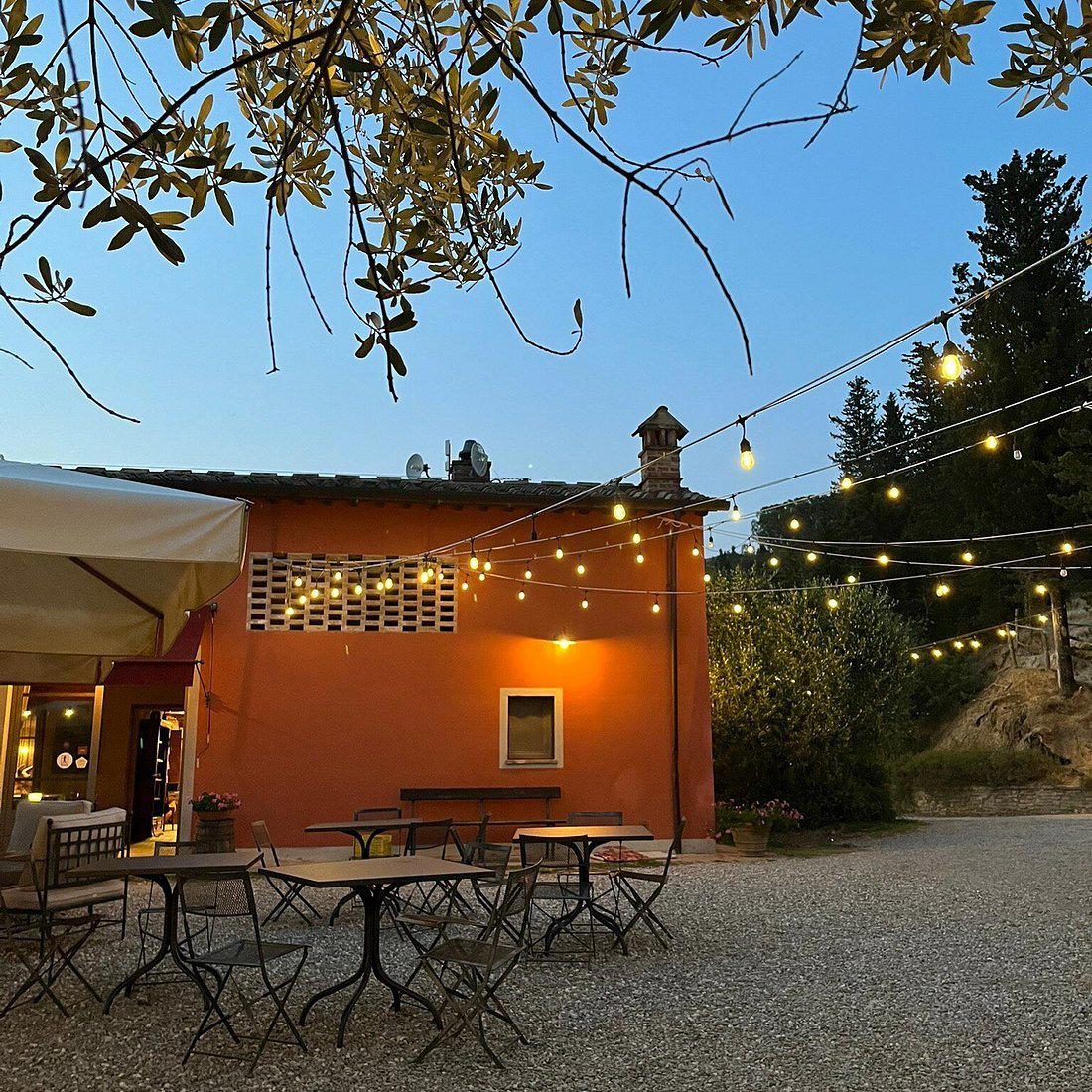
The approach to wine in Montespertoli is agricultural before it is decorative: vines, olive trees, old cellar materials, and family hospitality all sit close together. At Azienda Agricola Montalbino, the useful story is not scale or spectacle, but the way a small organic estate uses the local Chianti Montespertoli frame to make wine feel connected to a working Tuscan farm.
Montespertoli has long traded on its wine identity, and that matters here because the appellation gives the tasting a clear regional spine. Chianti Montespertoli DOCG is not presented as a generic Tuscan red category; it is tied to Sangiovese, Canaiolo, and Colorino, varieties that carry the area’s traditional blend logic. The estate also works with Foglia Tonda and Trebbiano Toscano, which gives the portfolio a broader Tuscan vocabulary without pushing it into international-variety gloss.
Chianti Montespertoli seen through a small organic estate
In Tuscany, the difference between a wine visit and a rural hospitality visit often comes down to how much of the farm remains visible. Montalbino’s advantage is that the vineyard, cellar, agriturismo, and restaurant setting are part of the same operation, so the wines are not detached from the place that produces them. The estate covers 90 hectares, with 6.5 hectares planted to vines, a ratio that keeps wine production intimate rather than industrial.
The organic commitment is not a recent branding layer. Certification dates to 2008, and the estate’s production philosophy is explicitly organic, with sustainable farming included in its sourcing profile. In a region where “Tuscan authenticity” can be stretched into a vague sales phrase, organic certification gives the claim a firmer base. The estate’s membership in the Viticoltori Montespertoli Association, a group of 15 vintners formed in 2022 around organic viticulture, sustainability, and territorial identity, places it inside a wider local movement rather than as a solitary rural address.
The wine focus is still red-led, as it should be in this part of Tuscany, but the details are more instructive than the category. Chianti Montespertoli DOCG here is built on Sangiovese with Canaiolo and Colorino, while Foglia Tonda appears in the estate’s red IGT. That grape choice is a useful signal: it points toward local biodiversity and away from the easy international shorthand that can flatten Tuscan wine lists into Cabernet-and-Merlot familiarity.
Concrete vats, vineyard touring, and the value of format discipline
Physical cellar gives the visit its strongest identity. Restored concrete vats from the 1960s have been converted into tasting space, while the winery renovation keeps older cellar architecture in active dialogue with modern production needs. That matters because many Tuscan tastings lean on views alone; here, the material history of fermentation and storage is part of the format.
Tasting structure is concise rather than sprawling. The standard experience centers on a guided vineyard-and-cellar visit followed by three wines, with a separate version adding a light lunch. Tours run in Italian and English, and the format suits travelers who want explanation without turning the visit into a full-day seminar. Giulio Tinacci is listed as winemaker, but the more interesting point is not biography; it is that the estate keeps production, hospitality, and agricultural identity close enough for visitors to understand how the wines fit the ground around them.
Food is not incidental in this model. The estate includes an agriturismo setting and La Lombricaia, so the wine tasting sits beside the older Tuscan habit of reading wine through the table. Extra virgin olive oil from the farm appears in the pairing context, a detail that reinforces the mixed-agriculture character of the estate. The result is better suited to travelers interested in place, farming, and regional varieties than to those chasing trophy bottles or formal cellar theatrics.
How to read this stop within Montespertoli
Montespertoli rewards a slower itinerary. The town’s wine identity is less about the grand-castle drama associated with some Tuscan routes and more about working estates, local blends, and agriturismo culture. Montalbino fits that pattern: quiet, small-scale, family-run, and more educational than performative. It is a strong choice for visitors who want to understand Chianti Montespertoli through the mechanics of farming, varietal choice, and cellar adaptation.
The critical lens is simple. Do not approach this as a luxury tasting room calibrated for collectors. Approach it as a compact Tuscan wine lesson with organic farming, restored cellar fabric, and a portfolio that keeps Sangiovese and native varieties in the foreground. The value lies in coherence: the vineyard scale, the guided format, the agriturismo setting, and the appellation story all point in the same direction.
For broader planning around town, EP Club’s city guides cover Montespertoli wineries, Montespertoli restaurants, Montespertoli hotels, Montespertoli bars, and Montespertoli experiences. Nearby winery reading includes Barone di Renzis Castello Sonnino, Conte Guicciardini, Fattoria Bonsalto, Fattoria Poggio Capponi, and Marzocco di Poppiano. Further afield, the winery archive also covers 3GP SRL in Treviso, 47 Anno Domini in Trebaseleghe, A Mano Wine in Noci, »der Steiner« Hans Steiner in Podersdorf am See, and & Handwein in Mannheim.
Recognition history
Dated appearances from independent guides and award organizations, with the underlying list record or original source where available.
Falstaff Winery - Listed
Falstaff
Continue exploring
More in Montespertoli
Wineries in Montespertoli
Browse all →
Bars in Montespertoli
Browse all →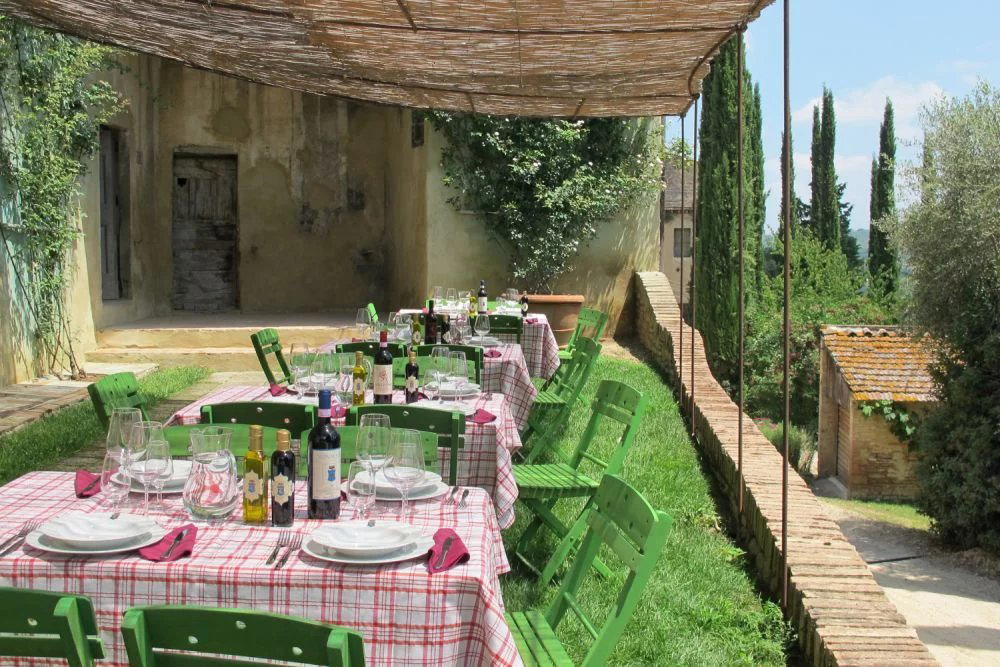
At a Glance
- Rustic
- Cozy
- Scenic
- Classic
- Wine Education
- Family
- Group Outing
- Special Occasion
- Vineyard Tour
- Historic Building
- Private Tasting
- Design Destination
- Organic
- Sustainable
- Vineyard
- Chianti Montespertoli DOCG
- Sangiovese
- Canaiolo
- Colorino
- Foglia Tonda
- Trebbiano Toscano
- Still Red
- Still White
- Still Rosé
- Guided Tasting
- Tasting With Light Lunch
Warm, authentic, and rustic, with a renovated historic winery that blends functionality, architecture, and history; tastings are paired with a welcoming agriturismo setting.