
Arrigoni brings Ligurian wine culture into focus through a cellar-and-shop format in La Spezia and a production story tied to hand-farmed hillside vineyards. The draw is terroir: Vermentino, Pigato, Sangiovese and Bosca shaped by Colli di Luni DOC and Cinque Terre DOC, with a quiet, heritage-led tasting format rather than spectacle.

Pearl is the En Primeur Club membership app — saves, bookings, and concierge access live there. Same editors, same standards.
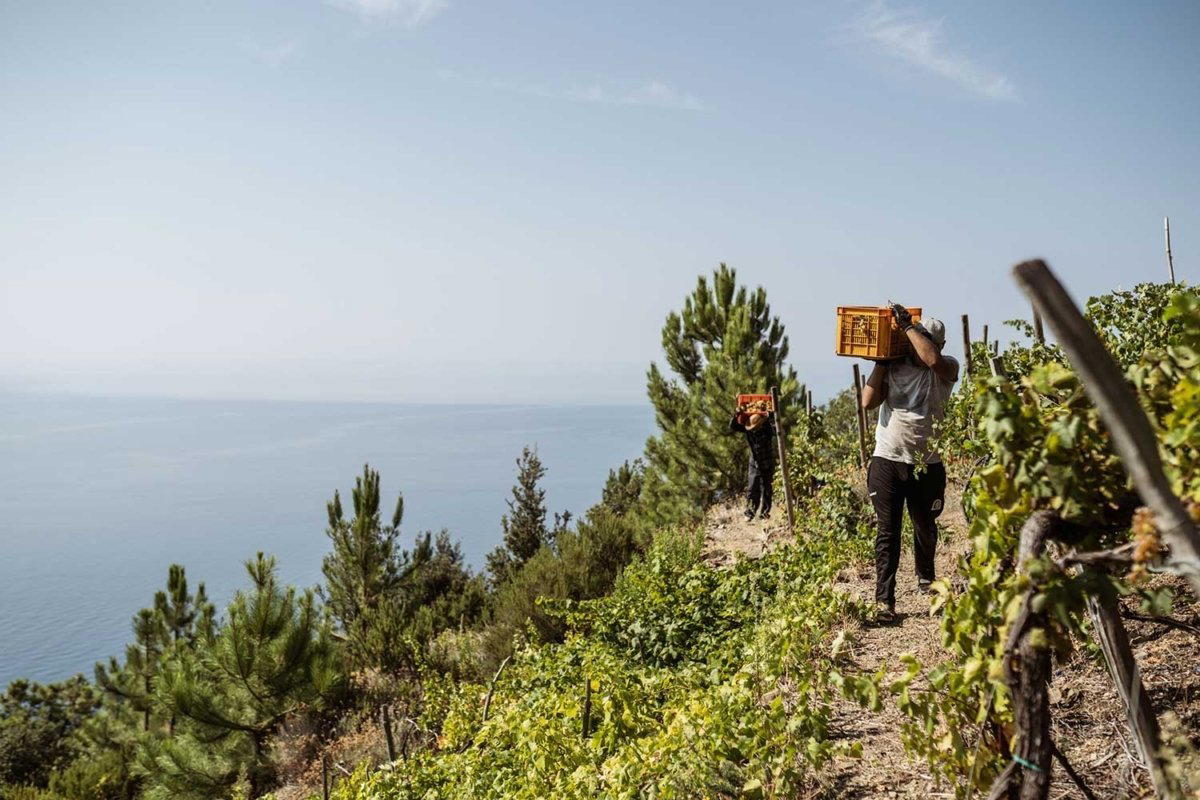
Approach Arrigoni as a Ligurian wine address first and a visitor experience second. The mood is quiet, cellar-like and grounded in the old agricultural logic of the coast: steep terrain, small production, patient explanation, wines that make more sense when read against the hills above La Spezia than against a generic Italian tasting-room template.
Liguria has never been an easy wine region. The coast gives beauty, but it also gives fractured slopes, narrow terraces and vineyards where hand work is not a nostalgic flourish but a practical condition. That is the frame for Arrigoni, founded in 1913 and associated with both Colli di Luni DOC and Cinque Terre DOC. Its relevance comes from that geography: Vermentino and Pigato for white wines, Sangiovese for reds, Bosca within the local white tradition, and dessert wine in the Cinque Terre idiom.
Coastal hillside farming gives the tasting its point
The stronger way to read this producer is through terrain. Colli di Luni sits at the meeting point of Liguria and Tuscany, where Vermentino carries coastal freshness without becoming anonymous. Cinque Terre DOC belongs to a harsher visual and viticultural language: terraced slopes, sea exposure and limited room for mechanised farming. Arrigoni’s small-production profile and hand-farmed hillside emphasis place the wines inside that Ligurian category of effort-intensive bottles, where scale is secondary to site expression.
The cellar-and-shop format suits that story. This is not a high-volume hospitality estate built around performance; it is a classic, compact wine stop for drinkers who want appellation context and a guided line through local grapes. The tasting types include classic, premium and guided formats, and the estate’s stated focus runs from still whites and still reds to dessert wine. Food pairing is part of the experience, which matters in Liguria, where wine is rarely separated from anchovy, olive oil, pesto, focaccia and seafood traditions.
There is a useful editorial distinction here. Many Italian winery visits sell a soft idea of countryside leisure. Ligurian wine, when handled seriously, asks for more attention: why Vermentino behaves differently near the sea, why Pigato remains culturally specific to the region, why Cinque Terre dessert wine carries a preservation value beyond sweetness. Arrigoni works for travelers who want that conversation in La Spezia rather than another interchangeable tasting flight.
What the glass says about La Spezia's wine corridor
La Spezia is often treated as a transit point for the Cinque Terre, but its wine geography is more interesting than that role suggests. The city sits close to zones where Ligurian and Tuscan influences overlap, and the cellar culture around it tends to reward visitors who think in grape varieties and appellations rather than postcard villages. Arrigoni’s portfolio signals that overlap clearly: Vermentino and Pigato on the white side, Sangiovese on the red side, Bosca within the local blend vocabulary.
The estate’s founding year, 1913, gives it a real heritage signal without needing inflated language. In a region where vineyard work can be physically demanding and economically marginal, longevity matters. It points to continuity through changing tourism patterns, from working agricultural producer to a wine address now relevant for travelers building a La Spezia itinerary around taste rather than transport.
The experience is also shaped by restraint. The listed setting is historic, scenic, classic and quiet, with vineyard and mountain view cues attached to the broader visit. That combination is a better match for wine education, solo exploration, small-group tastings and special-occasion drinking than for a loud social circuit. The dress code is casual, and the tone reads more cellar conversation than polished resort hospitality.
How to place it in a La Spezia itinerary
Use Arrigoni as the wine anchor for a La Spezia stay, especially if the rest of the trip leans toward coastal villages, seafood cooking and Ligurian pantry staples. Its practical appeal is focus: a compact, reservation-led winery visit with guided tasting options, a heritage building context and a production story tied to hillside farming. It is a strong fit before or after a broader look at the city’s restaurants, bars and experiences.
For planning around the wider city, start with Our full La Spezia wineries guide, then cross-check dining in Our full La Spezia restaurants guide. Travelers staying overnight can pair it with Our full La Spezia hotels guide, while aperitivo and late-evening options sit in Our full La Spezia bars guide. For non-wine planning around the city, use Our full La Spezia experiences guide.
Readers comparing Italian winery formats beyond Liguria can also look across the wider EP Club winery index: 3GP SRL in Treviso, 47 Anno Domini in Trebaseleghe, A Mano Wine in Noci, a6mani in Fragagnano, Abbadia Ardenga in Torrenieri, Abbazia di Crapolla in Neapel, Abbazia Monte Oliveto in Asciano, Abbazia Santa Anastasia in Castelbuono, »der Steiner« Hans Steiner in Podersdorf am See and & Handwein in Mannheim. Those links are less about direct comparison than about reading how place, scale and hospitality format change the meaning of a winery visit.
The editorial case for Arrigoni is clear: go for Ligurian terroir rather than grandeur. The value is in hearing how Colli di Luni and Cinque Terre translate into grape choice, farming constraints and a quiet tasting rhythm in La Spezia. For travelers who prefer appellation intelligence over decorative hospitality, that is the point.
Recognition history
Dated appearances from independent guides and award organizations, with the underlying list record or original source where available.
Falstaff Winery - Listed
Falstaff
Continue exploring
More in La Spezia
Restaurants in La Spezia
Browse all →
At a Glance
- Historic
- Scenic
- Classic
- Quiet
- Wine Education
- Group Outing
- Special Occasion
- Solo Exploration
- Historic Building
- Vineyard Tour
- Private Tasting
- Vineyard
- Mountain
- Colli Di Luni Doc; Cinque Terre DOC
- Vermentino
- Pigato
- Sangiovese
- Bosca
- Still White
- Still Red
- Dessert
- Classic Tasting
- Premium Tasting
- Guided Tasting
Historic cellar-and-shop setting with a heritage-focused winery atmosphere rooted in Ligurian winemaking traditions.