
Anne et Jean-François Ganevat is a Jura natural-wine estate in Rotalier, rooted in family viticulture dating to 1650 and shaped by biodynamic farming. The draw is terroir over polish: 13 hectares, 17 local varieties, hand work in the cellar, no new oak, and a portfolio that moves from Savagnin and Chardonnay to Vin de Paille.
Pearl is the En Primeur Club membership app — saves, bookings, and concierge access live there. Same editors, same standards.
- Address
- Rotalier, Bourgogne-Franche-Comté, Frankreich
 Saves & bookings on Pearl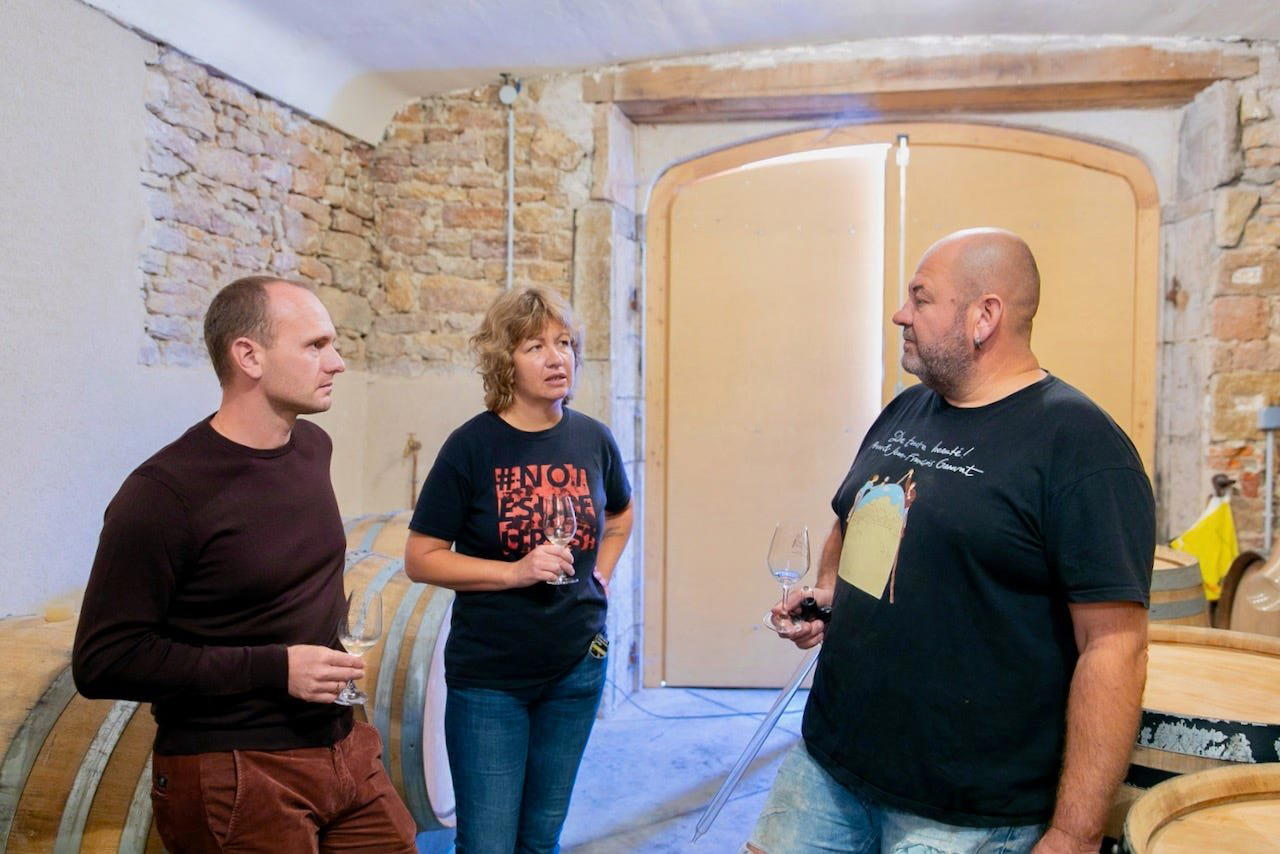
Anne et Jean-François Ganevat is a historic Jura family estate in Rotalier with a reputation built around minimal-intervention, biodynamic natural wines. The appeal is not a polished, design-led setting; it is the authentic, rural and rustic character of a serious wine address with a cult following among enthusiasts. In that sense, the estate should be read first through wine culture rather than through conventional hospitality language: its interest comes from the weight of the Jura setting, the family-estate identity and the kind of low-intervention approach that attracts people already invested in natural wine.
For planning purposes, a reliable way to read the venue is as a destination for people who already care about Jura wine culture and natural-wine methods. Specific public-facing details beyond the estate’s Rotalier setting, premium price tier and rustic atmosphere should be confirmed directly before making a visit. That caution matters because the estate’s public appeal is strong, but the practical experience should not be assumed from the reputation alone. Treat it as a specialist address where advance confirmation is part of sensible planning.
Jura identity and minimal-intervention wine
The story here is broad rather than technical: Anne et Jean-François Ganevat is rooted in the Jura and known for biodynamic, minimal-intervention natural wines. Rather than presenting the estate as a conventional hospitality stop, it is better understood as a rural family estate whose pull comes from place, biodynamic practice and the following its wines have earned among dedicated drinkers. The Jura identity is central to that reading: this is not a neutral backdrop but the frame through which the estate’s character, seriousness and appeal are understood.
That also means avoiding assumptions about formats, tastings, specific cuvées, service style or visitor access unless confirmed directly with the estate. The grounded draw is the combination of Jura identity, biodynamic practice and a low-key rural atmosphere. It is a profile built on restraint rather than spectacle, and that restraint is part of the point: the venue’s value is not in a decorative visitor narrative, but in the sense of a serious wine estate rooted in its region and methods.
The price tier is listed as $$$$, which signals a premium positioning. In context, that should be read less as design-led luxury and more as part of the estate’s specialist wine positioning. The premium cue does not imply gloss or ceremony; it simply reinforces that this is a serious, sought-after wine address whose reputation sits within a niche, enthusiast-driven world.
A specialist Jura wine destination
Anne et Jean-François Ganevat is best approached as a wine-focused Rotalier address rather than a broad travel amenity. The confirmed emphasis is on natural wines shaped by minimal intervention and biodynamic principles, with the setting remaining authentic, rural and rustic. For the right visitor, that is precisely the attraction: the estate reads as grounded and purposeful, with its identity carried by wine, place and practice rather than by a curated hospitality concept.
Travellers should treat the estate as a specialist wine destination and confirm practical arrangements before planning around it. That means the estate is not best used as a casual, guaranteed stop inserted into an itinerary without checking the basics. Its appeal is strong, but the useful planning posture is careful and direct: confirm what is possible, then build the visit around what the estate itself can actually accommodate.
For visitors mapping Rotalier through wine, the useful context is simple: this is not a glossy, design-driven stop. Its appeal lies in the seriousness of the estate, its Jura identity and its following among enthusiasts who value natural-wine culture. The rustic atmosphere should be understood positively rather than as a lack of polish: it supports the sense of a rural family estate where authenticity and wine focus matter more than presentation.
How to read the French winery map around it
The winery represents the quieter side of wine travel: rural, rooted and method-focused rather than theatrical. Some destinations are built around architecture or formal hospitality; this one is better framed around a historic family estate, biodynamic natural wines and a rustic Rotalier atmosphere. That distinction is important because it sets expectations correctly. The estate’s reputation does not need to be translated into a grand visitor experience in order to be compelling; its significance sits in the seriousness of the wine address itself.
The editorial verdict is direct: this is a serious Jura address for drinkers who care about place, biodynamic practice and low-intervention wine more than ceremony. The $$$$ price tier reflects its premium positioning, while the experience reads rural and authentic rather than showy. For enthusiasts, that combination is the point: the winery belongs on the map as a specialist, reputation-led Jura estate whose appeal is strongest for visitors who understand why minimal intervention, biodynamic practice and regional identity matter.
Recognition history
Dated appearances from independent guides and award organizations, with the underlying list record or original source where available.
Falstaff Winery - Listed
Falstaff
Continue exploring
More in Rotalier
Wineries in Rotalier
Browse all →
At a Glance
- Rustic
- Classic
- Well Known
- Intimate
- Solo Exploration
- Wine Education
- Special Occasion
- Estate Grounds
- Historic Building
- Biodynamic
- Vineyard
- Mountain
- Côtes Du Jura AOC
- Chardonnay
- Savagnin
- Poulsard
- Trousseau
- Pinot Noir
- Still White
- Still Red
- Dessert
Historic Jura family estate in the hamlet of La Combe de Rotalier, focused on minimal-intervention, biodynamic natural wines; atmosphere is authentic, rural and rustic rather than design-driven, with a cult following among enthusiasts.