
Falstaff Winery - Listed
Alpha Group is a Rustavi winery for travelers interested in Georgia’s wine culture beyond postcard cellar doors. The mood is industrial and quiet, with an appointment-only format that suits a focused stop rather than a casual drop-in tasting. Treat it as a production-led address in a city better known for industry than vineyard theatre.

Pearl is the En Primeur Club membership app — saves, bookings, and concierge access live there. Same editors, same standards.
- Address
- Rustavi, Georgia
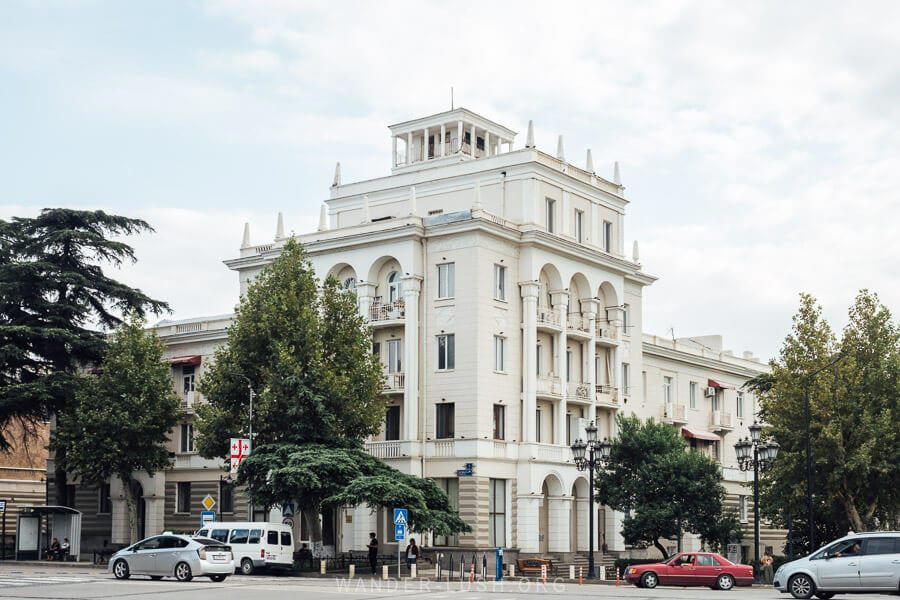
Alpha Group is listed as a winery in Rustavi, Georgia. The public information is limited, so the most useful way to frame it is straightforwardly: a professional wine producer in a working city rather than a venue with a well-described guest experience, dining format, or designed hospitality setting. In other words, the listing is clearest when treated as a practical producer profile, not as a promise of tours, tastings, restaurant service, or a polished cellar-door model. That restraint is important, because it helps set expectations around what is actually visible in the public record and what still needs to be checked directly.
The available description of atmosphere is sparse, but the setting is best read as industrial and quiet. Those two words give the page its main texture: functional rather than scenic, understated rather than theatrical, and closer to the working side of wine than to the leisure side. If Alpha Group is relevant to a trip, the safest reading is that it belongs on a shortlist as a winery to research further, not as a fully documented stop with a complete visitor script already in place.
Rustavi gives Georgian wine a working-city frame
Rustavi’s context matters because it is not presented here as a scenic wine-country village or resort destination. For Alpha Group, the facts point instead to a producer in Rustavi with a practical, quiet, industrial character. That makes the venue more useful as a grounded reference point in the city’s wine landscape than as a page built around hospitality claims. The appeal, such as it can be described from the available information, comes from that groundedness: a winery located within a city better understood through workaday texture than through curated rural romance.
Because the available information does not describe the winery’s interior, service style, tasting program, or visitor flow, expectations should stay simple. Alpha Group can be understood as a Rustavi-based wine producer, with any visit-specific details confirmed through the venue’s current channels before making plans. That means readers should be careful about filling in the blanks with assumptions borrowed from other Georgian wine destinations. A winery listing does not automatically mean a public tasting room, a guided cellar visit, food pairings, or a formal hospitality schedule. Here, the more accurate approach is to keep the category broad and the planning cautious.
Rustavi’s appeal is strongest when approached as a working city with wine as one possible layer. Readers building a full itinerary can map the winery alongside broader Rustavi planning resources, including Rustavi wineries, restaurants, bars, hotels, and experiences guides. The better approach is to treat Alpha Group as a producer listing in Rustavi, not as a fully documented hospitality destination. In practical terms, that makes it most useful for people who are trying to understand the range of wine-related addresses in the city, or who want to note where professional production appears in Rustavi’s broader urban mix. It is less useful for anyone looking for a fully described day-trip plan without additional confirmation.
A producer-led stop for drinkers who care about context
Alpha Group is better understood from the public record as a professional wine producer than as a restaurant, resort, or hospitality-first estate. That distinction is useful because it keeps the focus on what is actually known: the venue is a winery in Rustavi, Georgia, with a $$ price level and a quiet, industrial atmosphere. The $$ marker gives a broad sense of positioning, but it should not be overread as a menu, tasting fee, bottle list, or service structure. Likewise, the atmosphere description helps shape expectations, but it does not provide enough detail to describe décor, seating, views, music, or the rhythm of a guest visit.
For that reason, Alpha Group should be compared only in broad terms with other dining or wine-related options in Rustavi, rather than positioned through unconfirmed rankings or detailed program notes. It may appear in the same planning conversation as restaurants, bars, hotels, or other winery listings because all of those help define how a traveler experiences the city. But the comparison should remain careful: Alpha Group’s available profile is producer-led, not experience-led, and the public record does not support a more elaborate description of what happens on site.
Against that limited but useful field of information, Alpha Group’s identity is clear enough: a Rustavi-based Georgian wine producer with a practical, understated profile. It suits readers who want to note a professional winery in the city while confirming any operational or visitor details directly before relying on them. The value of the listing lies in that clarity. It does not need to be embellished into a restaurant, a tasting room, or a destination estate to be useful. For the right reader, the point is simply to recognize Alpha Group as part of Rustavi’s wine map, then do the necessary direct checking before turning that reference into a plan.
Recognition history
Dated appearances from independent guides and award organizations, with the underlying list record or original source where available.
Falstaff Winery - Listed
Falstaff
Details
- Industrial
- Quiet